
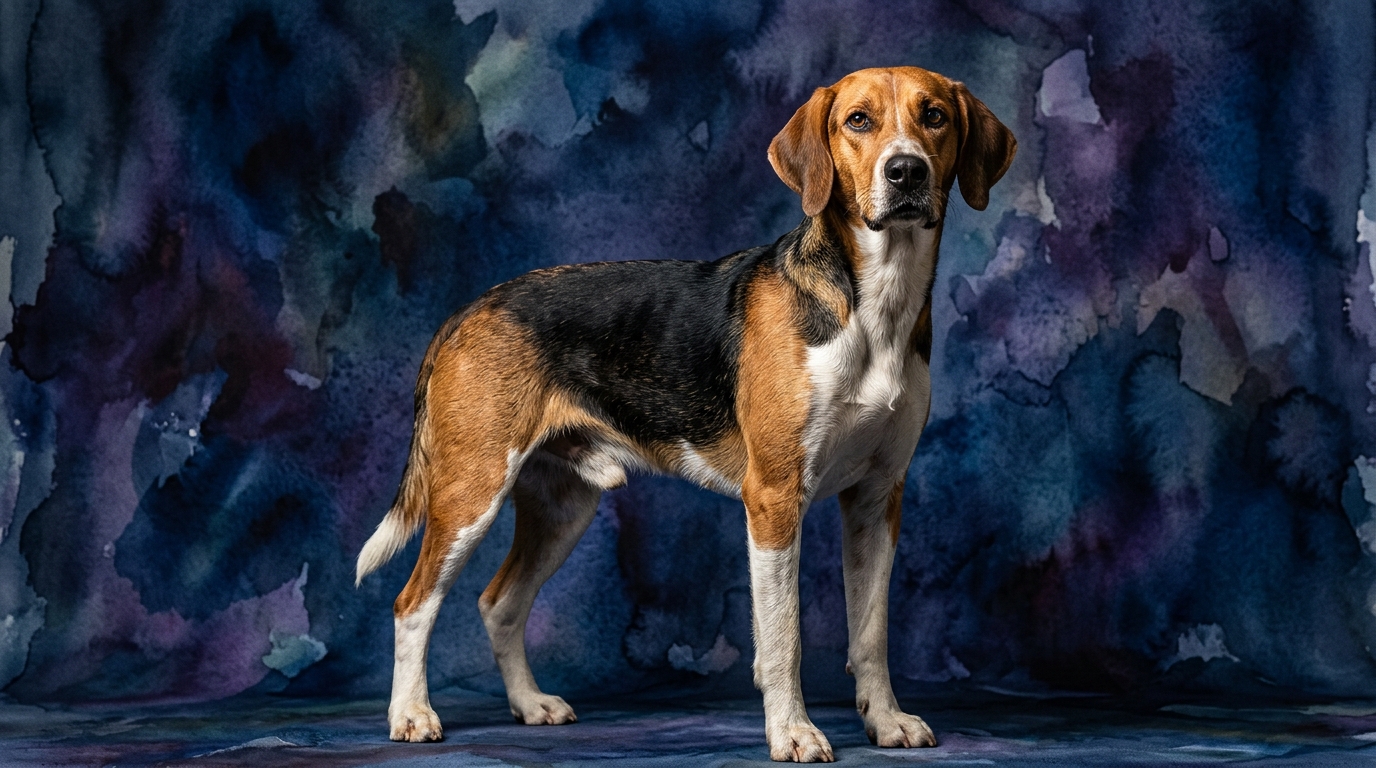
Side-by-Side IQ Profile: Staffordshire Bull Terrier vs. English Foxhound
The Cosmic Pet Pet IQ Lab categorizes canine intelligence across five key dimensions, and it's intriguing to see both the Staffordshire Bull Terrier and English Foxhound scoring 3/5 in every category. However, these identical scores belie a world of difference in how each breed applies its cognitive strengths, shaped by their unique historical roles and physical attributes. Let's explore what a 3/5 truly means for each.
For the **Staffordshire Bull Terrier (Terrier Group)**, a 3/5 across the board points to a pragmatic and determined intellect, particularly attuned to their immediate environment and human companions. Their **Problem Solving (3/5)** often manifests as tenacious effort to achieve a goal, like figuring out how to retrieve a favorite toy or manipulating a puzzle feeder; they are persistent rather than overtly strategic. **Training Speed (3/5)** suggests a moderate learning curve, where consistency and positive reinforcement unlock their ability to grasp commands, though their terrier resolve can sometimes require extra patience. Their **Social Intelligence (3/5)** is often deeply focused on their human family, demonstrating empathy and a strong desire for connection, while interactions with other canines can be more selective. The Staffie’s **Instinctive Drive (3/5)** includes a robust prey drive, channeled into vigorous play, and a protective loyalty towards their loved ones. Finally, their **Memory (3/5)** is strong for routines, household rules, and the specific individuals they bond with, forming lasting associations.
The **English Foxhound (Hound Group)**, conversely, expresses its 3/5 scores through a lens dominated by its specialized sensory world and pack heritage. Their **Problem Solving (3/5)** is intrinsically linked to their primary function: tracking. This score indicates exceptional proficiency in deciphering complex scent trails and navigating vast landscapes to follow a specific path, a skill that demands intense focus and endurance. **Training Speed (3/5)** means they are capable learners, but their powerful, all-consuming scent drive frequently overrides other commands, making training a unique challenge. Their **Social Intelligence (3/5)** is primarily geared towards pack dynamics, fostering seamless cooperation and understanding of hierarchy within a group of dogs, while their interactions with humans, though affectionate, often retain an independent streak. The Foxhound's **Instinctive Drive (3/5)** is overwhelmingly defined by their unparalleled scenting ability and an unwavering urge to pursue a trail, a drive so profound it shapes their entire cognitive processing. Their **Memory (3/5)** is exceptional for scent profiles and the complex geography associated with tracking, allowing them to recall routes and specific odors with remarkable accuracy.
Where the Staffordshire Bull Terrier Wins Cognitively
The Staffordshire Bull Terrier exhibits a cognitive edge in scenarios demanding focused, human-centric engagement and adaptable problem-solving within a domestic setting. Their tenacity, interpreted as a 3/5 in problem-solving, often translates into a persistent effort to achieve a goal, whether it's figuring out how to get a treat or navigating a new puzzle toy. This breed's social intelligence, also rated 3/5, often manifests as a deep, intuitive understanding of human emotions and household dynamics, allowing them to adjust their behavior to suit family moods. This makes them particularly adept at forming strong, reciprocal bonds and responding to subtle human cues, giving them an advantage in environments where partnership with a specific individual is paramount. Their memory, a solid 3/5, is particularly strong for recalling specific routines and the preferences of their primary caregivers, which can streamline daily interactions and reinforce positive habits.
Where the English Foxhound Wins Cognitively
The English Foxhound's cognitive strengths lie profoundly in their specialized sensory processing and group cooperation, stemming from their heritage as a pack hunting dog. Their 3/5 problem-solving ability is highly specialized, allowing them to unravel intricate scent puzzles over vast distances and varied terrains, a skill far beyond most breeds. This unparalleled olfactory intelligence means they can process and remember a complex tapestry of environmental information through smell, providing a distinct advantage in any task requiring sustained focus on a non-visual stimulus. Furthermore, their social intelligence, also 3/5, is geared towards seamless integration into a canine pack structure, fostering cooperative behaviors and an understanding of group roles that are less pronounced in more individually focused breeds. Their memory, while rated 3/5 overall, is exceptionally robust for recalling complex scent trails and geographical layouts encountered during their pursuits, making them masters of environmental navigation through smell.
Which is Easier to Train and Why
When considering ease of training for the average pet owner, the Staffordshire Bull Terrier generally presents a more straightforward experience. Both breeds carry a 3/5 rating for training speed, but the *nature* of their drives dictates different training approaches. The Staffie, while possessing terrier independence, often finds motivation in pleasing their human companions and engaging in interactive play. Their social intelligence encourages them to work *with* their owner, and their problem-solving skills can be channeled into learning new commands or tricks, especially when rewarded with attention or a favorite toy. Consistency and positive reinforcement are key, but their desire for connection makes them receptive learners in a typical household environment.
The English Foxhound, conversely, poses a greater training challenge due to its powerful instinctive drive for scent work. While equally capable of learning (3/5 training speed), their nose is an overwhelming distraction. A Foxhound on a scent trail is notoriously difficult to recall, as their cognitive focus is almost entirely consumed by their primary instinct. Training them effectively requires an owner who deeply understands their hound nature, employing extremely high-value rewards, long-line training, and often, specialized scent games to satisfy their innate urges. Their pack-oriented social intelligence means they might respond well to a clear, consistent leader, but their independence from human direction when a scent is present makes traditional obedience more arduous for many.
Suitability for Active vs. Relaxed Owners
For active owners, both breeds offer engaging companionship, but their activity requirements diverge significantly. The Staffordshire Bull Terrier, while robust and energetic, can adapt to a varied exercise routine. They thrive on daily walks, vigorous play sessions, and mental stimulation like puzzle toys or training classes. Once their energy needs are met, they are typically content to relax indoors, making them suitable for active owners who also appreciate downtime. Their social intelligence makes them excellent companions for varied activities, from hiking to simply cuddling on the sofa.
The English Foxhound, however, is unequivocally suited only for highly active owners with specific lifestyle considerations. Their immense stamina and relentless drive for running and tracking demand hours of sustained, vigorous exercise daily, ideally in large, secure areas where they can safely explore scents off-leash. A relaxed owner or one with limited outdoor space would find it incredibly challenging to meet a Foxhound's fundamental needs, potentially leading to frustration for both dog and human. Their contentment is deeply tied to fulfilling their innate drive to move and track, making them a poor match for a sedentary lifestyle.
The Verdict
Choose the Staffordshire Bull Terrier if you seek a robust, affectionate, and engaged family companion who enjoys interactive play and thrives on a strong bond with their human, adapting well to a moderately active household.
Opt for the English Foxhound if you are an experienced, highly active individual or family with ample secure space, dedicated to providing extensive daily exercise and skilled in managing a dog whose primary cognitive focus is driven by an insatiable desire to track.
🧠 Find Your Pet's IQ Score
Our Pet IQ Lab assessment covers 25+ tests across 5 cognitive dimensions — personalized to your breed.
Take the Full IQ Test →Frequently Asked Questions
Do Staffordshire Bull Terriers make good family pets, considering their social intelligence?
Yes, Staffordshire Bull Terriers often form deep bonds with their human families, displaying considerable affection and empathy. Their 3/5 social intelligence score reflects their ability to integrate well into a household, though early socialization is important to help them navigate interactions with other dogs and strangers positively.
How does the English Foxhound's strong instinctive drive impact its behavior in a home environment?
The English Foxhound's powerful instinctive drive, particularly for scenting and pursuit, means they require significant outlets for this energy. Without sufficient exercise and mental stimulation, they may become restless, vocal, or engage in behaviors like excessive sniffing, digging, or even attempting to follow scents out of the yard, demanding a committed owner.
Given their similar training speed scores, are there practical differences in training a Staffie versus a Foxhound?
Despite both scoring 3/5 in training speed, practical training differs significantly. A Staffie's training benefits from their desire to please and engage with their owner, making reward-based methods effective. A Foxhound's training is often more challenging due to their overpowering scent drive, requiring an owner to compete with environmental stimuli and sometimes to integrate scent work into their training regimen to maintain focus.