Side-by-Side IQ Profile: Understanding '3/5' Through Different Lenses
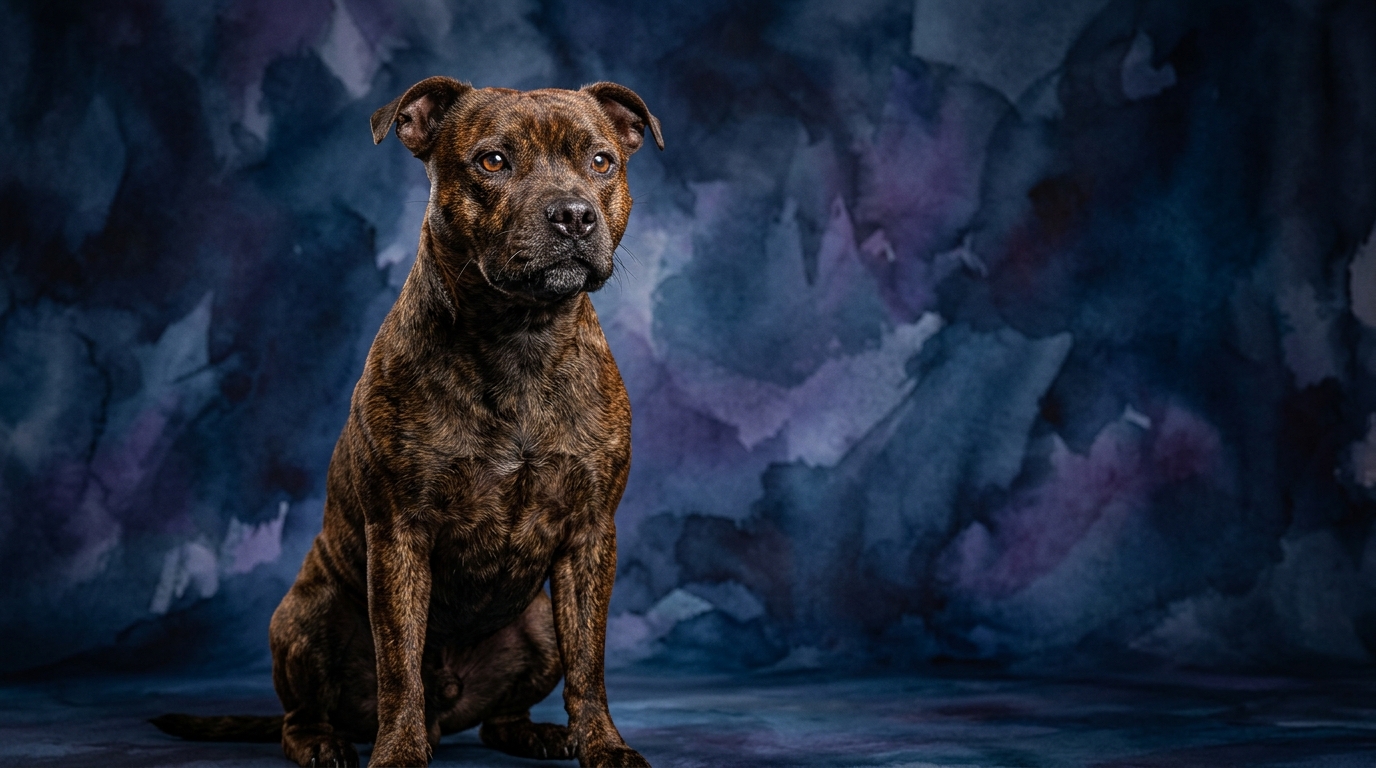
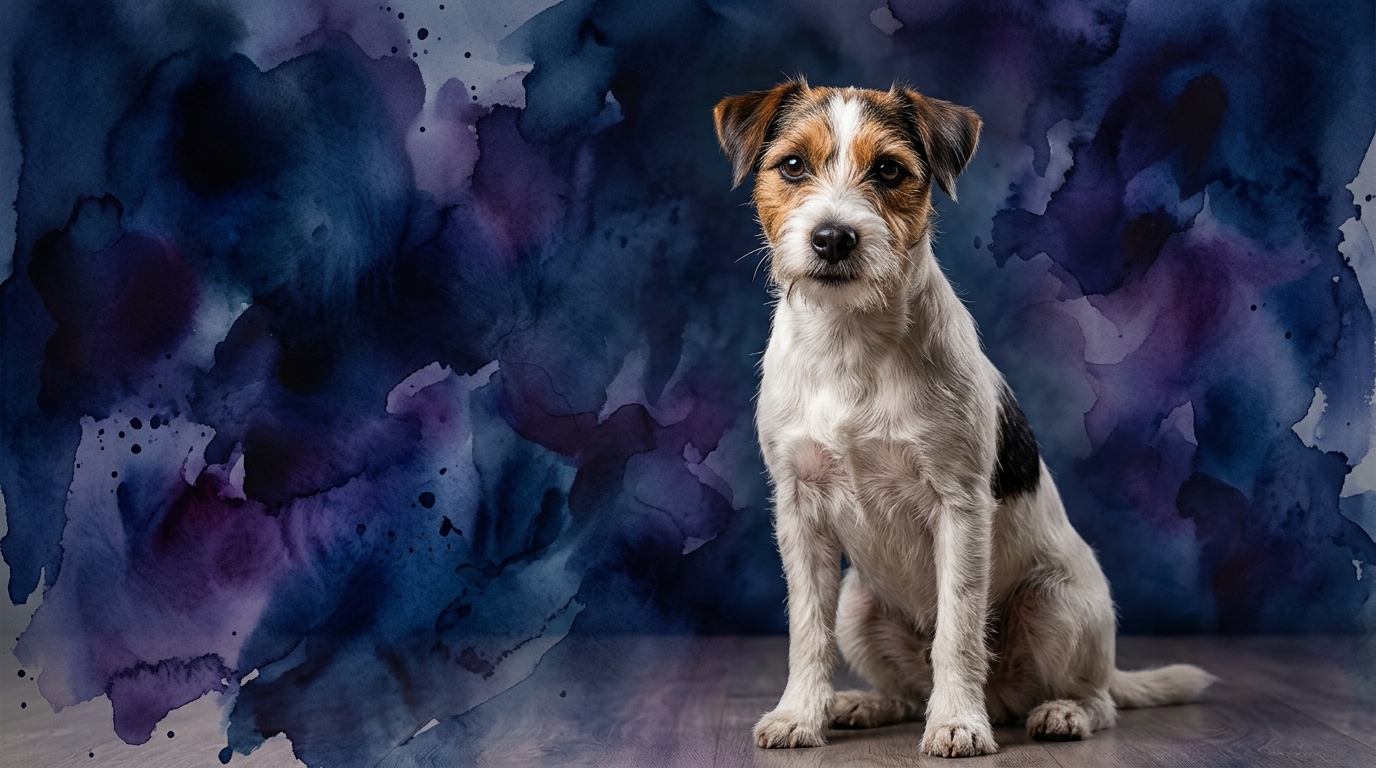
The Cosmic Pet Pet IQ Lab assesses canine intelligence across five key dimensions, each rated on a scale of 1 to 5. What makes this comparison intriguing is that both the Staffordshire Bull Terrier and the Parson Russell Terrier achieve a consistent '3/5' across all categories. However, these identical scores don't imply identical cognitive expression; rather, they highlight how similar intellectual capacities can manifest uniquely based on breed history, physical attributes, and innate temperament. Let's delve into how a '3/5' looks for each.
Both the Staffordshire Bull Terrier and the Parson Russell Terrier register a '3/5' in Problem Solving, yet their approaches diverge significantly. The Staffordshire Bull Terrier often tackles challenges with a determined, direct methodology, leveraging physical presence and learned sequences to open a gate or retrieve a toy. Their problem-solving is often about applying strength and persistence to overcome physical obstacles. Conversely, the Parson Russell Terrier, reflecting its hunter's legacy, exhibits agile, independent problem-solving, adept at navigating complex environments, finding clever routes, or outmaneuvering small objects with quick assessment and adaptability. Their solutions tend to be more cunning and less reliant on brute force.
Their shared '3/5' in Training Speed signifies both breeds grasp commands at a moderate pace, but with distinct motivational triggers. Staffordshire Bull Terriers respond well to consistent, positive reinforcement, often driven by a strong desire to please their human companions, though their inherent strong will requires patient, clear guidance. Parson Russell Terriers learn quickly when engaged, yet their independent spirit and high instinctive drive mean they can be easily distracted, requiring creative, varied training methods to maintain their sharp focus and prevent boredom.
With a '3/5' in Social Intelligence, both breeds demonstrate competence in social interactions. The Staffordshire Bull Terrier excels in forming deep, empathetic bonds with family, often reading human emotional cues with remarkable sensitivity and offering comfort or seeking interaction appropriately. Their interactions with other dogs can be more nuanced, often requiring careful introductions. The Parson Russell Terrier is also perceptive of social dynamics, communicating clearly and adapting to settings, but often maintains a more independent disposition, valuing personal space while remaining observant of their surroundings and social cues.
The '3/5' Instinctive Drive in both breeds manifests quite differently, deeply rooted in their historical purposes. For the Staffordshire Bull Terrier, this drive is predominantly channeled into vigorous play, such as tug or fetch, and a strong protective instinct towards their human family, rather than a persistent prey drive directed at small animals in modern settings. The Parson Russell Terrier's '3/5' drive, however, is a profound aspect of their being, driven by a deep-seated urge to hunt, chase, and dig, displaying intense focus on scent and movement. This drive is not merely for play but a deep-seated behavioral pattern that requires appropriate outlets.
Both terriers achieve a '3/5' in Memory, indicating effective retention, albeit for different kinds of information. The Staffordshire Bull Terrier reliably remembers routines, commands, and familiar people, especially when associated with positive emotional experiences and consistent reinforcement, building a robust understanding of their environment. The Parson Russell Terrier's memory is keenly tuned to recalling environmental details, successful hunting strategies, hidden objects, and the consequences of past actions, fueling their exploratory and task-oriented endeavors, making them excellent at remembering where they left a 'prize' or found an interesting scent.
Where the Staffordshire Bull Terrier Wins Cognitively
While both breeds exhibit a '3/5' in Social Intelligence, the Staffordshire Bull Terrier often demonstrates a particularly nuanced understanding of human emotional states. Their cognitive strength lies in their capacity for deep empathetic connection, allowing them to perceive and respond to the subtleties of their owner's mood or needs with remarkable accuracy. This isn't just about reading commands; it's about forming a profound bond where they seem to anticipate comfort or engagement, making them exceptionally attuned companions.
Furthermore, their '3/5' in Problem Solving, when combined with their natural tenacity, often translates into a superior persistence in tasks that require sustained effort and physical engagement. An Staffordshire Bull Terrier is less likely to abandon a puzzle that requires brute force or repeated attempts, leveraging their sturdy build and resolute nature to achieve a goal, rather than seeking a clever workaround. Their cognitive approach favors determination over intricate manipulation.
Where the Parson Russell Terrier Wins Cognitively
The Parson Russell Terrier, despite sharing a '3/5' in Problem Solving with the Staffordshire Bull Terrier, excels in independent and adaptive cognitive strategies, particularly in dynamic environments. Their historical role demanded quick, autonomous decision-making in complex situations, and this manifests today as an innate ability to assess novel problems and devise solutions with agility and cunning. They might find the most efficient route through an obstacle course or figure out how to retrieve an object from a tight spot by manipulating their body and environment, rather than relying on sheer force.
Moreover, their '3/5' Instinctive Drive, while requiring management, also fuels a remarkable focus on specific tasks, especially those involving scent or movement. Once a Parson Russell Terrier locks onto a 'mission,' their cognitive resources are intensely concentrated, allowing them to filter out distractions and pursue their objective with impressive single-mindedness, a trait honed by generations of focused pursuit in challenging terrains. This sustained focus is a distinct cognitive advantage in specific scenarios.
Which is Easier to Train and Why
Determining which breed is 'easier' to train, given their identical '3/5' Training Speed, largely depends on an owner's approach and understanding of breed-specific motivations. The Staffordshire Bull Terrier, with its strong desire to please its human companions and its '3/5' Social Intelligence, often responds well to positive reinforcement and consistent methods. They tend to absorb routines and commands steadily, motivated by praise and affection, though their innate strong will means an owner must be patient and firm, ensuring commands are clear and expectations are consistent. They thrive on building a cooperative relationship, making training a bonding experience where mutual respect is key.
In contrast, the Parson Russell Terrier, while quick to grasp concepts due to their '3/5' Training Speed, presents a different kind of training challenge. Their '3/5' Instinctive Drive and independent nature mean they are easily distracted by environmental stimuli, particularly scents or movement. Training a Parson Russell Terrier requires creativity, short engaging sessions, and a deep understanding of their terrier instincts to channel their intelligence effectively. They learn rapidly but need constant mental engagement and varied activities to prevent boredom and maintain focus, meaning their perceived 'ease' of training is less about passive compliance and more about the trainer's ability to keep them captivated and motivated.
Which Suits Active Owners vs. Relaxed Owners
For owners seeking a companion that balances activity with moments of calm companionship, the Staffordshire Bull Terrier often presents a more adaptable choice. Their '3/5' Instinctive Drive is largely expressed through enthusiastic play and a strong desire for human interaction, making them excellent partners for daily walks, fetch in the park, and engaging in family activities. However, their '3/5' Social Intelligence also means they are deeply content to curl up beside their owners, enjoying quiet time after their exercise needs are met. They are robust and enjoy activity, but are equally capable of being a relaxed presence in the home, valuing proximity and comfort.
The Parson Russell Terrier, on the other hand, is unequivocally suited for highly active owners who can provide substantial and consistent outlets for their formidable energy and '3/5' Instinctive Drive. This breed requires more than just physical exercise; they need significant mental stimulation to prevent boredom and destructive behaviors. Owners who enjoy activities like agility, earthdog trials, extensive hiking, or even canine parkour will find a willing and tireless partner in the Parson Russell Terrier. A 'relaxed' owner, one who prefers a more sedentary lifestyle, would likely find the Parson Russell Terrier's persistent demands for engagement overwhelming, as their cognitive makeup compels them to be constantly exploring, learning, and 'working'.
The Verdict
Choose the Staffordshire Bull Terrier if you seek a robust, empathetic companion who thrives on close human connection and enjoys a balance of active play and relaxed family time, appreciating their steadfast loyalty and direct problem-solving.
Opt for the Parson Russell Terrier if you are a highly active individual or family prepared to channel a tenacious, independent intellect into structured activities that satisfy their profound instinctive drives and cunning problem-solving abilities.
🧠 Find Your Pet's IQ Score
Our Pet IQ Lab assessment covers 25+ tests across 5 cognitive dimensions — personalized to your breed.
Take the Full IQ Test →Frequently Asked Questions
Are Staffordshire Bull Terriers good with children?
Staffordshire Bull Terriers, with their '3/5' social intelligence, often form deep bonds with family members, including children. Proper socialization from a young age and supervision with very young children are always recommended to ensure positive interactions.
Do Parson Russell Terriers bark a lot?
Parson Russell Terriers, due to their '3/5' instinctive drive and alert nature, can be prone to barking, especially if bored or detecting something unusual. Consistent training and sufficient mental and physical stimulation can help manage excessive vocalization.
How much exercise does each breed need?
The Staffordshire Bull Terrier requires moderate daily exercise, typically 30-60 minutes of active play or walks, combined with mental engagement. The Parson Russell Terrier, however, demands significantly more, often needing an hour or more of vigorous activity and consistent mental challenges to satisfy their high drive and prevent boredom.