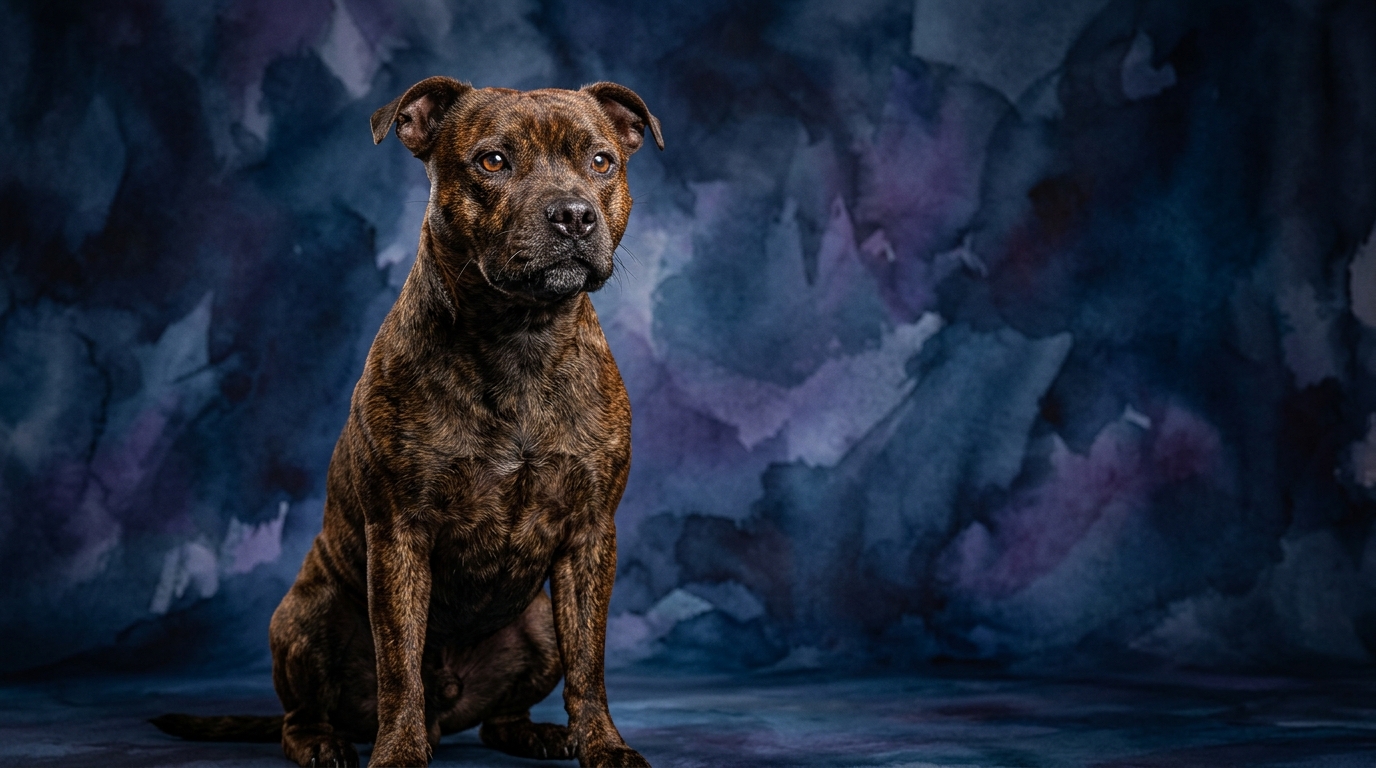
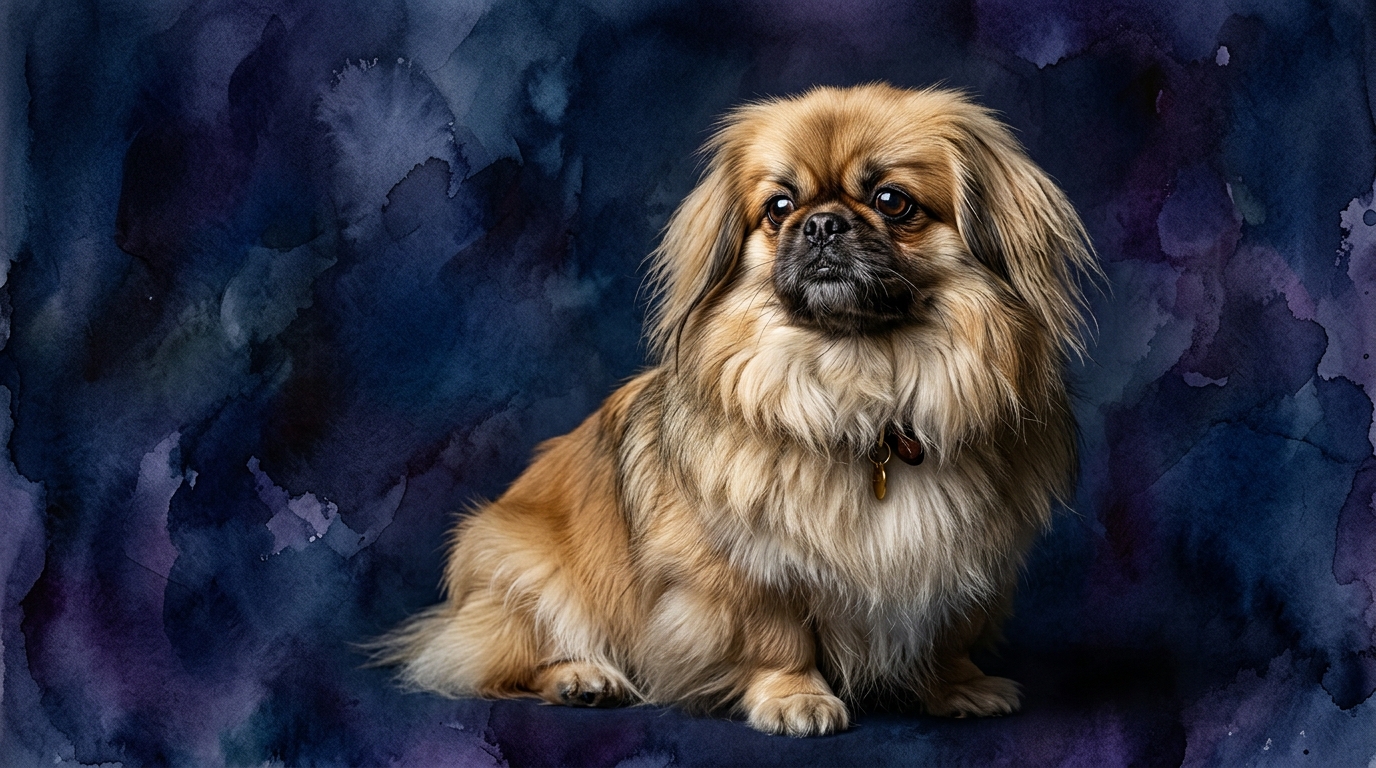
Side-by-Side Cognitive Profiles: Staffordshire Bull Terrier vs. Pekingese
The Cosmic Pet Pet IQ Lab assesses five key cognitive dimensions, and intriguingly, both the Staffordshire Bull Terrier and the Pekingese register a consistent 3 out of 5 across all categories. This shared numerical rating, however, belies significant differences in how these abilities express themselves, rooted deeply in their breed histories and inherent temperaments.
For the **Staffordshire Bull Terrier**, a robust terrier breed, their **Problem Solving (3/5)** often manifests as a tenacious pursuit of an objective, whether it's figuring out how to retrieve a hidden toy or navigating a complex environment to reach a desired person. They approach challenges with physical engagement and a determined mindset, employing trial-and-error with a hearty enthusiasm. Their **Training Speed (3/5)** reflects an eager-to-please nature combined with a potential for strong-willed focus; they grasp commands readily, especially when motivation is high, but can be distracted by external stimuli or their own robust drive. **Social Intelligence (3/5)** in a Staffy is typically characterized by deep emotional attunement to their immediate human family, often displaying profound empathy and a desire for close physical connection, though their boisterous affection can sometimes be misread. Their **Instinctive Drive (3/5)** is pronounced, encompassing a terrier's propensity for chasing, digging, and engaging with objects, a drive that needs appropriate outlets. Finally, their **Memory (3/5)** is reliable for routines, learned commands, and associations with people and places, retaining experiences both positive and negative with clarity.
The **Pekingese**, a distinguished toy breed with a regal past, approaches these same cognitive dimensions from a vastly different perspective. Their **Problem Solving (3/5)** is often more subtle and strategic, perhaps figuring out how to gain a favored spot on the sofa or how to solicit attention from their chosen human through nuanced behaviors. They are adept at manipulating their environment for comfort and personal advantage, relying less on physical exertion and more on clever observation. **Training Speed (3/5)** for a Pekingese can be variable; while capable of learning commands, their independent and sometimes aloof nature means they often comply only if they perceive a clear benefit or if it aligns with their personal agenda. They are not typically driven by a strong desire to please in the same way some breeds are. Their **Social Intelligence (3/5)** is highly refined within their intimate circle, allowing them to read subtle human cues and moods with remarkable accuracy, often forming an almost symbiotic bond with their primary caregiver. They may, however, be quite reserved or indifferent to strangers, signaling a more selective social focus. The **Instinctive Drive (3/5)** of a Pekingese leans towards guarding their personal space and comfort, a protective instinct towards their immediate territory and chosen people, rather than a strong prey drive. Their **Memory (3/5)** is excellent for established routines, preferred people, and locations of comfort or resources, demonstrating a clear recall for what benefits them and who provides it.
Where the Staffordshire Bull Terrier Excels Cognitively
Despite identical scores, the Staffordshire Bull Terrier truly shines in cognitive tasks requiring physical engagement and unwavering determination. Their problem-solving, rated 3/5, is particularly effective when it involves overcoming physical obstacles or working through a challenge with sheer will. A Staffy might excel at figuring out how to open a child-proof gate through repeated attempts and clever manipulation, or persist in digging to locate a scent. Their instinctive drive (3/5) gives them an edge in activities that tap into their terrier heritage, such as scent work or agility courses where their robust build and focused energy become assets. This physical and mental tenacity means they often exhibit a robust, practical intelligence geared towards action and resolution in tangible situations. They process information quickly when it relates to their environment and their physical interactions within it, making them adept at learning sequences of actions or navigating complex play scenarios.
Where the Pekingese Demonstrates Unique Cognitive Strengths
The Pekingese, also scoring 3/5 across the board, demonstrates a different kind of cognitive superiority, particularly in nuanced social navigation and strategic comfort-seeking. Their social intelligence (3/5) is exquisitely tuned to the emotional landscape of their immediate human companions, allowing them to anticipate needs and moods with an almost uncanny precision. A Pekingese might "solve" the problem of a human's sadness by subtly nudging for comfort or strategically placing themselves for a comforting cuddle, demonstrating a sophisticated understanding of emotional dynamics. Their memory (3/5) is often exceptional for routines and the specific behaviors that elicit desired responses from their owners, remembering exactly which glance or posture will result in a treat or a lap invitation. This breed's intelligence is often characterized by a refined, almost regal understanding of their place within the household hierarchy and how to subtly influence it to their advantage, making them masters of quiet persuasion and observation.
Trainability: A Tale of Motivation and Temperament
When it comes to trainability, both breeds share a 3/5 rating for training speed, yet their paths to learning diverge due to their inherent temperaments and motivations. The Staffordshire Bull Terrier, often characterized by an eager-to-please attitude and a strong desire for human companionship, can be highly responsive to positive reinforcement. They learn commands quickly when engaged and motivated by praise, play, or food rewards, often enjoying the interaction and challenge of training sessions. However, their terrier drive and boisterous nature mean that consistency and firm, fair guidance are essential to channel their enthusiasm and prevent stubbornness or distraction. Socialization from a young age is crucial to refine their social intelligence and ensure they apply their good nature broadly.
The Pekingese, while capable of learning, often presents a different training dynamic. Their independence and self-assured demeanor mean they are less inherently driven to please and more likely to comply if they perceive a personal benefit or if the request aligns with their comfort. Training a Pekingese requires immense patience, creativity in finding high-value motivators, and an understanding that they may not perform on cue with the same enthusiastic consistency as a Staffy. They might learn a command but choose to execute it only when it suits them. House training can be a particular challenge for some Pekingese due to their small size and desire for comfort, requiring diligent routine and consistent reinforcement. Their social intelligence, while keen within their family, may not extend to a broad acceptance of all new people or situations, meaning early, positive exposure is vital for a well-adjusted companion.
Matching Breeds to Lifestyles: Active vs. Relaxed Owners
The choice between a Staffordshire Bull Terrier and a Pekingese often hinges on an owner's lifestyle and expectations for canine companionship. The Staffordshire Bull Terrier, with its robust instinctive drive (3/5) and physically engaged problem-solving (3/5), thrives with active owners who enjoy regular exercise, structured play, and mental challenges. They are suitable for individuals or families who can dedicate time to daily walks, engaging games, and perhaps even dog sports like agility or obedience. Their social intelligence (3/5) makes them deeply devoted family members who crave interaction and inclusion in daily activities, making them excellent companions for those seeking an involved, affectionate, and energetic dog.
Conversely, the Pekingese, while capable of bursts of activity, is generally better suited for more relaxed owners. Their instinctive drive (3/5) leans towards comfort and guarding their immediate space, not extensive physical exertion. They are content with shorter, leisurely strolls and indoor play, preferring the warmth and security of their home environment. Their refined social intelligence (3/5) makes them ideal for owners who appreciate a dog that is deeply devoted to a select few, offering quiet companionship and subtle affection rather than boisterous enthusiasm. They are particularly well-suited for individuals who can provide a calm, predictable home and cherish a companion that values comfort and close, intimate bonds.
The Verdict: When to Choose Each Breed
The Verdict
Choose the Staffordshire Bull Terrier if you seek an active, tenacious, and incredibly affectionate companion eager to engage in physical and mental challenges, and you can provide consistent training and socialization.
Opt for the Pekingese if you desire a dignified, independent, and subtly charming companion who thrives in a calm home, appreciates quiet devotion, and you are prepared for a dog with a strong will and refined social graces.
🧠 Find Your Pet's IQ Score
Our Pet IQ Lab assessment covers 25+ tests across 5 cognitive dimensions — personalized to your breed.
Take the Full IQ Test →Frequently Asked Questions
Do Staffordshire Bull Terriers learn tricks easily?
Yes, Staffordshire Bull Terriers, with their 3/5 training speed and eager-to-please nature, generally learn tricks quite readily, especially when positive reinforcement and engaging play are incorporated into sessions. Their robust memory (3/5) helps them retain what they've learned.
Is the Pekingese difficult to house train?
House training a Pekingese can sometimes be more challenging due to their independent nature (3/5 training speed) and preference for comfort. Consistent routines, frequent potty breaks, and high-value rewards are crucial for success, often requiring more patience than with other breeds.
Which breed is better with children?
Both breeds can be good with children, but their interactions differ. Staffies (3/5 social intelligence) are often patient and playful, forming strong bonds, but their boisterousness requires supervision. Pekingese (3/5 social intelligence) can be affectionate but prefer gentle interactions and a calm environment, potentially being less tolerant of rough play.