
Side-by-Side IQ Profile: Unpacking the 3/5 Score
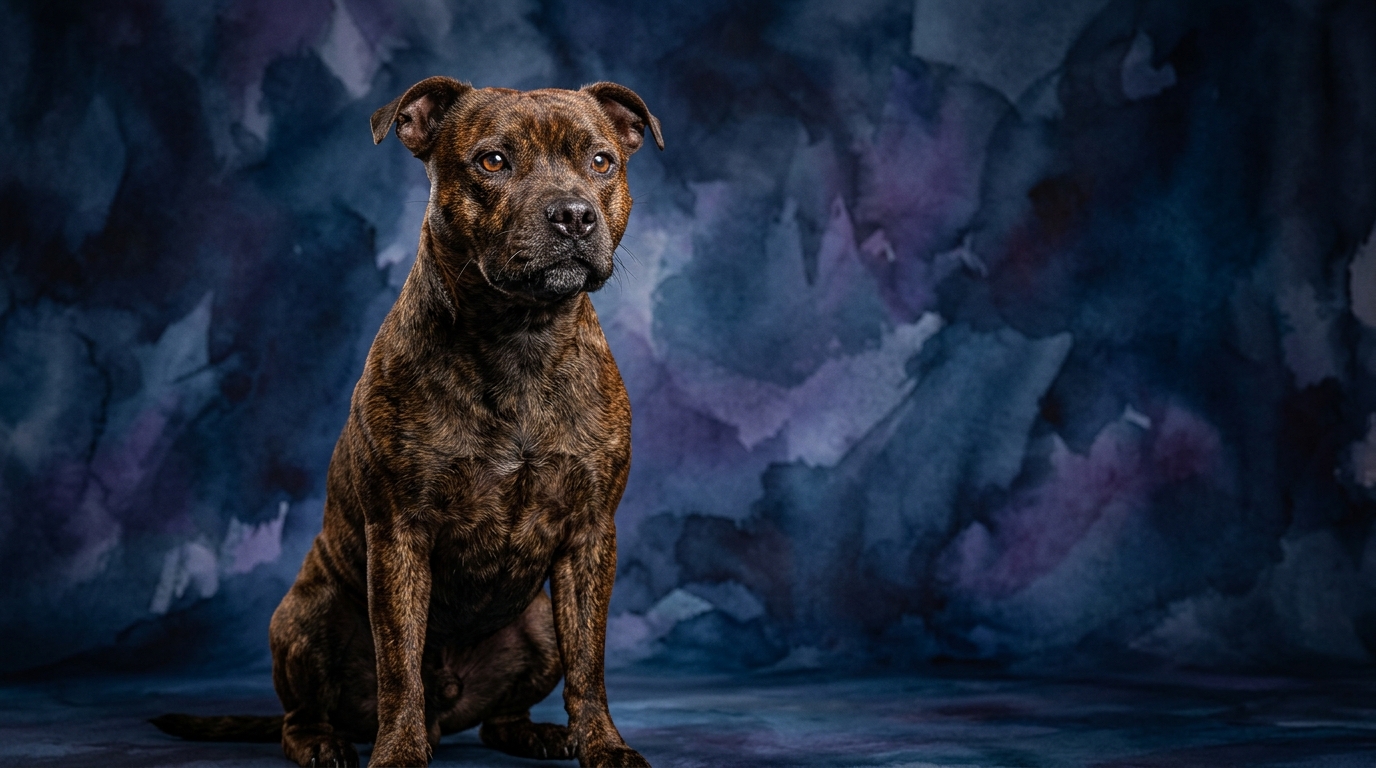
The Staffordshire Bull Terrier, a sturdy and affectionate companion, exhibits its 3/5 cognitive ratings with a distinct emphasis on social engagement and determined focus. For Problem Solving (3/5), Staffies approach challenges with determined persistence, often leveraging physical strength or social charm. They excel at direct-action tasks, like retrieving a toy, rather than complex, multi-step puzzles, driven by a desire for interaction or reward. In Training Speed (3/5), Staffies are capable learners, absorbing commands at a moderate pace, especially with engaging, reward-based methods. Their desire to please aids compliance, but terrier tenacity means consistent, patient repetition is needed to solidify behaviors. Their Social Intelligence (3/5) is highly attuned to human emotions and family dynamics, displaying significant capacity for bonding and understanding social cues within their immediate circle. They often anticipate owner moods, making them deeply connected, though their social acuity with unfamiliar dogs can vary. The Staffy's Instinctive Drive (3/5) centers on companionship, play, and loyal protection, with historical “gameness” translating to intense focus during play. They possess a manageable moderate prey drive, emerging with fast-moving objects. Finally, for Memory (3/5), Staffies have a good memory for routines, learned commands, and people, quickly recalling established patterns. They remember both positive and negative experiences, making consistent positive reinforcement crucial.
In contrast, the agile Rat Terrier, historically a farm dog, demonstrates its identical 3/5 cognitive ratings through independent cunning and environmental mastery. Their Problem Solving (3/5) tackles problems with agile cunning and keen observation, often using trial-and-error. Their vermin control history fostered quick thinking for navigating tight spaces or outsmarting prey, excelling at dynamic, environmental puzzles. Regarding Training Speed (3/5), quick-witted, Rat Terriers pick up commands rapidly when training feels like a game. Their intelligence allows fast learning, but independence and high prey drive mean easy distraction, requiring engaging, varied sessions to maintain focus. Their Social Intelligence (3/5) is observant of human family moods, but the Rat Terrier is more independent, expressing affection on their own terms. They are adept at reading environments and other animals, though often reserved with strangers, with social intelligence geared towards assessing situations. The Rat Terrier's Instinctive Drive (3/5) is characterized by a robust prey drive, an insatiable urge to hunt, dig, and explore for “game.” This core drive manifests as intense focus on small animals, a desire to chase, and vocal expressions, requiring outlets for these natural behaviors. Their Memory (3/5) shows excellent recall for practical tasks like past “kills,” hidden treats, or complex routes. They learn quickly from experiences, retaining information about effective strategies for their environment.
Where the Staffordshire Bull Terrier Wins Cognitively
Despite their matching 3/5 IQ scores, the Staffy often demonstrates a nuanced cognitive edge in areas demanding deep emotional connection and social navigation within a family unit. Their superior social intelligence, while rated the same numerically, manifests as a profound ability to read and respond to human emotional states. This means a Staffy might intuitively understand when a family member needs comfort, offering a gentle nudge or leaning in, a form of cognitive empathy that goes beyond simple obedience. This social attunement also contributes to their problem-solving when the solution involves influencing human behavior – a charming gaze or a persistent paw might be their preferred method to achieve a desired outcome, rather than brute force. Their memory, too, is often more geared towards the emotional context of interactions, remembering who was kind or unkind, which underpins their fierce loyalty and sometimes their selective obedience.
Where the Rat Terrier Wins Cognitively
Conversely, the Rat Terrier's cognitive strengths shine brightest in scenarios demanding independent thought, environmental awareness, and rapid adaptive problem-solving. Their problem-solving, though also rated 3/5, is distinctly geared towards practical, dynamic challenges, such as figuring out how to access a tight space or outmaneuver a small, fast-moving object. This isn't just about physical agility; it’s a cognitive agility, quickly assessing variables and adjusting tactics. Their instinctive drive to hunt and explore fuels a memory specialized in spatial awareness and practical recall, allowing them to remember complex routes or the precise location of a hidden scent with exceptional accuracy. This makes them particularly adept at engaging with puzzle toys that mimic hunting scenarios or navigating new environments, showcasing a different flavor of intelligence focused on self-reliance and environmental mastery.
Which Is Easier to Train and Why
Determining which breed is “easier” to train is less about raw training speed and more about aligning with their inherent motivations. Both breeds are rated 3/5 for training speed, but their behavioral drivers differ significantly. The Staffordshire Bull Terrier, with its strong social intelligence and desire to please its chosen people, often responds well to positive reinforcement rooted in praise and affection. Their training might be smoother when a strong bond is established, and they see training as a shared activity. However, their terrier tenacity can sometimes translate into stubbornness if they don't see the immediate value or if the handler isn't consistent. The Rat Terrier, on the other hand, learns commands quickly due to its sharp wit and problem-solving acumen. Yet, their independent nature and high prey drive mean they can be easily distracted by environmental stimuli. Their training requires more creativity, variety, and engagement to hold their attention, often benefiting from games that tap into their hunting instincts. While a Staffy might be easier to motivate with cuddles and approval, a Rat Terrier might require more mental stimulation and a sense of purpose in the training exercise.
Which Suits Active Owners vs. Relaxed Owners
For owners seeking a highly active companion, the Rat Terrier often presents a more suitable match due to their robust instinctive drive and preference for independent exploration. Their need for mental and physical exertion is significant; they thrive on activities like agility, earthdog trials, or extensive walks that allow them to sniff and “hunt” for mental stimulation. A relaxed owner might find a Rat Terrier's constant energy and high prey drive challenging to manage without sufficient outlets. The Staffordshire Bull Terrier, while certainly active and playful, also possesses a strong social intelligence that makes them content with a balance of activity and close companionship. They enjoy vigorous play sessions and walks, but are often equally happy to curl up on the sofa with their family, making them more adaptable to owners who appreciate both adventure and downtime. Their activity needs are more about quality interaction than relentless independent exploration.
The Verdict
Choose the Staffordshire Bull Terrier if you prioritize a deeply bonded companion whose intelligence shines in social interactions and unwavering loyalty, suitable for a family life that balances activity with affectionate downtime.
Opt for the Rat Terrier if you're an active individual or family seeking a quick-witted, independent problem-solver who thrives on dynamic challenges and has an insatiable drive for exploration and engaging mental work.
🧠 Find Your Pet's IQ Score
Our Pet IQ Lab assessment covers 25+ tests across 5 cognitive dimensions — personalized to your breed.
Take the Full IQ Test →Frequently Asked Questions
Do Staffordshire Bull Terriers and Rat Terriers have similar trainability?
While both breeds share a 3/5 training speed rating, their motivations differ. Staffies respond well to affection and consistency due to their social intelligence, whereas Rat Terriers learn quickly but require engaging, varied training to combat their independent nature and prey drive.
Which breed is better for apartment living?
Both can adapt to apartment living with proper exercise. A Staffy's need for companionship means they thrive on indoor family time after their daily walks. A Rat Terrier, despite its size, requires more rigorous mental and physical stimulation to prevent boredom and destructive behaviors in a confined space.
How do their problem-solving skills differ with the same IQ score?
A Staffy's 3/5 problem-solving often involves persistence and social manipulation to achieve goals like getting attention. A Rat Terrier's 3/5 is geared towards agile, quick-thinking solutions for environmental or 'hunting' challenges, emphasizing adaptability and independent strategy.