
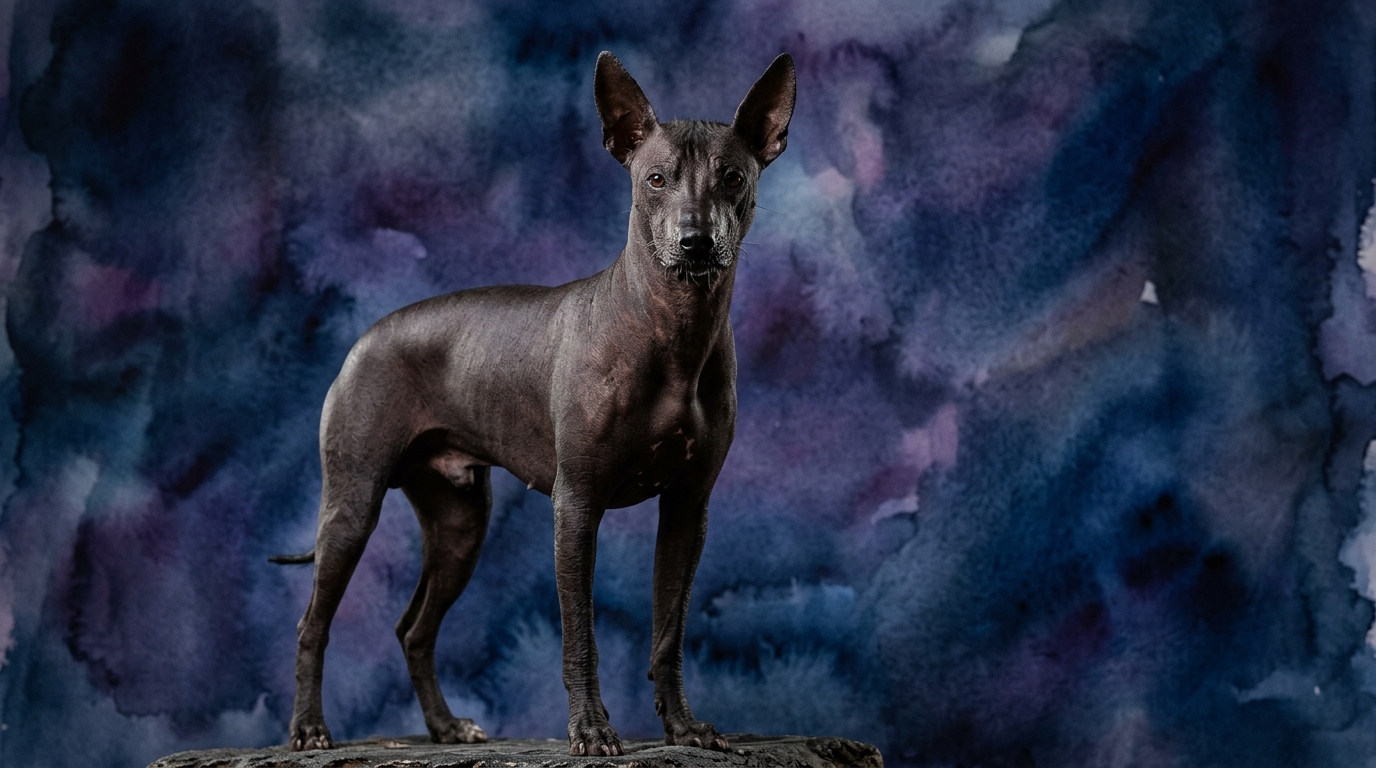
Side-by-Side IQ Profile: Staffordshire Bull Terrier vs. Xoloitzcuintli
In problem solving, both breeds score 3/5. For the Staffy, this often manifests as a tenacious drive to achieve a goal, whether it's figuring out how to retrieve a favorite toy from under furniture or navigating a complex play environment. Their problem-solving is typically hands-on and persistent, driven by a robust curiosity and a desire for engagement, learning through active experimentation and physical interaction with their surroundings.
For the Xolo, a 3/5 in problem-solving means a more observational and deliberate approach. They might quietly assess a situation before acting, employing a calm, independent thought process to overcome obstacles, such as finding the most comfortable spot in a room or figuring out how to access a desired vantage point. Their solutions can be elegant and efficient, reflecting a thoughtful nature rather than overt physical persistence.
Both breeds also share a 3/5 rating in training speed. Staffies generally pick up new commands and routines with moderate speed, responding well to consistent, positive reinforcement that taps into their desire for interaction and praise. Their strong will, however, means that while they grasp concepts quickly, they might require engaging methods to maintain focus and compliance, especially if a task feels repetitive or unrewarding.
Xolos also learn at a moderate pace, but their sensitivity dictates the training approach. They respond best to gentle, patient, and positive methods, forming strong associations with their trainers. While they absorb information efficiently, their independent streak and potential for aloofness with unfamiliar people mean that training effectiveness is deeply tied to the bond with their primary handler and the perceived value of the task.
Social intelligence for both stands at 3/5. A Staffy's social intelligence means they are generally adept at reading human emotions and intentions within their familiar circle, often displaying a keen understanding of family dynamics. They tend to be outwardly affectionate and eager to participate in social interactions, though their enthusiasm can sometimes be boisterous, thriving on companionship and adapting to varied social settings with proper exposure.
The Xolo's 3/5 in social intelligence manifests as a profound connection to their immediate family, often demonstrating an almost psychic ability to sense their owner's moods and needs. However, this deep bond comes with a tendency to be reserved or even wary of strangers, requiring extensive early socialization to develop appropriate social etiquette outside their close circle. Their social understanding is intense but often exclusive.
Instinctive drive is rated 3/5 for both. For the Staffordshire Bull Terrier, this score reflects a significant prey drive inherited from their terrier lineage, often seen in their enthusiasm for chasing toys or small animals. They also possess a strong desire for companionship and engagement, driving them to seek out play and interaction, with protective instincts toward their family being a notable aspect of their inherent motivations.
The Xolo's instinctive drive at 3/5 includes a strong guardian instinct, making them watchful and protective of their home and family, often with a keen sense of territory. They also exhibit a sighthound-like tendency to chase, combined with a natural desire for comfort and warmth, driving them to seek out cozy spots. Their breed history as companions and guardians shapes these fundamental motivations.
Finally, memory is 3/5 for both. Staffies demonstrate a good memory for commands, routines, and past experiences, quickly forming positive and negative associations with people, places, and events. This cognitive trait allows them to build on previous training and remember learned behaviors, making consistency in their environment and training crucial for reinforcing desired habits.
Xolos also possess a solid memory, recalling training cues, established routines, and the nature of past interactions with remarkable clarity. Their ability to remember specific individuals and their behaviors, both positive and negative, contributes to their cautious nature with strangers and their deep loyalty to family members, influencing their responses in various social contexts.
Where the Staffordshire Bull Terrier Wins Cognitively
The Staffordshire Bull Terrier often displays an edge in overt enthusiasm for collaborative tasks and a robust adaptability to new, stimulating environments. Their tenacious problem-solving, driven by a desire for active engagement, makes them particularly adept at tasks requiring physical persistence and a willingness to "get stuck in," even when faced with initial setbacks. This energetic approach means they can be more readily motivated by interactive play and physical challenges than their Xolo counterparts.
Furthermore, the Staffy’s generally outgoing social nature contributes to a cognitive advantage in navigating a wider range of novel social situations with less reservation. While both breeds show strong social intelligence, the Staffy's tendency to embrace new interactions more readily, once properly socialized, allows them to process and integrate a broader spectrum of social cues from diverse individuals and environments, fostering a more broadly adaptable social cognition.
Where the Xoloitzcuintli Wins Cognitively
The Xoloitzcuintli often excels in subtle social attunement within their family unit, demonstrating a remarkable capacity to read and respond to the nuanced emotional states of their human companions. Their cognitive strength lies in a deep, almost intuitive understanding of their immediate environment and the emotional landscape of their core group, allowing for an intensely bonded and responsive companionship that goes beyond mere obedience. This sensitivity translates into a keen perception of unspoken cues.
Additionally, the Xolo's independent and observant nature gives them an advantage in problem-solving that requires quiet contemplation and self-sufficiency. Rather than relying on overt trial-and-error, they often approach challenges with a deliberate, strategic mindset, finding efficient solutions to personal comfort or navigating familiar spaces without constant human direction. Their watchful disposition also means they excel at discerning novelties or potential threats in their surroundings.
Which is Easier to Train and Why
When evaluating ease of training, both breeds score 3/5 in training speed, meaning neither is inherently "easier" in terms of how quickly they grasp a new command. The difference lies profoundly in their behavioral responses and the methodologies required. Staffordshire Bull Terriers, with their robust and often boisterous nature, require consistent, firm, and positive reinforcement to channel their strong will and occasional exuberance. They respond well to clear boundaries and engaging, play-based rewards, but their terrier tenacity means they can be easily distracted by external stimuli or their own strong drives if not properly focused.
Xoloitzcuintli, conversely, are highly sensitive and respond best to gentle, patient, and entirely positive reinforcement techniques. Harsh corrections can easily shut them down or foster distrust, hindering progress. While they learn efficiently, their independent streak and reserved nature mean that training must be framed as a collaborative, bond-building exercise rather than a series of demands. They might not be as overtly eager to perform for strangers, making public demonstrations of their learned behaviors more dependent on their comfort level with the environment and the depth of their bond with the handler.
Which Suits Active Owners vs. Relaxed Owners
The Staffordshire Bull Terrier thrives with active owners who can match their energetic and playful demeanor. Their 3/5 instinctive drive, coupled with their robust physical build, means they require regular, engaging exercise beyond simple walks, such as vigorous play sessions, dog sports, or extended hikes, to keep them mentally stimulated and physically content. Owners who enjoy frequent outdoor activities and can incorporate their dog into an active lifestyle will find the Staffy a joyful and enthusiastic companion, helping to channel their tenacity and prevent boredom-related behaviors.
The Xoloitzcuintli, while capable of activity, often suits owners who appreciate a more balanced energy level, leaning towards relaxed companionship within the home. Their 3/5 instinctive drive includes a strong desire for comfort and warmth, making them excellent lounge partners once their exercise needs are met. While they require daily walks and mental stimulation, they are not typically high-intensity athletes in the same vein as many sporting breeds. Owners who enjoy quiet evenings at home, yet are committed to moderate daily exercise and consistent mental engagement, will find the Xolo a deeply devoted and calm presence.
The Verdict
Choose the Staffordshire Bull Terrier if you seek a robust, tenacious, and overtly affectionate companion eager to engage in active play and collaborative training, thriving with an owner who can consistently channel their energetic drive. Their adaptable social intelligence makes them a joyful participant in a varied family life, provided their need for interaction and physical activity is met.
Opt for the Xoloitzcuintli if you desire a sensitive, deeply bonded, and watchful companion who excels in subtle emotional attunement within a calm home environment, valuing an owner who understands their need for gentle handling and early, careful socialization. Their independent cognitive approach and reserved nature make them ideal for those who appreciate a thoughtful and devoted presence.
🧠 Find Your Pet's IQ Score
Our Pet IQ Lab assessment covers 25+ tests across 5 cognitive dimensions — personalized to your breed.
Take the Full IQ Test →Frequently Asked Questions
Do Staffies and Xolos have different learning styles despite similar training speed scores?
Yes, despite both scoring 3/5 in training speed, their learning styles diverge. Staffies often learn best through engaging, consistent, and play-based methods that cater to their robust and tenacious nature, while Xolos, being more sensitive, thrive with gentle, patient, and positive reinforcement that builds trust and respects their independent spirit.
How does their social intelligence score of 3/5 manifest uniquely in each breed?
For Staffies, 3/5 social intelligence often means a broad adaptability and overt affection within their familiar circle, eager to interact with many. Xolos, however, display their 3/5 score as a profound, almost intuitive bond with their immediate family, coupled with a natural reservation or wariness towards strangers, making their social circle more exclusive.
Can a Xolo be as active as a Staffy, or vice versa?
While both breeds need regular exercise, their typical activity profiles differ. Staffies are generally more consistently energetic and thrive on vigorous, active play. Xolos, while capable of bursts of activity, are often content with more moderate exercise and considerable downtime, preferring to lounge with their family once their physical needs are met.