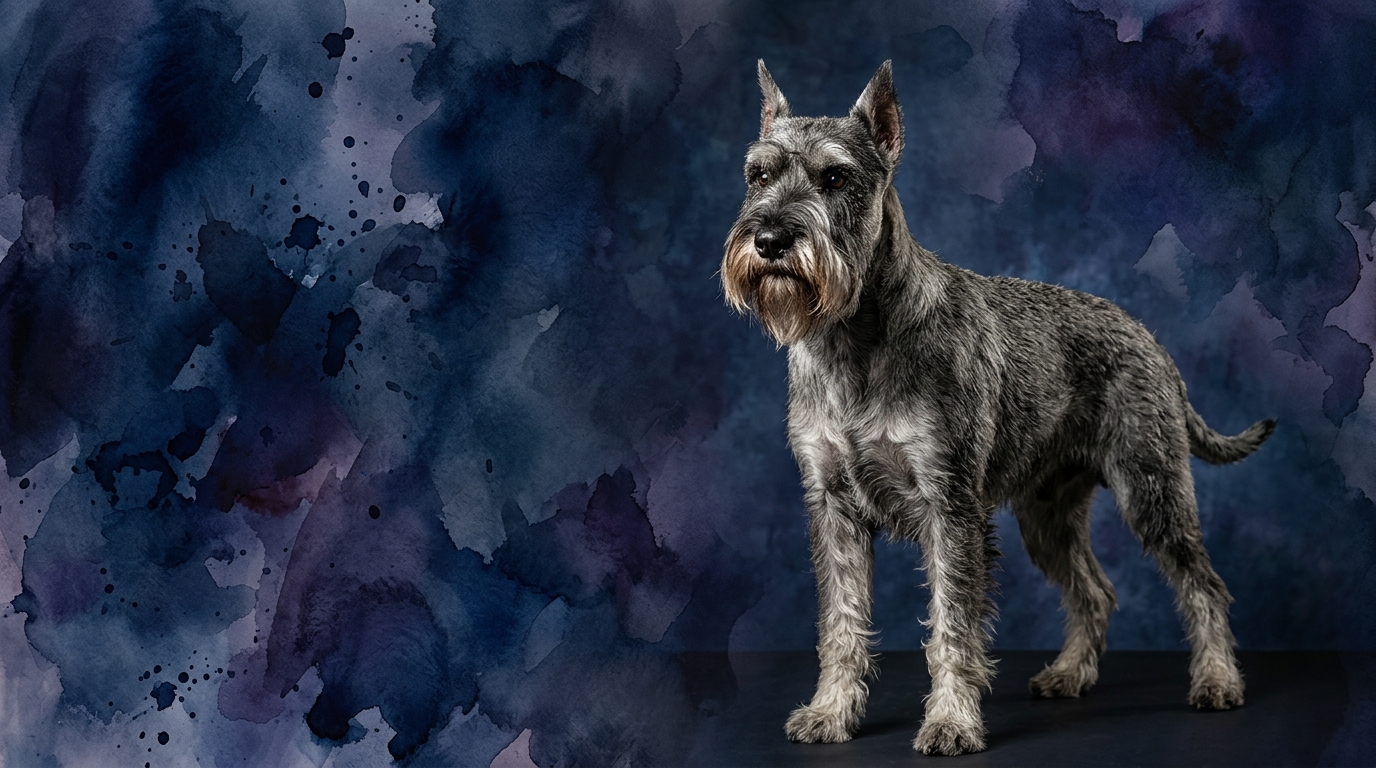
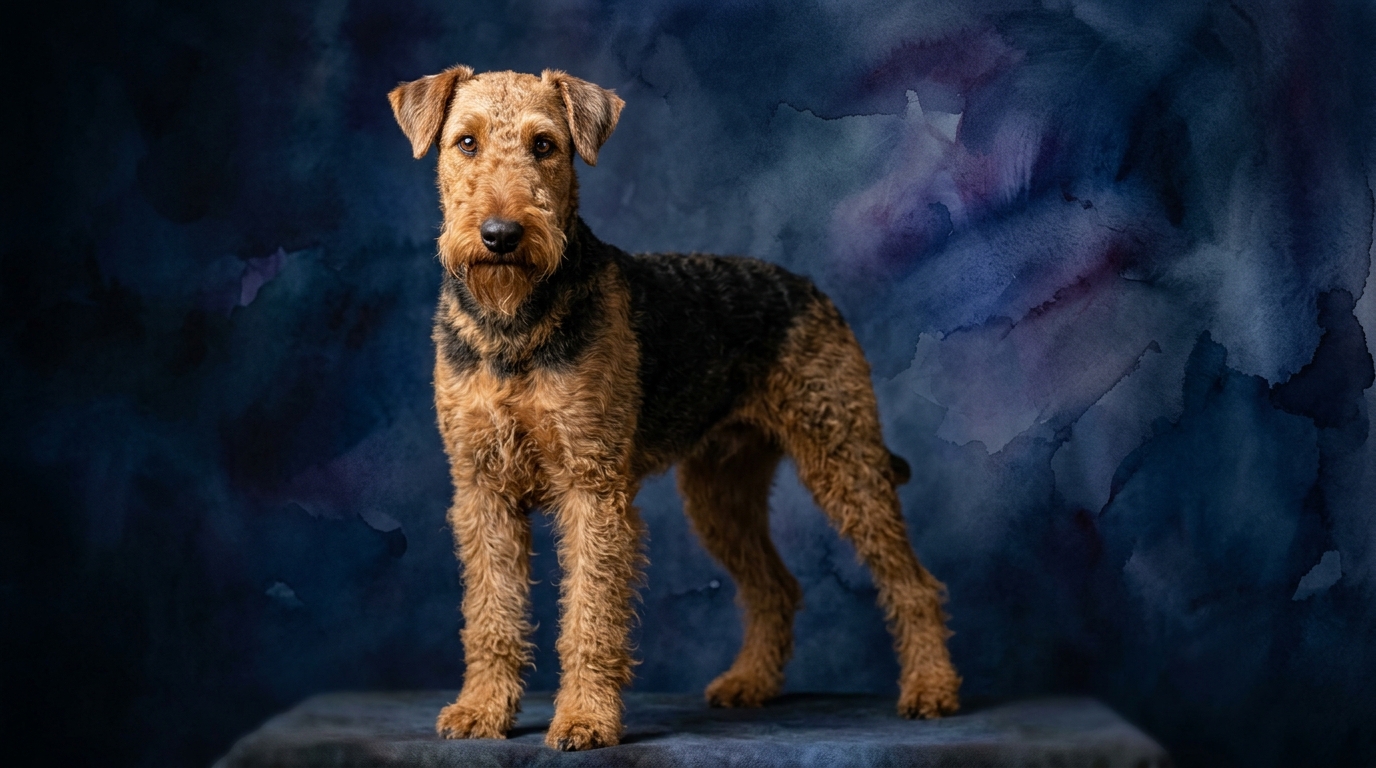
Side-by-Side Cognitive Profiles: Decoding Identical Scores
At first glance, the Pet IQ Lab profiles for both the Standard Schnauzer and the Airedale Terrier present a striking similarity across all five cognitive dimensions. Both breeds score 4/5 in Problem Solving, 4/5 in Training Speed, 3/5 in Social Intelligence, 3/5 in Instinctive Drive, and 4/5 in Memory. This identical numerical representation invites us to look beyond the numbers and consider how these capacities manifest distinctly in breeds shaped by different historical roles and temperaments.
For Problem Solving (4/5), the Standard Schnauzer, a versatile farm dog, often excels at understanding complex, multi-step commands and navigating structured tasks. Their problem-solving tends to be collaborative, focused on achieving a clear objective set by their human partners. The Airedale Terrier, on the other hand, a tenacious hunter, applies its problem-solving acumen to independent challenges, such as figuring out how to retrieve a hidden toy or circumventing an obstacle to reach a perceived 'prey.' Their approach is often more self-directed and resourceful.
Regarding Training Speed (4/5), the Standard Schnauzer's history as a working companion means they often display a strong desire to please and a quick grasp of new commands when presented with consistent, positive reinforcement. Their responsiveness is rooted in a natural inclination towards partnership. The Airedale Terrier also learns new behaviors with remarkable speed, but their strong will and independent nature mean that training often requires more creative motivation and unwavering consistency to maintain engagement and prevent them from applying their quick wit to less desirable activities.
In Social Intelligence (3/5), both breeds demonstrate a solid understanding of basic social cues, though not to the subtle degree seen in some herding breeds. The Standard Schnauzer is typically reserved with strangers but deeply devoted and attentive to its family, often acting as a vigilant protector. The Airedale Terrier, while affectionate with its family, can be more boisterous and may exhibit a typical terrier's confident, sometimes challenging, demeanor when interacting with unfamiliar dogs or people, requiring careful socialization to channel their exuberance appropriately.
Instinctive Drive (3/5) in the Standard Schnauzer often encompasses a moderate prey drive, alongside strong guarding instincts and sometimes a latent herding inclination. These drives are frequently channeled into structured work or protective duties, making them purposeful companions. The Airedale Terrier’s instinctive drive is heavily influenced by its terrier heritage, manifesting as a strong, persistent prey drive and an inherent tenacity for pursuit and investigation, often more self-directed and requiring consistent management.
Finally, for Memory (4/5), both breeds demonstrate excellent retention. The Standard Schnauzer reliably remembers commands, routines, and the identity of people and places, which aids significantly in their consistent performance. The Airedale Terrier likewise retains experiences and learning remarkably well, remembering complex sequences of actions or specific 'tricks' to achieve desired outcomes, and can sometimes be perceived as having a long memory for past interactions or perceived injustices.
Where the Standard Schnauzer Wins Cognitively
The Standard Schnauzer excels in cognitive domains that benefit from structure, consistency, and a clear partnership with their human. Their background as a multi-purpose farm dog means they possess a nuanced adaptability to varied tasks, from guarding livestock to pest control, demonstrating a capacity for structured problem-solving that is highly trainable. This breed shines in environments where they can apply their intelligence to tasks defined by their owner, showing a remarkable ability to learn and adhere to complex routines.
Their vigilance and discernment in guarding are not merely instinctive; they involve a cognitive process of assessing threats and distinguishing between welcomed visitors and potential intruders. This requires a keen observational memory and an ability to interpret subtle environmental cues. Furthermore, the Standard Schnauzer's consistency in responding to commands, even in distracting environments, underscores a cognitive strength rooted in their desire to work cooperatively and their focused attention span when engaged in a task alongside their human partner.
Where the Airedale Terrier Wins Cognitively
The Airedale Terrier's cognitive strengths are deeply rooted in its independent, tenacious terrier spirit. This breed truly wins in situations demanding self-directed problem-solving and ingenious approaches to overcoming challenges. Faced with an obstacle, an Airedale is more likely to devise a novel solution on its own, rather than waiting for human instruction, showcasing a resourceful and 'thinking outside the box' mentality that is invaluable for independent hunting and pest control.
Their persistence and tenacity in pursuit, whether of a scent, a toy, or a perceived 'vermin,' are direct manifestations of their cognitive drive. An Airedale will often continue to work at a puzzle or a task long after other breeds might give up, demonstrating remarkable mental endurance. This breed's ingenuity allows them to adapt quickly to new, unstructured situations, often figuring out the mechanics of a new environment or object through exploratory play and determined investigation.
Which is Easier to Train and Why?
Despite identical 4/5 scores in Training Speed, the practical experience of training a Standard Schnauzer versus an Airedale Terrier often differs significantly due to their inherent temperamental variations. The Standard Schnauzer is generally perceived as more biddable, thriving on clear communication, consistent routines, and a strong sense of purpose within their family unit. Their desire to be a useful, contributing member of the 'pack' makes them inherently attentive and eager to please, leading to a relatively smoother training process for owners who provide clear leadership and positive reinforcement.
The Airedale Terrier, while certainly capable of learning quickly, possesses a strong independent streak and a formidable will. Their terrier heritage means they can be easily distracted by scents or movement, and their problem-solving skills might be applied to figuring out how to avoid a command they deem uninteresting or unnecessary. Training an Airedale requires exceptional patience, creativity, and high-value rewards to keep them engaged against their innate desire to chase or investigate. While they learn fast, they also learn *what they want to learn* fast, requiring greater consistency and a more engaging approach to harness their intelligence effectively.
Which Suits Active Owners vs. Relaxed Owners?
The choice between a Standard Schnauzer and an Airedale Terrier also hinges on an owner's lifestyle, particularly their activity level and willingness to engage mentally. A Standard Schnauzer requires consistent physical exercise, enjoying brisk walks, hikes, and structured playtime, but they also possess an 'off switch' indoors once their needs are met. They thrive on mental stimulation through obedience, agility, or scent work, and while they need engagement, they can settle into a relaxed home environment with sufficient daily activity, making them suitable for active owners who also appreciate quiet time.
The Airedale Terrier, however, is generally better suited for highly active owners who can dedicate significant time to both physical exertion and mental challenges. Their robust energy levels and persistent nature demand extensive daily exercise, often requiring more than just a walk around the block. Without sufficient outlets for their boundless energy and sharp minds, Airedales can become bored and destructive. They are true partners in adventure, excelling in activities like hiking, running, swimming, and complex training, making them an ideal match for individuals or families who embrace a consistently vigorous and engaging lifestyle.
The Verdict
Choose the Standard Schnauzer if you appreciate a dedicated, versatile companion who thrives on structured tasks and clear guidance, offering a balanced blend of activity and calm within the home. They are an excellent choice for owners who enjoy consistent training and a dog that is eager to partner in various activities.
Opt for the Airedale Terrier if you are a highly active individual or family seeking an independent, tenacious, and resourceful partner for adventures and challenging mental engagement. This breed thrives with owners who can match their energy and provide creative outlets for their clever, spirited nature.
🧠 Find Your Pet's IQ Score
Our Pet IQ Lab assessment covers 25+ tests across 5 cognitive dimensions — personalized to your breed.
Take the Full IQ Test →Frequently Asked Questions
Are Standard Schnauzers good family dogs?
Yes, Standard Schnauzers are typically devoted and protective family dogs, forming strong bonds with their human companions. They can be reserved with strangers but are affectionate and playful with their immediate family, often doing well with respectful children when properly socialized.
Do Airedale Terriers get along with other pets?
Airedale Terriers can coexist peacefully with other pets, especially if raised with them from a young age, but their strong prey drive requires careful management around smaller animals. Proper socialization and supervision are crucial to ensure harmonious relationships with other dogs and cats.
What kind of mental stimulation do these breeds need?
Both breeds require significant mental stimulation to prevent boredom; the Standard Schnauzer thrives on obedience, puzzle toys, and learning new commands, while the Airedale Terrier benefits from advanced training, scent work, agility, and challenging problem-solving games that engage their independent thinking and tenacious spirit.