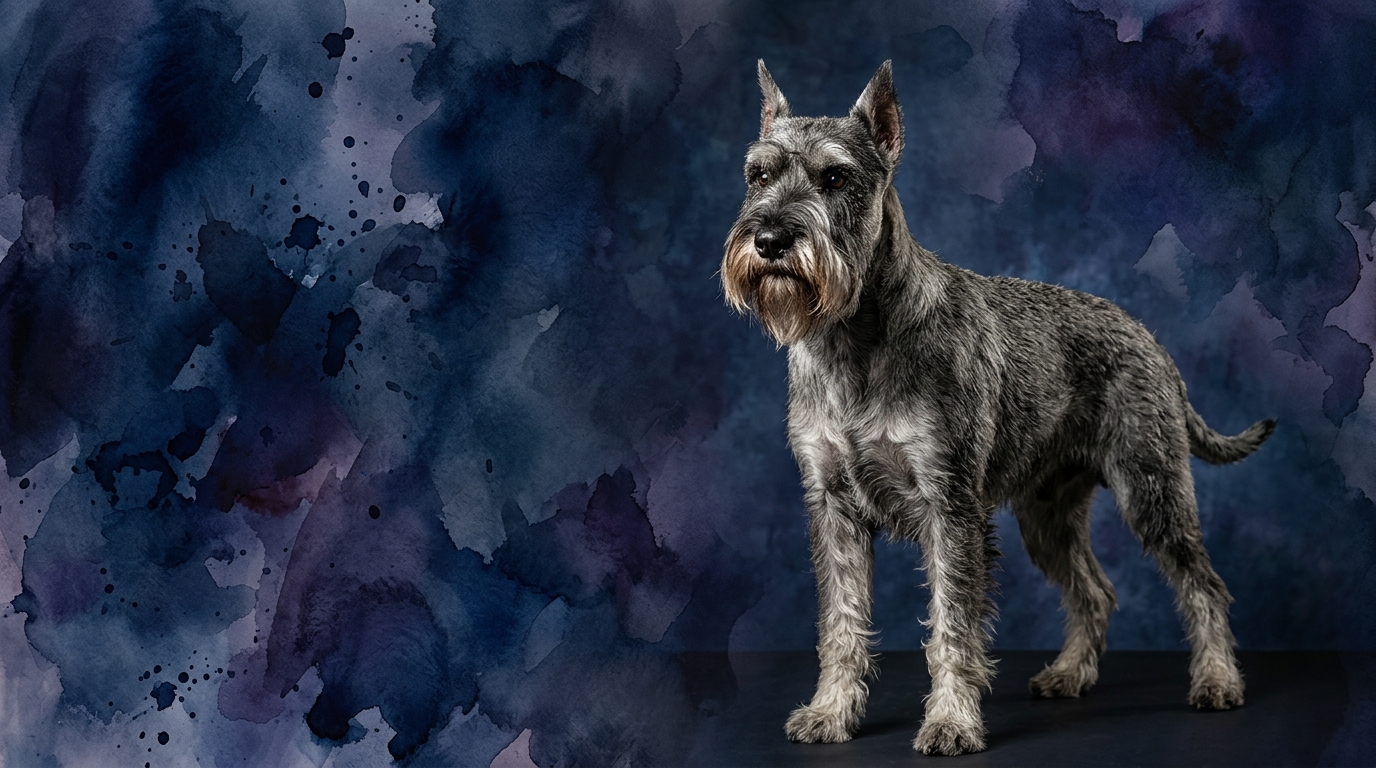
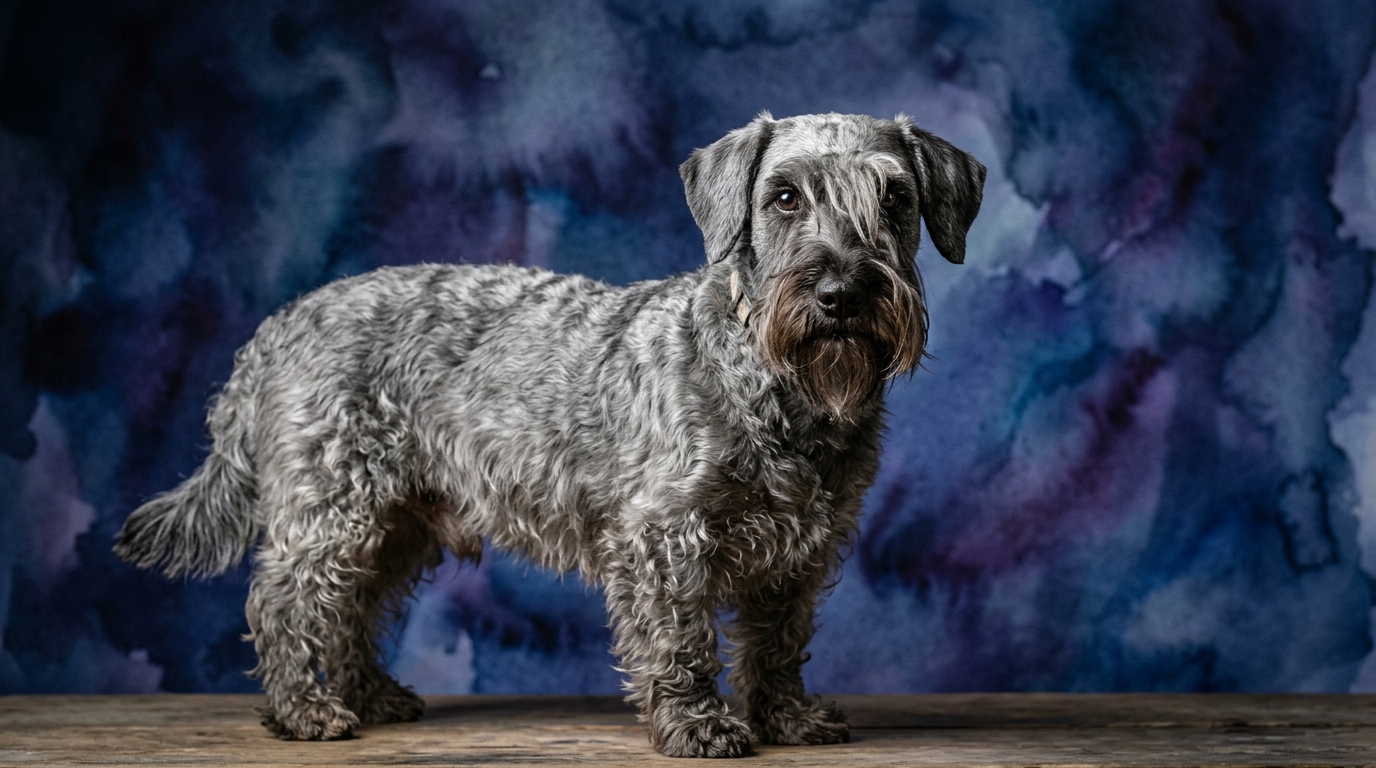
Side-by-Side IQ Profile
The Cosmic Pet Pet IQ Lab categorizes canine intelligence across five key dimensions, providing a nuanced understanding of each breed's mental aptitude. For the Standard Schnauzer, a Working Group dog with a Coren rank of #22, its profile reflects a sharp, capable mind: Problem Solving 4/5, Training Speed 4/5, Social Intelligence 3/5, Instinctive Drive 3/5, and Memory 4/5. This suggests a dog that is quick to learn and remember, with a strong ability to navigate challenges.
In contrast, the Cesky Terrier, a Terrier Group dog not listed in Coren's ranking, presents a more balanced and consistent cognitive footprint: Problem Solving 3/5, Training Speed 3/5, Social Intelligence 3/5, Instinctive Drive 3/5, and Memory 3/5. This breed demonstrates a reliable and steady mental capacity across all dimensions, indicating a practical and persistent approach to learning and interaction rather than a quick, high-scoring one.
Delving deeper into the Standard Schnauzer's specific attributes, its 4/5 in Problem Solving signifies a strong capacity for navigating complex situations, often devising solutions to obstacles or learning intricate sequences of tasks with relative ease. Their cognitive flexibility allows them to adapt quickly to new challenges. A 4/5 in Training Speed means they typically grasp new commands and routines swiftly, demonstrating an eagerness to learn and respond to instruction. Their ability to form associations quickly makes them receptive students in structured training environments. While their Social Intelligence at 3/5 indicates they are capable of forming deep bonds, they can be discerning in their interactions with strangers or other animals, observing social cues but not always being overtly gregarious. Possessing a moderate level of Instinctive Drive (3/5), Standard Schnauzers retain working instincts that manifest as vigilance, a desire to patrol, or an inclination towards specific tasks, requiring outlets for this innate energy. Finally, their Memory at 4/5 is notable, enabling them to retain learned behaviors, routes, and associations over extended periods, contributing significantly to their training retention and reliability.
The Cesky Terrier's uniform 3/5 scores paint a picture of a practical and resilient mind. Their Problem Solving at 3/5 means they possess a practical aptitude for figuring out moderate challenges, though they might not always seek out novel solutions with the same zeal as some higher-scoring breeds; they approach obstacles with a determined, methodical mindset. A 3/5 in Training Speed indicates this breed learns at a steady pace, absorbing new commands and routines through consistent positive reinforcement. While not as rapid as some, their learning is durable once established, building a solid foundation over time. Like the Schnauzer, their Social Intelligence at 3/5 suggests they are observant and capable of forming strong bonds with their immediate family, being reserved with outsiders but generally polite. Their terrier heritage grants them a moderate Instinctive Drive (3/5), manifesting as a keen interest in scent work, digging, or chasing small critters, a drive that is present but generally manageable within a family setting. Lastly, their Memory at 3/5 demonstrates reliable recall, capable of retaining learned commands and routines sufficiently for everyday tasks and maintaining good manners.
Where Standard Schnauzer Wins Cognitively
The Standard Schnauzer clearly excels in areas demanding swift cognitive processing and retention. Their superior Problem Solving score of 4/5 means they are often quicker to analyze and overcome novel challenges, whether it's figuring out a puzzle toy or navigating a complex agility course. This cognitive flexibility allows them to adapt more readily to new environments and unexpected situations, often anticipating owner intentions. Furthermore, their 4/5 in Training Speed indicates a more rapid acquisition of new skills and commands, making the initial stages of obedience training potentially less time-intensive. Owners might observe a Standard Schnauzer picking up a multi-step routine after fewer repetitions compared to many other breeds. Coupled with a strong 4/5 Memory, once a Schnauzer learns something, it tends to stick, contributing to their reliability in performing learned tasks long after the initial training period. This combination of quick learning and enduring recall makes them particularly adept at advanced obedience, competitive sports, or roles requiring consistent, complex behaviors. Their cognitive profile suggests a dog that actively engages with its environment, always looking for an opportunity to apply its intellect.
Where Cesky Terrier Wins Cognitively
While not achieving higher individual scores than the Standard Schnauzer in specific cognitive dimensions, the Cesky Terrier's consistent 3/5 across all categories represents a unique cognitive strength: a balanced, predictable, and robust mental profile. This breed avoids the extremes that can sometimes accompany higher scores, such as overwhelming instinctive drives or an incessant need for complex mental stimulation that can lead to frustration if unmet. Their moderate Problem Solving (3/5) means they are practical and persistent in overcoming obstacles, often preferring a steady, determined approach rather than a flash of brilliance. This can translate to a dog that, while perhaps not solving a puzzle in record time, will patiently work at it until success is achieved. Similarly, their 3/5 in Training Speed and Memory indicates a reliable learner who, with consistent effort, builds a solid foundation of understanding that endures. The uniformity of their scores also suggests a well-rounded cognitive architecture where no single dimension dramatically overshadows the others, leading to a dog whose mental responses are generally consistent and less prone to unexpected behavioral nuances. This balance makes them a cognitively steady companion, providing reliable responses without demanding constant, high-level intellectual engagement to prevent boredom-driven behaviors.
Which is Easier to Train and Why
Based on their respective IQ profiles, the Standard Schnauzer is generally easier to train, primarily due to its higher scores in Training Speed (4/5) and Memory (4/5) compared to the Cesky Terrier's 3/5 in both categories. A Standard Schnauzer typically grasps new commands and behaviors with fewer repetitions, demonstrating a quicker association between actions and consequences. This means an owner might spend less time drilling a specific command before it becomes reliably understood. For instance, teaching a complex sequence like “fetch the leash and bring it here” might progress noticeably faster with a Schnauzer. Their superior memory ensures that once a behavior is learned, it is retained effectively over time, reducing the need for frequent refreshers. The Standard Schnauzer's inherent drive to work and please, combined with its cognitive quickness, often translates into a more enthusiastic and responsive training partner.
In contrast, the Cesky Terrier, with its 3/5 Training Speed, will learn, but at a more deliberate pace. Owners might need to be more patient and consistent, providing more repetitions and reinforcement to solidify new commands. While Ceskys have a reliable memory, it may not be as tenacious as the Schnauzer's, meaning occasional review sessions could be more beneficial to maintain proficiency. The Cesky Terrier’s independent terrier spirit, while manageable, requires a more understanding and persistent approach to achieve the same level of precision and responsiveness, making it a rewarding but perhaps slower training journey.
Which Suits Active Owners vs. Relaxed Owners
The cognitive profiles offer clear guidance for matching these breeds to owner lifestyles. The Standard Schnauzer, with its 4/5 Problem Solving and 4/5 Training Speed, coupled with a 3/5 Instinctive Drive, thrives with active owners who can provide consistent mental and physical engagement. Their quick minds require stimulating activities beyond simple walks; they excel in dog sports like agility, obedience, or even scent work, which tap into their problem-solving abilities and desire to learn. Owners who enjoy teaching new tricks, participating in structured training, or engaging in vigorous outdoor adventures will find the Schnauzer a willing and capable partner. Their moderate instinctive drive means they need outlets for their energy and vigilance, otherwise, they might devise their own, potentially unwelcome, mental challenges. A relaxed owner, one who prefers minimal structured activity or intellectual engagement, might find a Standard Schnauzer becomes easily bored or restless, potentially leading to undesirable behaviors born of unmet cognitive needs.
The Cesky Terrier, with its consistent 3/5 across all cognitive dimensions, is better suited for owners who are active but perhaps not intensely focused on high-level competitive dog sports or constant intellectual challenges. While they still require daily walks and engaging play, their mental needs are more moderately paced. A Cesky will enjoy exploring a park, a good game of fetch, or learning a few basic commands, but they might not demand the same intricate problem-solving tasks as a Schnauzer to feel fulfilled. Their moderate instinctive drive means they appreciate opportunities to sniff and explore, but their drive is generally more manageable for an owner seeking a balanced companion rather than a working partner. Owners who appreciate a steady, reliable companion for daily activities, who are consistent with training but not necessarily seeking to push advanced cognitive boundaries, will find the Cesky Terrier a rewarding match. They are not couch potatoes, but their mental and physical requirements are less demanding than those of the more intensely driven Standard Schnauzer.
The Verdict
When seeking a canine companion, understanding their cognitive makeup is paramount. The Standard Schnauzer stands out for those who relish a highly engaged, quick-thinking partner capable of mastering complex tasks and thriving on consistent mental stimulation.
Conversely, the Cesky Terrier, with its balanced and steady cognitive profile, is an excellent fit for owners who appreciate a reliable, persistent, and moderately active companion without the intense demands for high-level intellectual output.
🧠 Find Your Pet's IQ Score
Our Pet IQ Lab assessment covers 25+ tests across 5 cognitive dimensions — personalized to your breed.
Take the Full IQ Test →Frequently Asked Questions
Does the Cesky Terrier's 'Not Coren-ranked' status mean it's less capable than a Standard Schnauzer?
Not at all; Coren's ranking primarily assesses working obedience and intelligence, a specific measure. The Cesky Terrier is a capable learner with a balanced cognitive profile, simply bred for different historical purposes than many highly-ranked obedience breeds. Its intelligence manifests in persistence and adaptability, rather than purely rapid obedience.
How much mental stimulation does a Standard Schnauzer truly need given its high problem-solving score?
A Standard Schnauzer, with its 4/5 problem-solving and training speed, benefits significantly from daily mental challenges. This could involve puzzle toys, learning new tricks, participating in dog sports, or engaging in interactive games that require thought. Without adequate mental outlets, they can become bored and potentially channel their intellect into less desirable behaviors.
Since both breeds have a 3/5 social intelligence score, how might they interact with strangers or other animals?
A 3/5 social intelligence score suggests both breeds are observant and capable of appropriate social behavior, but they might not be overtly effusive with new acquaintances. They are likely to be reserved or polite rather than immediately friendly, preferring to assess new situations. Early and consistent socialization is crucial for both to foster confident and well-adjusted interactions.