Side-by-Side IQ Profile: Standard Schnauzer vs. Field Spaniel
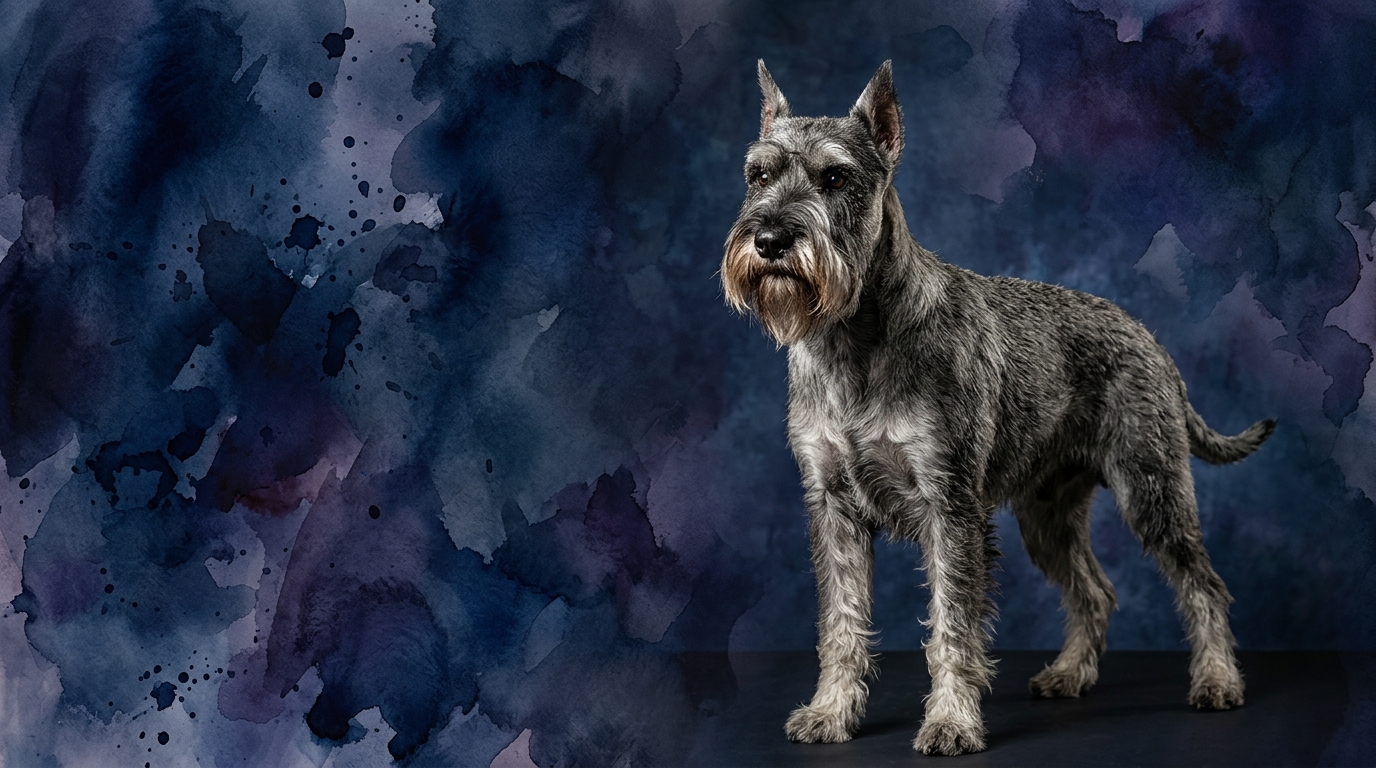
At The Cosmic Pet Pet IQ Lab, we evaluate canine intelligence across five key dimensions. The Standard Schnauzer, a member of the Working Group, registers impressively with a Coren rank of #22, indicating a strong capacity for understanding and executing commands. Its cognitive scores are: Problem Solving 4/5, Training Speed 4/5, Social Intelligence 3/5, Instinctive Drive 3/5, and Memory 4/5. These scores suggest a dog with a keen mind for independent thought and rapid learning.
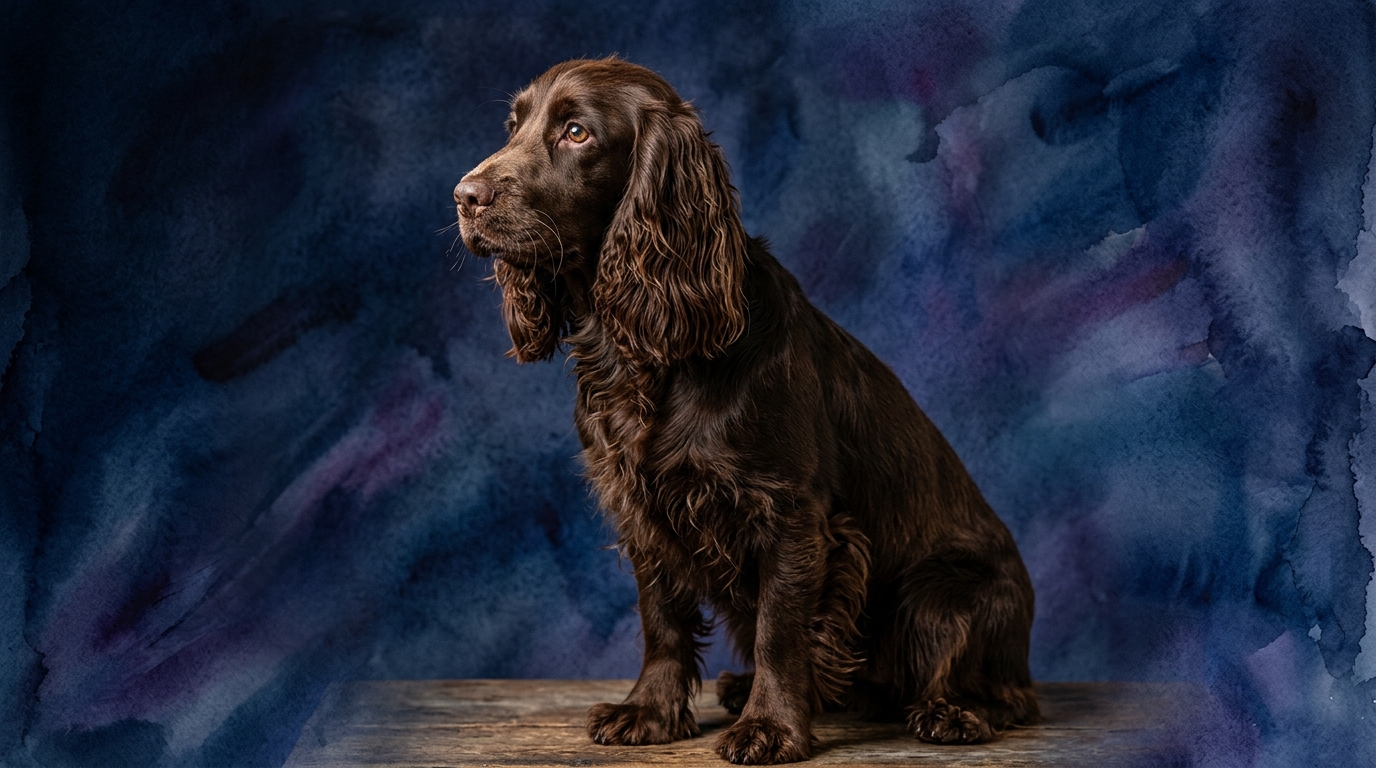
In contrast, the Field Spaniel, part of the Sporting Group, is not listed on Coren's ranking, which doesn't diminish its cognitive abilities but rather highlights a different emphasis in its development. Its scores are consistently moderate: Problem Solving 3/5, Training Speed 3/5, Social Intelligence 3/5, Instinctive Drive 3/5, and Memory 3/5. This profile indicates a dog that is capable and cooperative, perhaps less inclined towards complex independent tasks but reliably engaged in partnership.
Where the Standard Schnauzer Excels Cognitively
The Standard Schnauzer’s higher Problem Solving score of 4/5 means it possesses a significant capacity for independent thought and creative solutions to novel obstacles. This isn't merely about following commands, but about assessing situations and devising a path forward, a trait honed by its history as a multi-purpose farm dog and guardian. For instance, a Schnauzer might more readily figure out how to open a child-proof gate or retrieve a toy from an unusual hiding spot without direct instruction.
Its Training Speed and Memory, both rated at 4/5, further underscore its cognitive agility. A Schnauzer typically grasps new commands with fewer repetitions and retains them over extended periods. This combination allows for a vast and intricate vocabulary of cues and behaviors to be built over its lifetime. Its working background demanded this quick uptake and retention for diverse tasks, from herding to vermin control, requiring a robust cognitive framework for learning and recall.
Where the Field Spaniel Shines Cognitively
While the Field Spaniel’s scores are consistently 3/5 across the board, this balanced profile fosters a different kind of cognitive strength, particularly suited to its role as a cooperative sporting companion. Its 3/5 for Social Intelligence, matching the Schnauzer, manifests in a deep desire to work alongside its human, interpreting subtle cues and demonstrating a strong pack mentality. This isn't about outsmarting its handler, but about forming a highly responsive partnership.
The Field Spaniel's moderate instinctive drive (3/5) means it possesses the motivation for activity and purpose without the intense, independent focus sometimes seen in breeds developed for solitary tasks. This translates into a dog that is less likely to become overly fixated on a singular scent trail or task without handler input, making it a more consistently engaged and agreeable partner during activities like retrieving or navigating complex terrain together. Its cognitive abilities are perfectly aligned for sustained, collaborative effort rather than independent strategy.
Which Breed is Easier to Train, and Why?
Based on our metrics, the Standard Schnauzer (Training Speed 4/5) generally demonstrates a quicker learning curve for new commands compared to the Field Spaniel (Training Speed 3/5). A Schnauzer's higher problem-solving aptitude also means it can generalize learned behaviors to new contexts more efficiently, often requiring fewer repetitions to solidify a command. However, this same problem-solving ability can sometimes lead to a Schnauzer 'thinking for itself' and testing boundaries, requiring consistent and firm guidance.
The Field Spaniel, while potentially requiring more repetitions to initially learn a new command, often exhibits a steadfast desire to please and a high degree of compliance once a behavior is established. Its slightly lower instinctive drive and problem-solving scores mean it may be less prone to independent 'scheming' or pushing limits, making it a reliable and eager student for owners who appreciate a more straightforward training approach. Consistency is key for both, but the Schnauzer demands mental engagement to prevent boredom-induced mischief, while the Spaniel thrives on patient, positive reinforcement to build confidence.
Suitability for Active vs. Relaxed Owners
For active owners seeking a dynamic partner, the Standard Schnauzer is an excellent match. Its high problem-solving and training speed mean it thrives on mental challenges such as advanced obedience, agility, or scent work, alongside vigorous physical exercise. Owners who can provide structured activities that engage both body and mind will find the Schnauzer a highly responsive and fulfilling companion. A lack of engagement can lead to boredom and the Schnauzer finding its own 'work,' which may not always align with human preferences.
The Field Spaniel, with its sporting background, also requires regular physical activity, enjoying long walks, retrieving games, and outdoor adventures. However, its cognitive profile suggests it might be more content with a less intensely structured daily routine than a Schnauzer, as long as its exercise needs are met and it receives ample companionship. While not suited for truly 'relaxed' sedentary owners, the Field Spaniel might be a better fit for active individuals who prioritize shared experiences and a calmer home environment over intense, independent mental challenges.
The Verdict
Choose the Standard Schnauzer if you are an active, experienced owner ready to consistently engage a sharp, problem-solving mind with structured training and diverse activities.
Opt for the Field Spaniel if you desire a cooperative, affectionate companion for outdoor activities and value a steadfast, less challenging training partner, understanding it still requires consistent exercise and companionship.
🧠 Find Your Pet's IQ Score
Our Pet IQ Lab assessment covers 25+ tests across 5 cognitive dimensions — personalized to your breed.
Take the Full IQ Test →Frequently Asked Questions
Does a higher Coren rank mean a dog is 'smarter' overall?
Coren's ranking primarily assesses 'working and obedience intelligence,' which reflects a dog's capacity for learning and executing human commands. While a higher rank, like the Standard Schnauzer's #22, indicates strong aptitude in this domain, it doesn't encompass all aspects of canine cognition, such as problem-solving or social intelligence, which our IQ metrics detail. A dog not on the Coren list, like the Field Spaniel, can still possess robust cognitive abilities tailored to its specific breed purpose.
How does 'instinctive drive' affect daily life for these breeds?
Instinctive drive refers to a dog's innate urges, like hunting, guarding, or herding. The Standard Schnauzer's 3/5 drive might manifest as a strong prey drive for small animals or a protective instinct, requiring management and channeling. The Field Spaniel's 3/5 drive, while similar in score, is typically geared towards cooperative retrieving and working alongside humans, making it less prone to independent pursuits like extensive wandering or solitary hunting, as its instincts are intertwined with partnership.
Can a Field Spaniel excel in dog sports despite its 3/5 training speed?
Absolutely. While its training speed of 3/5 suggests it might take more repetitions initially than a 4/5 breed, the Field Spaniel's eagerness to please and strong social intelligence make it a dedicated student. With patient, positive reinforcement and consistent practice, Field Spaniels can achieve high levels of proficiency in various dog sports, particularly those that emphasize teamwork, such as obedience, rally, or even agility, where their athleticism and desire to work with their handler shine.