Side-by-Side Cognitive Profile: Schnauzer vs. Flat-Coat
The Cosmic Pet Pet IQ Lab employs a five-dimensional framework to evaluate canine cognition, offering a granular view beyond simple rankings. For the Standard Schnauzer, ranked #22 by Coren, and the Flat-Coated Retriever, ranked #17, these dimensions highlight their individual strengths and approaches to learning and interaction.
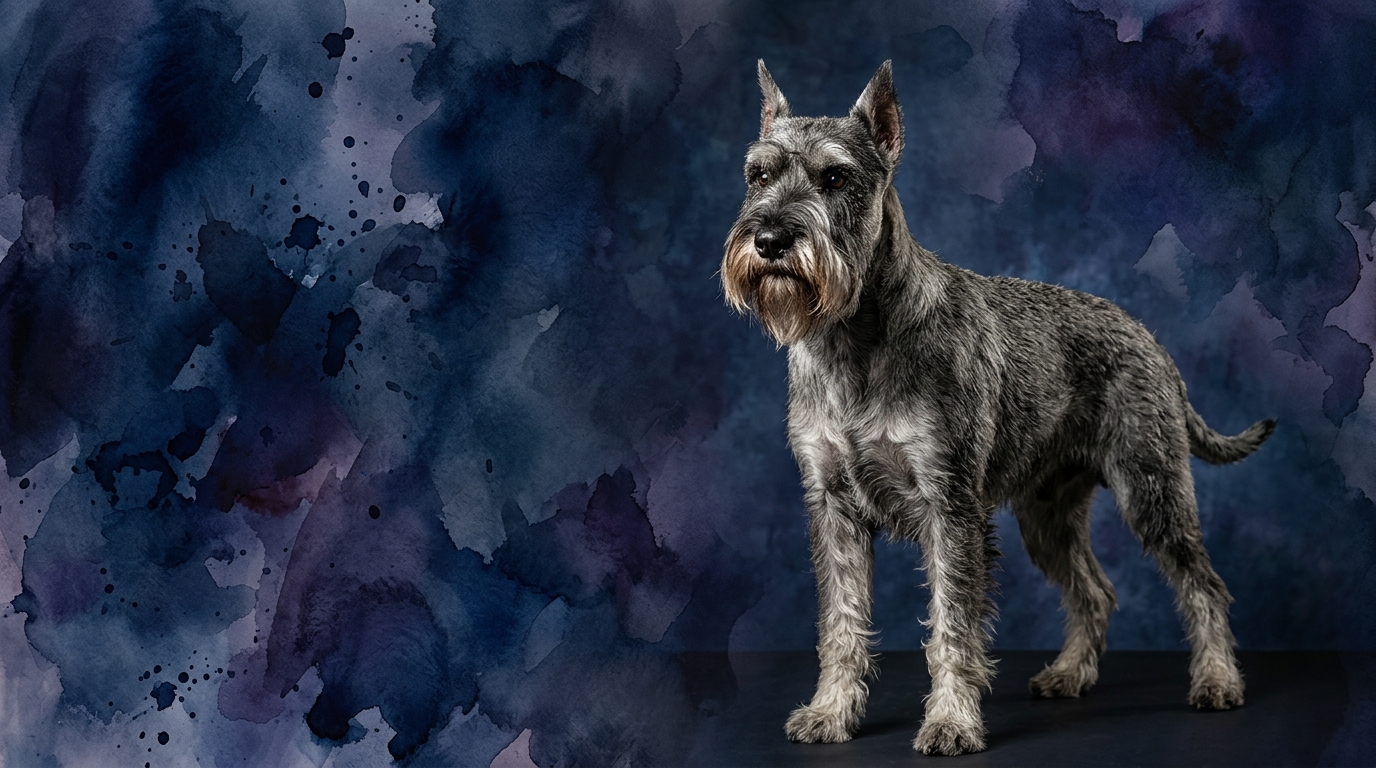
**Standard Schnauzer (Coren Rank #22, Working Group)**: This breed demonstrates a strong capacity for figuring out novel situations, often employing strategic thinking to overcome obstacles, earning a Problem Solving score of 4/5. They possess a commendable ability to grasp new commands and routines with efficiency, often requiring fewer repetitions than many other breeds, reflected in their Training Speed of 4/5. Their Social Intelligence of 3/5 indicates an average understanding of human cues and social dynamics, capable of forming strong bonds but perhaps less nuanced than some highly people-focused breeds. Exhibiting a moderate level of innate drives, particularly related to their historical role as farm dogs and guardians, their Instinctive Drive is 3/5. Finally, the Schnauzer displays a robust ability to retain learned behaviors, routes, and associations over time, securing a Memory score of 4/5.
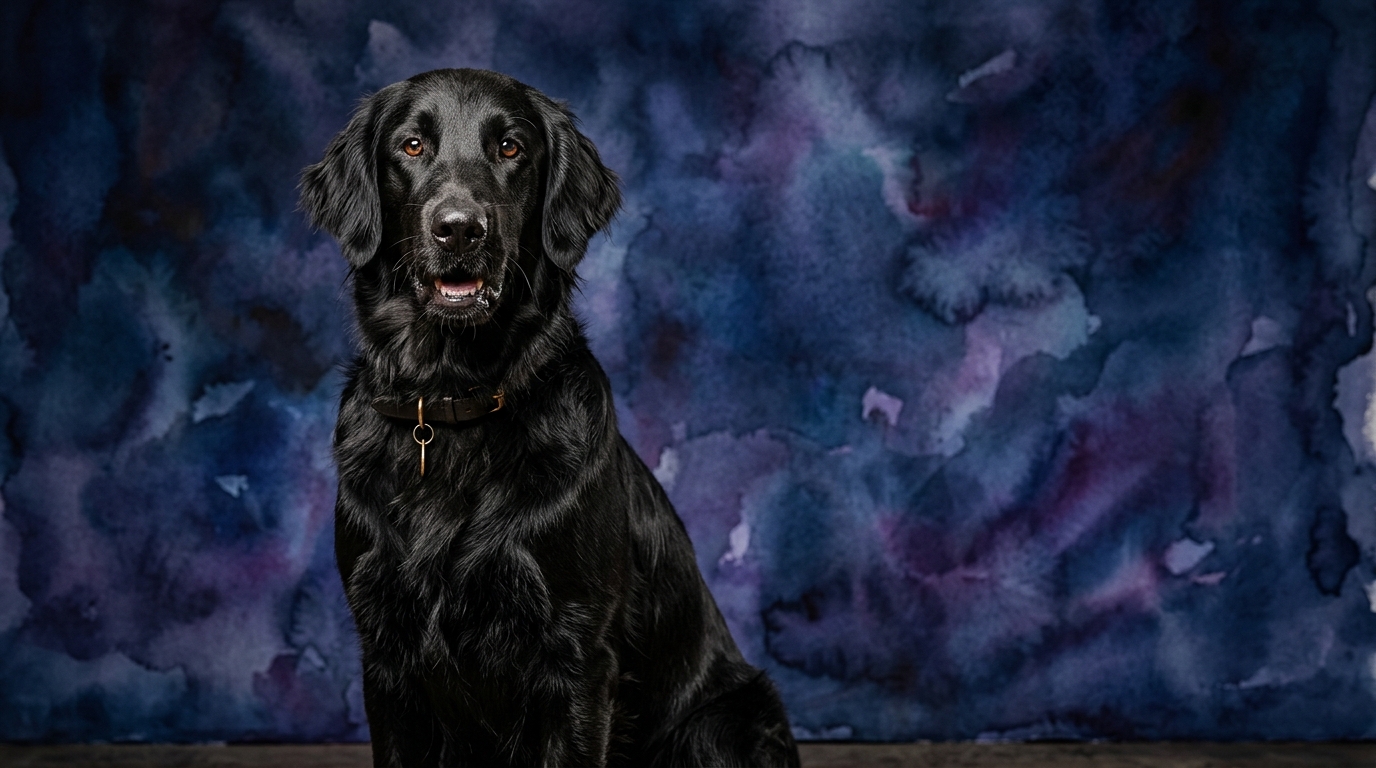
**Flat-Coated Retriever (Coren Rank #17, Sporting Group)**: This breed approaches new problems with enthusiasm and a practical, often trial-and-error method, quickly adapting their strategies based on outcomes, scoring 4/5 in Problem Solving. They learn new tasks and commands readily, often enjoying the process of engagement and collaboration with their handler, resulting in a Training Speed of 4/5. With a solid understanding of social interactions and human emotions, generally responding well to positive reinforcement, their Social Intelligence is 3/5. The Flat-Coat exhibits a moderate, well-channeled instinctive drive, primarily focused on retrieving and working alongside humans, also earning 3/5 for Instinctive Drive. This breed stands out with an exceptional capacity for memory, recalling complex sequences, specific locations, and past experiences with remarkable accuracy and longevity, earning an impressive 5/5 for Memory.
Where the Standard Schnauzer Excels Cognitively
The Standard Schnauzer’s cognitive edge often lies in its tenacity and independent problem-solving approach. While both breeds rate 4/5 in problem solving, the Schnauzer's Working group background imbues it with a certain self-reliance when faced with novel challenges. They might persist longer on a puzzle that requires a less obvious solution, drawing on their historical role of independent farm work and vermin control. This isn't just about figuring things out, but about the *manner* in which they deduce solutions, often with a determined, self-directed focus, making them adept at tasks requiring sustained mental effort and strategy.
Their robust memory (4/5) combined with their pragmatic problem-solving means they are adept at remembering effective strategies for specific tasks, and then applying them consistently. For example, a Schnauzer might quickly learn the most efficient way to open a tricky gate or navigate a complex agility course, and then reliably repeat that exact sequence. This practical application of memory to problem-solving gives them a distinct advantage in tasks requiring consistent, strategic execution, showcasing their ability to learn and refine specific methods.
Where the Flat-Coated Retriever Shows Cognitive Strengths
The Flat-Coated Retriever truly shines with its superior memory (5/5), which is a full point higher than the Schnauzer. This exceptional recall ability means they can internalize and retrieve vast amounts of information, from complex multi-step commands to the locations of specific objects over extended periods. Their capacity to remember intricate details and sequences makes them outstanding candidates for advanced obedience, field trials, or service work where remembering a precise series of actions and locations is paramount, allowing them to perform intricate tasks with remarkable consistency.
While both breeds have similar social intelligence (3/5), the Flat-Coat’s inherent optimism and eagerness to please often translate into a more enthusiastic and collaborative approach to learning and interaction. This isn't necessarily a higher *understanding* of social cues, but rather a more consistent *positive response* to them, fueled by their desire to engage and retrieve. Their robust memory also means they remember positive interactions and training cues with remarkable clarity, fostering a strong, responsive bond with their handler, making them highly receptive to collaborative learning environments.
Training Dynamics: Which Breed is Easier to Teach?
Both the Standard Schnauzer and the Flat-Coated Retriever share an impressive 4/5 rating for training speed, indicating they both pick up new commands with commendable efficiency. However, the *ease* of training can subtly differ due to their underlying motivations and cognitive strengths. The Flat-Coated Retriever's exceptional memory (5/5) and innate desire to retrieve and please a handler often make the training process feel more fluid and less challenging. They internalize commands deeply and retain them reliably, meaning less frequent refreshers and a more consistent performance over time. Their optimistic and cooperative nature means they often approach training sessions with a joyful willingness to participate, making them highly receptive to positive reinforcement methods.
The Standard Schnauzer, while also a quick learner, brings a more independent and sometimes opinionated streak rooted in its Working group heritage. They learn commands quickly due to their problem-solving ability and focus, but their historical role required a degree of independent decision-making rather than constant human direction. This can manifest as a need for more engaging, varied training to maintain their interest, and a firmer but fair hand to channel their determination. While they learn fast, their motivation might be more about mastering the task than purely pleasing, requiring a trainer to understand and leverage this drive effectively to prevent boredom or stubbornness.
Matching Lifestyles: Active vs. Engaged Owners
For active owners seeking a canine partner for adventures, both breeds present compelling options, but with distinct nuances. The Flat-Coated Retriever, with its boundless energy, enthusiasm for outdoor activities, and exceptional retrieving drive, is an ideal match for owners who enjoy daily long walks, runs, hiking, swimming, or participation in dog sports like agility, flyball, or dock diving. Their robust memory and cooperative nature make them excellent for complex outdoor tasks and consistent engagement. They thrive on having a 'job' that involves physical exertion and mental stimulation, making them a superb companion for the consistently on-the-go individual or family.
The Standard Schnauzer also requires significant activity to thrive, but their energy often manifests differently. They possess a strong, purposeful drive and excel in activities that engage their problem-solving skills and keen senses, such as earthdog trials, scent work, or advanced obedience. While they enjoy vigorous walks and playtime, their need for mental engagement might be as strong as their physical requirements. They suit active owners who appreciate a dog with a strong personality and a desire for varied, structured activities, rather than just endless physical exertion. Neither of these breeds would truly suit a 'relaxed' owner in the sense of minimal exercise, as both demand consistent physical and mental engagement to prevent behavioral issues.
The Verdict
Choose the Standard Schnauzer if you appreciate a tenacious, self-reliant canine partner who excels in practical problem-solving and thrives on structured mental challenges, and you are prepared for a dog with a strong, purposeful personality.
Opt for the Flat-Coated Retriever if you desire an exceptionally memorable, cooperative, and joyful companion for extensive outdoor activities and complex training, and you can provide consistent, enthusiastic engagement.
🧠 Find Your Pet's IQ Score
Our Pet IQ Lab assessment covers 25+ tests across 5 cognitive dimensions — personalized to your breed.
Take the Full IQ Test →Frequently Asked Questions
Do Standard Schnauzers or Flat-Coated Retrievers require more grooming?
Standard Schnauzers require regular grooming, including hand-stripping or clipping every 6-8 weeks to maintain their distinctive coat texture and prevent matting, along with daily brushing of their beard and furnishings. Flat-Coated Retrievers have a medium-length, dense coat that requires less intensive grooming, typically needing weekly brushing to prevent mats and occasional trimming.
Which breed is generally better with children?
Both breeds can be good with children when properly socialized and raised, but their temperaments differ. Flat-Coated Retrievers are often known for their perpetually puppy-like exuberance and gentle nature, making them joyful and tolerant playmates, though their enthusiasm can sometimes be overwhelming for very young children. Standard Schnauzers are loyal and protective of their family, and while good with children, they may be less overtly playful or tolerant of roughhousing than the Flat-Coat, preferring respectful interaction.
What are the typical energy levels of these two breeds?
Both breeds possess high energy levels and require significant daily exercise and mental stimulation to prevent boredom and destructive behaviors. Flat-Coated Retrievers are known for their boundless, exuberant energy that lasts well into adulthood, demanding extensive physical activity like running, swimming, and retrieving. Standard Schnauzers also have substantial energy, but it often manifests as a more focused drive, requiring purposeful activities such as long walks, training sessions, and interactive games that engage their working instincts.