Side-by-Side Cognitive Profiles
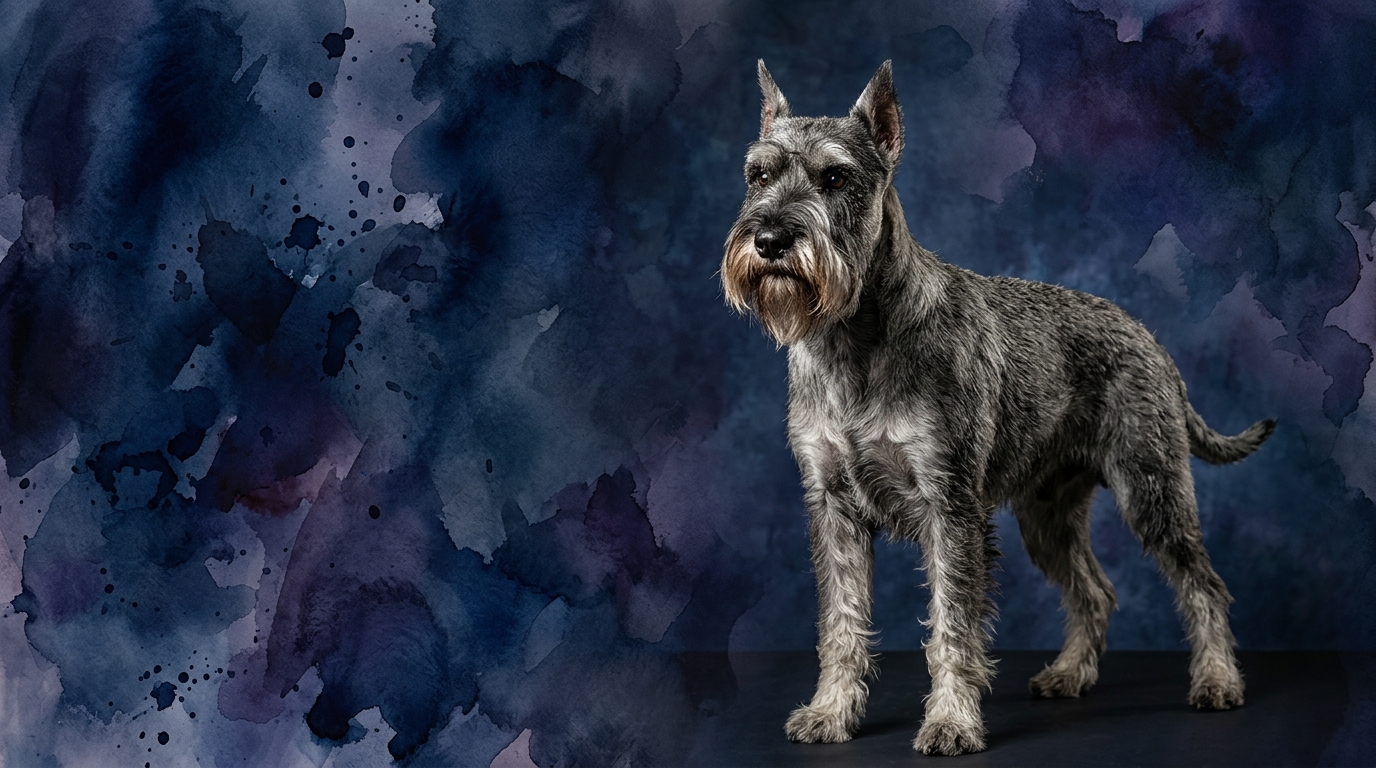
The Standard Schnauzer, a robust member of the Working Group, registers a Coren rank of #22, indicating a high aptitude for obedience and working intelligence. Its cognitive profile includes a Problem Solving score of 4/5, reflecting a capacity for strategic thought and figuring out how to achieve desired outcomes, often related to vigilance or task completion. Its Training Speed of 4/5 means it picks up new commands and routines with efficiency, cementing lessons quickly.
Social Intelligence for the Schnauzer sits at 3/5, suggesting it is observant of human cues and capable of forming strong bonds, but perhaps with a degree of independent judgment inherent to its guarding heritage. An Instinctive Drive of 3/5 points to an inherent motivation for purpose, often expressed as a desire to protect its territory or family, or engage in structured tasks. Finally, its Memory score of 4/5 ensures it retains complex sequences, learned behaviors, and important details about its environment or people.
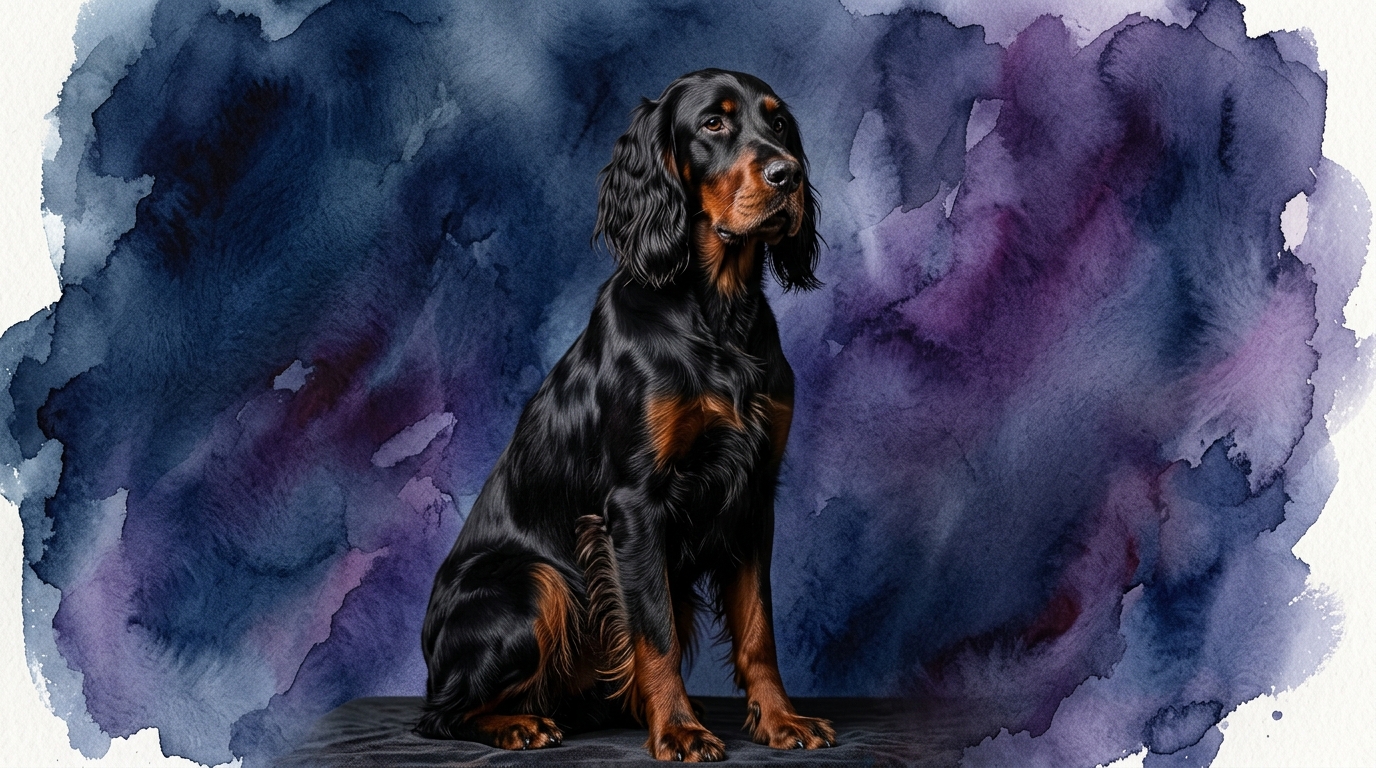
The Gordon Setter, hailing from the Sporting Group, holds a Coren rank of #39, placing it squarely among breeds with respectable working and obedience intelligence. Its detailed IQ scores are remarkably similar to the Schnauzer: Problem Solving at 4/5, indicating an adeptness at navigating challenges, particularly those encountered in the field. Its Training Speed also stands at 4/5, meaning it can learn intricate commands and signals with considerable swiftness, essential for a hunting companion.
Like the Schnauzer, the Gordon Setter’s Social Intelligence is 3/5, demonstrating an ability to read its handler's intentions and cooperate, albeit often with a focus on shared activities rather than purely social dynamics. An Instinctive Drive of 3/5 in this breed is primarily channeled into its gundog heritage—a powerful urge to hunt, point, and retrieve. Its Memory score is also 4/5, which is crucial for recalling scent patterns, terrain layouts, and learned hunting strategies over vast areas.
Where the Standard Schnauzer Excels Cognitively
While their raw IQ scores appear identical, the Standard Schnauzer’s higher Coren rank (#22 vs #39) offers a crucial distinction, hinting at how its cognitive strengths are applied. The Schnauzer’s problem-solving (4/5) and training speed (4/5) are intrinsically linked to its historical role as a farm dog, guard dog, and vermin controller. This means its intelligence is often geared towards structured tasks and a more direct, consistent adherence to handler instruction.
Its cognitive strengths shine in scenarios demanding consistent execution and strategic thinking within defined parameters. For instance, a Schnauzer's problem-solving might manifest as efficiently figuring out how to navigate an agility course with precision, or understanding complex multi-step commands for protection work. Their memory (4/5) reinforces these learned behaviors with exceptional fidelity, making them particularly reliable for roles requiring unwavering consistency and a strong understanding of routines and boundaries.
The Schnauzer's instinctive drive (3/5), while not as singular as a pure hunting drive, translates into a purpose-driven mindset that thrives on having a 'job.' This cognitive inclination makes them particularly receptive to advanced obedience, protection sports, or even service roles where their problem-solving and memory are channeled into fulfilling specific human-assigned duties with a dependable, thoughtful approach. They are often more focused on the task at hand, less distracted by environmental novelties unrelated to their perceived duties.
Where the Gordon Setter Excels Cognitively
The Gordon Setter’s cognitive profile, while numerically similar, is profoundly shaped by its Sporting Group heritage. Its problem-solving (4/5) is uniquely adapted for dynamic, expansive environments. This manifests as an exceptional ability to independently assess and navigate complex terrain, interpret subtle scent trails, and make rapid decisions to locate game, often far from its handler. Their intelligence thrives in situations requiring quick, on-the-fly adaptations.
The Setter's training speed (4/5) is particularly impressive when applied to field work, where it learns intricate hand signals, whistle commands, and retrieving protocols with remarkable alacrity. This isn't just about learning commands, but about integrating them seamlessly into fluid, fast-paced hunting scenarios. Their social intelligence (3/5) is acutely attuned to reading their handler's subtle cues during a hunt, demonstrating a collaborative intelligence focused on a shared objective.
The Gordon Setter’s instinctive drive (3/5) is channeled into an unwavering, almost single-minded focus on finding and pointing game. This specific drive underpins a unique cognitive processing style – one of sustained attention, endurance, and a sophisticated understanding of scent and wind patterns. Their memory (4/5) is phenomenal for recalling specific locations of past finds, terrain features, and the nuances of various hunting grounds, allowing them to build an impressive mental map of their working environment.
Training: Which Breed is Easier and Why?
Both breeds boast a Training Speed of 4/5, suggesting a high capacity for learning. However, the 'ease' of training often comes down to how their inherent drives and temperaments interact with human instruction. The Standard Schnauzer, with its Working Group background and higher Coren rank, generally presents as a more straightforward training candidate for general obedience and structured tasks.
The Schnauzer's inherent desire for a 'job' and its vigilance translate into a cognitive willingness to engage with human directives. Their problem-solving (4/5) is often applied to understanding and executing complex commands, and their social intelligence (3/5) helps them readily grasp human expectations. They tend to be highly responsive and consistent in their learned behaviors, making them rewarding for owners who appreciate a dog that takes its training seriously and aims to please through structured cooperation.
The Gordon Setter, despite its equally high Training Speed (4/5), can present different training challenges due to its strong, independent hunting drive (3/5). While incredibly intelligent and quick to learn, their primary motivation is often tied to their instincts for the field. Training a Gordon Setter requires an understanding that their problem-solving (4/5) might initially be directed more towards finding birds than sitting on command.
To train a Gordon Setter effectively, owners often need to incorporate their natural drives into the training regimen or provide ample outlets for their instincts. While they learn quickly, channeling their focus away from a compelling scent or a perceived opportunity to hunt requires consistent, engaging, and often creative motivation. Their memory (4/5) means they retain lessons well, but maintaining their attention in stimulating environments demands a patient and resourceful trainer who can make obedience as rewarding as a good hunt.
Active Owners vs. Relaxed Owners: A Cognitive Match
Understanding the cognitive makeup of these breeds is vital for matching them with the right lifestyle. The Standard Schnauzer, while not needing the sheer mileage of a Setter, thrives with active owners who can provide consistent mental and physical engagement. Their problem-solving (4/5) and instinctive drive (3/5) demand purpose, whether that's through advanced obedience, agility, earthdog trials, or simply being an active participant in family routines and 'guarding' duties. They are not content to be mere couch potatoes; their minds need to be stimulated with challenges and their bodies with regular exercise.
A Schnauzer suits owners who enjoy structured activities, consistent training, and value a companion that is always 'on duty' in some capacity. Their social intelligence (3/5) means they enjoy being part of the family, but their independent streak and vigilance require an owner who understands their need for clear leadership and consistent boundaries. They are excellent for those seeking a thoughtful, engaged partner for various canine sports or a diligent family protector.
The Gordon Setter unequivocally suits highly active owners. Their Sporting Group heritage and strong instinctive drive (3/5) mean they possess tremendous stamina and a profound need for extensive physical exercise, ideally off-leash in safe, open spaces. Their problem-solving (4/5) is best engaged when exploring, scenting, and navigating, making them ideal companions for long hikes, trail running, or field work. A 'relaxed' owner who cannot meet these exercise demands will find a Gordon Setter's cognitive and physical needs frustratingly unmet, potentially leading to boredom and undesirable behaviors.
Gordon Setters thrive with owners who embrace an outdoor, adventurous lifestyle and appreciate a dog that is a true partner in exploration. Their memory (4/5) and social intelligence (3/5) make them highly capable and collaborative in the field, but this energy needs an outlet. For those who love spending hours outdoors, engaging in activities that allow a dog to use its nose and legs, the Gordon Setter is an unparalleled companion. They are less suited for owners whose primary activity is sedentary or confined to a small urban environment without consistent opportunities for vigorous exercise.
The Verdict
Choose the Standard Schnauzer if you seek a vigilant, purpose-driven companion for structured activities and consistent training, valuing a dog that excels in defined tasks and family protection. They thrive with owners who provide mental challenges and clear leadership.
Opt for the Gordon Setter if you lead an exceptionally active, outdoor-oriented lifestyle and desire a tenacious, independent partner for extensive physical adventures and field pursuits. They need owners who can channel their powerful hunting instincts and provide vast opportunities for exercise.
🧠 Find Your Pet's IQ Score
Our Pet IQ Lab assessment covers 25+ tests across 5 cognitive dimensions — personalized to your breed.
Take the Full IQ Test →Frequently Asked Questions
Are Standard Schnauzers good family dogs?
Yes, Standard Schnauzers can be excellent family dogs, forming strong bonds and being protective of their loved ones. Their social intelligence (3/5) allows them to connect well, but their independent nature and vigilance mean they thrive with consistent training and clear boundaries within the family structure.
Do Gordon Setters need a lot of exercise?
Absolutely. Gordon Setters have a strong instinctive drive (3/5) for hunting and remarkable stamina, requiring extensive daily exercise, ideally including off-leash running and mental engagement related to their sporting heritage. Without sufficient activity, they can become bored and restless.
How do their social intelligence scores (3/5) manifest differently?
While both score 3/5, the Schnauzer's social intelligence often manifests as attentive observation of its human family, discerning cues related to its 'job' or household routines. The Gordon Setter's social intelligence is often more acutely tuned to handler cues in a working context, like during a hunt, emphasizing collaborative effort in a shared activity.