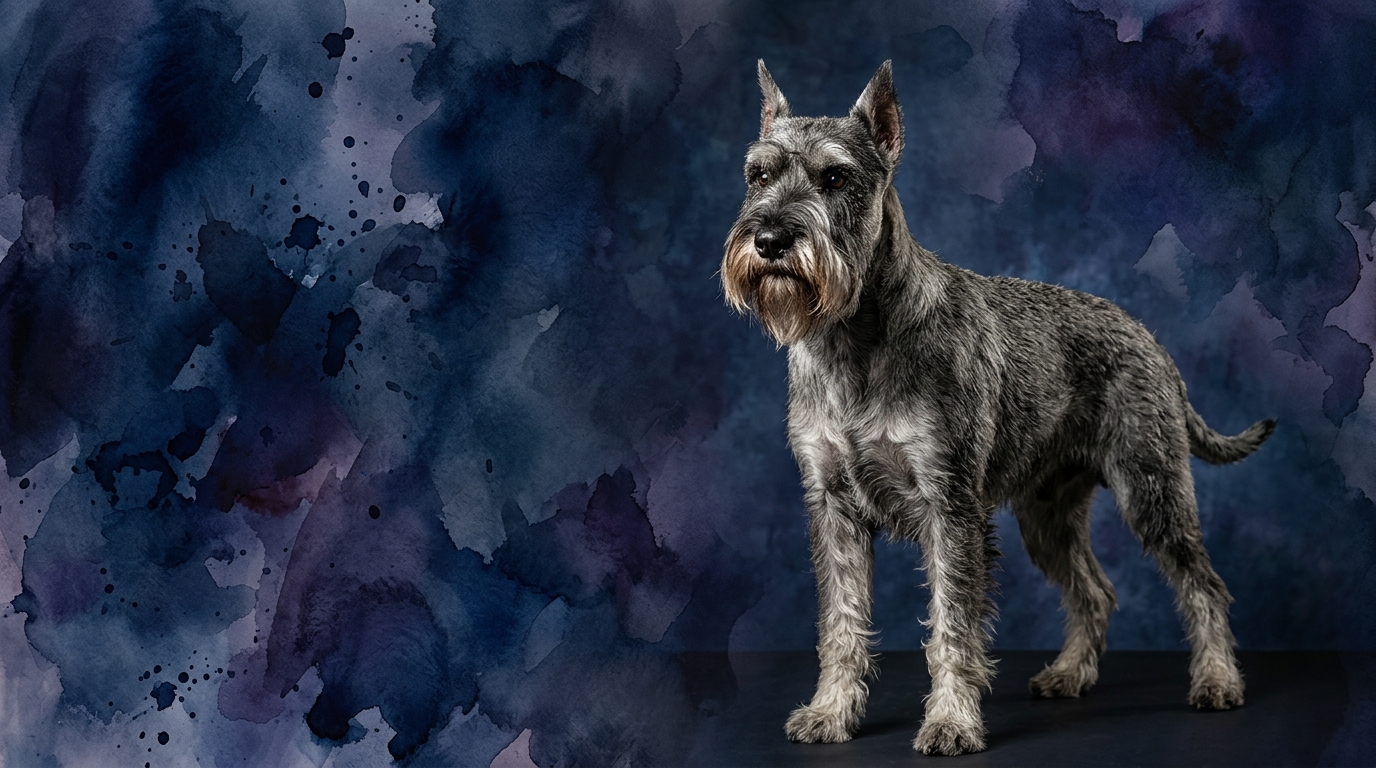
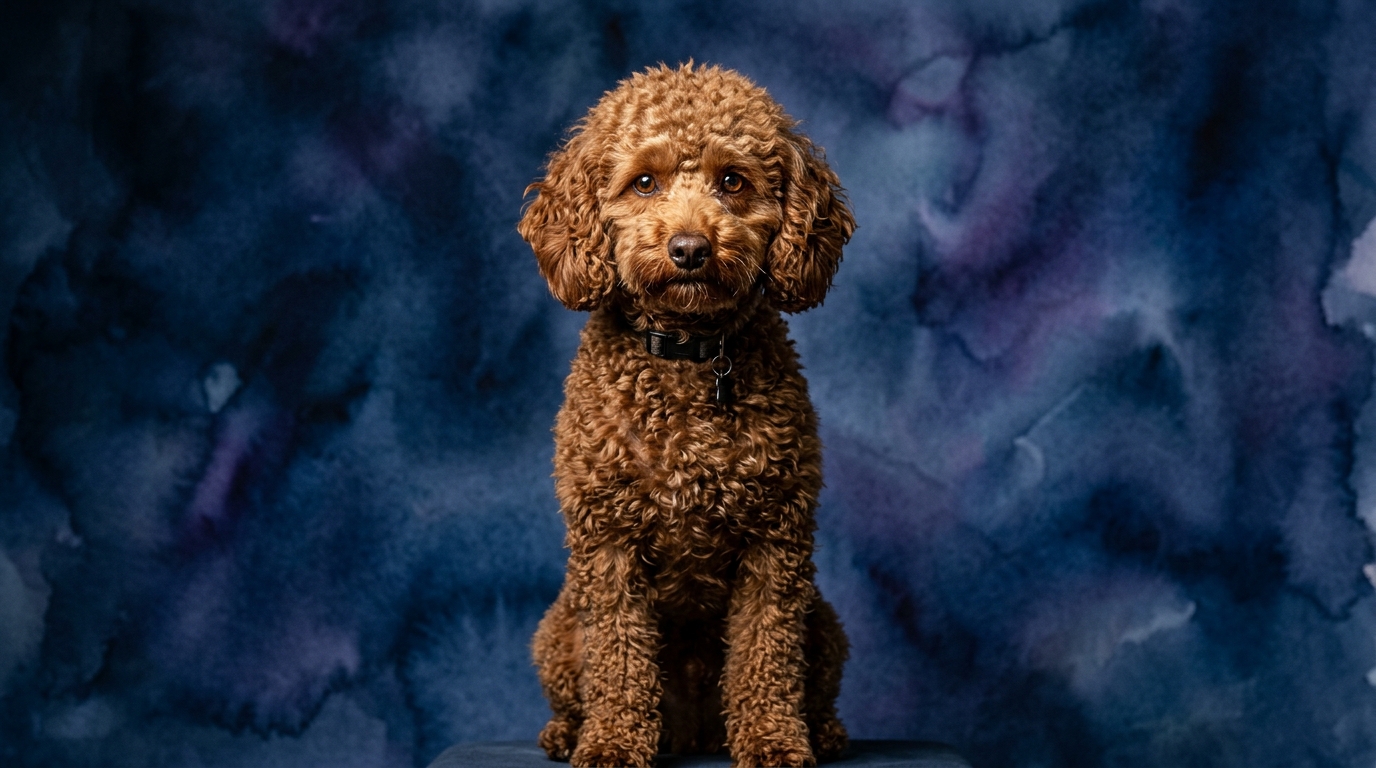
Side-by-Side Cognitive Profiles: Standard Schnauzer vs. Miniature Poodle
The Cosmic Pet Pet IQ Lab employs five key dimensions to evaluate canine intelligence, offering a nuanced view beyond mere obedience. For the Standard Schnauzer, a breed rooted in working roles, and the Miniature Poodle, celebrated for its companionship and flair, these dimensions reveal distinct cognitive strengths.
The Standard Schnauzer (Coren rank #22) presents a balanced and practical cognitive profile. Its **Problem Solving (4/5)** indicates a strong capacity to independently navigate challenges, figure out new tasks, and adapt strategies when faced with obstacles; they aren't merely rote learners but can apply learned principles to novel situations with considerable success, such as figuring out how to open a gate or retrieve a hidden toy after observing the process once. Their **Training Speed (4/5)** means they pick up new commands and routines quickly, often requiring fewer repetitions than many other breeds; their focus and desire to engage make them responsive students, though their independent streak means consistency is paramount. **Social Intelligence (3/5)** suggests a moderate ability to interpret human cues, understand social hierarchies within a household, and respond appropriately to various social contexts; while capable of forming strong bonds, their independence means they may not always seek constant human direction or validation. An **Instinctive Drive (3/5)**, reflecting their historical role as farm dogs and guardians, provides a moderate level of innate drive for tasks like alerting, guarding, and possibly vermin control, offering a foundation for purposeful activities without being overwhelming. Finally, their **Memory (4/5)** ensures they retain learned behaviors and experiences over long periods; once a command or routine is established, it tends to stick, allowing for the building of complex skill sets over time.
In contrast, the Miniature Poodle (Coren rank #2) showcases an exceptional aptitude for rapid learning and complex thought. With **Problem Solving (5/5)**, they exhibit an outstanding capacity for complex problem-solving, rapidly analyzing situations, devising innovative solutions, and excelling in tasks requiring strategic thinking or sequence learning; they thrive on mental puzzles and challenges, often solving multi-step puzzle toys quickly or even learning to manipulate latches and handles by observation and deduction. Their **Training Speed (5/5)** is astonishing, as this breed learns new commands with remarkable swiftness, often grasping concepts in just a few repetitions; their eagerness to please, coupled with their cognitive agility, makes them incredibly receptive and efficient learners in any training context. **Social Intelligence (3/5)** is solid, demonstrating a good understanding of human emotions and social dynamics, capable of bonding deeply and adapting to various family environments; they are sensitive to their owner's moods and can adjust their behavior accordingly, though their social drive is not overwhelming. A moderate **Instinctive Drive (3/5)** means that while not a traditional working breed, Miniature Poodles retain a desire to retrieve, swim, or engage in active play, which is easily channeled into positive activities and training. Their **Memory (5/5)** is outstanding, allowing them to recall a vast repertoire of commands, tricks, and past experiences with remarkable accuracy and over extended durations, contributing significantly to their training prowess and overall adaptability.
Where the Standard Schnauzer Excels Cognitively
The Standard Schnauzer's cognitive strengths are deeply rooted in its heritage as a practical, all-around farm dog and guardian. While the Miniature Poodle might demonstrate faster acquisition of new concepts, the Schnauzer's problem-solving and training speed, both rated 4/5, are notably coupled with a robust independence and a grounded, persistent approach to tasks. This breed particularly excels when given a specific job or purpose, demonstrating a thoughtful tenacity in completing it, rather than just rapidly executing commands. Their instinctive drive, rated 3/5, provides a solid foundation for practical applications like guarding, alerting, or engaging in scent work, without overwhelming their trainability. This balanced combination allows them to be effective working companions who can operate confidently and make sound judgments without constant human oversight, a trait often prized in practical, real-world scenarios. For instance, a Schnauzer might independently assess a situation and determine the best course of action to alert its family to an unfamiliar presence, leveraging its problem-solving and moderate instinctive drive in a cohesive manner.
Where the Miniature Poodle Shines Cognitively
The Miniature Poodle's cognitive strengths are undeniably centered around its unparalleled capacity for rapid learning and complex thought, placing it among the top echelons of canine cognition. With top scores of 5/5 in Problem Solving, Training Speed, and Memory, this breed demonstrates exceptional mental agility. They not only grasp new concepts almost instantaneously, often in one or two repetitions, but also retain that information with remarkable fidelity over time, allowing for the quick accumulation of a vast behavioral repertoire. Their problem-solving prowess means they can extrapolate from learned experiences, adapt to novel situations with ease, and even anticipate consequences with impressive accuracy. This cognitive horsepower makes them champions in obedience, agility, and intricate trick training, where their ability to process information quickly and execute complex sequences shines brightest. For example, a Miniature Poodle can quickly learn multi-step obstacle courses, understand complex verbal cues involving multiple actions, or even string together a sequence of tricks on command, showcasing their superior ability to connect concepts and remember sequences.
Ease of Training: Poodle's Velocity vs. Schnauzer's Steadfastness
When evaluating sheer ease of training, the Miniature Poodle holds a distinct advantage due to its superior cognitive speed. Their Training Speed rating of 5/5 means they typically require only a handful of repetitions, often just one or two, to understand and reliably perform a new command, showing immediate comprehension. Coupled with their 5/5 Memory, once a behavior is learned, it is rarely forgotten, streamlining the entire training process for both basic manners and advanced competitive disciplines. Miniature Poodles tend to be highly motivated by positive reinforcement and genuinely eager to engage in mental tasks, making them exceptionally responsive students who often offer behaviors proactively. This intrinsic motivation and rapid processing make them incredibly efficient to train.
The Standard Schnauzer, while still an excellent student with a 4/5 Training Speed, might require a few more repetitions to solidify a command, perhaps three to five. Their independent streak, while contributing to their working dog persona and ability to think for themselves, can sometimes mean they evaluate the value or purpose of a command before complying, rather than defaulting to eager participation. This doesn't mean they are difficult, but their learning velocity is simply not as instantaneous as the Poodle's. Therefore, while both breeds are highly trainable, the Miniature Poodle's exceptional cognitive speed and retention generally make the training journey quicker and often less repetitive for the owner, particularly when tackling complex sequences or a broad range of commands.
Matching Canine Cognition to Owner Lifestyles
For active owners seeking a canine partner for diverse pursuits, both breeds offer engaging companionship, though with different nuances in their cognitive demands. The Standard Schnauzer, with its Working group background and balanced instinctive drive (3/5), thrives with a clear purpose and consistent mental and physical engagement. Owners who enjoy structured activities like obedience, agility, tracking, or even farm-related tasks will find a willing and capable partner in the Schnauzer. While they don't necessarily require constant intense physical exertion, they do best with regular, stimulating outlets for their problem-solving skills and moderate drive, enjoying activities that allow them to apply their intelligence to a tangible goal. Their balanced profile means they can be versatile companions for hiking, biking, or participating in dog sports, provided these activities offer mental engagement.
For more relaxed owners, the Miniature Poodle's cognitive profile makes it surprisingly adaptable, provided mental needs are prioritized. While they possess immense mental capacity (5/5 Problem Solving, 5/5 Memory), their physical exercise needs are generally moderate and can often be met with daily walks and engaging indoor play. However, their strong desire for mental stimulation means relaxed owners must commit to regular training sessions, puzzle toys, and interactive games to prevent boredom and destructive behaviors. These mental activities don't necessarily demand high physical output but are absolutely crucial for their well-being. Therefore, the Miniature Poodle suits relaxed owners who are willing to invest significantly in mental enrichment and bond through interactive training, while the Standard Schnauzer fits active owners who enjoy purposeful outdoor activities and structured engagement that tap into a dog's sense of purpose and independent thought.
The Verdict
Choose the Standard Schnauzer if you value a robust, independent companion with a practical, grounded intelligence and a moderate drive for purpose-driven activities like guarding or scent work. This breed thrives with owners who provide consistent, engaging tasks and appreciate a dog that can think for itself while remaining loyal.
Opt for the Miniature Poodle if you seek an exceptionally quick learner and mentally agile companion who excels in complex training, trick work, and canine sports, and whose primary need is extensive mental stimulation. This breed suits owners who enjoy intricate training challenges and appreciate a dog that is eager to please and rapidly adapts to new concepts.
🧠 Find Your Pet's IQ Score
Our Pet IQ Lab assessment covers 25+ tests across 5 cognitive dimensions — personalized to your breed.
Take the Full IQ Test →Frequently Asked Questions
Are Standard Schnauzers good family dogs?
Standard Schnauzers can be excellent family dogs, known for their loyalty and protective nature towards their household. Their moderate social intelligence means they bond well with their family, though early socialization is crucial for them to comfortably interact with strangers and other animals and understand various social contexts.
Do Miniature Poodles need a lot of exercise?
Miniature Poodles require regular exercise to stay healthy and happy, but their needs are generally moderate, consisting of daily walks and playtime. More importantly, they need significant mental stimulation through consistent training, puzzle toys, and interactive games to satisfy their high problem-solving capacity and prevent boredom.
Which breed is better for apartment living?
The Miniature Poodle is generally better suited for apartment living due to its smaller size and moderate physical exercise requirements, provided its substantial mental stimulation needs are consistently met. Standard Schnauzers can adapt to apartments if they receive ample outdoor activity and purposeful engagement to satisfy their working dog instincts and prevent restlessness.