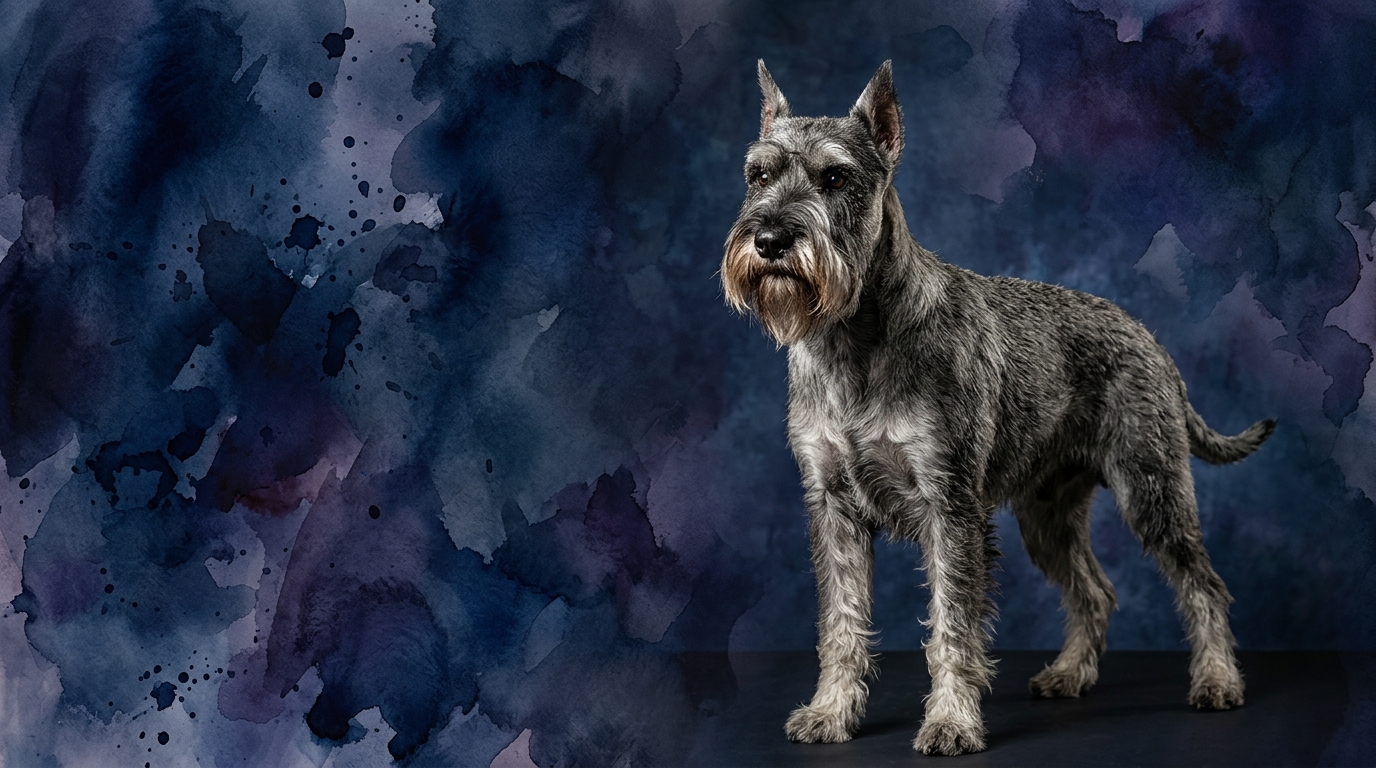
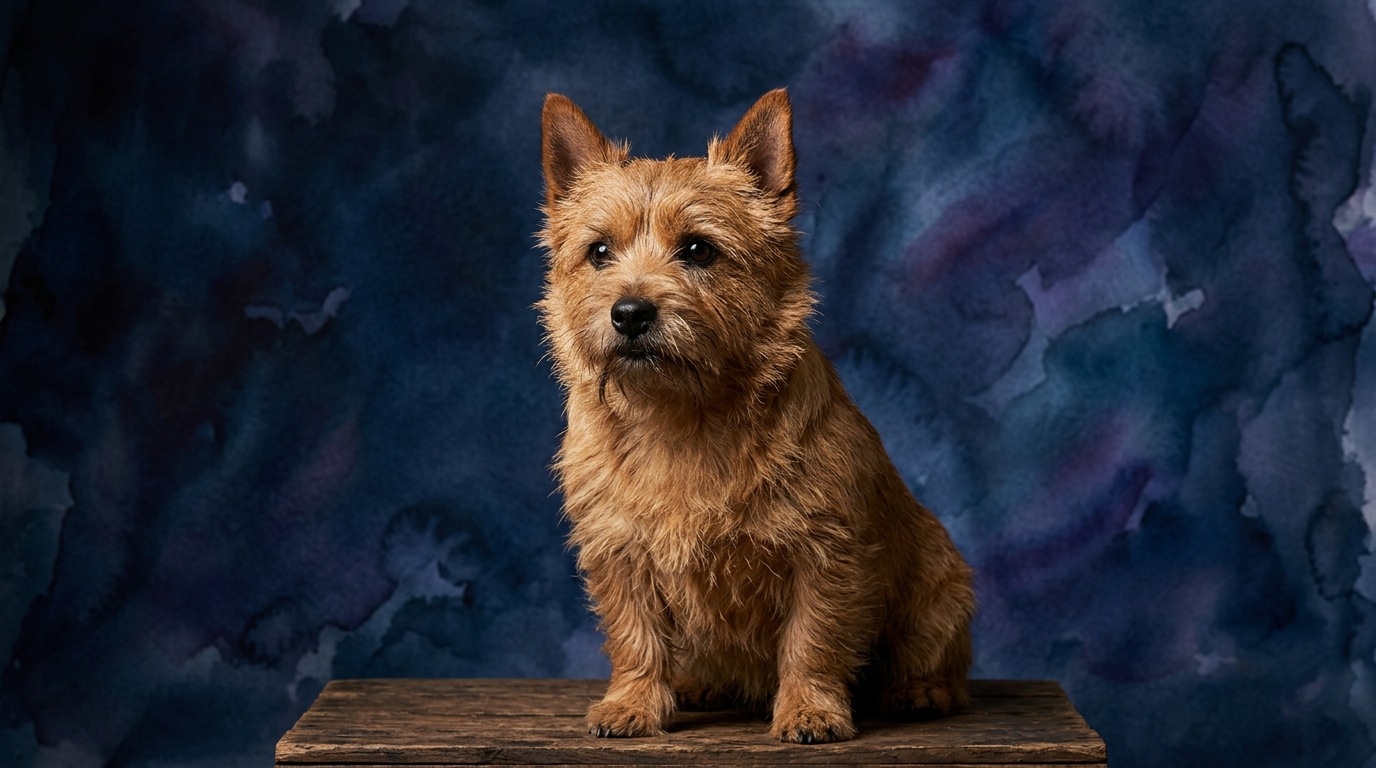
Side-by-Side Cognitive Profiles
The Cosmic Pet Pet IQ Lab employs five key dimensions to evaluate canine intelligence, offering a nuanced view beyond simple labels. For the Standard Schnauzer, a member of the Working group and ranked #22 by Coren, their cognitive strengths are quite pronounced. They exhibit a Problem Solving score of 4/5, indicating a capacity for understanding complex situations and devising effective solutions. Their Training Speed also stands at 4/5, suggesting a quick grasp of new commands and routines. Social Intelligence is rated 3/5, meaning they can interpret human cues effectively, though they retain a degree of independent thought. Their Instinctive Drive is 3/5, reflecting their heritage as working dogs with a clear purpose, and Memory is a robust 4/5, allowing them to retain learned behaviors and recall past experiences efficiently.
In contrast, the Norwich Terrier, from the Terrier group and not specifically Coren-ranked, presents a consistent cognitive profile across the board. They score 3/5 in Problem Solving, indicating practical, on-the-spot solutions rather than abstract reasoning. Their Training Speed is 3/5, meaning they are capable learners but may require more patience and varied approaches to maintain engagement. Social Intelligence is also 3/5, showing an ability to connect with their human companions while maintaining a characteristic terrier independence. Their Instinctive Drive is 3/5, a clear nod to their historical role as tenacious vermin hunters, and their Memory is also 3/5, sufficient for core commands and familiar routines, but perhaps less expansive than breeds with higher scores.
Where the Standard Schnauzer Excels Cognitively
The Standard Schnauzer’s elevated scores in Problem Solving (4/5) and Memory (4/5) give them a distinct advantage in tasks requiring multi-step sequences and long-term retention. This means they are particularly adept at advanced obedience, where they can quickly learn and accurately execute complex command chains. Their capacity for understanding intricate patterns makes them strong contenders in dog sports such as agility, where navigating a course demands both rapid learning and precise recall of obstacles. Furthermore, their superior problem-solving allows them to adapt more readily to new environments and challenges, often figuring out novel solutions to obstacles independently, such as opening latches or devising routes through complex terrain during walks. This cognitive depth translates into a dog that can truly partner with an owner in structured activities, anticipating and responding with precision.
Their Training Speed of 4/5 is another key area of cognitive superiority. This rapid acquisition of new skills not only makes the initial training phases smoother but also enables them to progress quickly through different levels of education. Owners can introduce new concepts and commands with the expectation of relatively swift comprehension and execution. This ability to learn quickly is not just about obedience; it extends to understanding household rules, routines, and even subtle changes in an owner's mood or environment, allowing them to integrate seamlessly into a structured home life. The combination of quick learning and strong memory means that once a concept is learned, it is likely to be retained for the long term, reducing the need for constant review.
Where the Norwich Terrier Shines Cognitively
While the Norwich Terrier’s scores are consistently 3/5, these numbers reflect a particular type of cognitive strength that allows them to shine in specific contexts. Their Problem Solving at 3/5 is not about abstract thought but about practical, immediate solutions, often driven by their keen instinctive drive. This makes them exceptionally good at on-the-ground tasks requiring persistence and resourcefulness, such as navigating tight spaces or outwitting small prey (or their toys). They excel at finding creative ways to achieve their objectives, which often translates into a charming tenacity in everyday life, like figuring out how to reach a favorite toy or alerting to an unusual sound outside. Their cognitive approach is rooted in action and immediate environmental assessment, making them highly effective at what they were historically bred to do.
The Norwich Terrier's consistent 3/5 in Instinctive Drive, coupled with their practical problem-solving, gives them an edge in situations demanding focused, independent action. This drive ensures they remain alert and engaged with their surroundings, making them excellent watchdogs who are quick to notice anything out of the ordinary. While their Social Intelligence is 3/5, it often manifests as a deep, loyal bond with their immediate family, allowing for subtle communication and an acute awareness of their chosen human’s emotional state. This isn’t a dog that needs constant direction; rather, they process their environment through their senses and instincts, making independent judgments that are often surprisingly apt for their size and breed purpose. Their memory, also 3/5, is perfectly adequate for recalling important people, places, and the fundamental rules of their home, ensuring a stable and predictable daily existence.
Training Ease: Schnauzer vs. Terrier
When it comes to training, the cognitive profiles of these two breeds lead to distinct experiences. The Standard Schnauzer, with its 4/5 Training Speed and Problem Solving, is generally considered more straightforward to train. They possess an eagerness to learn and a capacity to understand complex commands quickly, often thriving on consistent, structured training sessions. Their working dog background means they appreciate having a 'job' and respond well to clear expectations and positive reinforcement. They typically pick up basic obedience commands rapidly and are keen to progress to more advanced tasks, making them rewarding partners for owners who enjoy detailed training.
The Norwich Terrier, with 3/5 in Training Speed and Problem Solving, requires a different approach. While capable of learning, their terrier tenacity and independent spirit mean training can be more of a negotiation. They are less inclined to blindly follow commands and may challenge an owner if they don't see the immediate benefit or if their instincts (like chasing a squirrel) override. Training with a Norwich requires creativity, patience, and a deep understanding of their motivations. Short, engaging sessions with varied rewards work best, focusing on making training feel like a game rather than a chore. Owners must be consistent and firm, yet always fair, to channel their strong-willed nature effectively. They will learn, but perhaps at a slower pace and with more 'terrier-tude' involved.
Best Fit: Active vs. Relaxed Owners
The Standard Schnauzer’s cognitive makeup, particularly their higher problem-solving and memory, means they thrive with active owners who can provide ample mental stimulation and structured engagement. They are best suited for individuals or families who enjoy regular training sessions, dog sports like agility or obedience, or even scent work. An owner who can channel their working dog instincts into purposeful activities will find a highly cooperative and engaged companion. They require consistent interaction and challenges to prevent boredom, which could manifest as undesirable behaviors. These dogs enjoy being part of family activities and require an owner who values their participation in daily life, providing a sense of purpose.
The Norwich Terrier, while possessing a distinct energy, can suit a broader range of owners, including those who might be considered more 'relaxed' but are still committed to mental engagement. Their consistent instinctive drive means they need outlets for their terrier tendencies, like supervised digging areas or plenty of interactive toys. They enjoy walks and playtime, but their exercise needs are often met with moderate activity rather than intense, prolonged sessions. They are ideal for owners who appreciate a spirited, independent companion who is happy to curl up for a nap after a good walk, but who also understands the need for consistent mental enrichment through puzzle toys, short training bursts, and engaging games. They thrive with owners who appreciate their big personality in a small package and can provide clear boundaries and consistent, positive guidance without necessarily committing to advanced dog sports.
The Verdict: When to Choose Each
The Verdict
Choose the Standard Schnauzer if you seek a highly capable and responsive partner for advanced training, dog sports, or a structured working role, valuing their quick learning and strong memory. They thrive with owners who provide consistent mental challenges and purposeful engagement.
Opt for the Norwich Terrier if you appreciate a tenacious, independent companion with a practical problem-solving approach and a consistent instinctive drive, even if training requires more patience. They are suited for owners who can channel their terrier spirit with creativity and consistent boundaries, enjoying a spirited companion in a more compact form.
🧠 Find Your Pet's IQ Score
Our Pet IQ Lab assessment covers 25+ tests across 5 cognitive dimensions — personalized to your breed.
Take the Full IQ Test →Frequently Asked Questions
Is the Standard Schnauzer easy to train for first-time owners?
With a training speed of 4/5, Standard Schnauzers are generally receptive to learning and can be good for first-time owners who are committed to consistent, positive reinforcement training. Their capacity to quickly grasp commands makes the process rewarding, but their working dog drive means they need mental engagement beyond basic obedience.
What kind of mental stimulation does a Norwich Terrier need?
Norwich Terriers, with their 3/5 problem-solving and instinctive drive, benefit from activities that engage their natural curiosity and hunting instincts. This includes puzzle toys, scent games, short and engaging training sessions, and opportunities for supervised exploration in a secure yard. They enjoy 'working' to solve problems, even if it's just getting a treat out of a toy.
How do their social intelligence scores impact their family life?
Both breeds score 3/5 in social intelligence, meaning they are attuned to their human families but retain some independence. Standard Schnauzers will often form strong bonds and be protective, while Norwich Terriers develop deep attachments to their chosen people, often expressing their affection with an endearing, spirited personality. Both appreciate being included in family activities but may not be overly demonstrative with strangers.