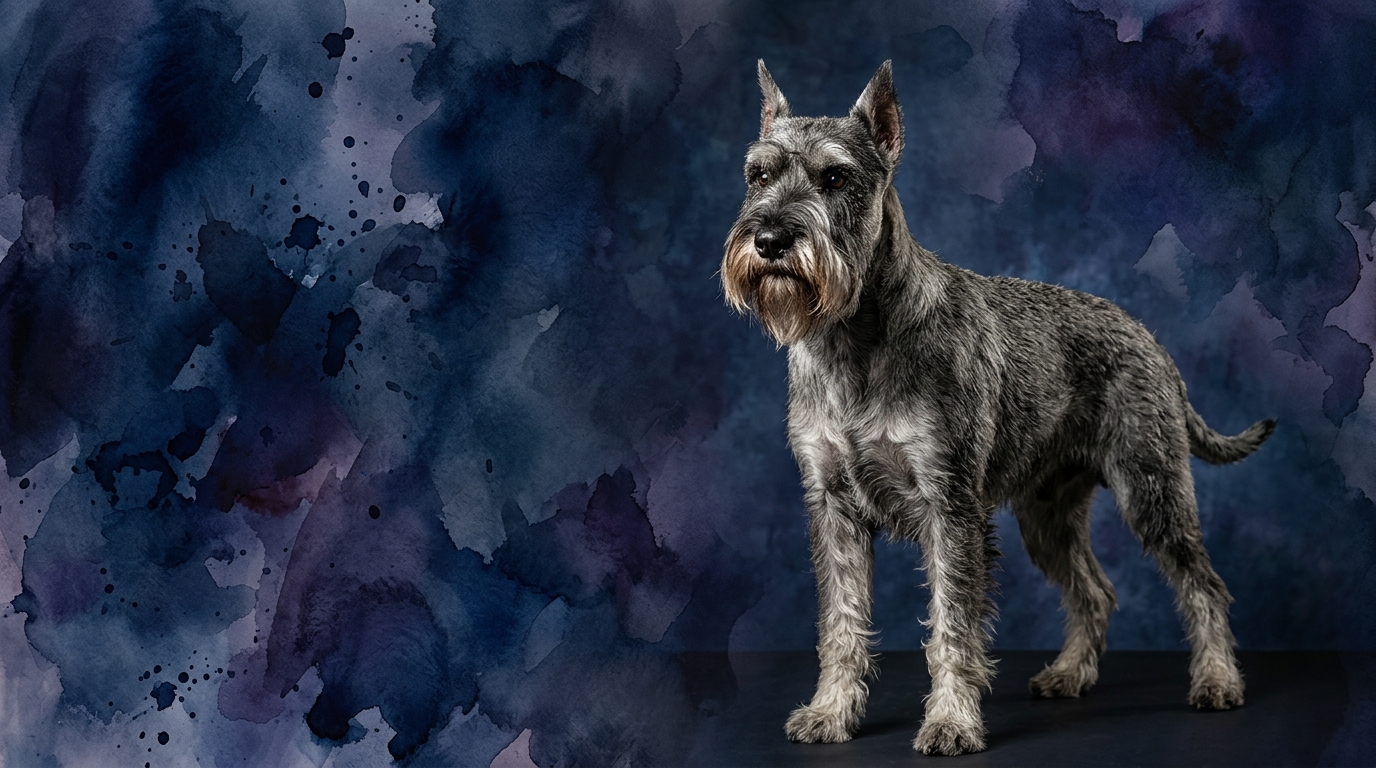
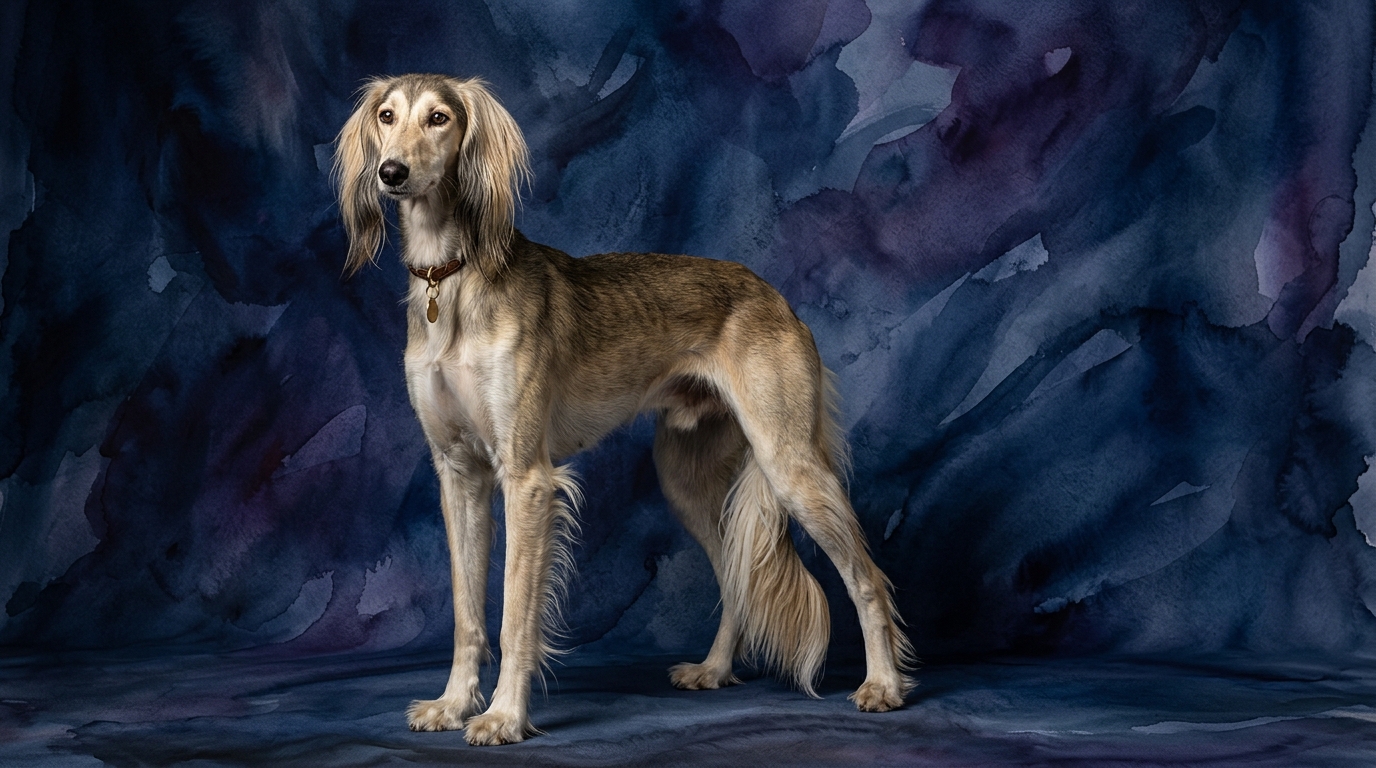
Side-by-Side IQ Profile: Standard Schnauzer vs. Saluki
The Cosmic Pet Pet IQ Lab employs a multi-dimensional assessment to capture a breed's cognitive essence beyond simple obedience. For the Standard Schnauzer, a breed ranked #22 by Coren, its profile shows a robust intellect: Problem Solving 4/5, Training Speed 4/5, Social Intelligence 3/5, Instinctive Drive 3/5, and Memory 4/5. This profile paints a picture of a dog adept at understanding and navigating complex situations, quick to grasp new concepts, and capable of retaining learned behaviors over time. Their social intelligence, while not the absolute highest, indicates a capacity for appropriate interaction within a family structure, and their instinctive drive is balanced, allowing for redirection towards tasks.
In contrast, the Saluki, a breed not ranked by Coren, presents a different cognitive signature, reflecting its ancient sighthound heritage: Problem Solving 3/5, Training Speed 3/5, Social Intelligence 3/5, Instinctive Drive 3/5, and Memory 3/5. This breed demonstrates a moderate capacity for problem-solving, often preferring to make its own decisions rather than seeking human guidance. Their training speed is adequate but suggests a need for patience and positive reinforcement, reflecting their independent nature. Social intelligence is on par with the Schnauzer, indicating a capacity for forming bonds, while their instinctive drive, particularly for chasing, is a defining characteristic of their breed type. Their memory is solid, though perhaps not as keenly applied to human-initiated tasks as the Schnauzer’s.
Where the Standard Schnauzer Wins Cognitively
The Standard Schnauzer clearly excels in areas demanding active engagement and collaborative problem-solving. With a 4/5 in Problem Solving, these dogs aren't just following commands; they are often figuring out *how* to achieve a goal. This manifests in their ability to master complex obedience routines, excel in dog sports requiring sequential tasks like agility or rally, and even cleverly manipulate their environment to get what they want – perhaps by figuring out how to open a cabinet or unlatch a gate. Their superior Training Speed (4/5) means they form associations quickly, making the learning process efficient and rewarding for both dog and owner. They pick up on cues, routines, and expectations with remarkable alacrity. Furthermore, their 4/5 Memory score ensures that once a lesson is learned or a skill acquired, it's retained with impressive longevity, allowing for advanced training and consistent behavior over their lifetime. This combination of quick learning, effective retention, and active problem-solving makes the Standard Schnauzer a highly adaptable and mentally engaging companion.
Where the Saluki Wins Cognitively
While the Saluki's IQ scores might not match the Standard Schnauzer's in human-centric tasks, their cognitive strengths lie in a specialized, independent form of intelligence perfectly adapted to their original purpose. Their 3/5 in Problem Solving, though lower, reflects a distinct approach: Salukis are adept at making quick, autonomous decisions in dynamic environments, particularly when pursuing prey. This isn't about solving a puzzle toy but about strategizing a chase, navigating varied terrain at speed, and utilizing their keen senses to locate and intercept. Their Instinctive Drive (3/5) is not merely a raw urge; it's a sophisticated package of sensory perception, anticipation, and pursuit strategy that has been honed over centuries. They possess an innate ability to process visual stimuli at a distance and react with incredible speed and precision. This independent cognitive style means they are not constantly seeking human direction but are confident in their own judgments, a trait that makes them exceptional in their sighthound role. Their memory (3/5) is effective for recalling paths, recognizing familiar faces, and remembering critical environmental cues relevant to their world, even if it's less focused on rote obedience.
Which is Easier to Train and Why
When it comes to ease of training, the Standard Schnauzer generally presents a more straightforward path. Their 4/5 Training Speed and strong desire to collaborate with their human partners mean they often approach training sessions with enthusiasm and a willingness to engage. They typically respond well to positive reinforcement, eager to please and quick to understand what is being asked of them. Their working dog heritage instills a sense of purpose in tasks, making them receptive to structure and routine. They find satisfaction in learning and executing commands, viewing it as a shared activity with their owner. This collaborative spirit significantly reduces the effort required to teach new behaviors and reinforce existing ones, making them a more predictable and responsive training partner for a wide range of activities.
The Saluki, with a 3/5 Training Speed, often requires a different approach to training. Their independent nature, a hallmark of sighthounds, means they are not inherently driven to please in the same way a working breed might be. They are capable of learning, and they do understand commands, but they often weigh the perceived value of compliance against their own impulses, particularly their formidable prey drive. A Saluki might perfectly execute a 'recall' in a distraction-free environment but then choose to ignore it if a squirrel crosses their path, demonstrating a prioritization of instinct over learned obedience. Training a Saluki requires immense patience, consistency, and a deep understanding of their sighthound temperament. Owners often find success by making training fun, varied, and highly rewarding, focusing on building a strong relationship rather than expecting robotic adherence to commands. Their training is less about 'easy' and more about 'effective communication and motivation' within their unique cognitive framework.
Which Suits Active Owners vs. Relaxed Owners
For owners who define 'active' as engaging in structured activities, training, and mental challenges, the Standard Schnauzer is an excellent match. Their need for mental stimulation and their desire to work alongside their owner mean they thrive in environments where they are given jobs to do, whether it's advanced obedience, agility, barn hunt, or even just consistent trick training. They require daily exercise that includes both physical exertion and cognitive engagement to prevent boredom and potential mischievousness. An owner who enjoys teaching, problem-solving with their dog, and maintaining a consistent training regimen will find the Schnauzer a fulfilling companion. They are not content to be mere couch potatoes, demanding active participation in family life.
The Saluki, while possessing incredible physical stamina and a need for regular, vigorous exercise, suits a different kind of 'active' owner. Their activity needs are often bursts of high-speed running in a safe, enclosed area, reflecting their sighthound heritage. They are not typically suited for long, structured training sessions in the same way a Schnauzer is, nor do they demand constant mental puzzles from their owners. Once their exercise needs are met, Salukis are often quite relaxed indoors, preferring to lounge gracefully. They suit owners who appreciate their independent spirit, can provide safe opportunities for them to stretch their legs and run, and understand that their mental engagement often comes from observing their environment and making their own decisions rather than through direct human instruction. They are not for the owner seeking a constantly 'on' or 'eager to please' companion, but rather one who appreciates a more self-possessed and serene presence indoors, coupled with explosive athleticism outside.
The Verdict
Choose the Standard Schnauzer if you seek an engaged, trainable companion eager to participate in structured activities and mental challenges, thriving on a collaborative partnership.
Opt for the Saluki if you appreciate an independent, graceful sighthound whose unique intelligence shines in bursts of speed and autonomous decision-making, and you can provide ample safe running space.
🧠 Find Your Pet's IQ Score
Our Pet IQ Lab assessment covers 25+ tests across 5 cognitive dimensions — personalized to your breed.
Take the Full IQ Test →Frequently Asked Questions
Are Salukis difficult to train?
Salukis are not 'difficult' in the sense of being unintelligent, but their independent nature and strong prey drive mean they require patient, consistent, and highly motivating training methods. They respond best to positive reinforcement and a strong bond, often prioritizing their instincts over commands if sufficiently tempted.
Do Standard Schnauzers need a lot of exercise?
Yes, Standard Schnauzers require significant daily exercise, encompassing both physical activity and mental stimulation. They thrive on structured walks, playtime, and engaging activities like obedience training or dog sports to keep their minds and bodies active and prevent boredom.
Which breed is better for first-time dog owners?
For most first-time dog owners, the Standard Schnauzer might be a more manageable choice due to their higher training speed and eagerness to please, which can make the learning process smoother. The Saluki's independent nature and specific exercise requirements can be more challenging for those new to dog ownership.