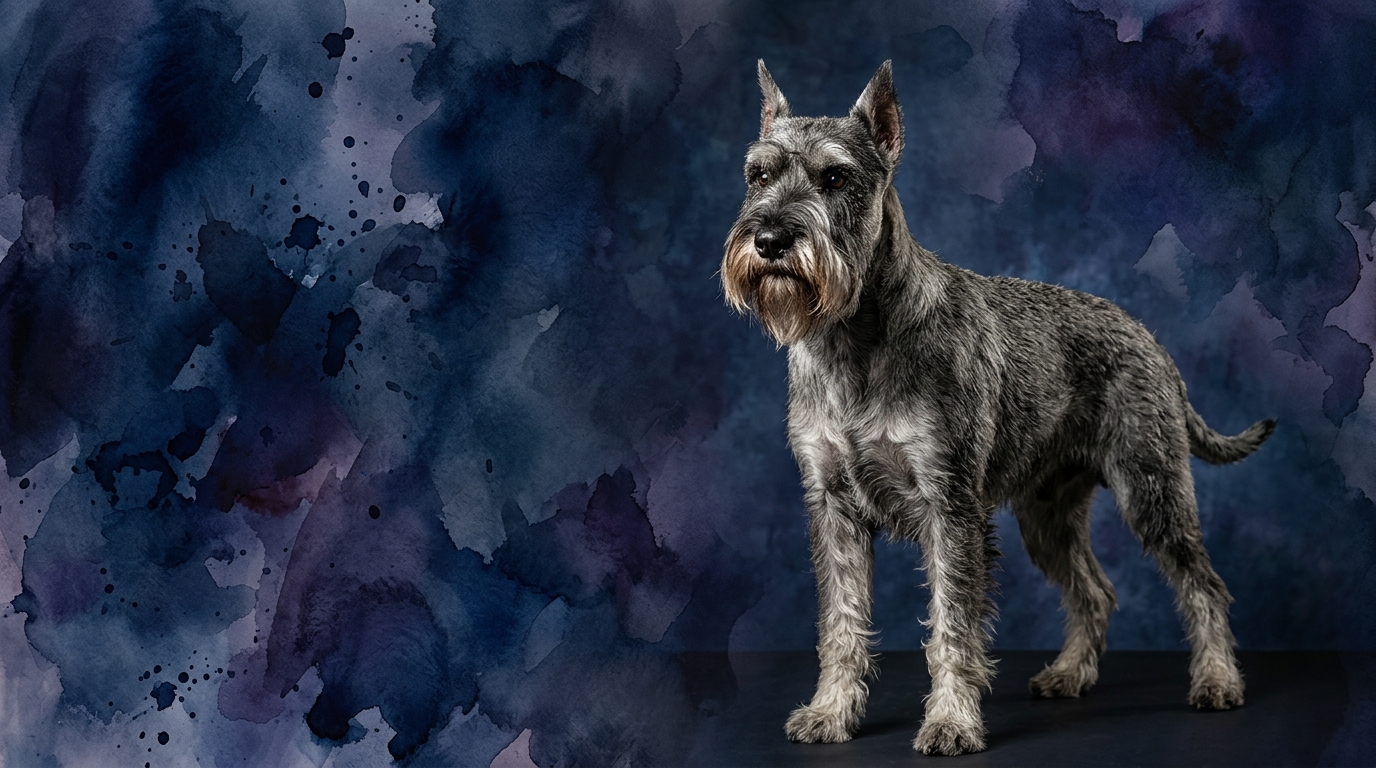
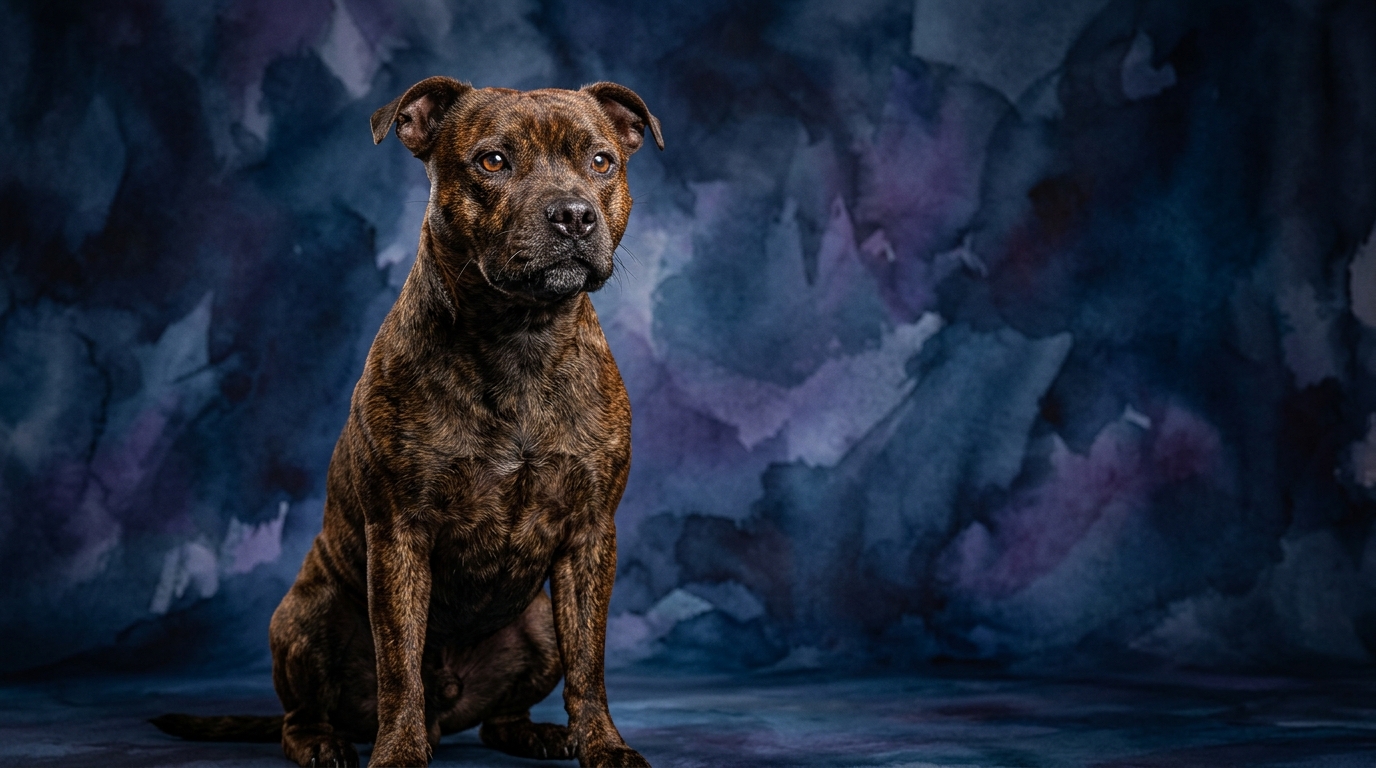
Side-by-Side Cognitive Profile: Standard Schnauzer vs. Staffordshire Bull Terrier
At The Cosmic Pet Pet IQ Lab, we evaluate canine intelligence across five key dimensions. Let's delve into how the Standard Schnauzer and Staffordshire Bull Terrier measure up in each area.
Problem Solving: This dimension assesses a dog's capacity to navigate new situations, understand cause-and-effect, and figure out how to achieve a goal. The Standard Schnauzer scores 4/5 here, often displaying a resourceful approach to new challenges, quickly assessing environments and devising strategies, whether it's opening a gate or finding a hidden toy. Their working heritage equipped them to independently tackle tasks. The Staffordshire Bull Terrier, with a score of 3/5, shows a practical, persistent approach to problem-solving. While they might not always find the most elegant solution, their determination often leads them to success, especially when a task involves physical manipulation or overcoming obstacles through sheer will.
Training Speed: This metric reflects how readily a breed grasps and retains new commands and routines. With a score of 4/5, Standard Schnauzers typically pick up new cues and sequences rapidly, displaying a strong desire to please and a quick grasp of concepts. Their focused attention makes them responsive learners in structured environments. Staffordshire Bull Terriers, scoring 3/5, are capable learners, but their independent terrier spirit can sometimes mean they require more repetition or varied motivational techniques. Once they understand a command and its reward, they are generally reliable in execution.
Social Intelligence: This dimension measures a dog's ability to interpret human communication, understand social cues, and adapt their behavior within a social context. Both breeds score 3/5 in social intelligence. Standard Schnauzers are attuned to their human companions, often observing and responding to subtle changes in tone or body language. They form strong bonds and can be quite perceptive about their family's moods, though their initial approach to strangers might be reserved. Staffies exhibit a notable capacity for social bonding with their chosen family, often displaying an intuitive understanding of human emotions and a desire for close interaction. Their expressiveness and willingness to engage make them communicative companions, though like Schnauzers, their initial assessment of unfamiliar individuals can be cautious.
Instinctive Drive: This refers to the inherent, genetically predisposed behaviors like prey drive, guarding instincts, herding tendencies, or digging. Both breeds score 3/5. Rooted in their ratting and guarding past, Standard Schnauzers possess moderate instinctive drives. They have a natural inclination to protect their home and family and can exhibit a prey drive towards small, fast-moving objects, requiring consistent management. As terriers, Staffies also possess a distinct, moderate instinctive drive. This manifests as a determined pursuit of interests, whether it's digging, exploring scents, or engaging in robust play. Their historical role means they approach tasks with a focused intensity.
Memory: This assesses the ability to retain learned information, recall past experiences, and recognize individuals or places over time. Standard Schnauzers demonstrate excellent memory, scoring 4/5, remembering complex sequences, learned behaviors, and people even after long periods. This contributes significantly to their training retention and ability to navigate familiar environments. Staffordshire Bull Terriers possess a reliable memory for training and routines, and they form lasting associations with people and places, scoring 3/5. While not quite as detailed in recall as the Schnauzer, they are certainly capable of retaining a wide array of information.
Where the Standard Schnauzer Excels Cognitively
The Standard Schnauzer’s cognitive strengths truly shine in areas requiring analytical thought and rapid assimilation of information. Their superior problem-solving skills (4/5) mean they often approach novel situations with a strategic mindset, quickly assessing variables and devising effective solutions. This aptitude, combined with their swift training speed (4/5), allows them to master complex commands and multi-step tasks with remarkable efficiency. Furthermore, their excellent memory (4/5) ensures that learned behaviors and established routines are retained over extended periods, making their training cumulative and reliable. This combination of quick learning, strategic thinking, and strong recall positions them as adept participants in activities requiring precision and sustained mental engagement, from obedience trials to scent work.
Where the Staffordshire Bull Terrier Excels Cognitively
While the Staffordshire Bull Terrier might not outscore the Schnauzer in traditional metrics, their cognitive strengths lie in their unique blend of tenacity, emotional depth, and practical application. Their problem-solving (3/5) is often characterized by sheer determination; they might not find the most elegant solution, but they will persist until a goal is achieved, showcasing a robust mental fortitude. Their social intelligence (3/5), though rated similarly, manifests as a profound emotional connection and an intuitive grasp of their human family’s feelings, making them exceptionally empathetic companions. They excel in situations where resilience and a strong will are paramount, often displaying remarkable bravery and an unwavering commitment to their loved ones. This breed's 'wins' are less about speed or complexity and more about enduring spirit and heartfelt connection.
Training Dynamics: Which Breed is Easier to Shape?
Comparing training ease, the Standard Schnauzer generally holds an advantage due to their higher scores in both training speed (4/5) and problem-solving (4/5). Their inherent drive to understand and execute commands, coupled with their quick grasp of new concepts, often translates into a more straightforward and less repetitive training process. They tend to be highly motivated by positive reinforcement and respond well to structured lessons, quickly forming associations between actions and rewards. In contrast, while the Staffordshire Bull Terrier (Training Speed 3/5, Problem Solving 3/5) is certainly trainable, their terrier independence and strong will can sometimes require more patience, consistency, and creative motivation techniques. They might challenge boundaries more frequently or require a stronger incentive to engage fully, meaning owners need to be particularly adept at making training fun and rewarding to maintain their focus and cooperation.
Matching Breeds to Lifestyles: Active vs. Relaxed Owners
For owners with an active lifestyle, both breeds can be suitable, but their cognitive demands differ significantly. The Standard Schnauzer, with its working background and higher problem-solving aptitude, thrives on consistent mental and physical engagement. They need activities that challenge their intellect, such as advanced obedience, agility, or scent work, alongside regular physical exercise. Owners who enjoy teaching new tricks, participating in dog sports, or engaging in structured outdoor adventures will find a highly cooperative partner. A 'relaxed' owner who cannot provide this mental stimulation might find a bored Schnauzer inventing their own, potentially destructive, entertainment. The Staffordshire Bull Terrier also benefits from regular activity, but their cognitive needs are often met through robust play, interactive games, and consistent companionship. While they enjoy learning, their primary drive is often for physical engagement and social interaction with their family. A Staffy can adapt to a slightly less structured routine if they receive ample affection, playtime, and opportunities to expend their physical energy, making them potentially more forgiving for owners whose daily schedule might vary, provided their fundamental needs for exercise and companionship are met.
The Verdict
Choose the Standard Schnauzer if you are seeking a highly trainable, mentally agile companion for structured activities and enjoy a dog that actively 'thinks' through challenges.
Choose the Staffordshire Bull Terrier if you value a tenacious, emotionally intuitive companion with a robust spirit, who thrives on close family interaction and engaging physical play.
🧠 Find Your Pet's IQ Score
Our Pet IQ Lab assessment covers 25+ tests across 5 cognitive dimensions — personalized to your breed.
Take the Full IQ Test →Frequently Asked Questions
Are Standard Schnauzers good for first-time dog owners?
Their trainability and desire to please can make them good candidates, but their need for consistent mental stimulation and confident leadership means a first-time owner should be prepared for an active, engaged partnership. They are not a 'set it and forget it' breed.
Do Staffordshire Bull Terriers do well with other pets?
With proper early socialization, many Staffies can coexist peacefully with other pets. However, their terrier heritage can sometimes mean they have a strong prey drive or dog-dog selectiveness, so careful introductions and supervision are always important, especially with smaller animals.
What kind of mental stimulation do Standard Schnauzers need?
Standard Schnauzers benefit from puzzle toys, advanced obedience training, agility, scent work, and learning complex trick sequences. Engaging their problem-solving skills regularly prevents boredom and channels their intellect constructively.