
Side-by-Side IQ Profile: Unpacking the 3/5 Score
While both the Sussex Spaniel and the Cesky Terrier register a 3 out of 5 across the board in our Pet IQ Lab, these identical scores belie a rich tapestry of cognitive expression shaped by their respective breed purposes. A score of 3/5 does not imply an average or generic intellect; rather, it signifies a specific manifestation of cognitive abilities within the context of their historical roles and inherent temperaments. Understanding these nuances is key to appreciating their distinct forms of intelligence.
For the **Sussex Spaniel**, a Sporting Group dog with a Coren ranking of #62, their cognitive profile is characterized by a cooperative and methodical approach. Their **Problem Solving (3/5)** centers on practical, sensory-driven tasks. Bred to flush game in dense undergrowth, their solutions often involve systematic scent tracking and navigating complex terrain, demonstrating persistence in sequential tasks rather than independent, creative detours. Their **Training Speed (3/5)** indicates a steady learning pace; they are generally biddable and eager to partner with their handler, thriving on consistent, positive reinforcement that solidifies commands over time. In **Social Intelligence (3/5)**, the Sussex shows a strong capacity for interpreting human cues and forming deep bonds, relying on companionship and validation within their family unit. Their **Instinctive Drive (3/5)** is deeply rooted in their flushing heritage, manifesting as a purposeful desire to explore scents and work cover, always with an orientation towards finding game for their human companion. Finally, their **Memory (3/5)** is reliable for recalling training cues, routines, and successful strategies for navigating their environment, supporting their consistent performance in both working and home life.
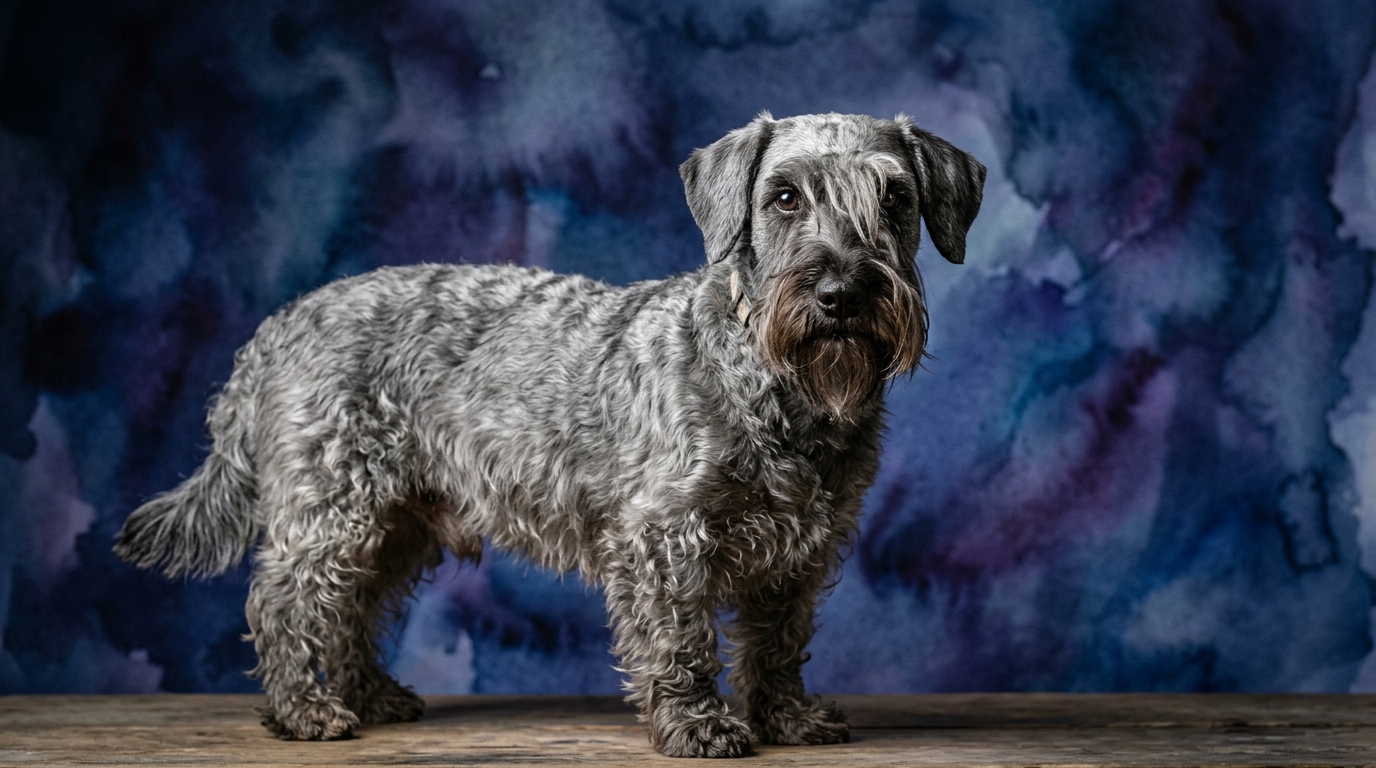
The **Cesky Terrier**, a Terrier Group dog without a Coren ranking, presents a profile of independent resourcefulness. Their **Problem Solving (3/5)** is expressed through tenacity and individual ingenuity. As a breed developed to hunt vermin in burrows, their problem-solving involves assessing tight spaces, strategizing how to flush prey, and often thinking laterally to overcome physical obstacles. They are self-directed and persistent in finding solutions. Their **Training Speed (3/5)**, while indicating learning capacity, is often tempered by their independent terrier spirit; they learn commands but may choose when to apply them based on their own motivations, requiring engaging and consistent methods to channel their focus. In **Social Intelligence (3/5)**, the Cesky exhibits a discerning sociability, bonding deeply with their chosen family but often displaying a more reserved demeanor with strangers. They understand their 'pack' dynamics but are less inclined to constant social validation. Their **Instinctive Drive (3/5)** is a profound prey drive, accompanied by a keen sense of smell and a natural inclination to dig. This drive is focused on the thrill of the chase and the satisfaction of 'working' independently. Their **Memory (3/5)** is strong for what benefits their independent pursuits, retaining successful strategies for hunting, interesting scent locations, and the consequences of their actions, even if they occasionally 'forget' a less compelling command.
Where the Sussex Spaniel Wins Cognitively
The Sussex Spaniel's cognitive strengths truly shine in their capacity for cooperative engagement. Their 3/5 in problem-solving is intrinsically linked to their role as a working partner, allowing them to excel at understanding and executing complex sequences of commands from a handler. This makes them highly effective team players, particularly in tasks requiring sustained focus and methodical progression. Furthermore, their biddable nature and innate desire to please ensure a consistent application of learned behaviors; once a task is understood, the Sussex reliably performs it, making them predictable and dependable in structured environments. Their instinctive drive, while potent, is also oriented towards working *for* the handler, meaning they are less prone to breaking off a task for purely personal gratification, preferring to share the hunt.
Where the Cesky Terrier Wins Cognitively
Conversely, the Cesky Terrier’s cognitive prowess lies in independent ingenuity and tenacious self-reliance. Their 3/5 in problem-solving manifests as remarkable resourcefulness, especially when faced with novel challenges or navigating confined spaces. They are adept at strategizing solutions without constant human intervention, demonstrating a cleverness born from their historical role as solo vermin hunters. This independence, combined with their potent instinctive drive, fuels an impressive tenacity; a Cesky will persist in a task, finding creative ways to overcome obstacles rather than waiting for direction. This self-sufficiency extends to their general demeanor; while they form deep bonds, they are often content to engage their minds independently, provided they have appropriate mental and physical outlets, making them less demanding of constant human-initiated entertainment.
Which is Easier to Train and Why
When considering ease of training, the Sussex Spaniel generally presents a smoother path for the average owner. Despite sharing a 3/5 in training speed, their cooperative nature and strong desire to work *with* their handler make them more amenable to traditional obedience methods. They are less inclined to question commands or become sidetracked by independent urges, and their social intelligence helps them readily grasp what is expected in a partnership.
The Cesky Terrier, while capable of learning quickly (3/5 training speed), often requires a more nuanced approach. Their independent problem-solving and strong instinctive drives mean they might learn a command but choose not to perform it if a more compelling instinct (like a scent trail) presents itself. Training a Cesky needs to be consistently engaging, positive, and often involve leveraging their natural prey drive in a controlled manner, or they will find their own, potentially less desirable, forms of entertainment. Their memory reliably retains what *they* find useful, which might not always align perfectly with an owner's agenda.
Which Suits Active Owners vs. Relaxed Owners
The **Sussex Spaniel** generally suits owners who enjoy consistent, moderate outdoor activity. They need regular exercise and mental stimulation that taps into their sniffing and 'working' heritage, such as scent games or structured walks, but they are not typically extreme athletes. They thrive on inclusion in family activities and structured engagement like obedience or field work. While adaptable, they require their daily needs to be met and will not be content as purely sedentary companions.
The **Cesky Terrier** is better suited for active owners who understand and can channel a terrier's intense, focused energy. They need dedicated outlets for their prey drive and digging instincts, often excelling in earthdog trials, agility, or vigorous, focused play sessions. While capable of being calm indoors, their mental and physical needs demand consistent, dedicated engagement. An owner seeking a truly 'relaxed' companion without providing stimulating, varied activities might find a bored or destructive Cesky.
The Verdict
Opt for the Sussex Spaniel if you desire a cooperative companion who thrives on partnership, valuing consistent effort in training and engaging in scent work alongside you for a rewarding shared experience.
Select the Cesky Terrier if you appreciate an independent, tenacious problem-solver, ready to engage in stimulating activities that channel their focused terrier instincts and clever self-sufficiency.
🧠 Find Your Pet's IQ Score
Our Pet IQ Lab assessment covers 25+ tests across 5 cognitive dimensions — personalized to your breed.
Take the Full IQ Test →Frequently Asked Questions
Do Sussex Spaniels and Cesky Terriers have similar trainability?
While both breeds score 3/5 in training speed, their underlying motivations differ. Sussex Spaniels are generally more biddable and eager to please, making traditional training often smoother. Cesky Terriers, with their independent nature, require more engaging and consistent training that leverages their natural instincts.
Which breed is better for a family with children?
Sussex Spaniels, with their generally amiable and socially intelligent nature, often integrate well into family life, forming strong bonds. Cesky Terriers can be devoted to their families but might be more reserved with strangers or less tolerant of boisterous play, making proper socialization and supervision crucial.
How do their instinctive drives differ in a home environment?
A Sussex Spaniel's instinctive drive often manifests as a love for scent work and exploring, usually in a cooperative manner. A Cesky Terrier's drive is typically a strong prey instinct and a propensity for digging, which requires dedicated outlets like earthdog sports or puzzle toys to manage constructively indoors.