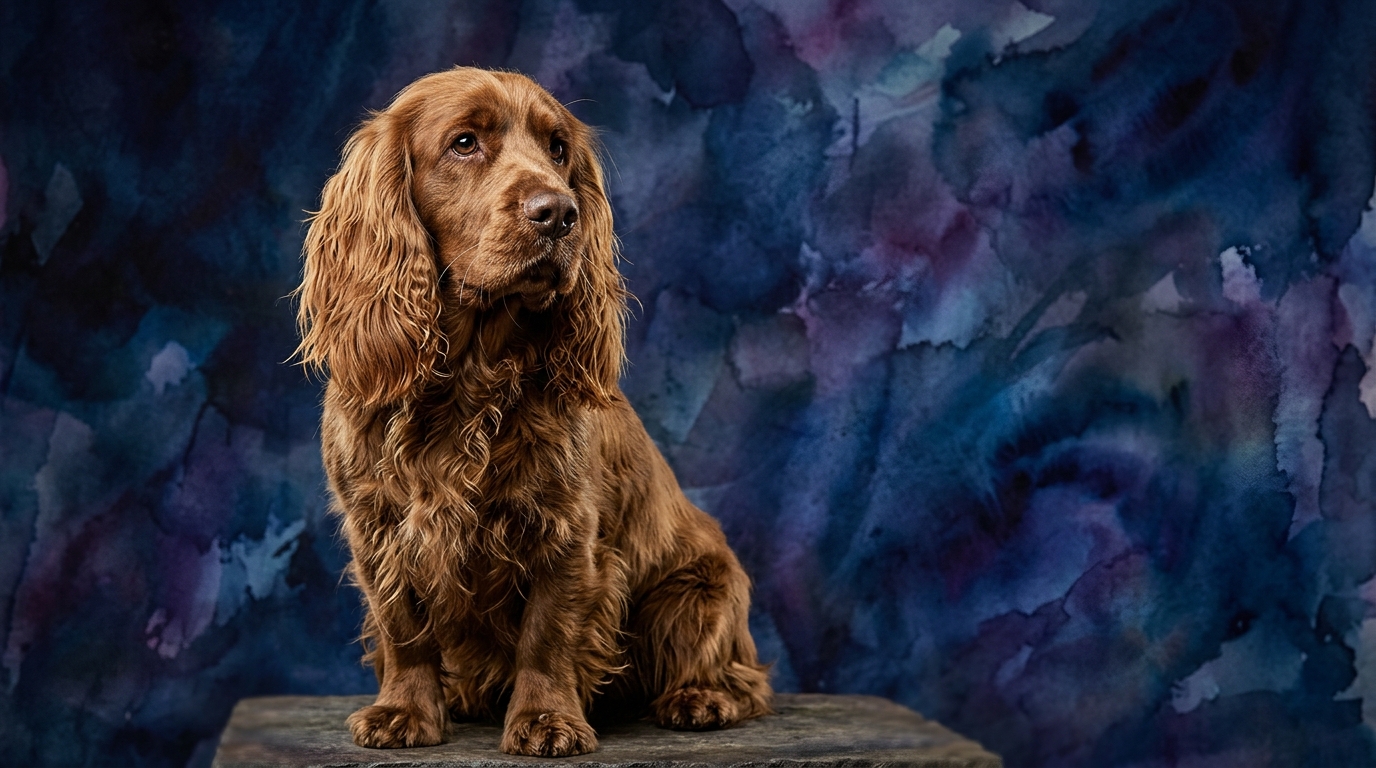
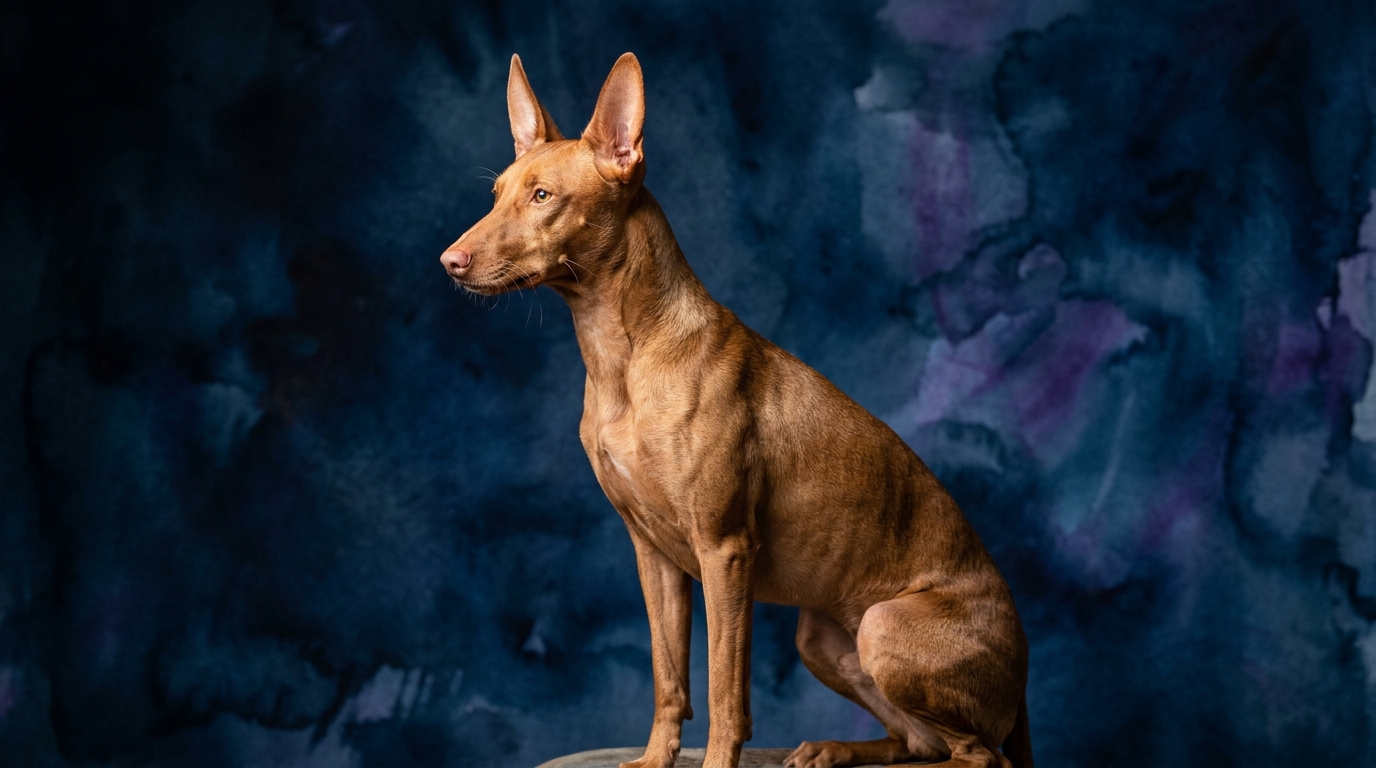
Side-by-Side IQ Profile: Sussex Spaniel vs. Pharaoh Hound
The Cosmic Pet Pet IQ Lab provides a standardized framework for understanding canine cognition across five crucial dimensions. For both the Sussex Spaniel and the Pharaoh Hound, each dimension scores a consistent 3 out of 5, indicating a moderate capacity. However, the *expression* of this moderate ability is profoundly shaped by their breed heritage.
The Sussex Spaniel, a member of the Sporting group and Coren-ranked at #62, demonstrates a moderate capacity for Problem Solving (3/5) that often thrives in a cooperative context. Their historical role as flushing dogs means they are adept at navigating dense cover and making tactical decisions to locate game, typically within the framework of a hunt, seeking direction from their handler. They might not independently devise complex solutions to novel puzzles but are capable of learning routines and applying learned strategies. Their Training Speed (3/5) is moderate, responding well to consistent, positive reinforcement. Their desire to please, characteristic of many Sporting breeds, aids in their willingness to engage, though mastering intricate sequences requires patience. Social Intelligence (3/5) is also moderate, showing an amiable nature and forming strong bonds, often seeking interaction and companionship, making them responsive to their owner's mood. Their Instinctive Drive (3/5) is rooted in their flushing and retrieving heritage, manifesting as a keen interest in scents and a desire to explore, which is typically manageable. Finally, their Memory (3/5) allows them to retain learned behaviors and experiences reliably with consistent practice, ensuring that once a skill is mastered, it is not easily forgotten.
The Pharaoh Hound, a sighthound not Coren-ranked, also exhibits a moderate ability in Problem Solving (3/5), but their approach often leans towards independent decision-making. Their historical role in hunting by sight means they are adept at assessing distances, anticipating prey movements, and navigating open terrain. They excel at figuring out how to achieve their own goals, sometimes independently of human direction. Their Training Speed (3/5) is moderate, yet their training can be influenced by an independent spirit; while capable of understanding tasks, their motivation often hinges on intrinsic rewards or the perceived value of the task to them. Social Intelligence (3/5) is expressed with a quiet dignity; they are affectionate with their chosen family but can be reserved with strangers, adapting to household routines without always overtly seeking to please. The Pharaoh Hound's Instinctive Drive (3/5) is profoundly shaped by its sighthound heritage, manifesting as a powerful chase instinct for anything moving quickly, requiring careful management. Their Memory (3/5) is moderate, retaining learned behaviors, routes, and experiences, especially if they find them rewarding or intrinsically motivating.
Where the Sussex Spaniel Wins Cognitively
The Sussex Spaniel's cognitive strengths shine particularly in cooperative tasks and environments where working alongside a human is paramount. Their Sporting group lineage has fostered a cognitive framework geared towards partnership; they excel at understanding and anticipating a handler's intentions, making them more receptive to intricate obedience work or complex scent discrimination tasks that require sustained focus and direction. Their moderate social intelligence, combined with their Coren ranking at #62, suggests a greater inclination to engage in directed learning and problem-solving that benefits from human guidance, rather than independent exploration. For instance, a Sussex might more readily learn a multi-step retrieve sequence or a complex agility course that requires constant communication, leveraging their memory for sequences and their drive to work in tandem.
Where the Pharaoh Hound Wins Cognitively
The Pharaoh Hound, conversely, demonstrates a distinctive cognitive edge in areas demanding independent judgment and sensory-driven problem-solving. As a sighthound, their intellect is finely tuned for observation, pursuit, and autonomous decision-making in open spaces. While their problem-solving score is also 3/5, its application is different; they are adept at rapidly assessing dynamic visual information, calculating trajectories, and making instant choices during a chase. This breed’s moderate instinctive drive, rooted in chasing, means they excel at tasks that leverage their visual acuity and speed, such as lure coursing, where they independently follow a moving object. Their "not Coren-ranked" status can be seen as an indicator of their self-reliant cognitive style, suggesting they are less driven by human approval in their problem-solving and more by intrinsic motivation or environmental stimuli.
Which is Easier to Train and Why
Between the two, the Sussex Spaniel generally presents as the easier breed to train for conventional obedience and companion tasks. This ease stems from their Sporting dog heritage, which cultivates a stronger desire to work *with* their handler. Their Coren ranking at #62, while not top-tier, places them within a group of breeds recognized for their working obedience aptitude. Even with a "training Speed 3/5" score, their moderate social intelligence and cooperative nature mean they are often more inclined to repeat behaviors that earn praise or treats from their owner. For example, a Sussex Spaniel is more likely to maintain focus during a "stay" command, understanding it as a joint effort with their human.
The Pharaoh Hound, despite also having a "training Speed 3/5," often brings a greater degree of independence to the training equation. Their sighthound nature means they are often more motivated by their environment or prey drive than by human direction. While they are certainly capable of learning, their moderate social intelligence might manifest as a more selective engagement; they might choose to comply if the reward is compelling or if it aligns with their own interests, but they can be quick to disengage if something more interesting captures their eye. This makes consistency and creativity in motivation crucial for Pharaoh Hounds.
Which Suits Active Owners vs. Relaxed Owners
For owners seeking a companion that thrives on consistent engagement and enjoys moderate, structured activity, the Sussex Spaniel is often a more suitable choice. They require regular walks, opportunities for scent work, and enjoy being involved in family activities. While not hyperactive, their Sporting dog background means they appreciate having a "job" to do, whether it's playing fetch, participating in trick training, or accompanying their owners on hikes. Their cooperative nature makes them adaptable to a variety of active pursuits that involve human partnership, making them a good fit for active families or individuals who enjoy spending quality time training or adventuring with their dog.
The Pharaoh Hound, on the other hand, is better suited for owners who can accommodate bursts of intense activity followed by periods of calm, and who appreciate a more independent companion. These dogs need ample opportunity to run at full speed in a securely fenced area, satisfying their innate sighthound drive. While they are calm and often quite relaxed indoors, their need for vigorous exercise is non-negotiable. Owners who prefer a dog that is less constantly "in their face" and more self-sufficient, but who can still provide the necessary outlets for their athleticism, would find a Pharaoh Hound a rewarding match. They are not necessarily for "relaxed" owners in the sense of minimal exercise, but rather for those who appreciate their independent energy and calm indoor demeanor, provided their outdoor exercise needs are met.
The Verdict
Choose a Sussex Spaniel if you value a cooperative partner for moderate activities, enjoy consistent training, and seek a companion eager to work alongside you in various pursuits.
Opt for a Pharaoh Hound if you appreciate an independent spirit, can provide secure spaces for intense sprints, and desire a calm indoor companion with a keen, visually-driven intellect.
🧠 Find Your Pet's IQ Score
Our Pet IQ Lab assessment covers 25+ tests across 5 cognitive dimensions — personalized to your breed.
Take the Full IQ Test →Frequently Asked Questions
Do Sussex Spaniels make good family pets?
Yes, Sussex Spaniels are generally good family pets. Their moderate social intelligence and amiable nature allow them to bond well with family members, and they typically get along with children when properly socialized. They enjoy being part of family activities and thrive on companionship.
Are Pharaoh Hounds difficult to train?
Pharaoh Hounds are not necessarily difficult to train, but they require a consistent and patient approach due to their independent nature. Their moderate training speed means they learn, but their motivation often needs to be intrinsic or highly rewarding, rather than solely based on pleasing their owner. Engaging their chase drive in a controlled environment can be a powerful training tool.
What kind of exercise does a Pharaoh Hound need?
A Pharaoh Hound needs regular opportunities for intense, full-speed running in a securely fenced area to satisfy their sighthound instincts. While they can be calm indoors, daily bursts of vigorous exercise are crucial for their physical and mental well-being, supplemented by regular leash walks.