
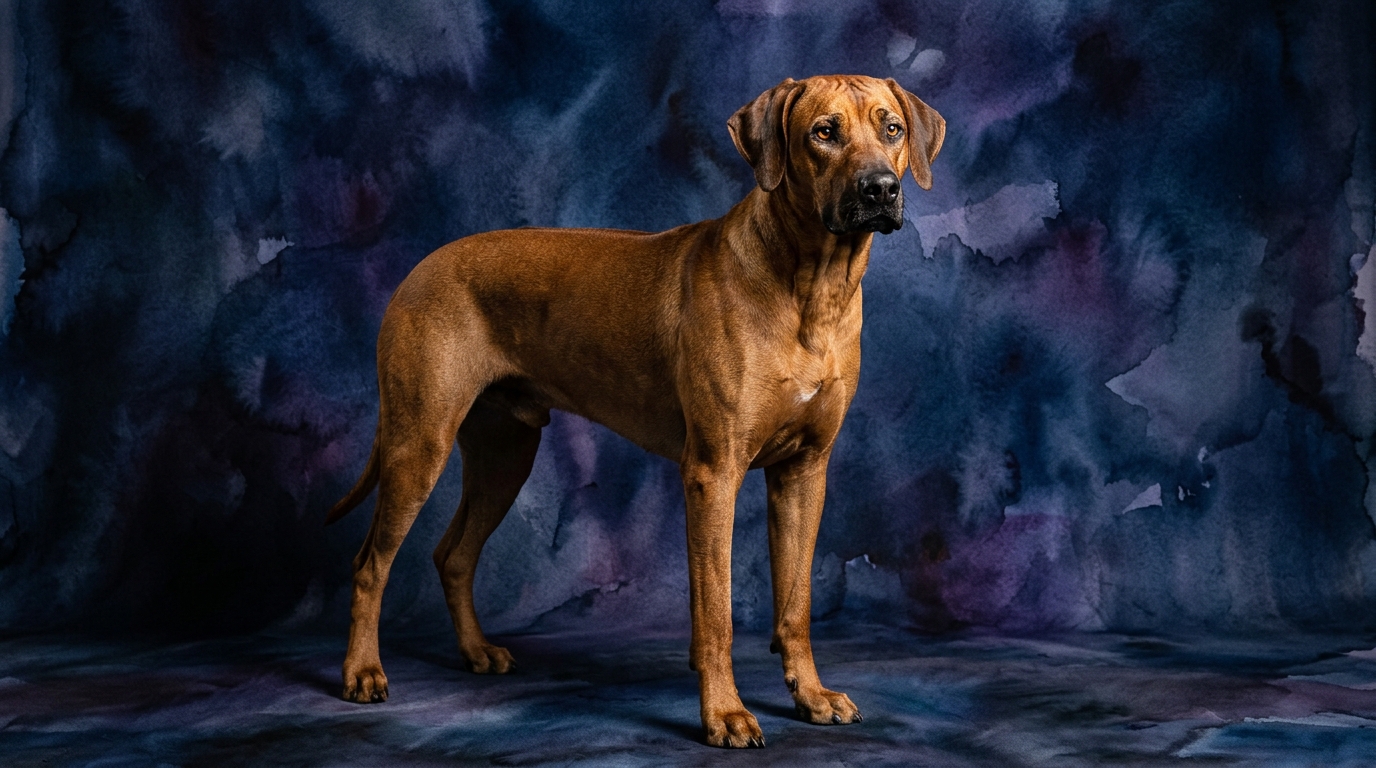
Side-by-Side IQ Profile: Sussex Spaniel vs. Rhodesian Ridgeback
The Cosmic Pet Pet IQ Lab provides a fascinating framework for understanding canine cognition across five key dimensions. For the Sussex Spaniel (Coren rank #62), their Problem Solving is rated 3/5, indicating a moderate capacity for navigating challenges, often relying on learned patterns and persistence, particularly in tasks involving scent or retrieving. Their Training Speed is 3/5, meaning they respond to consistent training methods with a moderate pace, showing willingness to learn but sometimes requiring patient repetition to solidify commands. Social Intelligence for the Sussex is 3/5, exhibiting moderate social acumen; they are generally amiable with family and familiar faces, though they can be reserved or a bit cautious with strangers initially. Their Instinctive Drive is 3/5, moderately pronounced and rooted in their flushing spaniel heritage, manifesting as an interest in tracking scents and a desire to work alongside humans. Finally, their Memory is 3/5, capable of recalling routines, learned commands, and familiar individuals over time, benefiting from consistent reinforcement.
The Rhodesian Ridgeback (Coren rank #52) also scores 3/5 across all five IQ dimensions, but their interpretation differs due to their breed-specific traits. Their Problem Solving, rated 3/5, displays a moderate and often resourceful approach; they are capable of assessing situations and devising solutions, especially when it involves navigating their environment or achieving a desired outcome, often quite clever in finding ways around obstacles. Training Speed is 3/5, indicating that while intelligent, their training pace is moderate due to an independent streak that requires engaging and motivating techniques; they learn quickly when motivated, but repetition without purpose might lead to disengagement. Their Social Intelligence is 3/5, characterized by deep loyalty to their family and a discerning, often aloof, nature towards strangers; they are observant and can 'read' social cues within their trusted circle. The Rhodesian Ridgeback's Instinctive Drive is 3/5, yet powerful, stemming from their history as lion hunters; this includes a notable prey drive, protective instincts, and a strong sense of territory, requiring careful management and socialization. Lastly, their Memory is 3/5, retaining experiences, learned commands, and the identities of people and places for extended periods, remembering both positive and negative interactions vividly.
Where the Sussex Spaniel Wins Cognitively
Despite identical scores across all five dimensions of IQ, the Sussex Spaniel's cognitive strengths often manifest in their cooperative spirit and task-oriented focus, a hallmark of their Sporting group heritage. Their problem-solving, rated 3/5, frequently aligns with persistence in scent-related tasks or the methodical flushing of game, demonstrating an intelligence geared towards achieving a specific, shared objective with their human partner. Unlike breeds prone to independent decision-making, the Sussex Spaniel's approach to challenges tends to be more about working through them diligently rather than attempting to outsmart the handler. This translates into a dog that, while not demonstrating abstract brilliance, excels in sustained effort and following through on complex sequences of learned behaviors, making them particularly adept at activities requiring consistent, methodical application rather than spontaneous improvisation.
Where the Rhodesian Ridgeback Wins Cognitively
The Rhodesian Ridgeback, with its Hound group lineage and slightly higher Coren rank of #52, presents a different flavor of cognitive strength, even with matching 3/5 IQ scores. Their problem-solving, also rated 3/5, is often characterized by a more independent and resourceful approach, reflecting their historical role in tracking and holding dangerous game without constant human direction. This breed frequently demonstrates a practical intelligence, assessing environmental situations and devising solutions that require a degree of self-reliance and strategic thinking. They might excel at navigating complex terrains or figuring out how to access a desired item, showcasing a capacity for independent thought that differentiates them from the more cooperative Sussex Spaniel. This self-sufficiency, while sometimes perceived as stubbornness in training, is a testament to their inherent ability to make decisions and adapt to dynamic circumstances, a valuable asset in real-world scenarios requiring quick, autonomous judgment.
Which is Easier to Train and Why
Both the Sussex Spaniel and Rhodesian Ridgeback share a 3/5 rating for training speed, indicating neither is inherently 'easier' or 'harder' to train in a universal sense, but rather that their trainability is influenced by their unique behavioral drivers. The Sussex Spaniel, as a Sporting dog, typically possesses an innate desire to please its handler and work cooperatively. This means they often respond well to positive reinforcement and consistent, clear commands, making them straightforward to train for obedience and field work, provided distractions are managed. Their challenges might arise from being easily sidetracked by interesting scents, requiring a patient and engaging approach to maintain focus during sessions. Conversely, the Rhodesian Ridgeback, while equally capable of learning, brings a strong independent streak to the training process. Their history of making autonomous decisions in the field means they often question the 'why' behind a command and may disengage if training feels repetitive or lacks purpose. They require a handler who can establish fair, consistent leadership and make training sessions dynamic and mentally stimulating, often responding best to methods that appeal to their intelligence rather than rote memorization. This independence, while a cognitive strength in problem-solving, can translate into a need for more nuanced and creative training strategies to achieve compliance.
Which Suits Active Owners vs. Relaxed Owners
When considering lifestyle compatibility, the distinctions between these two breeds become clearer, despite their similar cognitive ratings. The Rhodesian Ridgeback, a powerful Hound, is undeniably suited for active owners. Their historical role and robust physique necessitate significant physical exertion; they thrive on long, brisk walks, runs, hikes, and ample space to stretch their legs in a securely fenced yard. Beyond physical activity, their sharp minds require consistent mental challenges, such as advanced obedience, tracking, or puzzle toys, to prevent boredom and potential destructive behaviors. An owner who can dedicate several hours daily to their exercise and engagement will find a contented companion. In contrast, the Sussex Spaniel, while a Sporting dog, possesses more moderate exercise requirements. They enjoy daily walks, playtime in the yard, and engaging in scent games or retrieving, but they are also quite content to relax indoors with their family. While they appreciate mental stimulation, their needs are less intense than the Ridgeback’s, making them a better fit for owners who enjoy regular, but not necessarily high-octane, activities. They adapt well to a more relaxed pace of life, provided their basic needs for companionship and moderate activity are met.
The Verdict
The Sussex Spaniel is an excellent choice for owners seeking a cooperative, good-natured companion who enjoys moderate activity and thrives on consistent, positive training in a family setting. They are ideal for those who appreciate a dog that works alongside them with gentle persistence.
Opt for the Rhodesian Ridgeback if you are an experienced, active owner prepared to provide extensive physical exercise and mentally stimulating challenges for a self-reliant, discerning, and deeply loyal companion. They suit individuals who can embrace and channel their independent spirit.
🧠 Find Your Pet's IQ Score
Our Pet IQ Lab assessment covers 25+ tests across 5 cognitive dimensions — personalized to your breed.
Take the Full IQ Test →Frequently Asked Questions
What does a Coren rank mean in practical terms for these breeds?
The Coren rank, which places the Rhodesian Ridgeback at #52 and the Sussex Spaniel at #62, generally reflects their capacity for understanding new commands and obedience. While both are capable, the Ridgeback's higher ranking suggests they might grasp new instructions slightly faster on average, though individual variation always exists.
Despite similar IQ scores, how do their problem-solving approaches differ?
While both are rated 3/5 for problem-solving, the Sussex Spaniel often approaches challenges with cooperative persistence, focusing on tasks that involve working with their handler. The Rhodesian Ridgeback, conversely, tends towards more independent, resourceful solutions, reflecting their history of autonomous decision-making in complex situations.
How do their social intelligence ratings of 3/5 manifest in their interactions with people?
A 3/5 social intelligence for the Sussex Spaniel typically means they are generally friendly and amiable within their trusted circle, though they might be reserved with strangers. For the Rhodesian Ridgeback, this often translates into deep loyalty to their family and a discerning, often aloof, approach to new people, requiring them to assess situations before engagement.