
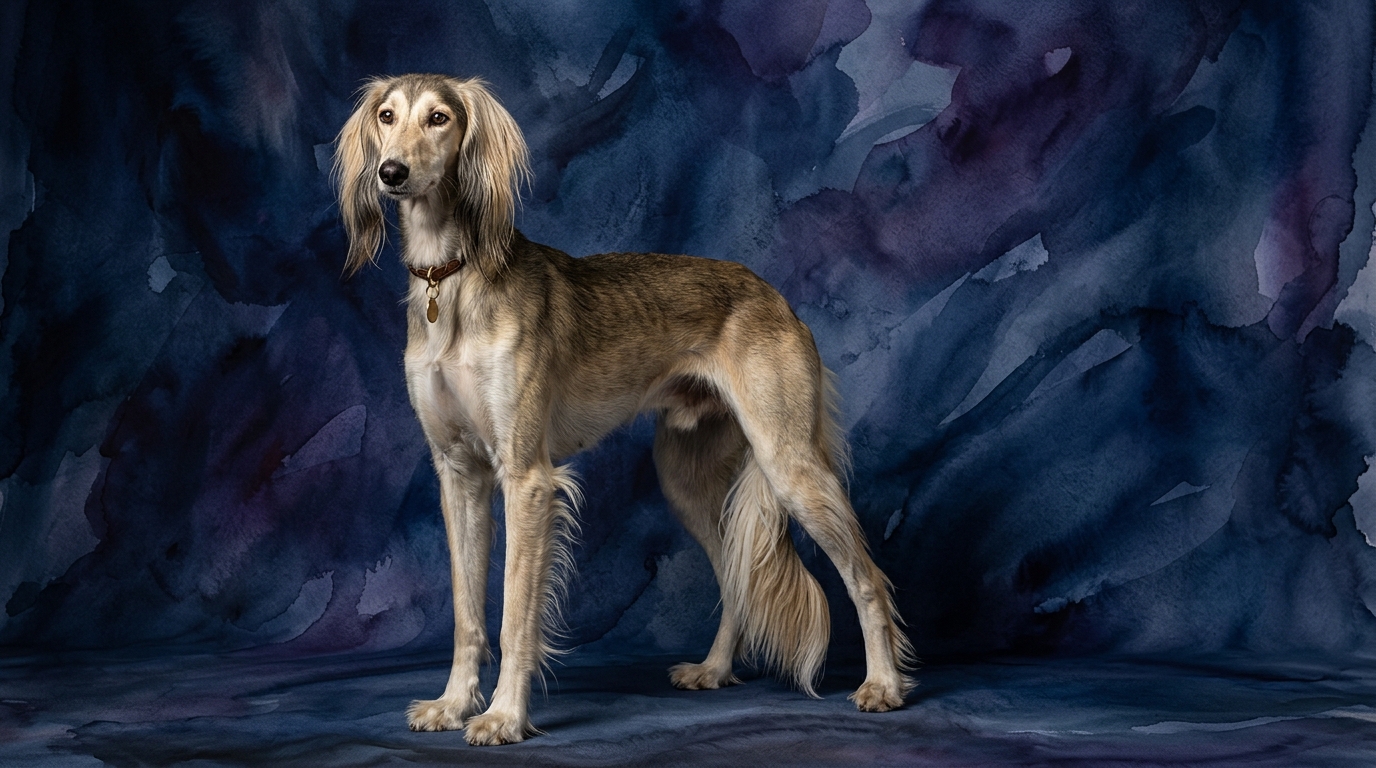
Side-by-Side IQ Profile: Sussex Spaniel vs. Saluki
At first glance, the IQ metrics from The Cosmic Pet Pet IQ Lab for the Sussex Spaniel and the Saluki appear identical: a consistent 3/5 across Problem Solving, Training Speed, Social Intelligence, Instinctive Drive, and Memory. This parity suggests a moderate, balanced cognitive capacity in both breeds. However, understanding their unique historical roles illuminates how these scores manifest in distinct behavioral patterns and cognitive strengths.
For the **Sussex Spaniel**, a Sporting Group dog ranked #62 by Coren, its 3/5 in **Problem Solving** often relates to navigating complex, dense terrain to locate game, relying heavily on scent rather than visual cues. Their **Training Speed** at 3/5 indicates a steady learning pace, influenced by a desire to work collaboratively with a handler, though tempered by a characteristic spaniel stubbornness. Their **Social Intelligence** (3/5) points to a generally affable nature, forming strong family bonds and responding to human cues, albeit without excessive demonstrativeness. The 3/5 **Instinctive Drive** is focused on methodical scent work and flushing game, often accompanied by their distinctive bay, a form of vocal communication. Finally, their **Memory** (3/5) allows them to retain established routines, scent trails, and learned commands, contributing to their reliability in familiar working environments.
The **Saluki**, a Hound Group dog not Coren-ranked, interprets its identical 3/5 scores quite differently. Its **Problem Solving** (3/5) is less about scent work and more about dynamic, visual assessment: calculating the trajectory of a fast-moving target and adapting pursuit strategies in open, expansive spaces. Their **Training Speed** (3/5) reflects their capacity to learn, but their profound independence means they are often selective learners, requiring engaging and varied methods that appeal to their self-interest. **Social Intelligence** (3/5) for a Saluki is typically expressed as a reserved devotion to their immediate family, often being aloof with strangers, valuing discernment over effusive interaction. Their 3/5 **Instinctive Drive** is powerfully centered on the sight chase, a rapid, visually triggered pursuit of anything that moves quickly. Their **Memory** (3/5) is effective for recalling familiar territories, preferred pathways during runs, and the locations of comfort spots, though their recall of commands can be highly context-dependent, influenced by their current focus.
Where the Sussex Spaniel Wins Cognitively
While both breeds score identically across the IQ dimensions, the Sussex Spaniel often exhibits a cognitive 'win' in scenarios demanding sustained cooperation and vocal communication with a handler. Their 3/5 in problem-solving and instinctive drive, when combined, manifests as a methodical, persistent approach to scent-based tasks. Unlike the independent decision-making of a sight hound, the Sussex applies its intelligence to systematically work through a field, meticulously following a trail and signaling discoveries with its distinctive bay. This collaborative problem-solving, focused on shared objectives and consistent feedback, highlights a specific strength in their cognitive application. Their moderate social intelligence, paired with their working history, often translates to a greater willingness to engage in structured learning activities that involve direct interaction and positive reinforcement from their human companion. This makes them particularly adept at tasks requiring consistent engagement and feedback from a human partner, where their intelligence is applied to fulfilling a shared objective.
Where the Saluki Wins Cognitively
Conversely, the Saluki's identical 3/5 scores shine brightest in contexts demanding rapid, independent strategic thinking and spatial awareness, particularly in open environments. Their problem-solving isn't about deciphering a scent puzzle but about calculating trajectories and optimizing pursuit paths over vast distances, often without direct human instruction. This independent application of their moderate intelligence allows them to make split-second decisions in high-speed scenarios, showcasing a unique blend of visual processing and physical agility. Their instinctive drive for the chase, while rated 3/5, is a powerful, self-directed cognitive process, enabling them to evaluate and react to dynamic stimuli with remarkable efficiency, a distinct advantage over breeds requiring constant direction. This cognitive strength is rooted in their history as independent hunters, where swift, autonomous decision-making was paramount for success.
Training Dynamics: Sussex Spaniel vs. Saluki
Determining which breed is 'easier' to train, given their identical 3/5 training speed, comes down to understanding their motivational drivers and inherent behavioral tendencies. The Sussex Spaniel, with its background as a close-working gundog, generally presents as more amenable to traditional, reward-based training. While they possess a moderate stubborn streak, their historical role often instills a desire to please their handler and work cooperatively. They respond well to consistent, positive reinforcement and thrive on structured routines, making them relatively straightforward to guide through obedience commands, even if they don't learn at lightning speed. Their vocal nature can be a training point, requiring management, but it also reflects an eagerness to communicate and engage.
The Saluki, however, presents a different training landscape. Their 3/5 training speed is coupled with a profound independence and a strong, visually driven prey instinct. They are not inherently motivated by a desire to please in the same way; instead, they learn best when training is engaging, varied, and clearly demonstrates a benefit to them. Repetitive drills can bore them quickly, and their attention can be easily diverted by anything that triggers their sight-hunting drive. This means training a Saluki requires immense patience, creativity, and an understanding that their compliance is often conditional on their interest, making them a more challenging prospect for conventional obedience. Their memory (3/5) holds information, but their willingness to *perform* a recalled command is often a matter of choice for them.
Lifestyle Suitability: Active vs. Relaxed Owners
The choice between a Sussex Spaniel and a Saluki based on owner lifestyle hinges less on their identical IQ scores and more on the *expression* of their physical and cognitive needs. A Sussex Spaniel, while scoring 3/5 across the board, suits owners who appreciate consistent, moderate activity and mental engagement. They are not extreme athletes but require daily walks, opportunities for scent work, and interactive play to keep their minds stimulated and prevent boredom. Their social intelligence means they thrive on companionship and structured family life, making them a good fit for relaxed owners who can still commit to regular, but not intense, daily engagement and prefer a dog with a steady, amiable presence indoors. Their moderate memory and training speed make them adaptable to a predictable routine.
The Saluki, in contrast, despite its similar IQ profile, is better suited for active owners who can accommodate their unique physical and cognitive requirements. While calm and elegant indoors, their 3/5 instinctive drive for sight hunting demands regular opportunities for high-speed, off-leash running in a securely fenced area. Their independent problem-solving means they enjoy exploring and making their own decisions during these bursts of activity. Owners who enjoy long, vigorous walks, have access to safe running spaces, and appreciate a dog that can transition from intense activity to quiet relaxation will find the Saluki a rewarding companion. They are not for the truly sedentary owner, as their cognitive and physical needs for bursts of intense freedom are non-negotiable. Their independent problem-solving and strong drive necessitate an owner who understands their need for specific outlets.
The Verdict
Choose the Sussex Spaniel for a companion who offers steady, cooperative engagement and thrives on consistent, structured interaction within a family setting, applying its intelligence collaboratively.
Opt for the Saluki if you seek an elegant, independent partner who excels at self-directed activity and appreciates intense bursts of freedom in secure environments, leveraging its intelligence for autonomous decision-making.
🧠 Find Your Pet's IQ Score
Our Pet IQ Lab assessment covers 25+ tests across 5 cognitive dimensions — personalized to your breed.
Take the Full IQ Test →Frequently Asked Questions
Do Salukis make good family pets despite their independent nature?
Yes, Salukis can be wonderful family pets. While they possess a reserved demeanor and strong independence, they form deep bonds with their chosen family members, often showing affection in subtle ways. Their calm indoor presence makes them suitable for homes that respect their need for personal space and provide appropriate outlets for their energy.
How does the Sussex Spaniel's vocalization impact living with them?
The Sussex Spaniel's characteristic 'bay' is a significant trait. While not constant, they use it to express excitement, alert to new arrivals, or during scent work. Prospective owners should be prepared for a vocal companion and be willing to engage in training to manage excessive barking if it becomes an issue, understanding it's an inherent part of their breed expression.
Since both breeds have 3/5 in problem-solving, how do I choose for a 'smart' dog?
Choosing a 'smart' dog between these two means aligning with how their 3/5 problem-solving manifests. If you prefer a dog that collaborates on scent-based tasks and works closely with you, the Sussex Spaniel's application of problem-solving aligns. If you appreciate a dog that makes quick, independent, strategic decisions in dynamic, open environments, the Saluki's cognitive strengths would be more appealing.