Side-by-Side Cognitive Profiles
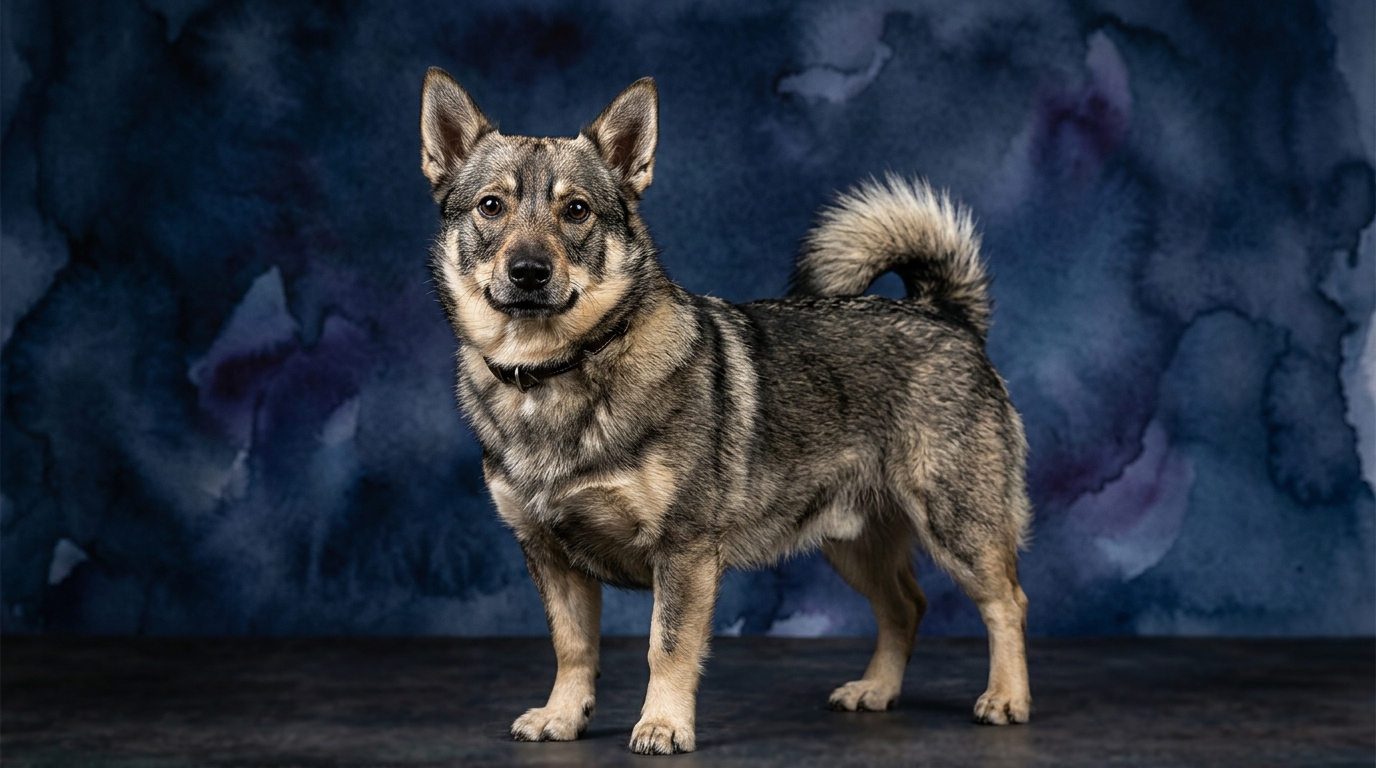
The Swedish Vallhund, a resilient herding dog, presents a balanced cognitive profile marked by practical intelligence. Their Problem Solving is rated 3/5, indicating an aptitude for finding solutions within familiar contexts, particularly those involving movement and control, vital for their historical role. Training Speed, also at 3/5, reflects a capacity to learn new commands with consistent reinforcement, though they may require more repetitions than some breeds to fully internalize tasks.
Their Social Intelligence, rated 3/5, points to an ability to understand and respond to human cues within their established social group, fostering strong bonds with family. An Instinctive Drive of 3/5 highlights a moderate herding inclination, manifesting as a desire to gather or 'control' their environment, which can be a powerful training motivator. Finally, their Memory, at 3/5, allows them to retain routines, learned behaviors, and familiar faces effectively, thriving on predictability and structure.
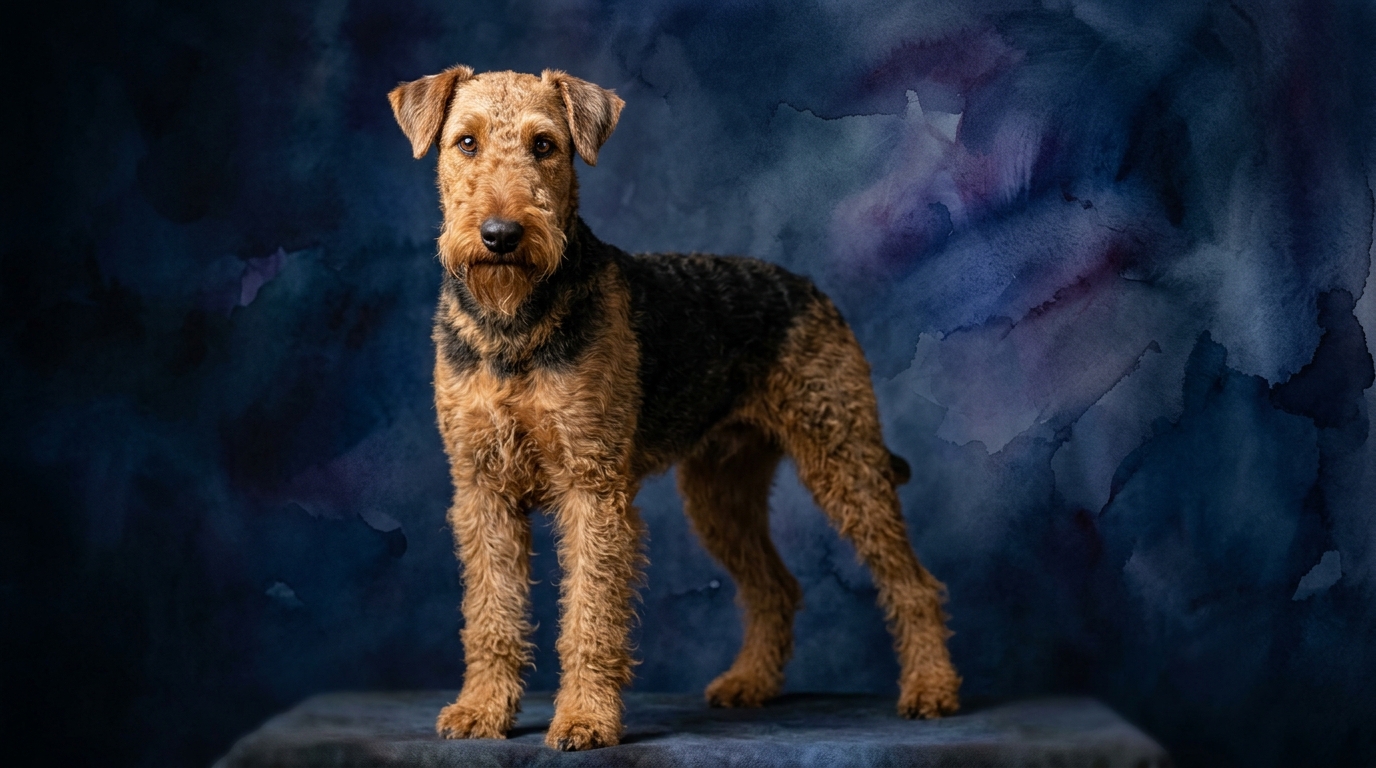
In contrast, the Airedale Terrier, ranked #29 by Coren, showcases a more independently oriented cognitive makeup. Their Problem Solving is a robust 4/5, signifying a strong aptitude for independent thought and creative solutions to obstacles, often leveraging their physical environment. This reflects their terrier heritage, where they were expected to work autonomously. Training Speed, at 4/5, means they grasp new concepts quickly and enjoy the mental stimulation of learning, making them a rewarding partner for varied training regimens.
Their Social Intelligence matches the Vallhund at 3/5, indicating a solid understanding of human-dog communication and family dynamics, though their independent streak can sometimes make them appear less overtly eager to please. An Instinctive Drive of 3/5 points to a significant prey drive and a natural inclination to explore and investigate, characteristic of the terrier group, which fuels their energetic approach to life. Their Memory, rated 4/5, stands out, suggesting an excellent capacity for long-term recall of commands, routines, and experiences, ensuring that once a lesson is truly learned, it tends to stick.
Where the Swedish Vallhund Wins Cognitively
While the Airedale boasts higher scores in several areas, the Swedish Vallhund's cognitive strengths lie in its specific, practical application of intelligence, particularly concerning sustained focus and environmental awareness. Their 3/5 Problem Solving, though not as high, excels in scenarios requiring consistent, repetitive tasks with subtle adjustments. For instance, in a simulated herding environment or a complex agility course, a Vallhund might demonstrate superior endurance in maintaining focus on the task, making small, intuitive adjustments based on real-time feedback, rather than attempting a novel, potentially risky, shortcut.
This breed's inherent structure-seeking nature and moderate instinctive drive (3/5) mean they often 'win' in situations demanding predictable, reliable execution over spontaneous brilliance. They are less likely to deviate from a learned pattern unless a clear, consistent alternative is presented. This makes them highly dependable in roles requiring steady adherence to a routine or a specific sequence of actions, where their memory (3/5) and training speed (3/5) combine to create a reliable performer. Their cognitive forte is in being a steadfast, adaptable worker within a defined framework.
Where the Airedale Terrier Wins Cognitively
The Airedale Terrier distinctly outshines the Vallhund in areas demanding independent thought, rapid assimilation of new information, and impressive recall. With a Problem Solving score of 4/5, the Airedale frequently demonstrates an almost mischievous ingenuity, finding novel ways to achieve goals, whether it’s figuring out a complex puzzle toy or devising an escape route from a secure yard. This makes them intellectually stimulating companions, constantly engaging their minds to navigate their environment.
Their Training Speed of 4/5 means they grasp new commands and concepts with remarkable quickness, often picking up new tricks in fewer repetitions than many other breeds. This rapid learning curve, combined with their 4/5 Memory, ensures that once a skill is acquired, it's typically retained for the long term. This allows owners to progress through training levels efficiently and introduce a broad repertoire of commands and activities. The Airedale's cognitive edge lies in its capacity for quick, independent decision-making and its enduring ability to remember and apply a wide array of learned information, making them adept at varied and challenging tasks.
Which Is Easier to Train and Why
Determining which breed is 'easier' to train depends heavily on an owner's definition of ease and their training approach. The Airedale Terrier, with its 4/5 Training Speed and 4/5 Memory, will generally pick up new commands and concepts more rapidly. They thrive on mental challenge and varied tasks, making them exciting students for an owner who enjoys dynamic, engaging training sessions. However, their strong independent problem-solving (4/5) and terrier tenacity mean they can also be prone to testing boundaries or finding creative ways to 'interpret' commands, which requires an owner who is consistent, clear, and can make training fun and rewarding to maintain their focus.
The Swedish Vallhund, with a 3/5 in both Training Speed and Memory, typically requires more repetitions and a more consistent, routine-based approach to training. They flourish with positive reinforcement and clear expectations, valuing predictability. Their herding drive (3/5) means they might initially try to 'herd' family members or other pets, which needs careful channeling and redirection from an early age. While they might not learn as quickly as an Airedale, their inherent desire for structure means that once a behavior is solidly learned through consistent practice, they are often reliable and dedicated performers, less likely to spontaneously deviate from a known task without good reason.
Which Suits Active Owners vs. Relaxed Owners
Neither the Swedish Vallhund nor the Airedale Terrier are suitable for genuinely relaxed owners; both breeds demand significant engagement. The Airedale Terrier, with its high problem-solving capacity (4/5) and robust instinctive drive (3/5), thrives with active owners who can provide a varied regimen of physical exercise and, crucially, ample mental stimulation. They need activities that challenge their intellect, such as advanced obedience, agility, scent work, or puzzle toys, to prevent boredom which can lead to destructive behaviors. An owner prepared for regular, stimulating adventures and continuous learning will find a loyal and enthusiastic partner.
The Swedish Vallhund, while perhaps not as demanding in terms of sheer intellectual novelty, still requires active owners who can cater to its herding background and moderate instinctive drive (3/5). They benefit from structured activities like herding trials, agility, or rally obedience, which allow them to use their natural instincts and channel their energy productively. Owners who appreciate consistency, enjoy establishing routines, and can provide purposeful tasks will find the Vallhund a devoted companion. They are adaptable but need an owner who understands their need for both physical activity and a sense of purpose within the family unit.
The Verdict
Choose a Swedish Vallhund if you value a consistent, structured companion who thrives on routine and purposeful tasks, and you are prepared to engage their herding instincts through appropriate activities. They offer a steady, adaptable intelligence, making them reliable partners for owners who appreciate predictability and a dog that excels within established frameworks.
Opt for an Airedale Terrier if you seek a quick-witted, independent learner who enjoys constant mental challenges and varied training, and you are ready to manage a dog with strong problem-solving skills and a spirited terrier personality. They excel with an owner who can match their enthusiasm, provide diverse intellectual stimulation, and appreciate a dog that often thinks for itself.
🧠 Find Your Pet's IQ Score
Our Pet IQ Lab assessment covers 25+ tests across 5 cognitive dimensions — personalized to your breed.
Take the Full IQ Test →Frequently Asked Questions
Are Swedish Vallhunds good family dogs?
Yes, Swedish Vallhunds are generally good family dogs, known for their loyalty and adaptability within their pack. They often enjoy being involved in family activities and can be patient with children, especially if properly socialized and raised with them from a young age.
Do Airedale Terriers bark a lot?
Airedale Terriers can be quite vocal, often barking to alert their owners to new sights, sounds, or perceived intruders, reflecting their guardian instincts. Consistent training, early socialization, and ensuring they receive sufficient mental and physical exercise are crucial for managing their barking tendencies.
Which breed is better for first-time dog owners?
Neither breed is typically recommended for absolute first-time dog owners without prior extensive research and commitment. Both the Swedish Vallhund and Airedale Terrier require significant engagement, consistent training, and thorough socialization due to their strong drives and distinct cognitive profiles, demanding an experienced or very dedicated owner.