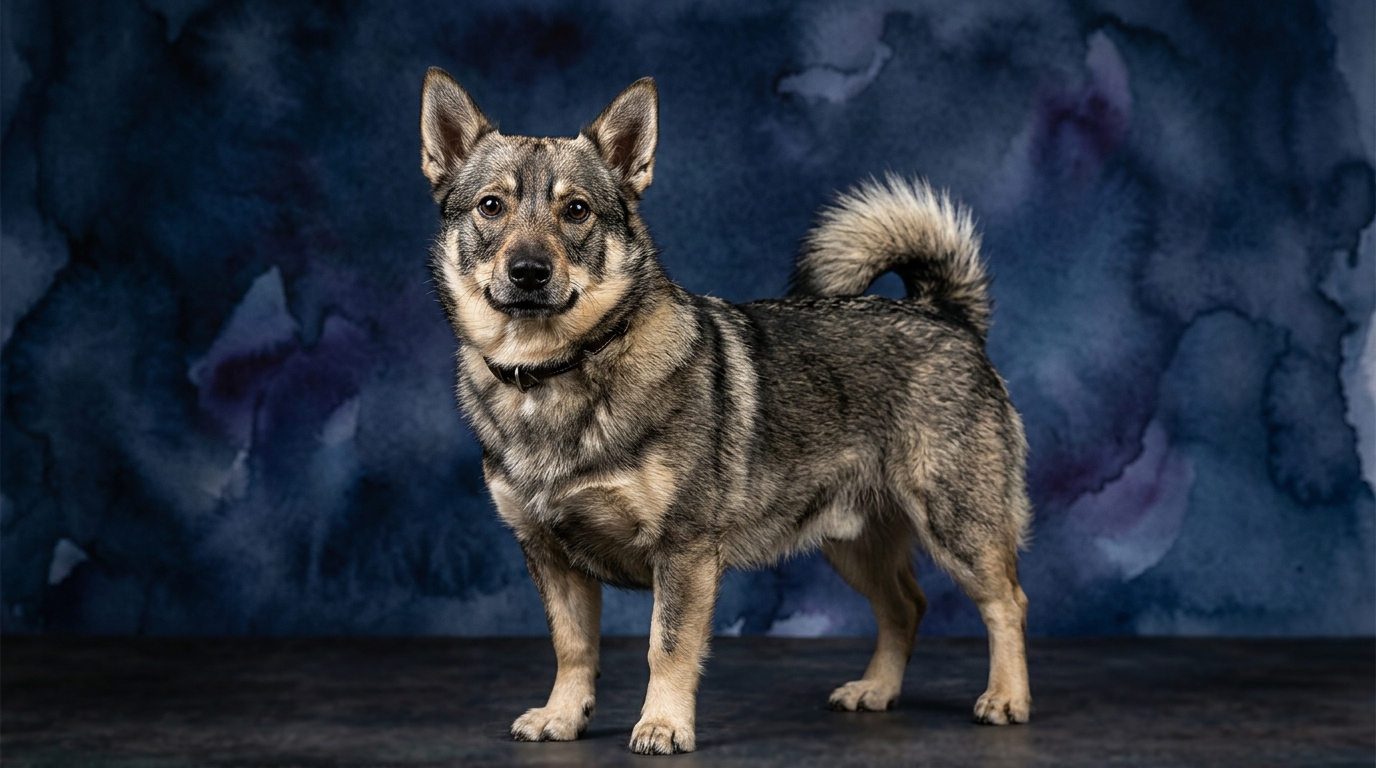
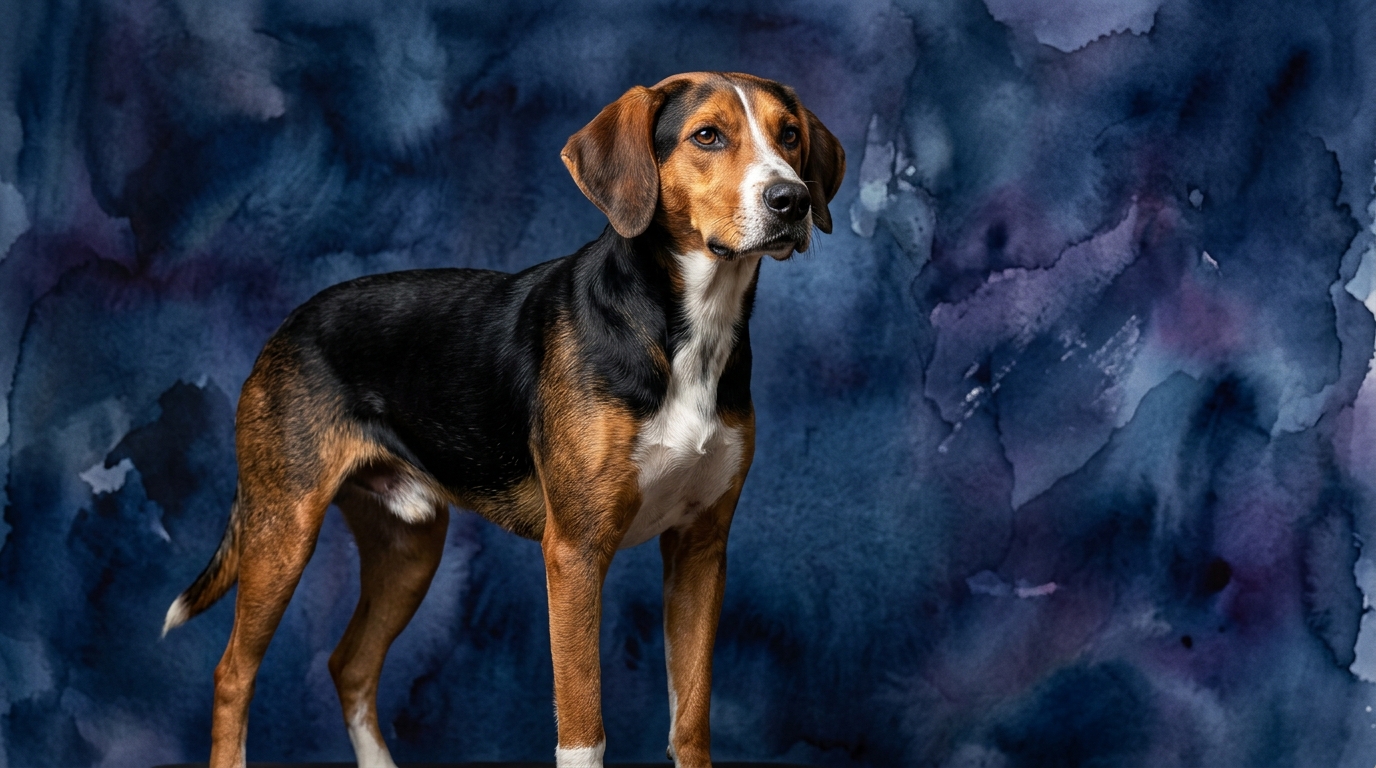
Side-by-Side Cognitive Profile: Swedish Vallhund vs. American Foxhound
Despite both breeds scoring 3/5 across all five cognitive dimensions – problem-solving, training speed, social intelligence, instinctive drive, and memory – their historical purposes have sculpted these abilities into remarkably different expressions. Understanding these nuances is key to appreciating their individual forms of intellect. For the Swedish Vallhund, a resilient herding dog, their problem-solving manifests in strategic livestock management, involving complex spatial reasoning to gather and guide animals. This isn't abstract puzzle-solving, but dynamic, context-dependent decision-making crucial for their herding duties. Their training speed is moderate, requiring consistent, positive reinforcement, as their independent herding spirit necessitates clear motivation beyond simple repetition. Socially, Vallhunds exhibit a watchful intelligence, attuned to their human family and familiar pack members, often driven by an instinct to manage their 'flock.' Their instinctive drive is primarily herding and guarding, leading to a desire for order and territorial alertness. Finally, their memory is practical and functional, excelling at recalling routines, spatial layouts, and learned commands, which supports their herding tasks and household integration.
The American Foxhound, a quintessential scent hound, applies its cognitive capacities in vastly different ways. Their problem-solving prowess is centered on tracking and unwavering persistence, deciphering complex scent trails, navigating varied terrain, and maintaining focus on an objective over extensive periods. This involves intricate sensory processing and sequential decision-making during pursuit. In terms of training speed, Foxhounds learn at a moderate pace, but their profound scent drive often diverts their attention, demanding patient, consistent, and highly motivating methods to maintain focus on human instructions. Their social intelligence, as pack animals, is geared towards group dynamics and cooperation within a canine hierarchy, generally amiable with other dogs and people, though their cues might be more subtle than a herding breed's direct engagement. The Foxhound's dominant instinctive drive is scenting and pursuing prey, an insatiable urge that defines their existence and fuels their remarkable endurance. Their memory is exceptionally strong for scent patterns, terrain features associated with trails, and the locations of potential prey, allowing them to recall complex olfactory information over time and recognize familiar hunting grounds.
Where the Swedish Vallhund Wins Cognitively
The Swedish Vallhund's cognitive strengths truly shine in scenarios demanding adaptable, handler-focused problem-solving and nuanced environmental awareness. Their herding heritage equips them with a superior ability to read human cues and anticipate commands, making them highly responsive partners in dynamic situations. They excel at tasks requiring spatial awareness and strategic maneuvering, such as agility courses or complex obedience routines, where they must quickly process instructions and navigate obstacles. Furthermore, their watchful nature translates into a cognitive advantage in discerning novel elements within their environment, allowing them to act as effective, discerning guardians. This breed's capacity for nuanced social observation means they often pick up on subtle changes in household dynamics or human moods more readily than a scent-driven hound, making them particularly adept at integrating into a family unit as an engaged participant.
Where the American Foxhound Wins Cognitively
The American Foxhound, while sharing similar overall scores, demonstrates distinct cognitive victories rooted in their specialized hunting role. Their paramount strength lies in their unparalleled ability to process and interpret olfactory information, enabling them to follow complex scent trails with unwavering focus and endurance over vast distances. This isn't merely a physical act but a sophisticated cognitive process involving memory recall of scent profiles, discrimination between overlapping odors, and strategic decision-making in pursuit. They display a remarkable persistence in problem-solving related to tracking, often working independently to overcome environmental challenges like broken trails or varied terrain. Their pack mentality also fosters a unique form of social intelligence in a group hunting context, where they coordinate efforts with other hounds, communicating through a rich repertoire of vocalizations and body language to achieve a shared objective, a cognitive skill less pronounced in a solitary herder.
Which is Easier to Train and Why
Determining which breed is 'easier' to train hinges significantly on the specific training goals and the environment. The Swedish Vallhund generally presents a more straightforward training experience for typical companion dog tasks due to their inherent desire to engage with their handler and their historical role requiring close cooperation. While they possess an independent streak and can be opinionated, their focus is often on their human 'flock,' making them more receptive to direct instruction and consistent positive reinforcement. Behavioral differences like their natural inclination to 'herd' family members can be channeled into useful tasks, and their alertness means they are often quick to grasp new concepts when appropriately motivated. In contrast, the American Foxhound's training journey is often more challenging, not due to a lack of cognitive capacity, but because their overwhelming instinctive drive to follow scent frequently overrides human commands. Their single-minded focus on a trail means that off-leash reliability can be a significant hurdle, and distractions are constant. While they can learn commands, achieving consistent execution requires immense patience, creativity in motivation (often involving high-value treats or simulated scent work), and a profound understanding of their hound nature. They are less inclined to perform simply to please and require a compelling reason to shift their focus from the olfactory world to their handler's instructions.
Suiting Active vs. Relaxed Owners
When considering owner lifestyles, both breeds require a commitment to activity, though the nature of that activity differs significantly. The Swedish Vallhund, despite its compact size, is a robust herding dog needing regular physical exercise and, crucially, consistent mental engagement. Owners who enjoy active pursuits like hiking, dog sports such as agility or obedience, or even regular puzzle toys and training sessions will find the Vallhund thrives. They are adaptable and, with sufficient stimulation, can settle indoors, making them suitable for owners who are active but also appreciate periods of calm at home. Their need for a 'job' means a relaxed owner who offers little structure or mental challenge might find their Vallhund invents its own, potentially undesirable, activities. The American Foxhound, however, demands a truly active owner. Their historical role as endurance hunters means they possess an almost boundless stamina and an innate need to run and explore vast spaces. A relaxed owner who cannot provide hours of vigorous exercise daily, ideally in a secure, expansive area where they can indulge their scenting instincts, will likely encounter a restless, potentially destructive, and unhappy Foxhound. They are less suited to apartment living or a sedentary lifestyle; their physical and mental well-being is intrinsically linked to covering ground and following their nose.
The Verdict
Choose the Swedish Vallhund if you seek a highly engaged, adaptable canine partner eager for varied mental challenges and direct interaction, thriving in a structured home with an active, involved owner.
Opt for the American Foxhound if you are a truly dedicated, active individual who embraces long outdoor adventures and can provide extensive opportunities for them to indulge their powerful scenting and running instincts.
🧠 Find Your Pet's IQ Score
Our Pet IQ Lab assessment covers 25+ tests across 5 cognitive dimensions — personalized to your breed.
Take the Full IQ Test →Frequently Asked Questions
Do Swedish Vallhunds and American Foxhounds learn at the same speed?
While both breeds score 3/5 for training speed, the practical experience differs. Vallhunds are generally more handler-focused, making them quicker to pick up standard obedience commands, whereas Foxhounds' strong scent drive often distracts them, requiring more patient and creative training methods.
Which breed is better at problem-solving?
Both breeds score 3/5 in problem-solving, but their strengths lie in different areas. Vallhunds excel at spatial reasoning and dynamic tasks like herding, while Foxhounds demonstrate superior problem-solving in complex scent discrimination and persistent tracking over long distances.
How does their social intelligence compare?
Both rate 3/5, but their social intelligence is distinct. Vallhunds are watchful and attuned to their human family's cues, often acting as discerning guardians. Foxhounds, being pack animals, display social intelligence geared more towards group dynamics and canine communication within a pack setting.