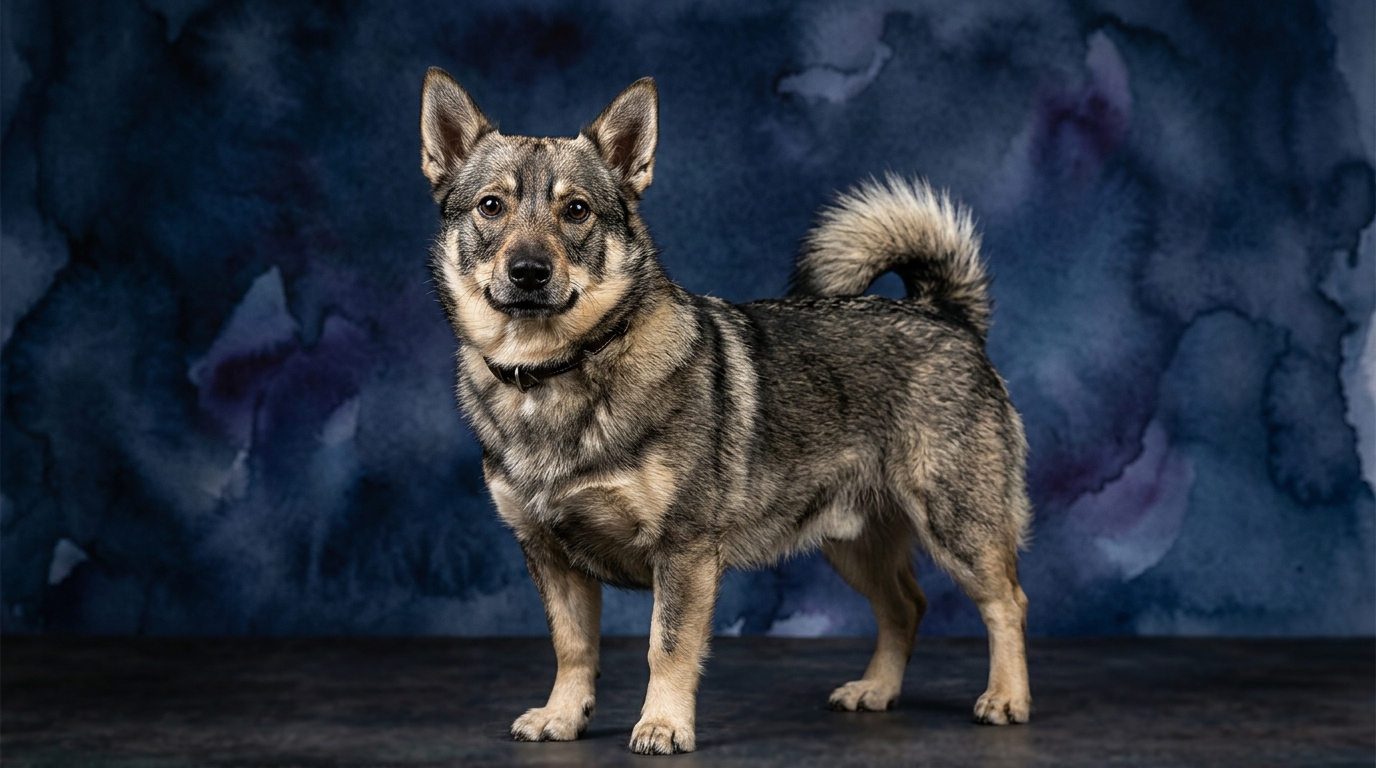

The Cosmic Pet Pet IQ Lab: Side-by-Side Cognitive Profiles
The Cosmic Pet Pet IQ Lab assesses canine intelligence across five key dimensions, each rated on a scale of 1 to 5. Interestingly, both the Swedish Vallhund and the Manchester Terrier score identically across the board, presenting a unique challenge to uncover their cognitive nuances beyond the raw numbers. Let's delve into what a 3/5 rating signifies for each breed in practice.
For **Problem Solving (3/5)**: The Swedish Vallhund, with its pastoral heritage, demonstrates practical problem-solving centered on environmental awareness and managing group dynamics. Their solutions often involve anticipating movements and navigating obstacles in a field, reflecting a strategic approach to their surroundings. The Manchester Terrier, conversely, applies its problem-solving acumen to rapid, decisive actions, honed by its vermin-hunting past. Their 3/5 reflects quick assessments and targeted solutions, often within confined spaces, requiring sharp focus on a specific objective.
Regarding **Training Speed (3/5)**: The Swedish Vallhund typically grasps new commands and routines with moderate efficiency, especially when tasks resonate with their herding instincts. They respond well to consistent, clear direction, indicating a readiness to learn within a structured framework. The Manchester Terrier also learns at a respectable pace, showing good retention. However, their terrier independence means their 3/5 training speed is often paired with a need for engaging, varied methods to maintain focus and enthusiasm, rather than simple repetition.
In terms of **Social Intelligence (3/5)**: The Vallhund is attuned to its human family and, historically, its livestock, reading cues and integrating into household dynamics with a balanced understanding of social hierarchies. They often show a perceptive awareness of their handler's intentions. The Manchester Terrier forms deep bonds with its primary caregivers and is keenly aware of social interactions within its immediate circle. Their 3/5 indicates an ability to pick up on moods and intentions, though sometimes expressed with a characteristic terrier self-possession.
For **Instinctive Drive (3/5)**: The Swedish Vallhund possesses a moderate but persistent herding drive, manifested in behaviors like circling or nipping at heels, which fuels their engagement in tasks and interaction. This drive is generally manageable and can be channeled positively. The Manchester Terrier exhibits a potent prey drive, characteristic of its ratting background, coupled with a notable guarding instinct. Their 3/5 drive signifies focused determination in pursuit or protection, requiring careful management around smaller animals and during outdoor excursions.
Finally, concerning **Memory (3/5)**: Both breeds demonstrate solid memory capabilities. The Swedish Vallhund retains learned commands, routines, and spatial layouts of their territory effectively, a crucial trait for their historical role. The Manchester Terrier also exhibits good recall for people, places, and established behaviors, capable of remembering training even after periods of inactivity and recalling past interactions with precision.
Where the Swedish Vallhund Wins Cognitively
Despite identical scores, the Swedish Vallhund often shines in cognitive areas related to spatial reasoning and the nuanced management of groups. Their 3/5 problem-solving, rooted in herding, manifests as an ability to anticipate movement and subtly influence the behavior of others, be it livestock or family members. This demonstrates a sophisticated understanding of how to orchestrate a situation rather than just reacting to it, a subtle but significant cognitive edge in certain contexts. Their social intelligence, while rated the same, leans towards a broader, more cooperative interaction with their environment and its inhabitants.
Where the Manchester Terrier Wins Cognitively
The Manchester Terrier's cognitive strengths often lie in rapid, focused, target-oriented problem-solving and an acute awareness of environmental details. Their 3/5 problem-solving is expressed as quick assessment and decisive action in confined or complex spaces, often requiring a sharp focus on minute changes that a Vallhund, oriented to broader spatial patterns, might overlook. Their instinctive drive, while also 3/5, is channeled into intense, singular pursuits, giving them an edge in tasks requiring precision, speed, and unwavering attention to a specific objective, such as scent work or agility challenges that mimic hunting.
Which Is Easier to Train and Why?
Both breeds score 3/5 in training speed, yet their unique temperaments can lead to different training experiences. The Swedish Vallhund, with its cooperative herding background, generally approaches training with an intrinsic desire to work alongside its handler. They are often eager to please and respond well to clear, consistent commands, especially when tasks tap into their natural herding instincts, making them relatively biddable. Their obedience is often fueled by a desire for partnership and a sense of having a 'job'.
Training Dynamics: Vallhund vs. Manchester
The Manchester Terrier, while quick to learn, can present a different training dynamic due to their independent terrier spirit and intense prey drive. They possess the cognitive capacity to learn swiftly, but their willingness to comply can be conditional on engagement and perceived value. Training a Manchester often requires more creativity, variety, and higher-value rewards to maintain their focus and prevent boredom, as their 3/5 training speed is coupled with a strong will that needs positive direction rather than rote repetition. Owners must be prepared to make training a stimulating game to keep a Manchester invested.
Suitability for Active vs. Relaxed Owners
Both breeds, scoring 3/5 in instinctive drive, demand significant engagement, making them better suited for active owners, though their ideal activities differ. The Swedish Vallhund thrives with owners who can provide consistent mental and physical challenges that tap into their herding intelligence; think long walks with opportunities to 'herd' toys, agility courses, or scent work that requires sustained focus. Their energy is often steady and requires a 'job' to feel fulfilled, making them less ideal for truly relaxed, sedentary households.
The Manchester Terrier, with its terrier energy, requires owners who appreciate intense bursts of activity, like vigorous games of fetch, quick sprints, or engaging puzzle toys that satisfy their hunting instincts. While they can be content to cuddle on the couch after sufficient exercise, their need for focused mental and physical exertion is non-negotiable, otherwise, their 3/5 problem-solving and instinctive drive might be directed towards less desirable behaviors. They might be slightly more adaptable to apartment living than a Vallhund, provided their exercise needs are rigorously met.
The Verdict
Choose the Swedish Vallhund if you seek a cooperative, biddable partner for structured activities and a dog that thrives on having a 'job' within a family unit, appreciating their subtle influence and spatial awareness.
Opt for the Manchester Terrier if you enjoy a spirited, independent companion with a quick wit and a penchant for intense, focused play, and are prepared to channel their strong prey drive and cleverness into positive outlets.
🧠 Find Your Pet's IQ Score
Our Pet IQ Lab assessment covers 25+ tests across 5 cognitive dimensions — personalized to your breed.
Take the Full IQ Test →Frequently Asked Questions
Are Swedish Vallhunds good family dogs?
Yes, Swedish Vallhunds are generally loyal and affectionate with their families, often forming strong bonds. Their herding instincts can make them watchful of children, sometimes attempting to 'herd' them, requiring supervision and early training to guide this behavior.
Do Manchester Terriers bark a lot?
Manchester Terriers can be quite vocal, especially if they are bored, under-exercised, or perceive a threat. Their alert nature means they often bark to signal new arrivals or unusual sounds, but consistent training and adequate stimulation can help manage this tendency.
Which breed is better for first-time dog owners?
Both breeds possess strong personalities and require dedicated training, consistent socialization, and ample exercise, making them perhaps not ideal for completely novice dog owners. However, a highly committed first-time owner who researches thoroughly and seeks professional guidance could succeed with either, provided they understand the specific needs and drives of each breed.