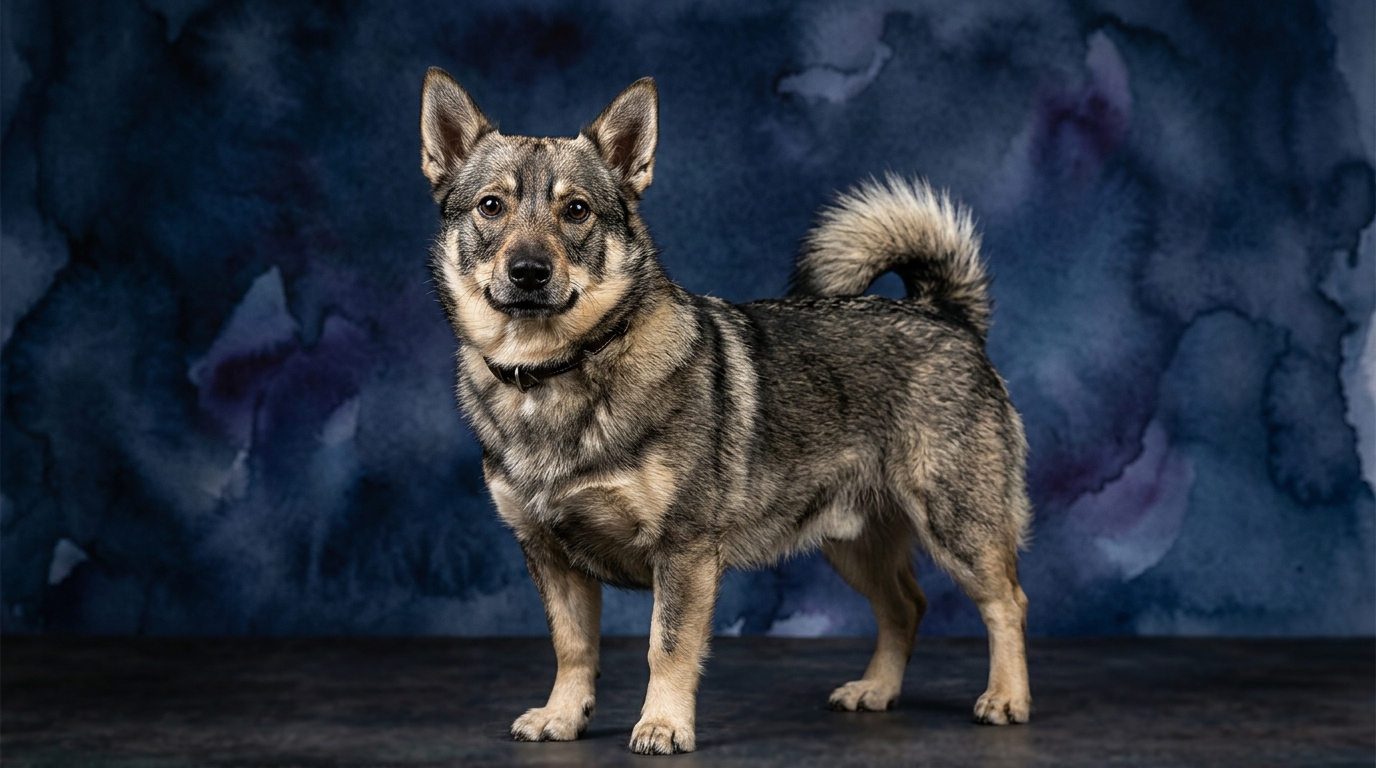

Side-by-Side IQ Profile: Unpacking Identical Scores
At The Cosmic Pet Pet IQ Lab, both the Swedish Vallhund and the Russian Toy register a consistent 3/5 across five key cognitive dimensions. This numerical parity doesn't imply identical behavior, but rather a similar *level* of cognitive capacity that manifests uniquely within their respective breed contexts.
For Problem Solving (3/5): A Vallhund’s moderate capacity often translates to practical environmental intelligence, adapting herding strategies or navigating complex terrains. They effectively apply learned solutions rather than consistently inventing new ones. For the Russian Toy, this 3/5 often means devising clever ways to gain attention, manipulate toys, or overcome small obstacles to reach their human, with solutions typically focused on their immediate social and personal environment.
For Training Speed (3/5): The Swedish Vallhund's moderate training speed means they grasp commands and routines in a reasonable number of repetitions. Their working background encourages structured learning, but requires consistent, engaging methods to prevent boredom or independent action. The Russian Toy, also at 3/5, picks up new tricks and commands steadily, often eager to please and bond, though their smaller size and attention span might necessitate shorter, more frequent sessions.
For Social Intelligence (3/5): The Vallhund's score reflects a solid understanding of pack dynamics and human communication cues, honed by interpreting signals from both livestock and handlers. They are attuned to social hierarchies within their family unit, though can be reserved with strangers. A Russian Toy’s 3/5 social intelligence is expressed through an extraordinary attunement to human emotions, adeptly reading moods and reacting with affection or comfort, understanding social boundaries within their immediate family.
For Instinctive Drive (3/5): The Vallhund’s moderate, yet present, inclination towards ancestral herding behaviors means owners might observe circling or attempting to 'gather' family members. This drive requires appropriate outlets to prevent misdirection. For the Russian Toy, a 3/5 instinctive drive translates to a strong desire for companionship, persistent alertness, and an inclination to 'guard' their territory or human with vocalizations, underpinning their role as a devoted companion.
For Memory (3/5): The Swedish Vallhund’s memory score indicates a good ability to recall learned commands, routines, and experiences, crucial for a working dog retaining complex sequences and environmental information. The Russian Toy's 3/5 in memory means they readily remember training, family routines, and individual preferences, contributing to their ability to adapt behavior within the household and form strong, lasting bonds.
Where the Swedish Vallhund Wins Cognitively
While both breeds share similar cognitive scores, the Swedish Vallhund's specific cognitive advantages are rooted in its robust physical capabilities and deeply ingrained herding heritage. Their 3/5 problem-solving, when paired with their instinctual drive, manifests as a practical, environmental intelligence. A Vallhund particularly excels at navigating complex outdoor terrains, figuring out how to move objects or animals from point A to point B, or even outsmarting a stubborn livestock animal. Their moderate memory serves them well in retaining intricate patterns for agility courses or remembering the layout of a large property, allowing them to apply learned solutions to varied, dynamic scenarios. This breed's social intelligence, while rated the same numerically, often involves a more nuanced understanding of group dynamics and leadership, honed by centuries of working alongside humans to manage livestock, requiring them to interpret subtle body language and vocalizations from multiple sources simultaneously.
Where the Russian Toy Wins Cognitively
The Russian Toy, despite identical scores, demonstrates cognitive strengths that shine in a different arena: the domestic sphere and intimate human companionship. Their 3/5 problem-solving frequently translates into sophisticated social maneuvering, such as devising clever ways to gain attention, figuring out how to access a favorite lap, or even 'training' their owners to respond to specific cues like a paw tap for a treat. Their social intelligence, while numerically similar, is often expressed through an extraordinary attunement to human emotions and needs. They are masters at reading subtle shifts in mood, providing comfort, or knowing precisely when to offer a moment of quiet companionship. Their moderate memory is particularly potent in recalling personal preferences, schedules, and the intricate social rules of their household, making them exceptionally well-adapted to being a beloved and integrated family member, navigating complex human interactions with surprising finesse for their size.
Training: Engagement vs. Eagerness
Determining which breed is 'easier' to train is less about raw cognitive capacity and more about motivational drivers and typical behavioral patterns. Both breeds have a 3/5 training speed, indicating a moderate ability to learn. The Russian Toy often presents as 'easier' in the context of basic obedience and house manners due to its strong desire to please its primary human and its reliance on companionship. They are generally highly motivated by praise, treats, and the opportunity for close interaction, making them eager participants in positive reinforcement training. Their smaller stature also means minor training lapses are often less impactful. The Swedish Vallhund, with its herding background, brings a different dynamic. While equally capable of learning, their 3/5 instinctive drive can sometimes lead to independent decision-making or a tendency to 'herd' family members, requiring a more experienced hand to channel these instincts productively. Training a Vallhund often requires more mental stimulation and a clear understanding of their working heritage to keep them engaged, as they can become bored if tasks aren't sufficiently challenging or meaningful.
Owners: Active Companionship vs. Devoted Lapdogs
The choice between a Swedish Vallhund and a Russian Toy hinges significantly on an owner's lifestyle and energy levels. The Swedish Vallhund, despite its compact size, is a robust herding dog. Its 3/5 instinctive drive and moderate problem-solving capacity necessitate an active owner who can provide consistent physical exercise and, crucially, mental stimulation. They thrive in environments where they can engage in activities like agility, herding trials, advanced obedience, or long, exploratory hikes. A relaxed owner might find a Vallhund's energy and need for engagement overwhelming, potentially leading to boredom-induced behaviors. Conversely, the Russian Toy is an ideal companion for more relaxed owners. While they enjoy walks and playtime, their primary need is for close human companionship. Their moderate social intelligence makes them content to snuggle on the couch, observe household activities, or accompany their owner on errands. They are adaptable to apartment living and require less intensive physical exertion, making them a perfect fit for individuals or families seeking a devoted, portable companion without the demands of a working breed.
The Verdict
Choose the Swedish Vallhund if you are an active, experienced owner eager to engage a clever, robust dog in a variety of physical and mental challenges, appreciating their independent spirit and working heritage.
Opt for the Russian Toy if you seek a devoted, sensitive companion who thrives on close human interaction and can adapt to a more relaxed pace of life, bringing joy through their affectionate and alert presence.
🧠 Find Your Pet's IQ Score
Our Pet IQ Lab assessment covers 25+ tests across 5 cognitive dimensions — personalized to your breed.
Take the Full IQ Test →Frequently Asked Questions
Do Swedish Vallhunds make good apartment dogs?
While adaptable, Swedish Vallhunds are herding dogs with significant energy and mental stimulation needs. They can live in apartments if owners are committed to providing daily vigorous exercise, training, and enrichment activities to satisfy their working drives and prevent boredom.
Are Russian Toys prone to separation anxiety?
Due to their strong bond and desire for companionship, Russian Toys can be prone to separation anxiety if not properly socialized and trained for alone time from a young age. Consistent, positive training to build independence is crucial for their well-being.
How do their barks differ, and what does it say about their social intelligence?
Swedish Vallhunds tend to have a robust, purposeful bark, often used for alerting or herding, reflecting their functional social role. Russian Toys have a higher-pitched, more persistent bark, frequently used to communicate needs, express excitement, or alert to perceived threats, highlighting their role as a vigilant companion. Both reflect their 3/5 social intelligence, but applied to different social contexts.