Side-by-Side IQ Profile: Herding Strategy vs. Terrier Tenacity
At The Cosmic Pet Pet IQ Lab, we evaluate canine intelligence across five key dimensions. Interestingly, both the Swedish Vallhund and the Smooth Fox Terrier score a consistent 3/5 in each category, yet their breed-specific heritage means these scores translate into remarkably different cognitive expressions.
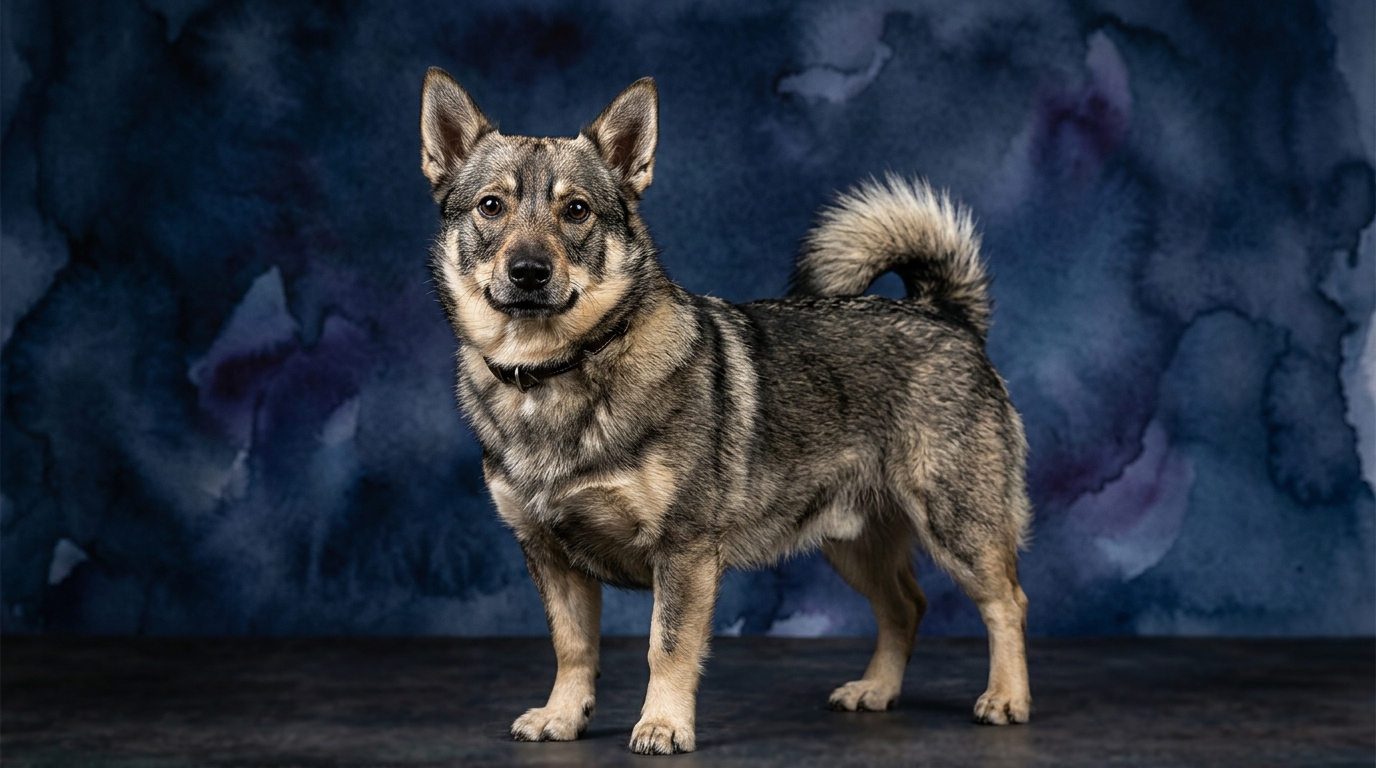
The **Swedish Vallhund**, a dog from the Herding group, demonstrates its problem-solving (3/5) through a practical, strategic approach, often focused on spatial reasoning and control. A Vallhund might analyze how to 'herd' scattered toys into a designated area or figure out the optimal path to gather family members, with solutions tending to be methodical, reflecting their ancestral task of managing livestock. Their training speed (3/5) shows in their steady acquisition of commands, especially when tasks involve cooperation and a clear purpose, responding well to positive reinforcement and consistency. Social intelligence (3/5) for a Vallhund means a keen awareness of their human companions' moods and intentions, vital for working closely with a shepherd, interpreting subtle cues to maintain harmony within their 'flock' (family). Their instinctive drive (3/5) is rooted in herding – an innate desire to gather, control, and move, which fuels their engagement and provides a strong motivational lever. Finally, their memory (3/5) is reliable for learned commands, routines, and important locations, aiding in maintaining order and predictability.
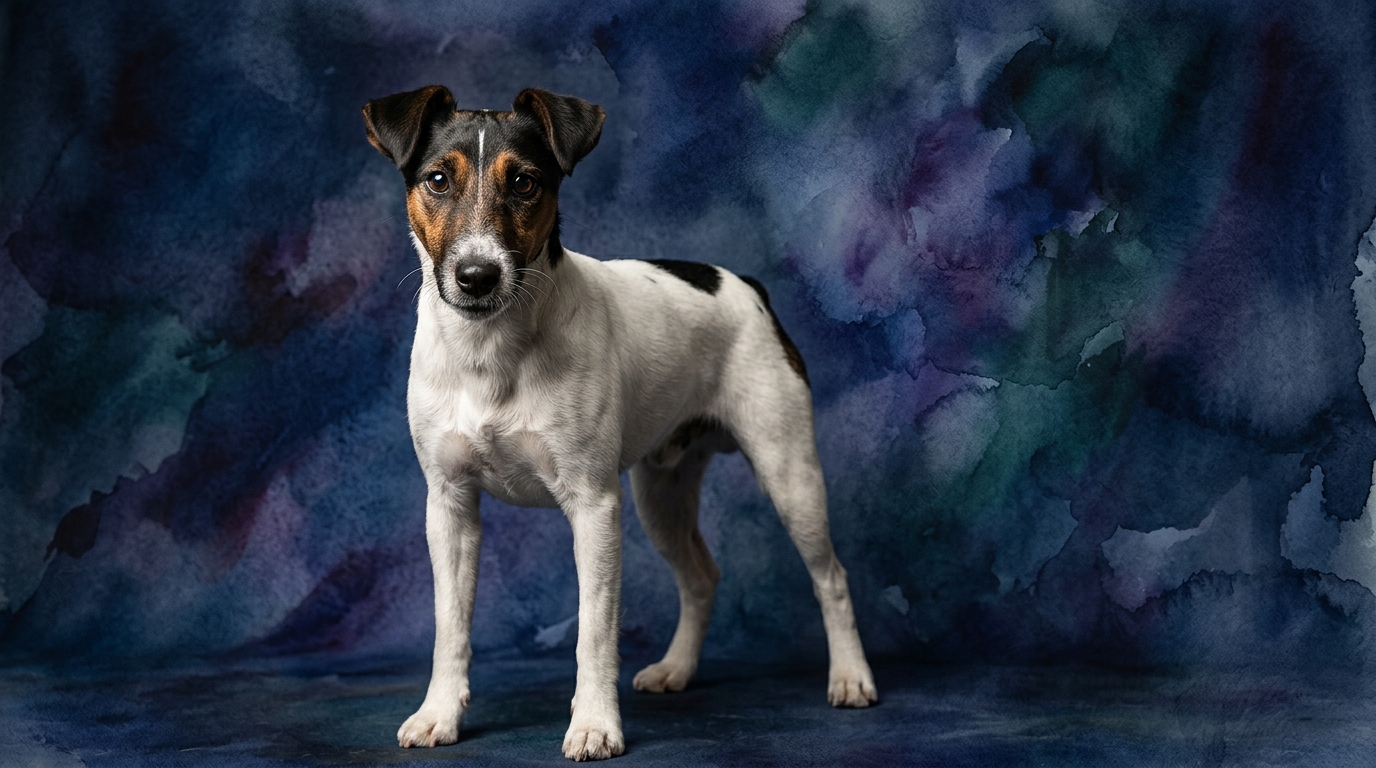
The **Smooth Fox Terrier**, a member of the Terrier group, showcases its problem-solving (3/5) through tenacity and a goal-oriented, often independent, approach. They excel at figuring out how to access confined spaces, retrieve hidden objects, or outsmart obstacles to reach a perceived 'prey,' with solutions often direct and driven by an immediate objective. Their training speed (3/5) means they learn quickly when motivated by chase, retrieve, or puzzle-solving games that tap into their natural instincts, grasping new commands rapidly but potentially choosing whether to comply if a task doesn't immediately appeal. Social intelligence (3/5) for a Fox Terrier involves adeptly reading their environment and people, often using observations to their advantage, being charming and persuasive when seeking attention or resources. Their instinctive drive (3/5) is primarily chasing and dispatching small prey, manifesting as a strong urge to dig, bark, and pursue anything that moves, a powerful motivator that also requires careful management. Their memory (3/5) is good for established routines, exciting smells, and successful strategies, leveraging recall to pursue their interests with vigor.
Where the Swedish Vallhund Wins Cognitively
Despite identical numerical scores, the Swedish Vallhund's cognitive strengths lean towards collaborative problem-solving and a more nuanced understanding of group dynamics. Their herding background instills a specific type of spatial intelligence, allowing them to excel at tasks requiring the strategic movement and containment of objects or individuals. This means they are often more adept at understanding and executing multi-step commands that involve positioning themselves or others. Furthermore, their social intelligence, while rated 3/5, is geared towards partnership; they are often more attuned to the subtle non-verbal cues of a handler, making them exceptional at activities like obedience, rally, or even complex trick training where precise timing and responsiveness are paramount. Their memory, while equivalent in score, often manifests as a reliable recall for sequences and patterns within a shared task, making them very consistent in learned behaviors that contribute to a collective goal.
Where the Smooth Fox Terrier Wins Cognitively
The Smooth Fox Terrier, with its 3/5 cognitive scores, demonstrates a distinct advantage in independent problem-solving and persistent pursuit of a goal. Their terrier heritage imbues them with a remarkable tenacity and inventiveness when faced with obstacles, particularly if the objective taps into their prey drive. They will often devise clever, sometimes unconventional, methods to reach a desired item or location, displaying a resourcefulness born from generations of hunting vermin. Their training speed, while numerically matched, often manifests as rapid acquisition of tasks that involve chasing, retrieving, or quick bursts of action, making them agile learners in sports like agility or earthdog trials. The Fox Terrier's social intelligence, similarly scored, excels in reading situations for personal gain – they might be quicker to exploit an opening for a game or a treat, or to find the weakness in a barrier. Their memory is particularly strong for high-value rewards and successful strategies that led to a 'catch' or discovery, fueling their independent exploratory nature.
Which is Easier to Train and Why
While both breeds share a training speed score of 3/5, the *process* of training them can feel quite different due to their inherent drives. The Swedish Vallhund is generally perceived as easier to train for obedience and cooperative tasks because their instincts align with working *with* a human partner. Their herding drive means they naturally want to gather and respond to direction, making them eager to please when given a clear job. They thrive on structure and benefit from consistent, positive reinforcement that affirms their role in a team. In contrast, the Smooth Fox Terrier's training, while equally capable of rapid learning, often requires more creativity and consistency to manage their independent spirit and strong prey drive. They learn quickly when motivated by games that simulate hunting or chasing, but their enthusiasm can quickly wane if a task feels repetitive or lacks immediate reward. Their tendency to make independent decisions means an owner must be more engaging and consistent, transforming training into a captivating activity rather than a series of commands. For foundational obedience and a generally compliant nature, the Vallhund often presents a smoother training path, whereas the Fox Terrier demands a more skilled and patient approach to channel their sharp wits effectively.
Which Suits Active Owners vs. Relaxed Owners
Both the Swedish Vallhund and the Smooth Fox Terrier are considered active breeds, but their activity needs manifest differently, impacting their suitability for various lifestyles. The Vallhund, with its herding background, requires regular physical exercise combined with mental stimulation that engages its strategic mind. They thrive on activities like herding games, agility, obedience, or long walks with opportunities to explore and 'manage' their environment. They can adapt to a moderately active household if their mental needs are met, and they are generally content to relax indoors after a good session. A relaxed owner might find a Vallhund manageable if they are committed to daily walks and interactive play. The Smooth Fox Terrier, however, demands a more consistently active owner. Their strong prey drive and boundless energy mean they need significant daily exercise that often involves running, chasing, and digging. Without sufficient outlets, their independent problem-solving can turn towards destructive behaviors or incessant barking. A relaxed owner would likely struggle with a Fox Terrier, as their drive for action is deeply ingrained and requires constant engagement to prevent boredom and mischief. For those seeking a companion for consistent, high-energy outdoor adventures, the Fox Terrier is an excellent match; for owners who appreciate activity but also value periods of calm cooperation, the Vallhund might be a slightly better fit.
The Verdict
Choose the Swedish Vallhund if you appreciate a cooperative partner eager to engage in structured activities and value a dog whose intelligence manifests in strategic teamwork and harmony.
Choose the Smooth Fox Terrier if you are an active, experienced owner who enjoys channeling a tenacious, independent problem-solver into high-energy pursuits and can provide consistent mental and physical challenges.
🧠 Find Your Pet's IQ Score
Our Pet IQ Lab assessment covers 25+ tests across 5 cognitive dimensions — personalized to your breed.
Take the Full IQ Test →Frequently Asked Questions
Are Swedish Vallhunds good family dogs?
Yes, Swedish Vallhunds are generally excellent family dogs, known for their friendly and outgoing nature. They bond closely with their families and are good with children, especially when properly socialized and given appropriate outlets for their herding instincts.
Do Smooth Fox Terriers bark a lot?
Smooth Fox Terriers can be prone to barking, particularly if they are bored, lack sufficient exercise, or perceive something to chase or alert to. Their alert nature and strong prey drive contribute to their vocal tendencies, which require consistent training to manage.
Which breed is better for apartment living?
Neither breed is ideally suited for apartment living without significant commitment to exercise and mental stimulation. However, if managed with daily vigorous outings and training, a Swedish Vallhund might adapt slightly better due to their more cooperative nature compared to the high-energy, independent Smooth Fox Terrier.