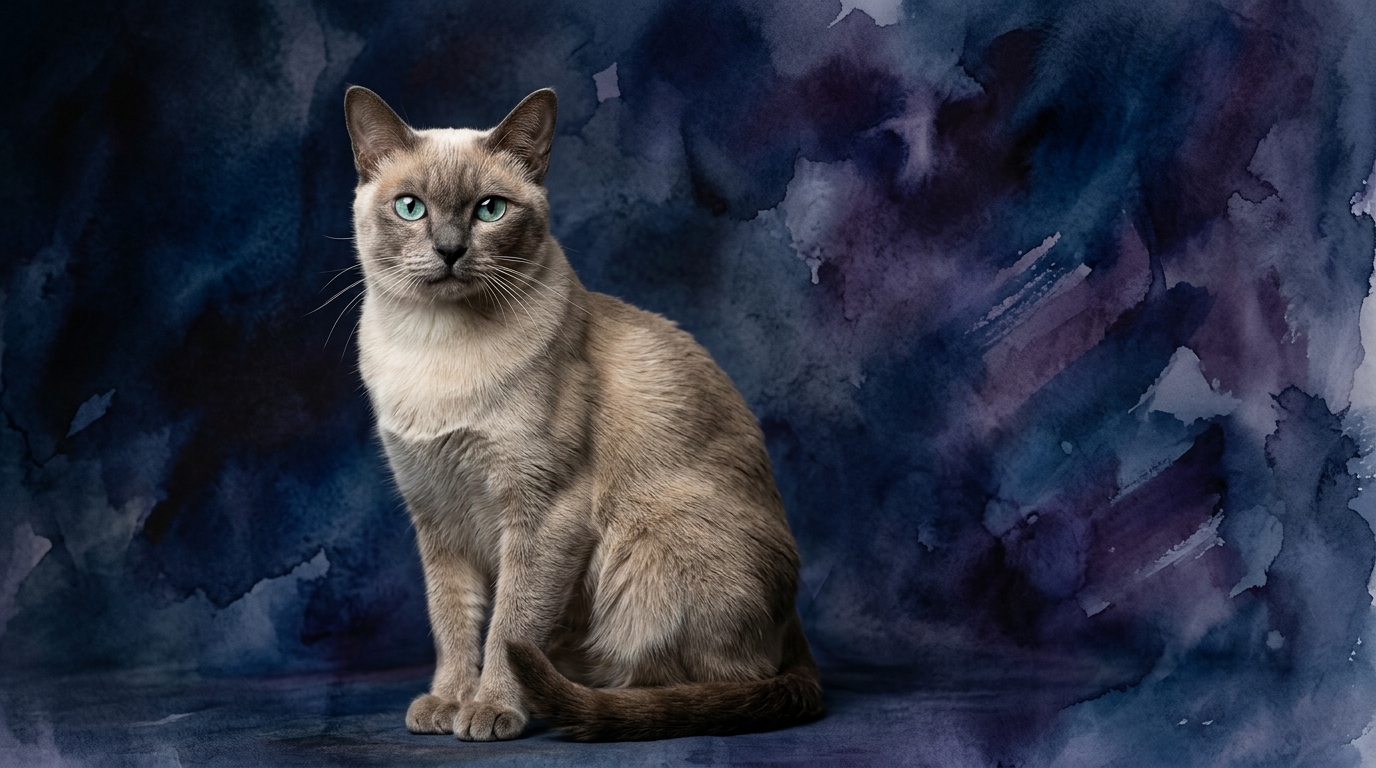
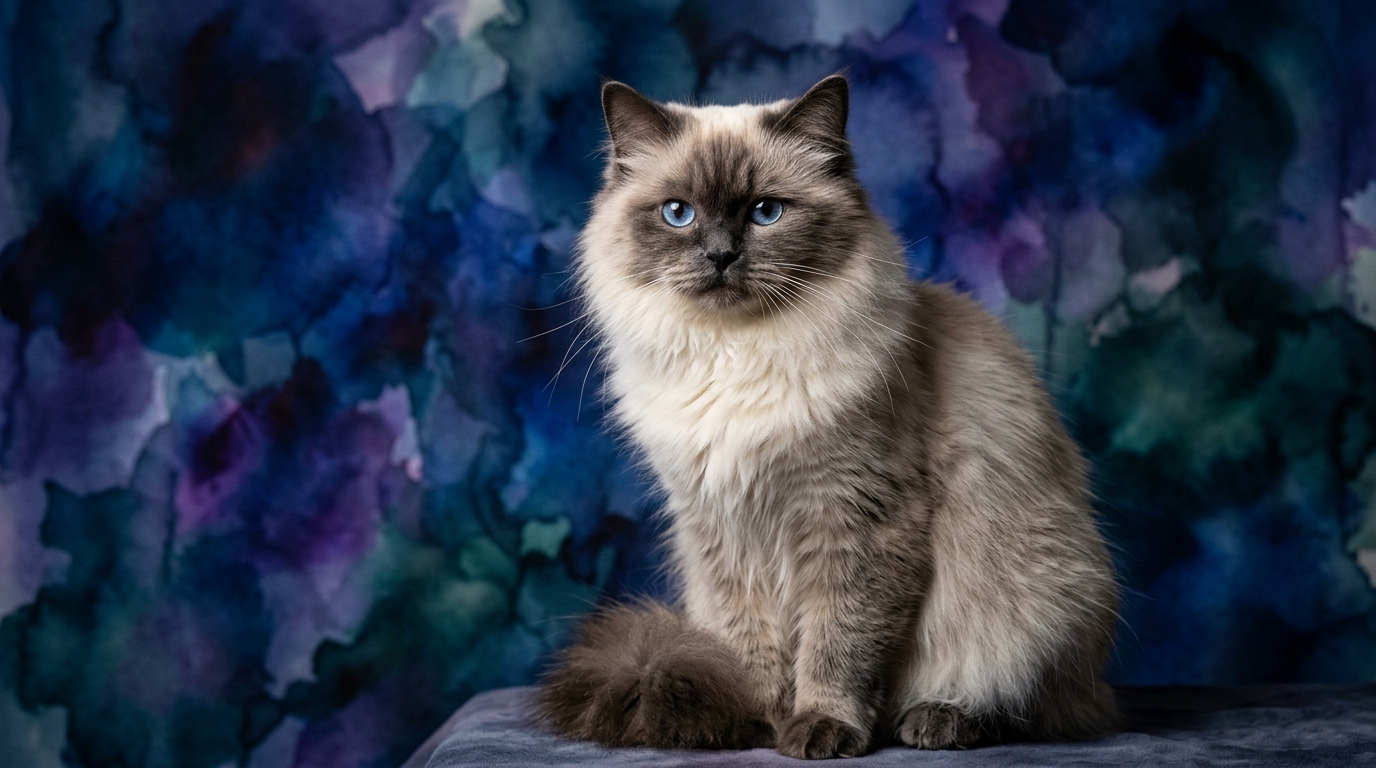
Side-by-Side IQ Profile: Tonkinese vs. Himalayan
The Cosmic Pet Pet IQ Lab provides a detailed breakdown of feline cognitive dimensions, offering a clear comparison between the Tonkinese and Himalayan breeds. These scores illuminate their inherent intellectual tendencies and how they might manifest in daily behavior.
The Tonkinese consistently demonstrates elevated cognitive abilities across almost all measured dimensions. Their Problem Solving is rated at an impressive 5/5, indicating a strong capacity for independent thought and navigating complex scenarios. Training Speed also scores a perfect 5/5, suggesting a rapid uptake of new commands and routines. Social Intelligence is equally exceptional at 5/5, reflecting a deep understanding of social cues and a desire for interaction. Their Instinctive Drive is robust at 4/5, pointing to a natural curiosity and active engagement with their environment, while Memory is rated 5/5, signifying excellent recall and retention of learned information.
In contrast, the Himalayan presents a more moderate, yet consistent, cognitive profile across the board. Their Problem Solving is rated 3/5, suggesting they approach challenges with a steady, rather than inventive, mindset, often preferring established patterns. Training Speed stands at 3/5, indicating they learn effectively with patience and repetition, though not with the same alacrity as some breeds. Social Intelligence is also 3/5, meaning they are affectionate and enjoy companionship but in a more reserved or less overtly demanding manner. Their Instinctive Drive is 3/5, reflecting a calmer disposition with less intense urges for exploration or hunting simulation. Finally, Memory is scored 3/5, indicating reliable recall for daily routines and familiar concepts, without the same precision for intricate details.
Where Tonkinese Wins Cognitively
The Tonkinese consistently demonstrates a cognitive edge across the board, particularly in areas demanding active engagement and adaptability. Their exceptional problem-solving acumen (5/5) means they are not simply reacting to their environment but actively manipulating it, often devising clever strategies to achieve their goals, such as opening doors or accessing treats. This contrasts sharply with the Himalayan's more moderate approach (3/5), where solutions are typically less inventive and more reliant on established patterns. Furthermore, the Tonkinese's superior training speed (5/5) and memory (5/5) signify a rapid uptake and retention of complex information. They can quickly associate actions with consequences and retain elaborate sequences of behaviors, making multi-step commands or intricate games well within their grasp. Their high social intelligence (5/5) allows for nuanced communication and a deeper understanding of human intentions, fostering a highly interactive relationship. This blend of quick learning, effective recall, and perceptive social understanding positions the Tonkinese as a feline companion eager to learn and engage on an almost conversational level.
Where Himalayan Wins Cognitively
While the Tonkinese excels in active cognitive domains, the Himalayan's moderate cognitive profile (3/5 across all dimensions) presents a different kind of advantage, particularly for owners seeking a more tranquil and predictable feline companion. Their moderate instinctive drive means they are less prone to elaborate mischief or ceaseless demands for stimulation, offering a calmer presence in the home. This reduced drive translates into a cat less compelled to explore every hidden nook or invent complex games, leading to a more serene and less 'busy' household atmosphere. Their steady, rather than rapid, training speed and memory mean they establish routines reliably without constantly seeking new challenges, contributing to a stable daily rhythm. The Himalayan’s moderate social intelligence, while less overtly demonstrative, fosters a gentle and consistent affection that is deeply appreciated by those who prefer a less demanding, yet profoundly loving, companion. Their cognitive makeup encourages a peaceful co-existence, where contentment often stems from comfort and routine rather than constant intellectual stimulation.
Which is Easier to Train and Why
Based on The Cosmic Pet Pet IQ Lab data, the Tonkinese is unequivocally easier to train, scoring a perfect 5/5 in training speed compared to the Himalayan's 3/5. This significant difference is rooted in their distinct behavioral profiles. Tonkinese cats possess a keen curiosity and an innate desire to interact and please their human companions, making them highly receptive to learning. Their exceptional problem-solving skills allow them to quickly grasp the connection between a command, an action, and a reward, accelerating the learning process. For example, a Tonkinese might learn to fetch a toy or walk on a leash in a matter of days or weeks, enthusiastically participating in training sessions. In contrast, Himalayans, while capable of learning, require more patience and repetition. Their moderate social intelligence means they may not be as driven by the desire to perform for their owners, and their moderate problem-solving skills mean they might take longer to connect abstract commands with physical actions. Training a Himalayan for basic commands like 'sit' or coming when called will be successful with consistent positive reinforcement, but it will likely be a slower, more deliberate process, as they are less inclined to actively seek out new intellectual challenges through training.
Active Owners vs. Relaxed Owners: A Cognitive Match
The cognitive profiles of these two breeds clearly delineate which might be a better fit for active versus relaxed owners. The Tonkinese, with its high scores across problem-solving, social intelligence, and instinctive drive, is an ideal match for active owners who thrive on interaction and mental stimulation. These cats require engaging play sessions, puzzle toys, and potentially even leash walks or agility training to satisfy their active minds and bodies. An owner who enjoys teaching tricks, engaging in extended play, and having a feline companion deeply involved in household activities will find the Tonkinese a rewarding partner. Their high social intelligence means they actively seek out and revel in human companionship, making them less suited for owners who prefer a more independent pet. Conversely, the Himalayan, with its consistent 3/5 scores, is perfectly suited for relaxed owners who appreciate a calm, gentle, and affectionate presence. These cats are content with a more predictable routine, enjoying quiet companionship, gentle petting, and less intense play. They are not prone to demanding constant attention or inventing elaborate games, making them an excellent choice for individuals or families seeking a serene feline companion that integrates smoothly into a peaceful home environment without requiring extensive daily engagement in complex activities.
The Verdict
Choose the Tonkinese if you desire an interactive, highly trainable, and cognitively engaged companion eager to participate in daily life and master new skills.
Opt for the Himalayan if you prefer a serene, affectionate feline that thrives on routine, gentle companionship, and a peaceful home environment, offering consistent love without demanding constant intellectual stimulation.
🧠 Find Your Pet's IQ Score
Our Pet IQ Lab assessment covers 25+ tests across 5 cognitive dimensions — personalized to your breed.
Take the Full IQ Test →Frequently Asked Questions
Are Tonkinese cats prone to destructive behavior due to their high instinctive drive?
While their instinctive drive (4/5) and problem-solving skills (5/5) mean Tonkinese cats are naturally curious and active, this doesn't necessarily translate to destructiveness. Providing ample mental stimulation through puzzle toys, interactive play, and consistent training can effectively channel their energy and intelligence into positive behaviors, preventing boredom-induced mischief.
Do Himalayans get bored easily with their moderate instinctive drive and problem-solving skills?
Himalayans are generally content with a more relaxed lifestyle and are less prone to boredom from lack of complex stimulation compared to breeds with higher cognitive drives. They appreciate comfort and routine, and while they enjoy gentle play, they don't typically require elaborate puzzles or constant novelty to remain content and engaged with their environment.
How do the social intelligence differences impact daily interaction with these breeds?
A Tonkinese (5/5 social intelligence) will likely be more overtly communicative and seek out interaction, often following you around, initiating play, or "conversing." A Himalayan (3/5 social intelligence) will be affectionate and enjoy your presence, but in a more reserved manner, often content to be near you rather than constantly engaging in active interaction, offering a quieter, yet deeply loving, bond.