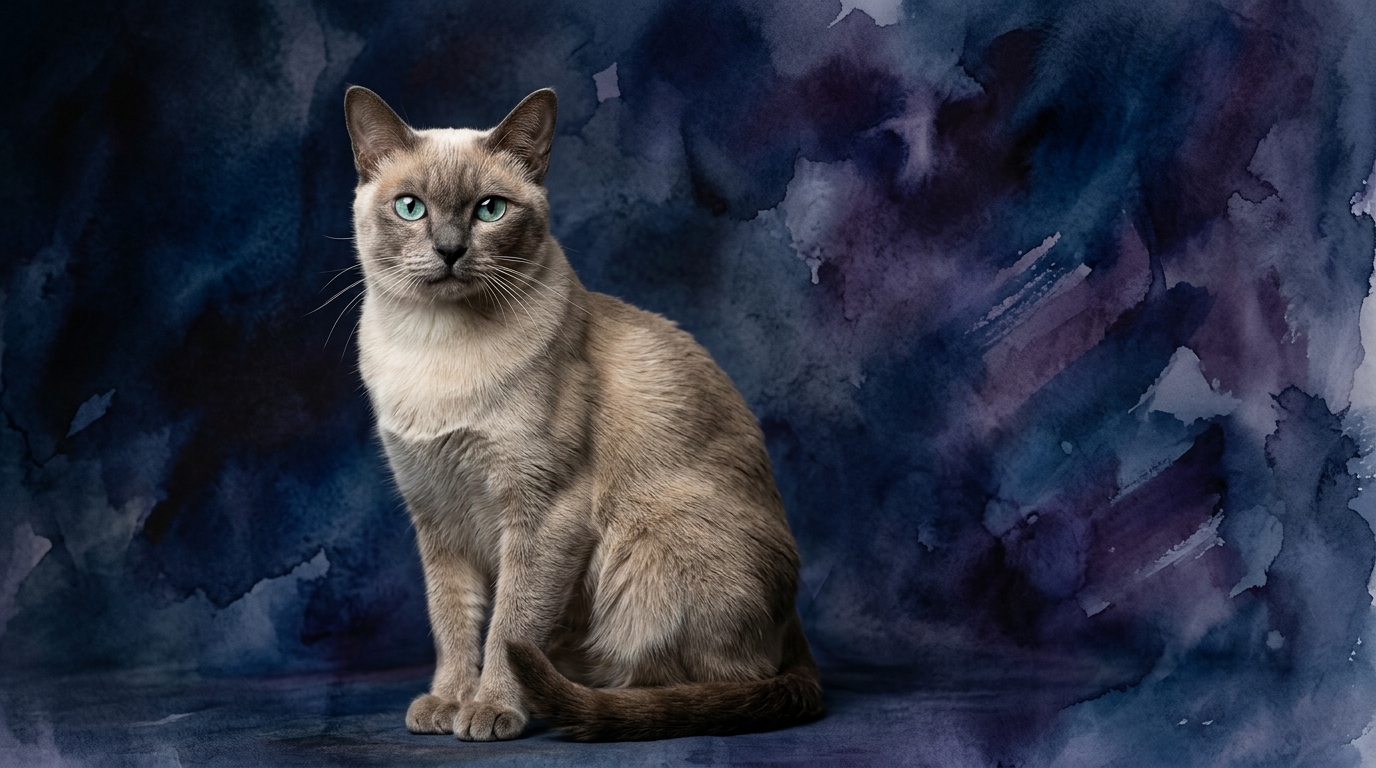
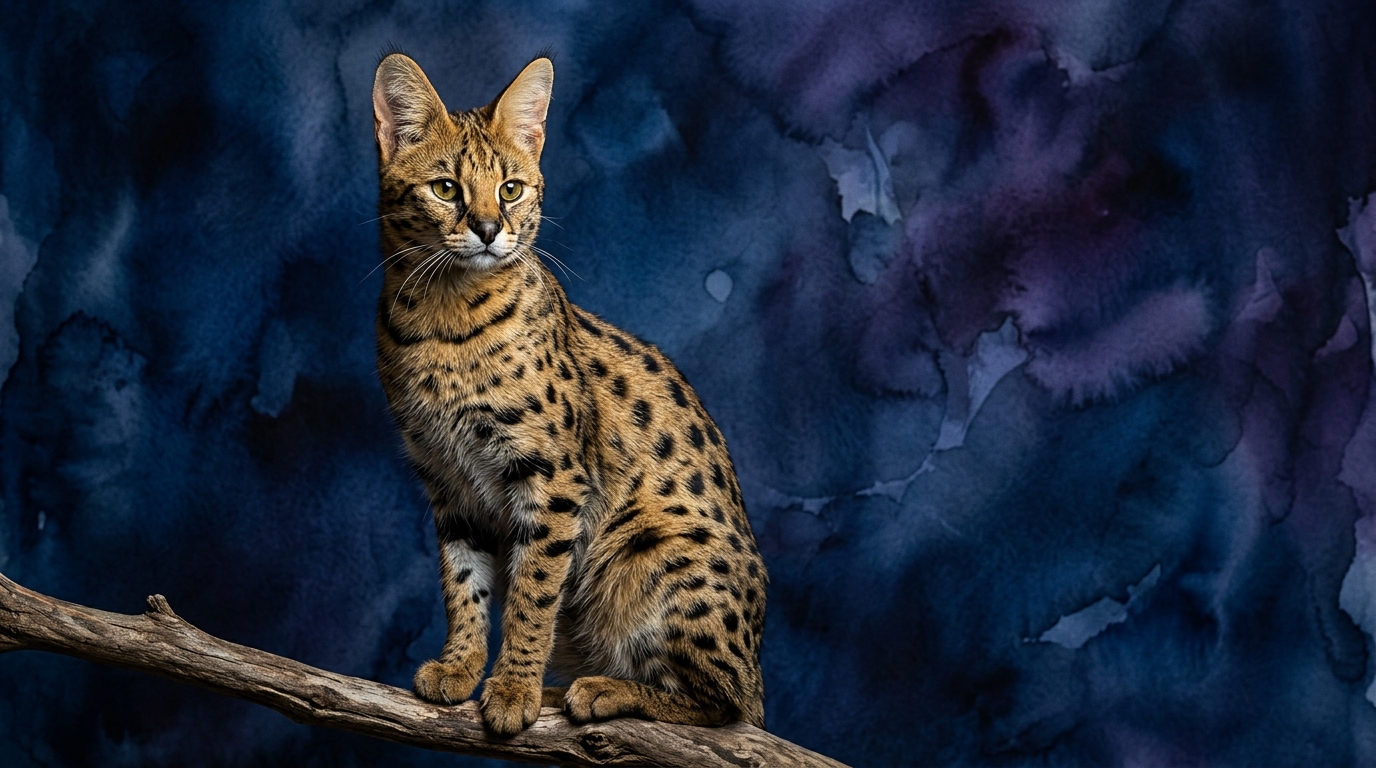
Side-by-Side IQ Profile: Tonkinese vs. Savannah
The Cosmic Pet Pet IQ Lab provides a detailed breakdown of feline cognitive capabilities across five key dimensions. For the Tonkinese, we observe a consistently high profile: Problem Solving (5/5), Training Speed (5/5), Social Intelligence (5/5), Instinctive Drive (4/5), and Memory (5/5). This indicates a cat that navigates complex situations with ease, absorbs new information rapidly, thrives on interaction, possesses a well-developed but not overwhelming natural drive, and retains learned experiences effectively.
In contrast, the Savannah cat presents a profile with distinct strengths: Problem Solving (5/5), Training Speed (4/5), Social Intelligence (4/5), Instinctive Drive (5/5), and Memory (5/5). While matching the Tonkinese in problem-solving and memory, the Savannah shows a slightly lower, though still significant, aptitude in training speed and social intelligence, coupled with a more pronounced instinctive drive. These scores suggest a cat equally adept at mental challenges and recall, but one whose learning approach and social dynamics are more influenced by their strong primal instincts.
Where the Tonkinese Wins Cognitively
The Tonkinese demonstrates a distinct cognitive advantage in two crucial areas: Training Speed and Social Intelligence, both scoring a perfect 5/5. This elevated Training Speed means a Tonkinese typically grasps new commands, routines, and household expectations with remarkable swiftness. They are quick to associate actions with consequences and adapt their behavior based on owner feedback, making the process of teaching tricks or reinforcing desired habits particularly efficient. This isn't merely about obedience; it reflects a capacity for rapid cognitive processing and behavioral modification.
Their superior Social Intelligence is equally noteworthy. A Tonkinese with a 5/5 score indicates an exceptional capacity to understand and respond to human emotions, vocal tones, and body language. They actively seek and engage in interaction, often forming deep, reciprocal bonds with their human companions. This cognitive strength allows them to integrate seamlessly into diverse family dynamics, anticipating needs and offering comfort, making them highly attuned and responsive members of a household. This strong social aptitude contributes to their adaptability and willingness to cooperate in training scenarios.
Where the Savannah Wins Cognitively
The Savannah cat's cognitive profile highlights a significant strength in Instinctive Drive, earning a top score of 5/5. This elevated drive translates into a pronounced innate curiosity, a strong prey drive, and a natural inclination towards exploration and physical activity. While both breeds are capable problem-solvers (5/5), the Savannah often channels this cognitive ability through its powerful instincts, using its mental faculties to strategize hunts, navigate complex environments, or overcome physical obstacles to reach desired objectives. They are masters at tasks requiring agility, vigilance, and strategic pursuit.
This robust instinctive drive also shapes their Problem Solving and Memory capabilities, which are also rated 5/5. A Savannah often applies its problem-solving skills to challenges that satisfy its natural urges, such as figuring out how to open a cupboard to investigate, or devising ways to reach a high perch. Their excellent memory, combined with this drive, means they recall successful hunting techniques, preferred exploration routes, and the locations of interesting stimuli with precision, making them persistent and effective in their pursuits. This combination results in a cat that is not just physically capable but mentally driven to interact with its environment in a profoundly active way.
Which is Easier to Train and Why?
Based on their cognitive profiles, the Tonkinese is generally easier to train compared to the Savannah. The Tonkinese's 5/5 in Training Speed means they absorb and internalize new commands and routines with impressive efficiency. Coupled with their 5/5 Social Intelligence, they are highly motivated by positive human interaction and possess a keen understanding of social cues, making them eager participants in training sessions. For instance, a Tonkinese might learn to fetch or walk on a leash in fewer repetitions because they quickly grasp the desired behavior and are rewarded by the engagement with their owner.
The Savannah, while still possessing a respectable 4/5 in Training Speed and 5/5 in Problem Solving, might require a more nuanced approach. Their strong 5/5 Instinctive Drive means training methods are most effective when they tap into their natural inclinations for exploration, chase, or puzzle-solving. While they can certainly learn complex behaviors, their independence and powerful instincts might mean they are less inclined to perform purely for human approval and more for the intrinsic reward of the activity itself. For example, a Savannah might excel at agility courses that mimic hunting or climbing, whereas a Tonkinese might be more readily trained for calmer, interaction-based tricks.
Which Suits Active Owners vs. Relaxed Owners?
For owners seeking a highly interactive, adaptable, and relatively relaxed companion, the Tonkinese is an excellent match. Their 5/5 Social Intelligence means they thrive on close companionship and integrate seamlessly into household routines, often content to observe or participate in quiet activities alongside their humans. While they appreciate play, their 4/5 Instinctive Drive suggests their activity needs are moderate and can often be met with regular play sessions and environmental enrichment rather than constant, intense physical demands. They are well-suited to owners who desire a feline presence deeply embedded in their daily lives, offering affection and engaging in conversational purrs.
Conversely, the Savannah cat is better suited for active and adventurous owners who can provide ample stimulation for their pronounced 5/5 Instinctive Drive. These cats require significant opportunities for physical exercise, exploration, and mental engagement that mimics their natural behaviors. Owners who enjoy interactive play involving chasing, climbing, or even leash-walking outdoors will find a rewarding companion in a Savannah. Their independence (relative to a Tonkinese's social intensity) means they can entertain themselves, but neglecting their need for activity can lead to boredom and potentially destructive behaviors. An owner who appreciates a cat with a wilder spirit and provides consistent, engaging outlets will foster a content Savannah.
The Verdict
Choose a Tonkinese if you prioritize a deeply social, rapidly trainable cat that integrates effortlessly into family life and thrives on close human connection. Their cognitive profile makes them ideal for owners who value a responsive and affectionate companion.
Opt for a Savannah if you are an active owner prepared to satisfy a powerful instinctive drive with ample physical and mental challenges, appreciating a cat that combines a striking appearance with an independent, adventurous spirit. They suit those who enjoy engaging with a feline possessing pronounced natural behaviors.
🧠 Find Your Pet's IQ Score
Our Pet IQ Lab assessment covers 25+ tests across 5 cognitive dimensions — personalized to your breed.
Take the Full IQ Test →Frequently Asked Questions
Are Tonkinese good family cats?
Yes, Tonkinese cats are exceptionally good family cats due to their 5/5 Social Intelligence. They actively seek interaction, form strong bonds with all family members, and adapt well to various household dynamics, making them affectionate and engaging companions for children and adults alike.
Do Savannah cats need a lot of attention?
Savannah cats require significant engagement and outlets for their high 5/5 Instinctive Drive, which can be interpreted as a need for 'attention' in the form of interactive play, exploration, and mental stimulation. While their Social Intelligence is 4/5, indicating they are social, they thrive when their physical and mental needs are consistently met through active participation rather than just passive companionship.
Which cat is better for apartment living?
The Tonkinese is generally better suited for apartment living due to their moderate Instinctive Drive (4/5) and high Social Intelligence (5/5), making them content with indoor life and human interaction. While a Savannah (5/5 Instinctive Drive) can adapt to an apartment, it would require extensive enrichment, vertical spaces, and dedicated active playtime to prevent boredom and satisfy their strong urge to explore and move.