
Side-by-Side Cognitive Profiles: A Deeper Look at 3/5
The Cosmic Pet Pet IQ Lab employs a five-dimensional framework to assess canine intelligence, offering a nuanced view beyond simplistic labels. Intriguingly, both the Toy Fox Terrier and the American Eskimo Dog register an identical score of 3 out of 5 across all five dimensions—Problem Solving, Training Speed, Social Intelligence, Instinctive Drive, and Memory—suggesting a balanced cognitive toolkit rather than exceptional prowess in any single area. However, the *expression* of these capacities differs significantly between a small, spirited terrier and a fluffy, Nordic spitz.
For the Toy Fox Terrier, a 3/5 in Problem Solving reflects their capacity to navigate immediate, tangible challenges, often driven by instinct or desire. They might cleverly figure out how to retrieve a dropped toy from under furniture or even manipulate a simple latch to explore, but complex, multi-step puzzles requiring abstract thought are typically beyond their scope without significant guidance. Their Training Speed, also a 3/5, indicates they can grasp new commands at a moderate pace, particularly when the learning is framed as an engaging game; however, their inherent terrier independence means they can quickly lose interest if repetition becomes monotonous or if a more stimulating distraction arises. Social Intelligence at 3/5 means they are generally adept at interpreting human body language and vocal cues, forming strong bonds within their immediate family, yet this score also accounts for a discerning nature, often leading to initial wariness or aloofness with strangers until trust is established. Their Instinctive Drive, another 3/5, is palpably expressed through a keen prey drive for small, fast-moving objects, reflecting their historical purpose, which fuels their playful chasing and provides a natural motivation for certain types of engagement. Finally, a Memory score of 3/5 suggests they retain learned behaviors and routines effectively, remembering past interactions and training cues, which contributes to consistent behavior over time once a pattern is established.
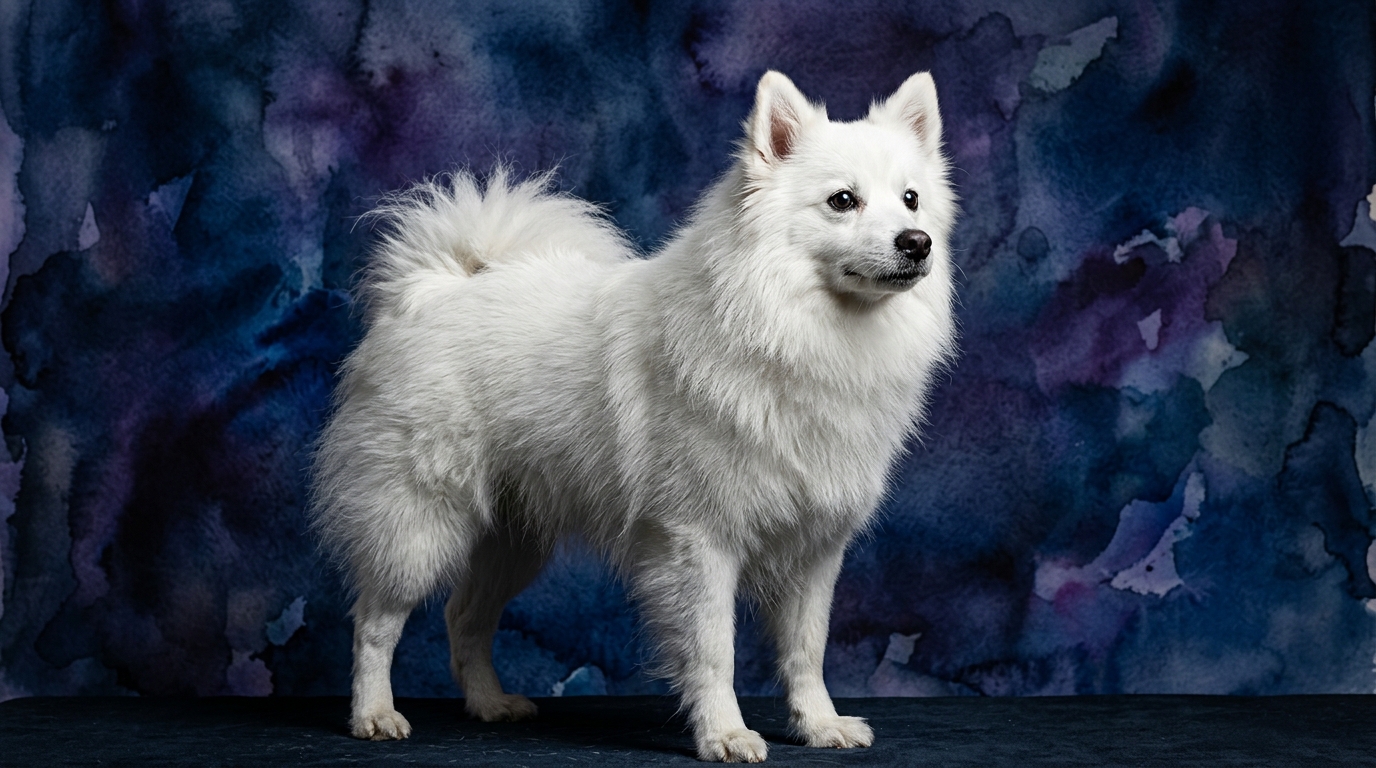
The American Eskimo Dog, with its 3/5 in Problem Solving, demonstrates a capacity for cleverness, often expressed through observation and mimicry. They might learn to open doors by watching humans or figure out how to access a treat container, showcasing a practical intelligence geared towards achieving desired outcomes; while capable, they too typically require clear, consistent instruction for more abstract challenges. Their Training Speed of 3/5 highlights their moderate learning curve; they are generally willing students who enjoy the mental engagement of training sessions, especially when positive reinforcement and praise are involved, though their independent spirit means they can sometimes appear to 'think for themselves' rather than blindly obeying, requiring a trainer who understands their motivations. A Social Intelligence score of 3/5 indicates a strong capacity for forming deep emotional connections with their human family, often displaying a remarkable ability to sense and respond to their owners' moods, which often translates to a more reserved or cautious approach with unfamiliar individuals, reflecting a selective social awareness. Their Instinctive Drive, also a 3/5, leans towards vigilance and companionship; they possess a moderate drive for barking to alert, and can exhibit herding tendencies or a desire to 'manage' their environment, rather than a strong predatory focus. Lastly, their Memory at 3/5 allows them to effectively recall a wide array of commands, routines, and experiences, contributing to their reputation as reliable and consistent companions who remember their learned lessons.
Where the Toy Fox Terrier Excels Cognitively
Despite their identical overall scores, the Toy Fox Terrier often displays a cognitive edge in scenarios demanding swift, decisive action and a tenacious spirit. Their terrier heritage imbues them with a remarkable resourcefulness when faced with a perceived 'problem' they genuinely want to solve, particularly if it involves securing a desired item or engaging in a chase. For instance, their Problem Solving (3/5) might manifest as a rapid assessment of how to navigate a complex, cluttered space to reach a specific toy, demonstrating a quick understanding of spatial relationships and immediate cause-and-effect. This is often coupled with their inherent Instinctive Drive (3/5), which fuels a relentless pursuit once a target (be it a squirrel or a thrown ball) is identified, showcasing a focused, undeterred cognitive processing towards a singular goal. Their quick reflexes and compact size also give them an advantage in agility-focused tasks, where their ability to process obstacles and execute rapid movements sets them apart. Furthermore, their Social Intelligence (3/5) often includes a sharp perception of their owner's emotional state, allowing them to quickly adapt their behavior to solicit attention or comfort, reading nuanced human cues with surprising accuracy. This quick cognitive 'read' allows them to be highly responsive in interactive play, where they can anticipate throws or movements, making them dynamic partners in games that require rapid back-and-forth engagement.
Where the American Eskimo Dog Shines Cognitively
The American Eskimo Dog, while sharing the same raw cognitive scores, tends to shine in different intellectual arenas, often leveraging their deep bond with their human family and their capacity for sustained focus. Their Problem Solving (3/5) frequently manifests through observational learning; an AED might meticulously watch an owner open a cabinet or operate a toy, then later attempt to replicate those actions themselves, showcasing a capacity for mimicry that is often more pronounced than in the Toy Fox Terrier. This observational aptitude is a hallmark of their learning style, contributing to their ability to pick up complex routines. Their Social Intelligence (3/5) is particularly strong in its depth of connection, allowing them to anticipate their owner's needs or moods with remarkable sensitivity, often responding with comforting gestures or a subtle shift in demeanor. This deep emotional attunement facilitates a more harmonious household dynamic. Furthermore, while both breeds score 3/5 in Instinctive Drive, the AED's tendencies often involve a sophisticated array of vocalizations—whines, 'woo-woos,' and varied barks—which can be interpreted as a more nuanced form of communication, allowing them to express desires or alerts with greater specificity. Their Memory (3/5) appears robust in recalling intricate training sequences or long-term routines, making them excellent candidates for advanced obedience or trick training where consistency over time is crucial. This foundational memory allows them to build a complex repertoire of behaviors, often with impressive retention.
Training Dynamics: Which is Easier and Why?
When assessing which breed is 'easier' to train, the identical 3/5 scores for Training Speed for both the Toy Fox Terrier and the American Eskimo Dog suggest that the *approach* and *trainer's style* are more critical than an inherent difference in learning capacity. For the Toy Fox Terrier, training often requires a dynamic, engaging, and highly consistent approach. Their terrier spirit, while contributing to their quickness, also means they possess an independent streak and a short attention span for repetitive tasks. A trainer working with a TFT must be creative, using varied rewards, short sessions, and incorporating play to maintain their interest. Their Instinctive Drive (3/5) for chasing means distractions can easily pull their focus, so training in controlled environments and gradually introducing distractions is paramount. Success with a TFT often comes from making training feel like a collaborative game rather than a rigid lesson, leveraging their Social Intelligence (3/5) to build a strong working partnership. In contrast, the American Eskimo Dog, also at 3/5 for Training Speed, often thrives on the mental stimulation that training provides and generally exhibits a strong desire to please their family. They respond exceptionally well to positive reinforcement, praise, and food rewards, often showing a sustained focus in structured sessions. While they possess an independent streak, it typically manifests as thoughtful consideration rather than outright defiance. Their Memory (3/5) allows them to build upon previous lessons effectively, leading to a steady accumulation of learned behaviors. However, their Instinctive Drive (3/5) includes a predisposition to vocalize, meaning early and consistent training is crucial to manage barking tendencies. Ultimately, neither is inherently 'easier'; the Toy Fox Terrier demands a more creative, fast-paced, and adaptable trainer, while the American Eskimo Dog benefits from a patient, consistent, and praise-heavy approach that acknowledges their thoughtful nature.
Matching Breeds to Lifestyles: Active vs. Relaxed Owners
The distinction between suitability for active versus relaxed owners, while often simplified, reveals subtle cognitive and behavioral differences between these two breeds. The Toy Fox Terrier, despite its diminutive size, possesses a robust energy level and a cognitive makeup that thrives on consistent engagement and activity. Their Instinctive Drive (3/5) for exploration and chasing, coupled with their Problem Solving (3/5) applied to navigating environments, means they are not content with minimal exercise. An active owner who enjoys daily walks, interactive play sessions, and perhaps even dog sports like agility will find a highly compatible companion in the TFT. Their Social Intelligence (3/5) makes them eager participants in family activities, and their Memory (3/5) helps them learn and anticipate routines involving outdoor adventures. They genuinely need an outlet for their physical and mental energy; an under-stimulated TFT can become restless or mischievous, using their problem-solving skills to create their own 'fun.' The American Eskimo Dog also has significant energy and requires regular exercise to remain balanced and content. Daily walks, play in a secure yard, and mental games are essential. However, their cognitive profile, particularly their strong Social Intelligence (3/5) and desire to be near their family, allows them to be more adaptable to periods of indoor relaxation *after* their exercise needs have been met. Unlike the perpetually-on-the-go TFT, an AED is often content to curl up near their owner for a quiet evening, provided they've had their physical and mental stimulation earlier. They can excel with active owners who provide structured outings and engage them in training, but their adaptability means they might also suit owners who can commit to dedicated exercise periods but also appreciate a calm, devoted companion during downtime. Therefore, for owners seeking a constant, high-octane playmate, the TFT might be the slightly better fit, whereas the AED offers a blend of activity and serene companionship.
The Verdict
Choose the Toy Fox Terrier if you appreciate a spirited, tenacious companion who thrives on engagement and quick-witted play, and you can provide consistent, stimulating training to channel their terrier drive.
Choose the American Eskimo Dog if you seek a devoted, intelligent family member who enjoys structured activities and mental challenges, and you're prepared to manage their vocal nature with positive, consistent guidance.
🧠 Find Your Pet's IQ Score
Our Pet IQ Lab assessment covers 25+ tests across 5 cognitive dimensions — personalized to your breed.
Take the Full IQ Test →Frequently Asked Questions
Are Toy Fox Terriers good at learning tricks?
Yes, Toy Fox Terriers can be quite adept at learning tricks due to their quickness and desire for engaging activities. Their 3/5 Training Speed means they'll pick up new behaviors at a moderate pace, especially if the tricks are presented as fun, interactive games with varied rewards.
Do American Eskimo Dogs get bored easily?
American Eskimo Dogs, with their 3/5 in Problem Solving and Training Speed, do require mental stimulation to prevent boredom. They enjoy puzzle toys and learning new tasks, and without sufficient engagement, they might find their own ways to entertain themselves, which can sometimes include excessive barking or destructive chewing.
How do their social skills compare with other dogs?
Both breeds generally possess a 3/5 Social Intelligence. Toy Fox Terriers often enjoy interacting with other dogs, especially those of similar size and play style, but can be selective. American Eskimo Dogs are typically friendly with familiar canine companions but may exhibit caution or reservation when introduced to new dogs, preferring to assess the situation before engaging fully.