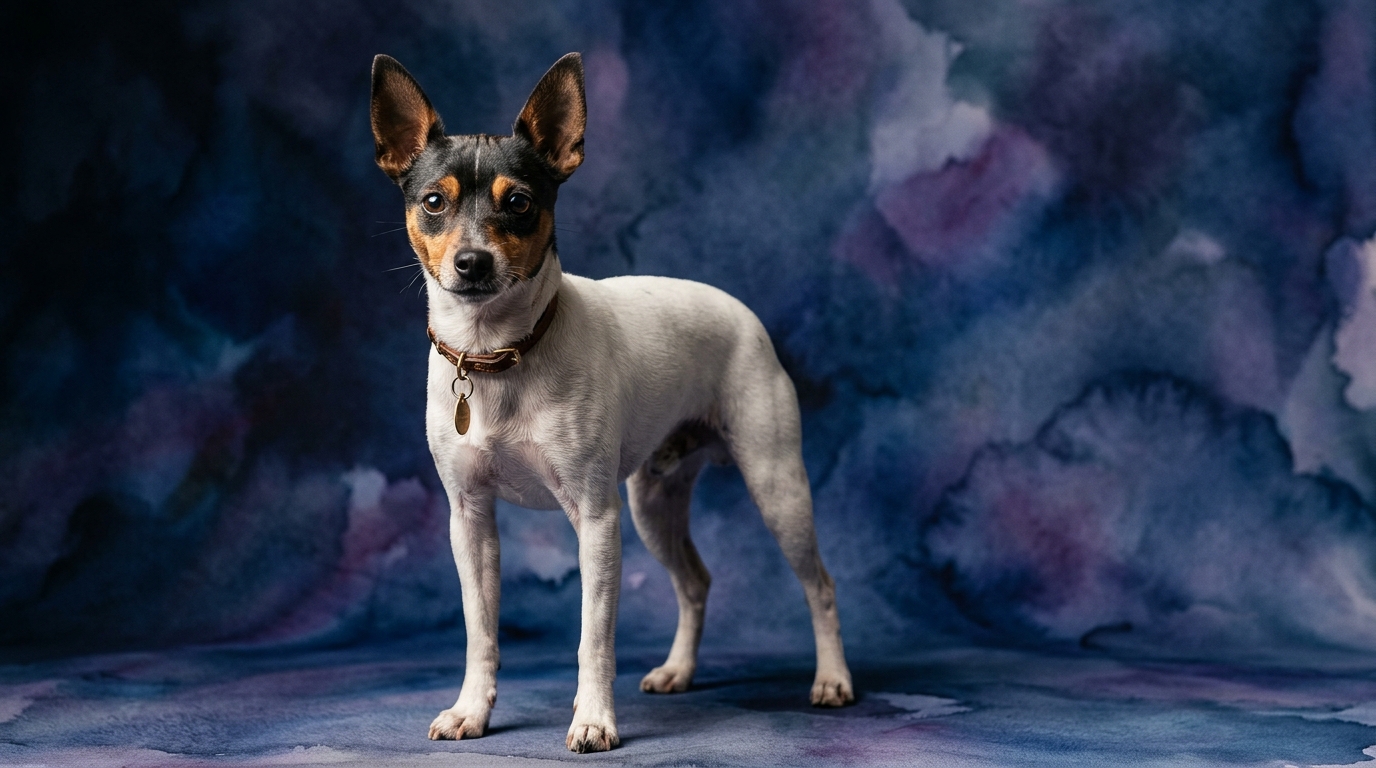
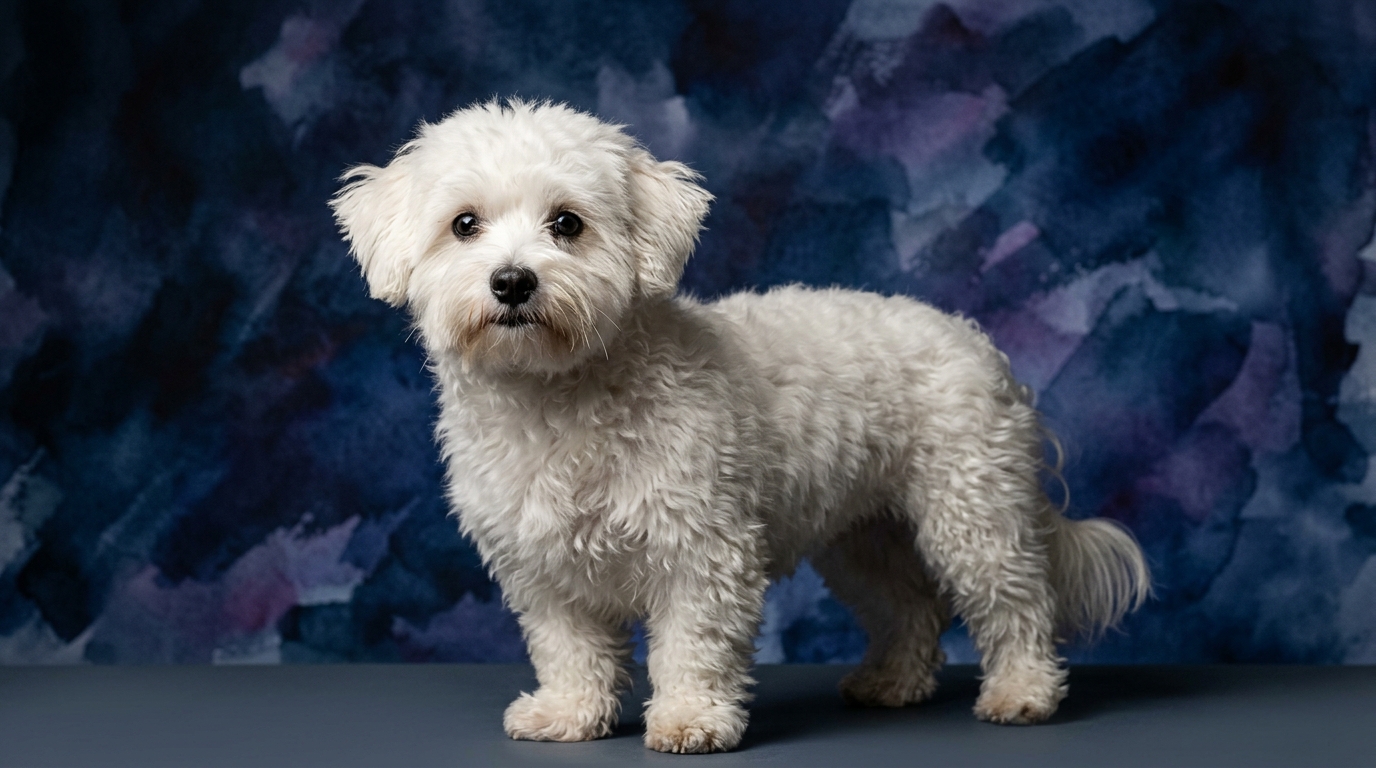
Side-by-Side Cognitive Profiles: Toy Fox Terrier vs. Coton de Tuléar
While both the Toy Fox Terrier (TFT) and the Coton de Tuléar share a consistent 3/5 rating across all five cognitive dimensions in The Cosmic Pet IQ Lab, their expression of these abilities is distinctly shaped by their breed histories and temperaments. This identical scoring doesn't imply identical behavior, but rather a similar level of competence applied in different contexts.
For Problem Solving (3/5), the Toy Fox Terrier demonstrates resourcefulness driven by its terrier heritage. A TFT will persistently work to achieve a goal, whether it's figuring out how to access a desired toy or navigating obstacles to chase a perceived 'prey.' Their solutions are often direct and determined, reflecting a practical, goal-oriented mindset. The Coton de Tuléar, conversely, applies its problem-solving abilities often in social or comfort-seeking contexts. A Coton might cleverly manipulate a toy for play, find the best spot for a nap, or figure out how to elicit attention from a family member. Their approach is typically more observational and charming, less about sheer tenacity and more about engaging with their environment and people.
Regarding Training Speed (3/5), the Toy Fox Terrier learns efficiently when engaged and motivated. However, their independent spirit and potential for a stubborn streak, characteristic of terriers, means consistency and positive reinforcement are paramount. They grasp commands effectively but might choose to prioritize an exciting scent or movement over immediate obedience. The Coton de Tuléar generally proves highly receptive to training, often eager to please and enjoying the interactive nature of learning. They pick up new cues readily, motivated by praise and social reward, though they can be sensitive to harsh methods and easily distracted by social opportunities.
In Social Intelligence (3/5), the Toy Fox Terrier forms deep, loyal bonds with its immediate family, adeptly reading their cues and emotions. However, their social circle tends to be more exclusive; they can be reserved, watchful, or even assertive with strangers and other animals, reflecting their protective instincts and territorial awareness. The Coton de Tuléar excels in social dynamics, being remarkably attuned to human emotions and social interactions. They thrive on companionship and are typically friendly, adaptable, and charming in new social situations, often seeking to engage positively with everyone they meet. They possess a natural ability to comfort and connect.
Instinctive Drive (3/5) in the Toy Fox Terrier is strongly influenced by its ratting background. This manifests as a keen interest in small, fast-moving objects, a propensity for digging, and alert barking as a natural watchdog. They are driven by an instinct to protect their territory and family. The Coton de Tuléar's primary drive is companionship and playful interaction. While they enjoy chasing toys, it's typically more about engaging with their human than a strong prey pursuit. They might exhibit a gentle 'herding' tendency to keep family members close and will alert bark to new sounds, but usually with less intensity than a terrier.
Finally, for Memory (3/5), the Toy Fox Terrier demonstrates excellent retention of routines, commands, and especially past 'victories,' such as where a treat was hidden or which person provides the best interactions. They retain their training well over extended periods. The Coton de Tuléar also possesses a strong memory for people, places, and learned behaviors. They remember positive experiences, routines, and can often anticipate daily events, using their memory to enhance their social adaptability and comfort within their environment.
Where the Toy Fox Terrier Wins Cognitively
The Toy Fox Terrier's cognitive advantage lies in its tenacious application of problem-solving with an independent, driven spirit. When faced with a physical challenge, such as a barrier to a desired object or a perceived pest, a TFT will employ a determined, often ingenious, approach to overcome it. Their memory for successful strategies in these practical scenarios is particularly sharp, allowing them to refine their methods over time. This terrier tenacity translates into a focused, goal-oriented cognitive style, making them uniquely effective at tasks requiring sustained effort and self-reliance, especially when the task aligns with their inherent drives. They excel at understanding and exploiting the physical aspects of their environment, demonstrating a robust, practical intelligence.
Where the Coton de Tuléar Wins Cognitively
The Coton de Tuléar's cognitive strengths truly shine in the realm of social and emotional intelligence. They possess a remarkable ability to read and respond to subtle human moods and cues, often adjusting their behavior to provide comfort or initiate playful interaction. Their problem-solving in social contexts, such as figuring out how to gently coax attention from a busy owner or offering a comforting presence to someone feeling low, is highly developed. This breed's memory for specific social interactions, preferred routines, and individual family member's temperaments is exceptional, enabling them to navigate complex household dynamics with innate grace and charm. They excel at fostering harmonious social environments and understanding nuanced human communication.
Which Is Easier to Train and Why
Although both breeds rate 3/5 for Training Speed, the Coton de Tuléar is generally perceived as easier to train for the average owner. Their strong desire to please and inherent social motivation make them highly receptive to positive reinforcement. Cotons thrive on praise, gentle encouragement, and interactive training sessions, often viewing learning as another form of engaging with their beloved humans. Their naturally lower instinctive drive compared to a terrier means fewer distractions from chasing small animals or obsessive digging, allowing for more focused training periods.
The Toy Fox Terrier, while learning quickly, can present more of a challenge due to their independent nature and strong prey drive. While they grasp commands efficiently, they might choose to ignore them if a compelling instinct, like a squirrel sighting, takes precedence, or if they simply decide there's a more interesting activity. Training a TFT requires unwavering consistency, high-value rewards, and engaging methods to harness their focus and work with, rather than against, their terrier stubbornness. Owners need to be patient and creative in redirecting their natural drives into productive training exercises.
Which Suits Active Owners vs. Relaxed Owners
For active owners, the Toy Fox Terrier is often the more suitable choice. Despite their small stature, TFTs are energetic and require regular, engaging physical and mental stimulation. Their instinctive drive means they genuinely enjoy activities that tap into their terrier spirit, such as agility courses, earthdog trials, or vigorous games of fetch and chase. They thrive with owners who can provide consistent outlets for their boundless energy and sharp minds. An under-stimulated TFT may channel their intelligence and drive into undesirable behaviors like excessive barking or destructive chewing.
The Coton de Tuléar, on the other hand, typically suits more relaxed owners. While they are playful and enjoy their daily walks and indoor games, their exercise needs are generally moderate. Their primary requirement is consistent companionship and being an integral part of family life. Cotons are content to be lap dogs for much of the day, adapting easily to various living situations, from apartments to larger homes. They are less demanding in terms of structured, high-intensity activity and more focused on providing and receiving affection, making them wonderful companions for a quieter, yet still interactive, household routine.
The Verdict
Choose the Toy Fox Terrier if you seek a spirited, tenacious companion who thrives on engaging challenges and offers an alert, independent presence, and you are prepared to channel their driven nature.
Choose the Coton de Tuléar if you desire a charming, highly adaptable companion who excels at social interaction and offers a comforting, joyful presence, fitting seamlessly into a relaxed yet interactive home.
🧠 Find Your Pet's IQ Score
Our Pet IQ Lab assessment covers 25+ tests across 5 cognitive dimensions — personalized to your breed.
Take the Full IQ Test →Frequently Asked Questions
Are Toy Fox Terriers good with children?
Toy Fox Terriers can be good with older, respectful children who understand how to interact with a small, sometimes feisty dog. They are not typically recommended for very young children due to their delicate size and independent nature, which might not tolerate rough play well.
Do Coton de Tuléars bark a lot?
Coton de Tuléars can be prone to alert barking, especially when new people approach or unfamiliar sounds occur, as they are watchful companions. However, with consistent training and socialization, this tendency can be managed, and they are generally not excessive barkers.
How much grooming do these breeds require?
The Toy Fox Terrier has a short, smooth coat that requires minimal grooming, primarily weekly brushing and occasional baths. The Coton de Tuléar, with its long, cotton-like coat, needs significant daily brushing to prevent matting and regular professional grooming or trimming to maintain its distinctive appearance.