
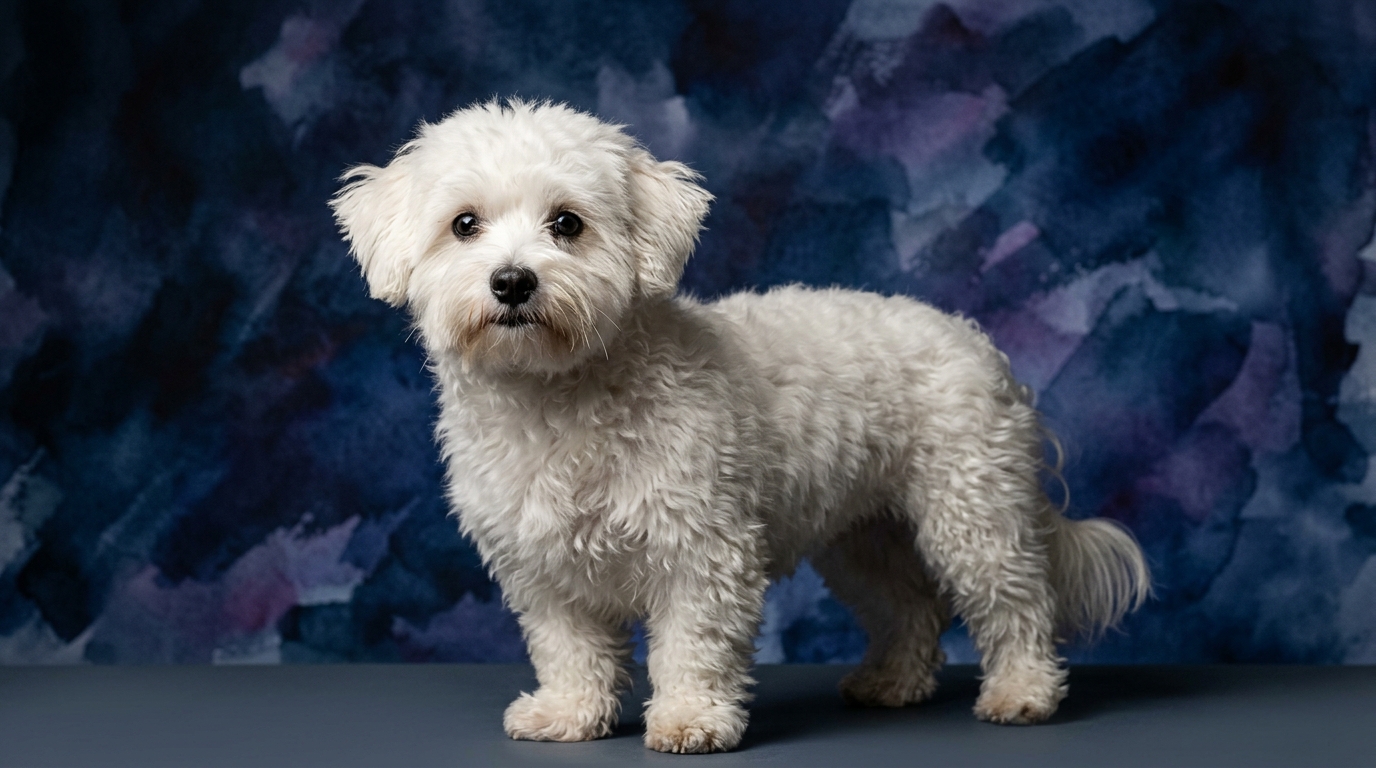
Side-by-Side IQ Profile: German Shepherd vs. Coton de Tuléar
The Cosmic Pet Pet IQ Lab employs five key dimensions to evaluate canine intelligence, offering a nuanced view beyond simple rankings. For the German Shepherd, a breed rooted in complex working roles, these scores consistently reflect a profound cognitive capacity across the board. Their Problem Solving is rated 5/5, indicating an exceptional ability to analyze novel situations, devise effective strategies, and navigate complex environments, often making independent decisions when needed. Training Speed also registers a perfect 5/5, meaning they grasp new commands and multi-step tasks with minimal repetition, rapidly forming associations between cues and actions. Social Intelligence, at 5/5, highlights their acute perception of human communication, emotional states, and their role within a social structure, making them highly attuned partners. An Instinctive Drive of 5/5 underscores their inherent motivation for purpose-driven activity, whether it's herding, protection, or scent work, compelling them to engage with their environment. Finally, their Memory at 5/5 signifies an impressive capacity to recall learned behaviors, commands, and experiences over extended periods, contributing to their reliability in intricate tasks.
In contrast, the Coton de Tuléar, a breed celebrated for its companionship, exhibits a different, yet equally effective, cognitive profile tailored to its role. Their Problem Solving is rated 3/5, suggesting they can navigate common household challenges and learn simple sequences, but may not independently strategize through highly complex, novel obstacles. Training Speed stands at 3/5, indicating they learn basic obedience and tricks adequately with consistent positive reinforcement, though they may require more repetition than a working breed to solidify new skills. Social Intelligence, also 3/5, reflects their strong affinity for human interaction and their capability to form deep bonds, understanding basic social cues and adapting to family dynamics without needing to interpret complex human intentions or anticipate intricate needs. An Instinctive Drive of 3/5 points to a moderate level of intrinsic motivation for play and companionship, rather than a strong compulsion for demanding work or independent tasks, allowing them to be content with less structured activity. Their Memory, rated 3/5, is sufficient for retaining household routines, learned commands, and familiar faces, ensuring they remember their training and beloved family members.
Where the German Shepherd Excels Cognitively
The German Shepherd's cognitive strengths are particularly evident in their capacity for advanced learning and application. Their 5/5 Problem Solving isn't just about figuring things out; it manifests as the ability to generalize solutions from one context to another. For instance, a German Shepherd trained to find a specific toy indoors can often apply that search concept to locate a different item in a new outdoor environment with minimal additional guidance. Their 5/5 Training Speed allows them to link abstract concepts with physical actions rapidly, such as understanding complex hand signals or differentiating between subtle verbal cues for multiple tasks. This translates into quickly mastering multi-stage commands, like 'find the keys, bring them here, then sit.' Furthermore, their superior Memory (5/5) means they retain these intricate command sequences and problem-solving strategies for extensive periods, making refresher training often quick and efficient. This blend of attributes allows them to excel in roles requiring independent judgment and consistent performance under varying conditions, from assistance work to protection duties, where they must interpret evolving situations and respond appropriately.
Where the Coton de Tuléar Excels Cognitively
While the Coton de Tuléar's cognitive scores are moderate compared to the German Shepherd, their particular blend of abilities allows them to excel in their primary role as a devoted companion. Their 3/5 Social Intelligence, for example, is perfectly calibrated for intimate family life; they are adept at reading fundamental human emotions and responding with comforting presence or playful engagement, fostering strong emotional bonds. This isn't about complex task interpretation, but about perceptive empathy and maintaining harmonious household dynamics. Their 3/5 Problem Solving means they quickly learn how to achieve desired outcomes within a home environment, whether it's figuring out how to get attention from a family member or navigating household objects to find their favorite nap spot. They may not independently solve complex puzzles, but they are astute at learning routines and leveraging their charm to influence their environment. Their 3/5 Instinctive Drive supports their adaptability; they are not compelled by intense working urges, making them content to simply be with their family, fitting seamlessly into various lifestyles without requiring constant, high-level mental stimulation beyond companionship and moderate play. Their cognitive strengths lie in their ability to be perceptive, adaptable, and emotionally responsive companions.
Which is Easier to Train and Why
Determining which breed is 'easier' to train depends heavily on the owner's goals and definition of ease. The German Shepherd, with its 5/5 Training Speed, 5/5 Problem Solving, and 5/5 Instinctive Drive, is profoundly easier to train for complex, multi-stage tasks and advanced obedience. They possess an innate desire to work and learn, rapidly connecting abstract concepts to actions and retaining them with minimal repetition. Their drive means they are often self-motivated to engage in training, thriving on the challenge and purpose it provides. However, this ease for advanced tasks comes with the caveat that their cognitive capacity and high drive necessitate consistent, engaging training to prevent boredom and channeling their mental energy constructively; without it, their intelligence can lead to self-directed, potentially undesirable behaviors.
The Coton de Tuléar, with its 3/5 scores across the board, is easier to train for basic obedience and house manners within a companion setting. Their desire to please their humans and their moderate Instinctive Drive make them generally cooperative and responsive to positive reinforcement for foundational commands like 'sit,' 'stay,' or house-training. They are less likely to challenge authority with strong independent thinking in the way a working breed might if not adequately stimulated. While they might require more repetition to solidify new behaviors (3/5 Training Speed), their adaptability and focus on social connection (3/5 Social Intelligence) make them eager students for foundational learning. Owners seeking a dog for relaxed companionship and basic good behavior will find the Coton's training journey straightforward and rewarding, without the intensity required to engage a German Shepherd's deep cognitive reserves.
Which Suits Active Owners vs. Relaxed Owners
For active owners, the German Shepherd is an ideal match. Their 5/5 Instinctive Drive and Problem Solving capabilities mean they thrive on consistent physical exertion combined with significant mental engagement. These dogs excel in activities like agility, competitive obedience, tracking, or even real-world working roles such as search and rescue. They require daily opportunities to use their bodies and minds in purposeful ways, finding immense satisfaction in mastering new challenges and executing complex tasks. An owner who enjoys long hikes, advanced training classes, or dog sports will find a German Shepherd to be an enthusiastic and capable partner, eager for shared adventures and mental stimulation.
Conversely, the Coton de Tuléar is better suited for relaxed owners seeking a devoted companion without demanding exercise or intense mental work. Their moderate 3/5 Instinctive Drive means they are content with shorter walks, indoor play, and ample cuddle time. While they enjoy learning tricks and engaging in interactive games, their cognitive needs are met more by consistent companionship and gentle mental stimulation rather than rigorous training regimes or high-octane activities. An owner who values quiet evenings, leisurely strolls, and a constant, affectionate presence will find the Coton de Tuléar to be a perfectly adaptable and joyful family member, content to share their human's more laid-back pace of life.
The Verdict
Choose the German Shepherd if you are an active individual or family prepared to dedicate significant time to advanced training, consistent mental challenges, and vigorous physical activity, seeking a profoundly capable and purposeful canine partner. They thrive with owners who can channel their deep cognitive abilities and strong drives into productive engagement.
Opt for the Coton de Tuléar if you desire a charming, adaptable companion for a more relaxed lifestyle, prioritizing affectionate companionship and moderate activity over intense training or demanding work. They suit owners who appreciate their perceptive social nature and are content with a dog whose cognitive strengths lie in being a devoted family member.
🧠 Find Your Pet's IQ Score
Our Pet IQ Lab assessment covers 25+ tests across 5 cognitive dimensions — personalized to your breed.
Take the Full IQ Test →Frequently Asked Questions
Do German Shepherds truly need constant mental challenges?
Yes, German Shepherds benefit significantly from consistent mental engagement. Their 5/5 Problem Solving and Instinctive Drive mean they possess a deep capacity for learning and a strong urge to have a purpose, making regular training, puzzle toys, and new experiences crucial to their well-being and preventing boredom-induced behaviors.
Can Coton de Tuléars learn complex tricks despite their moderate IQ scores?
Coton de Tuléars can certainly learn a variety of tricks and basic obedience commands, and enjoy the process. While their 3/5 Training Speed might mean they require more repetition than a German Shepherd, their desire to please and social intelligence make them willing students, capable of mastering many fun and useful skills.
How do their social intelligence scores manifest differently in daily life?
A German Shepherd's 5/5 social intelligence allows them to interpret subtle human cues, anticipate needs in working roles, and read complex social situations, making them exceptional partners in tasks requiring deep understanding. A Coton de Tuléar's 3/5 social intelligence translates to being highly perceptive of family emotions, adept at forming strong bonds, and adapting well to household dynamics, excelling as a sensitive and affectionate companion.