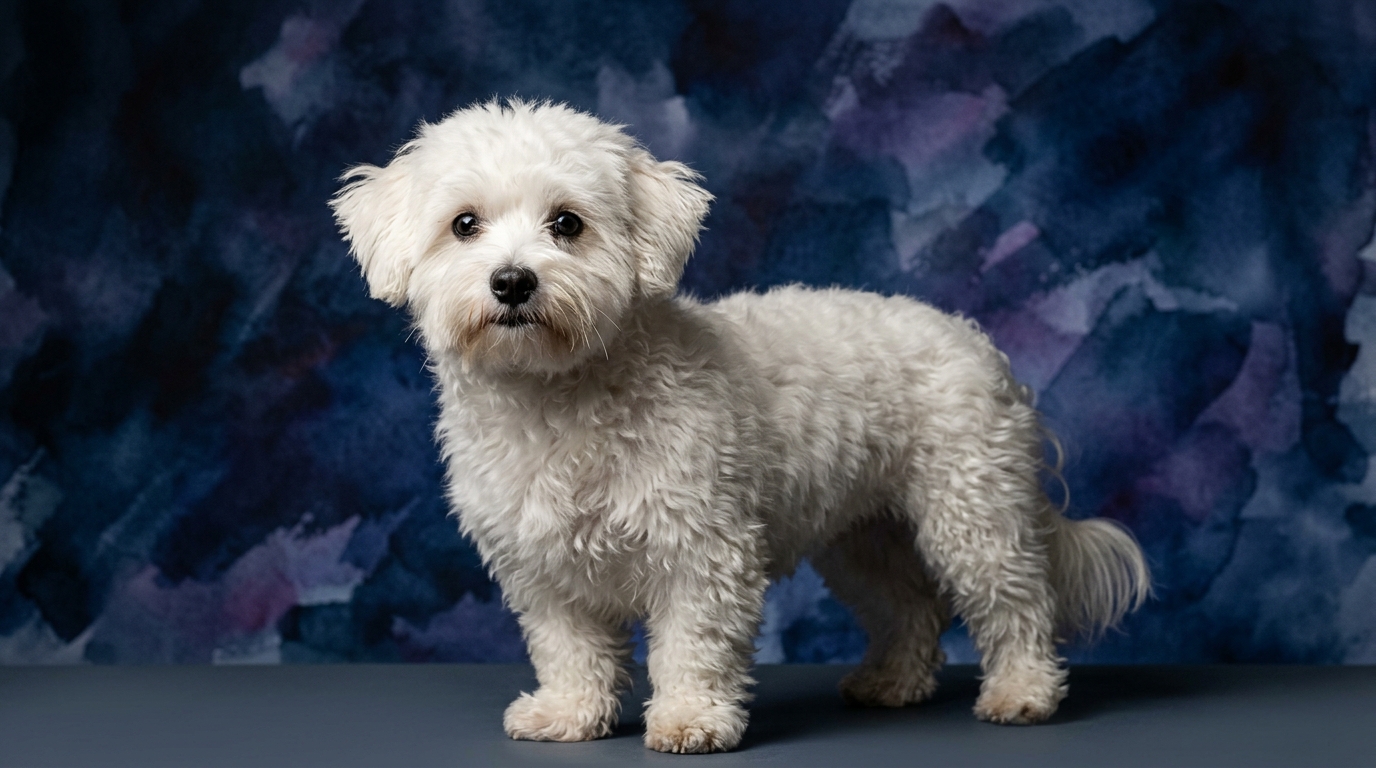
Coton de Tuléar at a glance
| IQ Rank / Score | 14/25 |
|---|---|
| Trainability | ★★★★☆ (4/5) |
| Social Intelligence | ★★★★☆ (4/5) |
| Lifespan | 12-16 years |
| Shedding | Low to moderate |
| Exercise Needs | Moderate (30-45 min/day) |
| Origin | Madagascar |
The Heart of Intelligence: Emotional Acumen & Adaptability
The primary angle for understanding Coton de Tuléar intelligence is their exceptional emotional intelligence and profound adaptability to social cues. Unlike breeds primarily developed for tasks like herding, hunting, or guarding, the Coton was meticulously shaped by centuries of close companionship, particularly with Malagasy royalty. This history fostered a cognitive profile where interpreting human emotions, intentions, and routines became paramount.
Coton de Tuléars possess an almost uncanny ability to 'read the room,' detecting subtle shifts in their owner's mood or household atmosphere. They don't just respond to direct commands; they anticipate needs, offer comfort when sensing distress, and seamlessly adjust their energy levels to match their environment. This high degree of social sensitivity allows them to integrate into diverse family dynamics with remarkable ease, making them truly intuitive companions rather than mere pets.
Their adaptability extends beyond emotional synchronicity; Cotons are known for thriving in various living situations, from bustling city apartments to quiet suburban homes. This cognitive flexibility, combined with their eagerness to please, enables them to quickly learn and conform to household rules and routines. Their intelligence is less about independent problem-solving of complex physical challenges and more about mastering the intricate social fabric of human-canine coexistence.
A Royal Legacy: Madagascar's Canine Gem and Its Cognitive Roots
A surprising scientific and historical fact about the Coton de Tuléar’s cognition is how their isolated development on Madagascar, specifically as the treasured companion of royalty, profoundly shaped their social intelligence. Legend has it they descended from shipwrecked dogs, and their subsequent evolution on the island, free from interbreeding with other working dog lines, allowed their companion-focused traits to become highly concentrated and refined over centuries.
This unique historical trajectory meant that survival and success for the Coton hinged not on raw strength, hunting prowess, or complex physical tasks, but on their ability to forge deep bonds with humans and integrate into the refined social structures of Malagasy aristocracy. Natural selection, in this context, favored dogs most attuned to human social signals, most capable of providing comfort and entertainment, and most adaptable to a lifestyle of close human interaction.
Therefore, their 'social intelligence' isn’t just a learned trait; it’s a deeply ingrained genetic predisposition, honed through generations where emotional resonance and adaptability were the keys to their elevated status. This makes their innate ability to interpret human cues and adapt to social environments a true hallmark of their cognitive legacy, distinguishing them from many other breeds whose intelligence was molded by more utilitarian roles.
Coton de Tuléar IQ Breakdown: A Holistic View
Understanding the Coton de Tuléar’s intelligence requires looking beyond simple obedience and appreciating their nuanced cognitive strengths. Here’s how they score on key IQ dimensions, reflecting their unique breed purpose and historical development:
**Problem-Solving (Score: 3/5):** Cotons are moderately skilled problem-solvers. While they can figure out simple puzzle toys and navigate household challenges, their primary approach is often to engage their human companions rather than to independently tackle complex physical obstacles. They excel at 'solving' social problems, like how to gain attention or comfort, more so than intricate mechanical ones. Their intelligence is less about brute-force logic and more about discerning cause-and-effect in social interactions.
**Training Speed (Score: 4/5):** This breed boasts impressive training speed, driven by their eagerness to please and strong desire for human approval and interaction. They pick up new commands and routines quickly, often with just a few repetitions. Their keen observational skills and ability to associate actions with rewards make them highly receptive to positive reinforcement training. They thrive on mental stimulation provided by learning new tricks and tasks, making them a joy to train.
**Social Intelligence (Score: 5/5):** This is where the Coton de Tuléar truly shines. Their social intelligence is exceptional, marking them as one of the most empathic and people-oriented breeds. They are masters at reading body language, vocal tones, and emotional states, allowing them to adapt their behavior accordingly. This high social IQ fosters deep, reciprocal bonds with their families and contributes significantly to their role as intuitive, comforting companions.
**Instinctive Drive (Score: 2/5):** As a breed developed purely for companionship, the Coton de Tuléar exhibits a relatively low instinctive drive for traditional dog tasks like hunting, herding, or guarding. While they may have a playful chase instinct for toys or small critters in the yard, these urges are not dominant. Their natural inclination is towards social interaction and leisure rather than performing independent, instinct-driven work.
**Memory (Score: 4/5):** Cotons possess excellent memory, particularly for routines, learned commands, and social experiences. They quickly remember where their favorite toys are, the schedule for walks and meals, and which family members are most likely to offer a treat or a cuddle. This strong memory contributes to their trainability and their ability to settle comfortably into a consistent household environment.
3 At-Home Tests to Measure Your Coton de Tuléar's IQ
These tests are adapted from peer-reviewed ethology research. No equipment is needed beyond items you have at home. Run each test 5–10 times for reliable results.
The Myth: "Coton de Tuléars are just pretty faces; they're not truly intelligent beyond being cute companions."
✅ The truth is Coton de Tuléars possess a highly refined form of intelligence, particularly social and emotional acumen, which is paramount for their role as deeply connected companions. While they might not herd sheep or solve complex scent trails, their ability to read human emotions, adapt to social dynamics, learn complex tricks quickly, and form strong, intuitive bonds showcases a profound and specialized form of canine intelligence. Their 'cuteness' is merely a charming packaging for a very smart, perceptive dog.
Coton de Tuléar vs. Similar Breeds
🧠 What's Your Dog's IQ Score?
Our full Pet IQ Lab assessment includes 12+ tests across 5 cognitive dimensions, calibrated for Coton de Tuléars specifically.
Take the Full IQ Test →Frequently Asked Questions
How smart is a Coton de Tuléar?
Our Pet IQ Lab framework scores cognition across five dimensions (max 25). The Coton de Tuléar totals 14/25 — above-average for a domestic dog. The full article breaks down each dimension with at-home tests.
Are Coton de Tuléars easy to train?
Coton de Tuléars are generally easy to train when you use consistent, reward-based sessions. They score 4/5 on Training Speed in our breed profile.
Are Coton de Tuléars good with children and other pets?
Yes — their Social Intelligence rates 4/5 in our Pet IQ Lab framework. With early socialization and supervised play, most Coton de Tuléars integrate well into families with respectful children and other pets.
Do Coton de Tuléars need a lot of mental stimulation?
Coton de Tuléars benefit from 10-15 minutes of focused enrichment a day: food puzzles, short training drills, or novel toys rotated weekly.
How much exercise does a Coton de Tuléar need?
Coton de Tuléars do well with 20-40 minutes of daily walks and play plus a few short training moments.
How good is a Coton de Tuléar's memory?
Coton de Tuléars score 3/5 on memory. They remember high-value associations well; less-used cues fade without refresher sessions.
What is the typical lifespan of a Coton de Tuléar?
Coton de Tuléars commonly live 12-16 years when kept at a healthy weight.
The Coton de Tuléar stands as a testament to the diverse forms of canine intelligence, proving that profound cognitive abilities are not limited to working breeds. Their exceptional emotional intelligence, adaptability, and eager-to-please nature make them not just pets, but truly intuitive and deeply connected family members, enriching lives with their perceptive charm and unwavering companionship.