
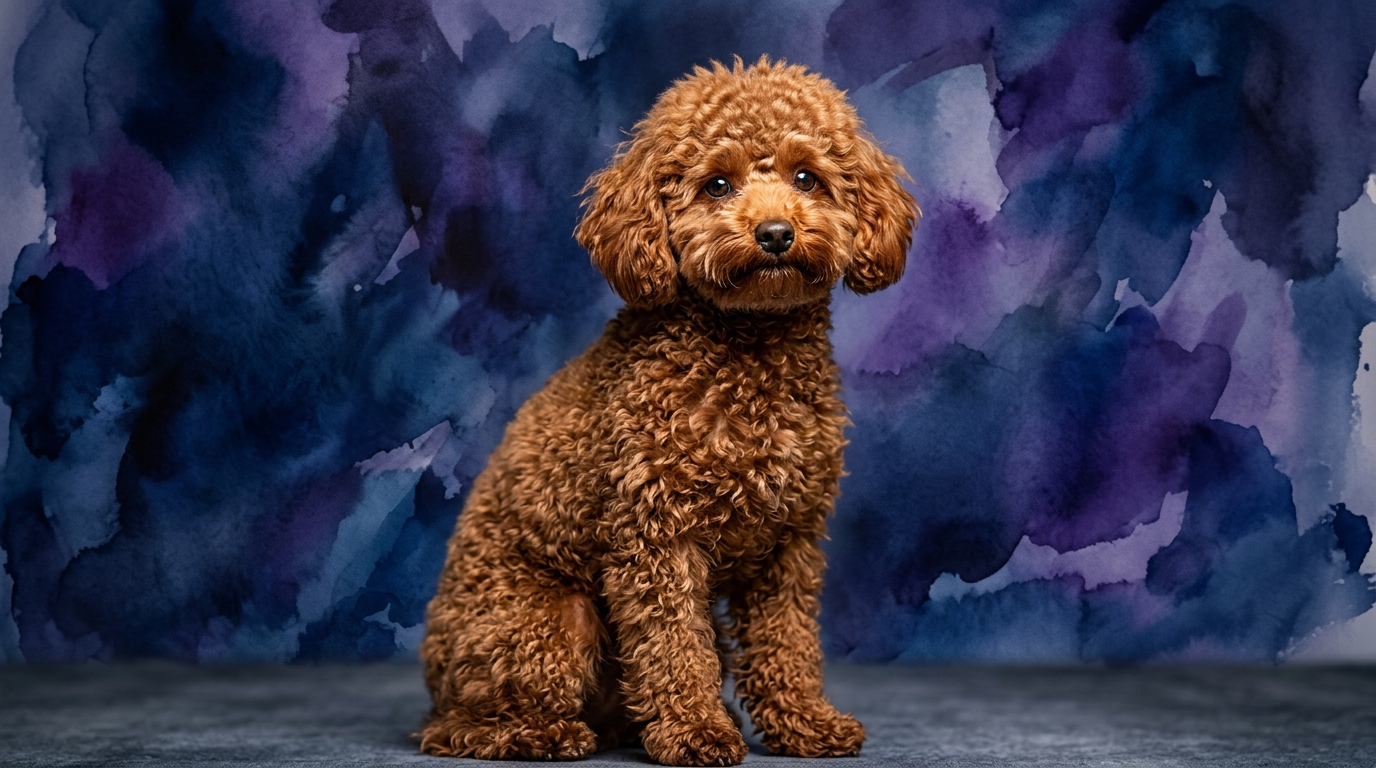
Side-by-Side IQ Profile: Toy Fox Terrier vs. Toy Poodle
The Cosmic Pet's IQ Lab offers a unique lens into canine cognition, moving beyond generic labels to specific dimensions. Let's explore how the Toy Fox Terrier and Toy Poodle measure up, providing a detailed look at their individual strengths and learning styles.
**Toy Fox Terrier (TFT):**
**Problem Solving (3/5):** The TFT approaches challenges with a practical, often direct method. They can unravel puzzles and navigate new situations, but might require more trial-and-error or simpler steps. Their solutions are often straightforward, preferring efficiency.
**Training Speed (3/5):** TFTs learn new commands and routines at a moderate pace. Consistency and positive reinforcement are key, as they benefit from clear, repetitive instruction. They can master behaviors, but may need more practice to generalize concepts across varied environments.
**Social Intelligence (3/5):** These terriers possess a balanced understanding of social cues, interacting appropriately with their human families and familiar animals. They are generally perceptive to moods and routines, but their social adaptability might be more focused on their immediate pack rather than broad interactions with strangers.
**Instinctive Drive (3/5):** The TFT retains a moderate terrier drive, manifesting as curiosity and a desire to explore, but typically without the intense, singular focus seen in working terrier lines. This drive often channels into playful pursuits and environmental monitoring, providing a stimulating yet manageable companion.
**Memory (3/5):** TFTs remember commands, routines, and experiences reliably. While they won't forget a well-learned lesson, their recall might require occasional refreshers, particularly if a behavior isn't regularly practiced. They can retain a significant repertoire of information over time.
**Toy Poodle:**
**Problem Solving (5/5):** The Toy Poodle excels at complex problem-solving, rapidly analyzing novel situations and devising sophisticated solutions. They demonstrate a remarkable capacity for strategic thinking, quickly understanding cause-and-effect relationships and adapting their approach to overcome obstacles, often with minimal intervention.
**Training Speed (5/5):** Toy Poodles are exceptionally quick learners, grasping new commands, tricks, and routines with astonishing speed. They require very few repetitions to master a behavior and readily generalize learned concepts to new environments and contexts, making them ideal for advanced obedience or performance sports.
**Social Intelligence (3/5):** Much like the TFT, the Toy Poodle shows a solid grasp of social dynamics within their household. They are attuned to human emotions and routines, forming strong bonds with their family members. Their social awareness contributes to their adaptability as companions, though their primary social focus remains with their immediate circle.
**Instinctive Drive (3/5):** The Toy Poodle exhibits a moderate instinctive drive, often expressed through curiosity, playfulness, and an enjoyment of retrieving. While they are not typically driven by intense prey or guarding instincts, their desire for engagement and mental stimulation is significant, stemming from their working retriever ancestry.
**Memory (5/5):** Toy Poodles possess exceptional long-term and short-term memory. Once they learn something, they retain it with remarkable clarity and for extended periods. This superior recall contributes significantly to their rapid training and ability to perform complex sequences accurately, even after long breaks.
Where the Toy Fox Terrier Wins Cognitively
While the Toy Poodle often garners attention for its rapid learning, the Toy Fox Terrier's cognitive profile offers distinct advantages for certain owners. The TFT's moderate scores across the board suggest a dog that is less prone to overthinking or becoming easily bored by routine tasks. Their 3/5 in Problem Solving means they tackle challenges directly without excessive deliberation, which can be less demanding for an owner who prefers a dog to follow established patterns rather than constantly innovating. Their 3/5 Instinctive Drive provides balanced curiosity without the intensity that might lead to obsessive behaviors or a constant need for specialized "work." This can translate into a more relaxed household companion who is content with consistent, manageable mental engagement rather than requiring constant, complex stimulation.
Where the Toy Poodle Wins Cognitively
The Toy Poodle’s cognitive strengths are undeniable, particularly in areas demanding rapid acquisition and retention of information. Their 5/5 in Problem Solving means they are adept at figuring things out independently, whether it's opening a cabinet or understanding a complex multi-step command. This capacity for analytical thought allows them to adapt quickly to new environments or training scenarios, making them highly versatile. Their 5/5 Training Speed and Memory mean they absorb lessons instantly and recall them flawlessly, even after extended periods. This combination makes them exceptional candidates for advanced obedience, agility, or any activity requiring a vast repertoire of precisely executed behaviors. Their capacity for learning complex sequences and understanding abstract concepts far surpasses many breeds.
Which Is Easier to Train and Why
When it comes to ease of training, the Toy Poodle generally holds a distinct advantage due to its exceptional Training Speed (5/5) and Memory (5/5). A Toy Poodle can often learn a new command in just a few repetitions, and once learned, they retain it for a lifetime. This allows for rapid progression through obedience levels and the teaching of intricate trick sequences. A Poodle might master "fetch specific toy by name" or "put toys away" with little effort, generalizing object identification and task completion.
The Toy Fox Terrier, with a Training Speed of 3/5 and Memory of 3/5, is certainly trainable, but requires a different approach. They will learn, but it will likely take more repetitions and a greater emphasis on consistency. A TFT might need more structured practice sessions and a slower introduction to new concepts. For example, teaching a TFT to "stay" might involve more gradual increases in duration and distance, whereas a Poodle might grasp the concept much faster. Owners training a TFT will benefit from breaking down tasks into smaller steps and celebrating small successes, leveraging their terrier spirit with engaging, game-like training rather than rote drills. Their moderate instinctive drive means that while they are curious, they might not be as inherently driven to perform complex tasks purely for the sake of working as a Poodle might be.
Which Suits Active Owners vs. Relaxed Owners
The choice between these two breeds often hinges on an owner's desired level of cognitive engagement and activity. An **active owner** who enjoys engaging in dog sports, advanced obedience, or wants a companion capable of intricate learning challenges will likely find the **Toy Poodle** more fulfilling. Their 5/5 Problem Solving and Training Speed mean they thrive on mental stimulation and excel in activities like agility, rally obedience, or even learning service dog tasks. They enjoy a "job" and can become bored or destructive if cognitive needs aren't met with varied challenges. Owners who want to push the boundaries of canine learning and spend significant time on training and mental games will find an eager and capable partner in the Toy Poodle.
For a **relaxed owner** who appreciates a bright, responsive companion but doesn't necessarily seek to engage in competitive dog sports or advanced training, the **Toy Fox Terrier** often makes an excellent fit. Their moderate Problem Solving and Training Speed (both 3/5) mean they are intelligent enough to learn household manners, basic obedience, and enjoy interactive play, but they won't constantly demand complex mental puzzles. They are content with consistent routines, regular walks, and interactive toys that don't require abstract thought. While mental engagement is needed, it's less intense than a Toy Poodle's requirement to prevent boredom. Owners who value a spirited, affectionate dog that is relatively straightforward to manage cognitively will appreciate the TFT.
The Verdict
Choose Toy Fox Terrier if: You seek a spirited companion with a balanced cognitive profile, content with consistent routines and moderate mental engagement, and you appreciate a direct approach to learning that thrives on playful, patient training.
Choose Toy Poodle if: You desire a highly adaptable and rapid learner eager for complex training, dog sports, and constant mental challenges, offering an exceptionally versatile partner for advanced obedience and intricate tasks.
🧠 Find Your Pet's IQ Score
Our Pet IQ Lab assessment covers 25+ tests across 5 cognitive dimensions — personalized to your breed.
Take the Full IQ Test →Frequently Asked Questions
Are Toy Poodles “too smart” for a first-time dog owner?
Toy Poodles are highly capable learners, which can be a double-edged sword for new owners. While they pick up good habits quickly, they can also learn undesirable behaviors with equal speed if not guided properly. Consistent, positive training is crucial, but their eagerness to please makes them generally rewarding for dedicated first-time owners.
Do Toy Fox Terriers bark a lot due to their terrier nature?
Toy Fox Terriers do retain some terrier vocal tendencies, often using their bark to alert to new sights or sounds. Their moderate instinctive drive (3/5) means this can be managed with consistent training and redirection from a young age, preventing excessive nuisance barking while still allowing them to be effective little watchdogs.
How much daily mental stimulation does each breed need?
The Toy Poodle (5/5 Problem Solving, 5/5 Training Speed) requires significant daily mental stimulation, including puzzle toys, training sessions, and varied activities, to prevent boredom. The Toy Fox Terrier (3/5 in both) needs regular mental engagement through play, basic training, and environmental enrichment, but generally at a less intense and complex level.