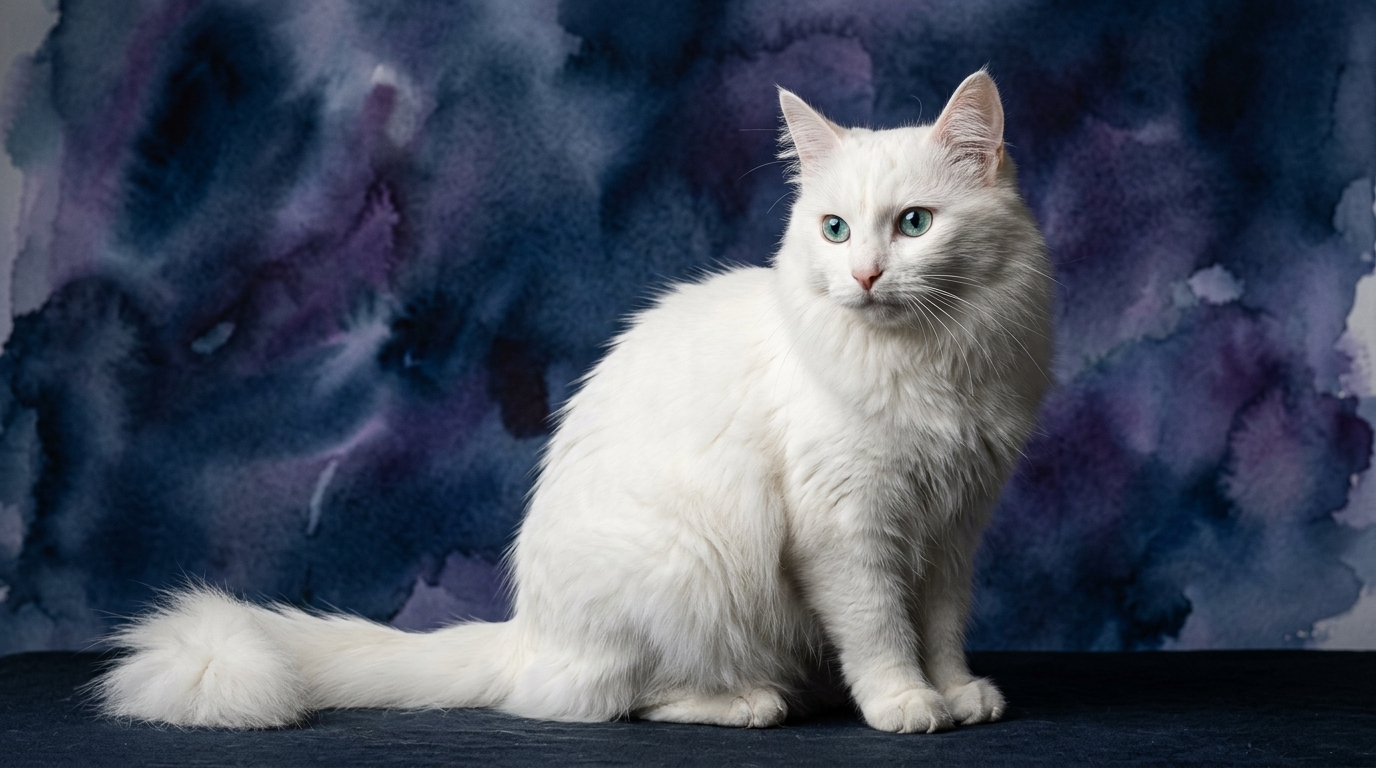
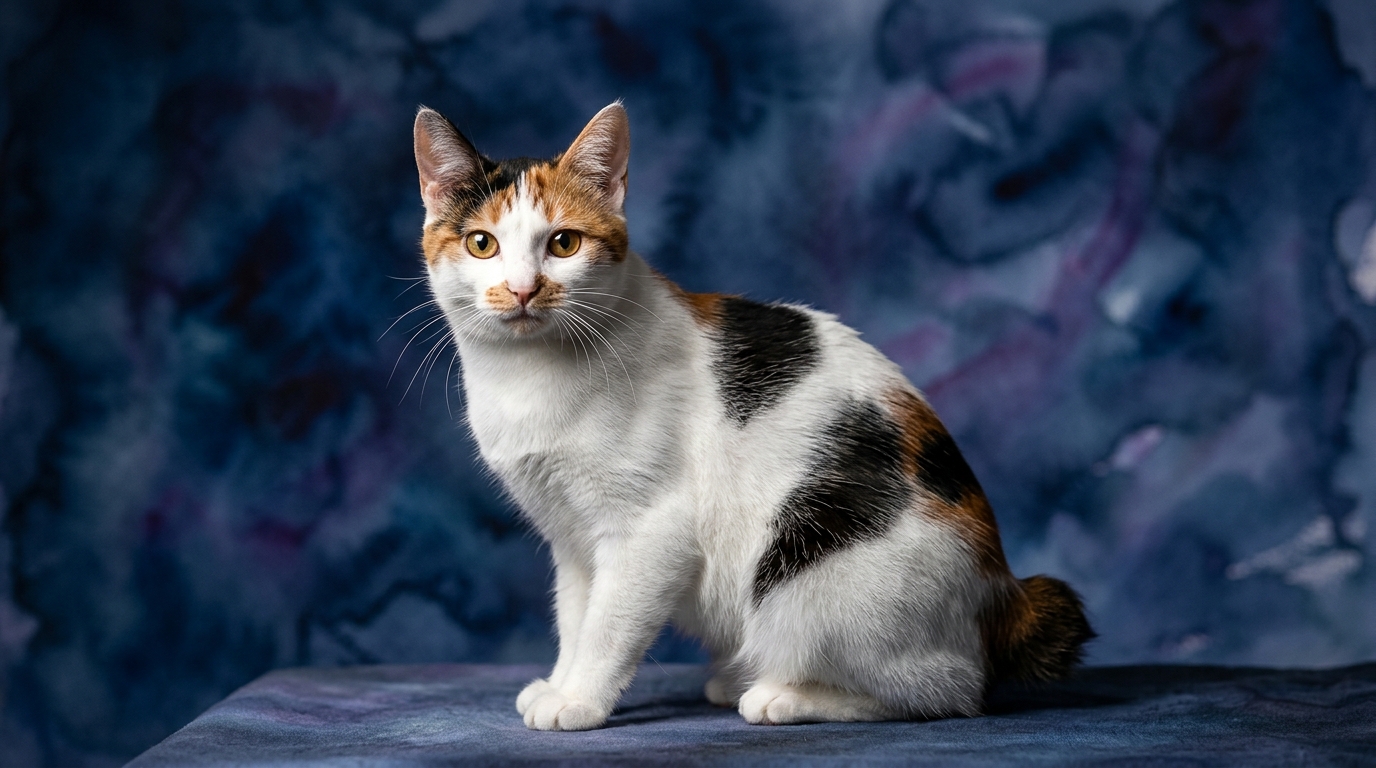
Side-by-Side Cognitive Profiles: Turkish Angora vs. Japanese Bobtail
The Pet IQ Lab provides a nuanced framework for understanding feline cognition, breaking down intelligence into five key dimensions. For the Turkish Angora, the profile reveals a robust cognitive toolkit: Problem Solving 5/5, Training Speed 4/5, Social Intelligence 4/5, Instinctive Drive 4/5, and Memory 5/5. This suggests a cat with a highly active and capable mind, eager to engage with its environment and learn.
In contrast, the Japanese Bobtail presents a more uniform, moderate cognitive profile across the board: Problem Solving 3/5, Training Speed 3/5, Social Intelligence 3/5, Instinctive Drive 3/5, and Memory 3/5. This does not imply a lack of intelligence, but rather a different cognitive approach – one that is less intensely driven by complex problem-solving or rapid acquisition of new behaviors, favoring perhaps a more straightforward and uncomplicated interaction with their world.
Where the Turkish Angora Excels Cognitively
The Turkish Angora’s cognitive strengths are evident in its exceptional Problem Solving (5/5) and Memory (5/5) scores. This breed demonstrates a remarkable capacity for understanding cause and effect, often strategizing to achieve desired outcomes. Owners might observe them systematically working to open latched cabinets, figuring out how to activate complex puzzle toys, or even manipulating levers for attention. Their keen memory means they not only solve these puzzles but retain the solutions, applying learned strategies to similar challenges in the future.
Furthermore, their high scores in Training Speed (4/5) and Social Intelligence (4/5) indicate a cat that is not only quick to grasp new concepts but also adept at reading human cues and responding appropriately. An Angora will likely remember specific routines, such as meal times or play schedules, and anticipate them. This breed’s cognitive architecture allows for sophisticated engagement, making them adept at learning sequences of actions or remembering where specific toys are stored, even after extended periods.
Where the Japanese Bobtail Finds Its Cognitive Niche
While the Japanese Bobtail’s scores are consistently moderate at 3/5 across all dimensions, this profile translates into a distinct set of cognitive advantages, particularly for certain living situations. Their more moderate Problem Solving (3/5) means they are less likely to be constantly testing boundaries or devising elaborate schemes to access restricted areas, potentially leading to a calmer home environment. They approach challenges with a simpler, more direct method, which can be less disruptive than the persistent, strategic problem-solving of a higher-scoring breed.
The Japanese Bobtail’s moderate Instinctive Drive (3/5) suggests a cat that is less intensely compelled by exploratory urges or predatory behaviors, making them potentially less prone to destructive curiosity or excessive hunting behaviors indoors. Their moderate Social Intelligence (3/5) means they are generally amenable companions without requiring overly complex social interactions or being prone to intricate emotional demands. This straightforwardness in their cognitive and social engagement can be a significant benefit for owners seeking a less mentally demanding, yet affectionate, companion.
Training Dynamics: Angora's Aptitude vs. Bobtail's Patience
When it comes to training, the Turkish Angora holds a clear advantage due to its superior Training Speed (4/5), Problem Solving (5/5), and Memory (5/5). This breed will typically pick up new commands, tricks, and routines with remarkable rapidity. Their high social intelligence means they are often attuned to their owner's intentions and vocal cues, facilitating the learning process. An Angora can be taught to fetch, walk on a leash, or perform complex sequences of actions, remembering these lessons over time and even in varied contexts.
The Japanese Bobtail, with its 3/5 scores in Training Speed and Memory, will require a more patient and consistent approach. While certainly trainable, they may take longer to grasp new concepts and necessitate more repetition to solidify learned behaviors. Their more direct cognitive style means training methods should be clear, concise, and highly rewarding. Owners should focus on positive reinforcement and break down complex tasks into smaller, manageable steps. Behavioral differences might include the Angora proactively offering behaviors to earn rewards, while the Bobtail might need more explicit prompting and guidance.
Matching Cognitive Profiles to Lifestyles: Active vs. Relaxed Owners
The Turkish Angora's vibrant cognitive profile makes it an ideal companion for active owners who thrive on interaction and mental stimulation. Owners who enjoy teaching tricks, engaging in interactive puzzle play, or providing a dynamic environment with climbing structures and varied toys will find the Angora's intellect highly rewarding. This breed flourishes when its problem-solving abilities and keen memory are regularly challenged, making them excellent partners for owners dedicated to enriching their cat's cognitive life.
Conversely, the Japanese Bobtail's more moderate cognitive scores make it well-suited for relaxed owners who appreciate a more straightforward and less cognitively demanding companion. While still playful and affectionate, they are generally content with simpler routines and less intensive mental engagement. Owners who prefer a cat that is less prone to elaborate mischief, content with standard play, and provides a calming presence without constant intellectual challenges might find the Japanese Bobtail a perfect fit. Their moderate instinctive drive also means they might be less inclined to engage in high-energy, complex hunting simulations, fitting into a more tranquil home atmosphere.
The Verdict
Choose the Turkish Angora if you seek a highly interactive, mentally agile feline partner eager to learn and engage in complex problem-solving. They thrive with owners who provide consistent mental stimulation and enjoy an active, responsive companion.
Opt for the Japanese Bobtail if you prefer a more even-tempered, straightforward companion who offers affection without requiring constant intellectual challenges or complex behavioral management. They are ideal for owners seeking a calmer, less cognitively demanding presence in their home.
🧠 Find Your Pet's IQ Score
Our Pet IQ Lab assessment covers 25+ tests across 5 cognitive dimensions — personalized to your breed.
Take the Full IQ Test →Frequently Asked Questions
Do Turkish Angoras need more mental stimulation than Japanese Bobtails?
Yes, Turkish Angoras, with their 5/5 problem-solving and memory, generally require more consistent mental stimulation through puzzle toys, training, and interactive play to prevent boredom. Japanese Bobtails, with 3/5 in these areas, are typically content with moderate levels of engagement.
Which breed is better for first-time cat owners?
For first-time owners, the Japanese Bobtail might be a slightly easier introduction due to its more moderate cognitive demands and generally less complex behavioral patterns. The Turkish Angora's higher cognitive drive requires an owner prepared for more active engagement and consistent mental enrichment.
Can Japanese Bobtails learn tricks?
Absolutely, Japanese Bobtails can learn tricks, though their 3/5 training speed means it may take more patience and repetition compared to a Turkish Angora. Consistent positive reinforcement and clear, simple cues are key to successful trick training with a Bobtail.