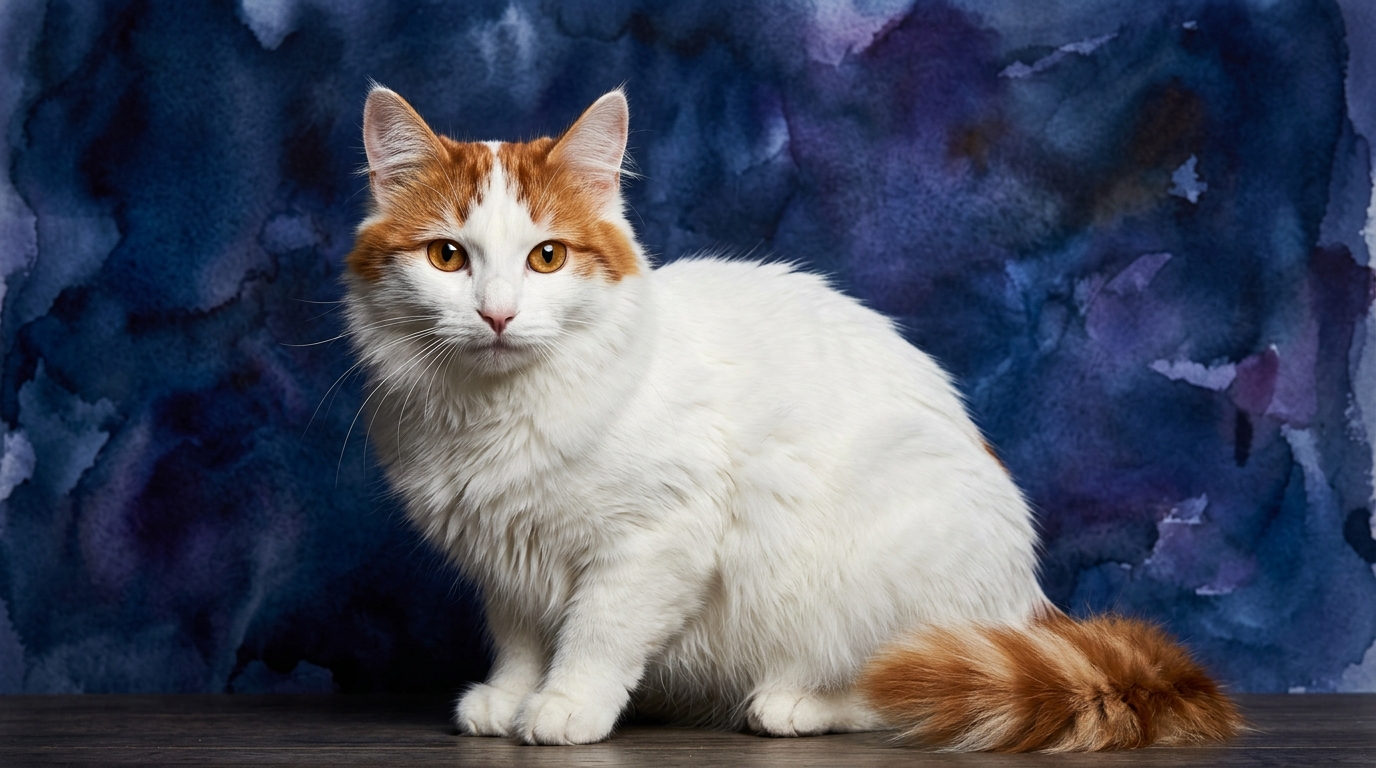
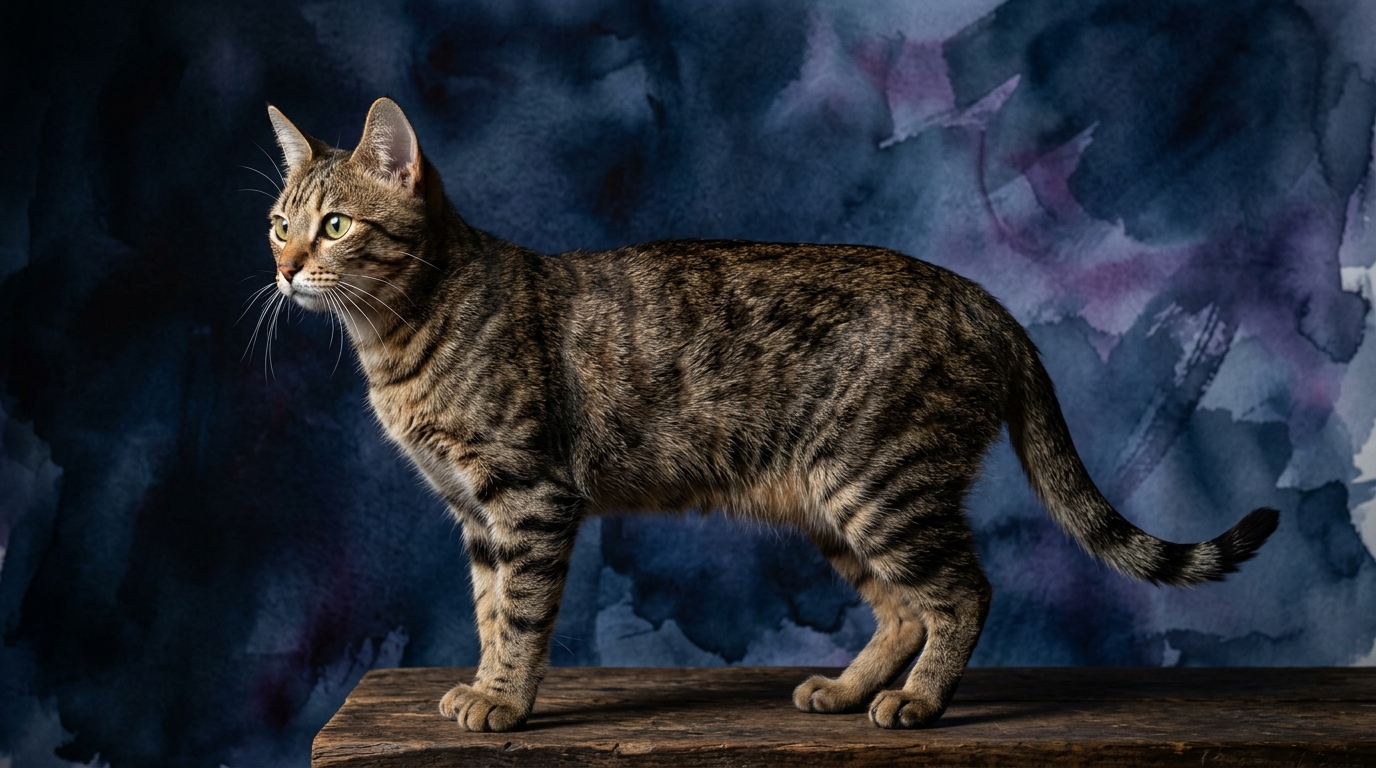
Side-by-Side IQ Profile: Turkish Van vs. Sokoke
While both the Turkish Van and the Sokoke are assessed with a consistent 3/5 across all five cognitive dimensions, it's crucial to understand how these scores manifest uniquely in each breed's behavior and inherent predispositions. A moderate score doesn't imply a lack of mental engagement but rather a particular style of applying their cognitive capacities.
Problem Solving (3/5): For the Turkish Van, this often translates into an inventive approach to exploring their environment, particularly when it involves water or reaching high places; they can be quite adept at manipulating objects to achieve a goal, driven by intense curiosity. The Sokoke, with its natural forest heritage, exhibits its problem-solving through navigating complex territories, efficiently locating perceived prey, and adapting to dynamic surroundings, showcasing a practical, survival-oriented ingenuity in their daily lives.
Training Speed (3/5): Turkish Vans typically learn commands and routines at a moderate pace, often responding well to consistent, reward-based methods, especially if the training incorporates their love for play and interaction. Their focus can be intense when motivated. Sokokes also demonstrate a moderate training speed, often motivated by food rewards and positive reinforcement, and their keen observation skills can sometimes allow them to pick up new behaviors by mimicry, particularly from their human companions.
Social Intelligence (3/5): The Turkish Van displays social intelligence through strong, often possessive bonds with a select few humans, communicating their desires and discomforts clearly to their chosen companions, and can be quite demanding of attention from those they trust. Sokokes, while deeply attached to their immediate family, show their social acumen through intricate vocalizations, expressive body language within their group, and a generally adaptable nature when introduced to new, non-threatening individuals or pets, preferring companionship.
Instinctive Drive (3/5): Turkish Vans possess a strong hunting instinct, often manifesting as vigorous play and a fascination with moving objects, coupled with a notable drive for exploration and physical activity, including their unique affinity for water. The Sokoke's instinctive drive is deeply rooted in its wild ancestry, exhibiting a pronounced prey drive, exceptional agility, and a natural inclination for climbing and surveying its territory, often engaging in bursts of energetic activity.
Memory (3/5): Turkish Vans exhibit a solid memory for people, routines, and places, often remembering specific interactions or where favorite toys are stored, contributing to their consistent behavioral patterns and strong attachment to their established environment. Sokokes also possess a reliable memory, particularly for their territory, family members, and established routines, which aids in their daily navigation and social interactions within their household, recognizing familiar faces and sounds with ease.
Where the Turkish Van Wins Cognitively
The Turkish Van often demonstrates a cognitive edge in tasks requiring a focused, almost obsessive pursuit of a goal, particularly if it involves interaction with water or manipulating objects to access a desired location. Their determined nature, coupled with a solid memory for cause-and-effect, means they can repeatedly attempt a puzzle until solved, showing persistence in their problem-solving approach to achieve their objective. They might also outshine the Sokoke in remembering complex sequences of human-initiated games, engaging enthusiastically in retrieving or hide-and-seek, often displaying a strong recall for specific play patterns.
Where the Sokoke Wins Cognitively
The Sokoke frequently excels in cognitive scenarios demanding quick environmental assessment and adaptive responses, a direct reflection of their natural forest heritage. Their problem-solving often involves rapid decision-making in navigating dynamic spaces, such as finding the quickest route through an obstacle course or identifying the most strategic perch for observation, showcasing their spatial intelligence. Their keen observational learning and ability to interpret subtle cues from their human family, along with their precise coordination, give them an advantage in tasks requiring agility and environmental awareness, making them adept at adapting to new layouts.
Which is Easier to Train and Why?
Both breeds, with a training speed score of 3/5, are receptive to learning, but their motivations differ, influencing ease of training. The Turkish Van, often driven by play and a desire for human interaction, responds well to training incorporated into games and activities, especially those involving water or chasing, becoming very dedicated learners when engaged. Their singular focus on a task can make them highly trainable for specific behaviors they find rewarding.
The Sokoke, typically more food-motivated and eager to please its family unit, often proves slightly easier to train using treats and positive reinforcement, as their desire for companionship and willingness to cooperate can lead to quicker retention of commands. Their social intelligence also helps them pick up on human intentions and cues more readily, fostering a cooperative training dynamic.
Suitability for Active vs. Relaxed Owners
For active owners, both breeds present suitable companions, yet the type of activity they thrive on differs. The Turkish Van, with its robust instinctive drive and love for exploration, is ideal for owners who enjoy interactive play, outdoor excursions (on a leash), and providing mentally stimulating toys that challenge their persistence. They require an owner who can channel their energetic bursts and unique water fascination, offering consistent engagement.
The Sokoke, highly agile and with a strong natural hunting instinct, is perfect for owners who can provide ample climbing opportunities, engage in vigorous play sessions, and appreciate a cat that enjoys exploring vertically and horizontally, often initiating games themselves. Relaxed owners might find either breed a handful without proper engagement; however, if a relaxed owner is willing to dedicate specific, scheduled periods to intense play and mental enrichment, the adaptable Sokoke might integrate slightly more smoothly into quieter moments, provided their core needs are met. The Turkish Van's sometimes singular focus on their chosen activity might be less forgiving of a truly passive lifestyle, demanding more consistent interactive stimulation.
The Verdict
Opt for the Turkish Van if you appreciate a cat with a determined, often singular focus on tasks, a distinct affinity for water, and a robust play drive that thrives on interactive games and consistent human engagement.
Select the Sokoke if you seek an agile, environmentally aware companion that excels in dynamic problem-solving, values strong family bonds, and appreciates varied physical and mental challenges rooted in their natural instincts.
🧠 Find Your Pet's IQ Score
Our Pet IQ Lab assessment covers 25+ tests across 5 cognitive dimensions — personalized to your breed.
Take the Full IQ Test →Frequently Asked Questions
Do Turkish Vans and Sokokes interact well with other pets?
Turkish Vans can be selective, often preferring to be the sole feline focus, though they can coexist with other pets if introduced carefully and given adequate personal space. Sokokes are generally more adaptable and can integrate well into multi-pet households, especially if socialized early, often forming bonds with other animals in their family unit.
Are these breeds suitable for apartment living?
Both breeds are active and benefit from space. Turkish Vans can adapt to apartments if provided with ample vertical space, interactive toys, and consistent mental stimulation to prevent boredom, channeling their exploratory nature indoors. Sokokes, with their need for climbing and exploration, also require a rich indoor environment with cat trees, puzzle toys, and regular vigorous play sessions to thrive in an apartment setting.
What kind of enrichment do these cats need to keep their minds sharp?
Turkish Vans benefit from puzzle feeders, interactive play that mimics hunting, and opportunities to engage with water or chase toys, stimulating their persistent problem-solving. Sokokes thrive on climbing structures, agility games, and toys that stimulate their prey drive, along with consistent social interaction and new experiences to keep their keen observational skills engaged and prevent monotony.