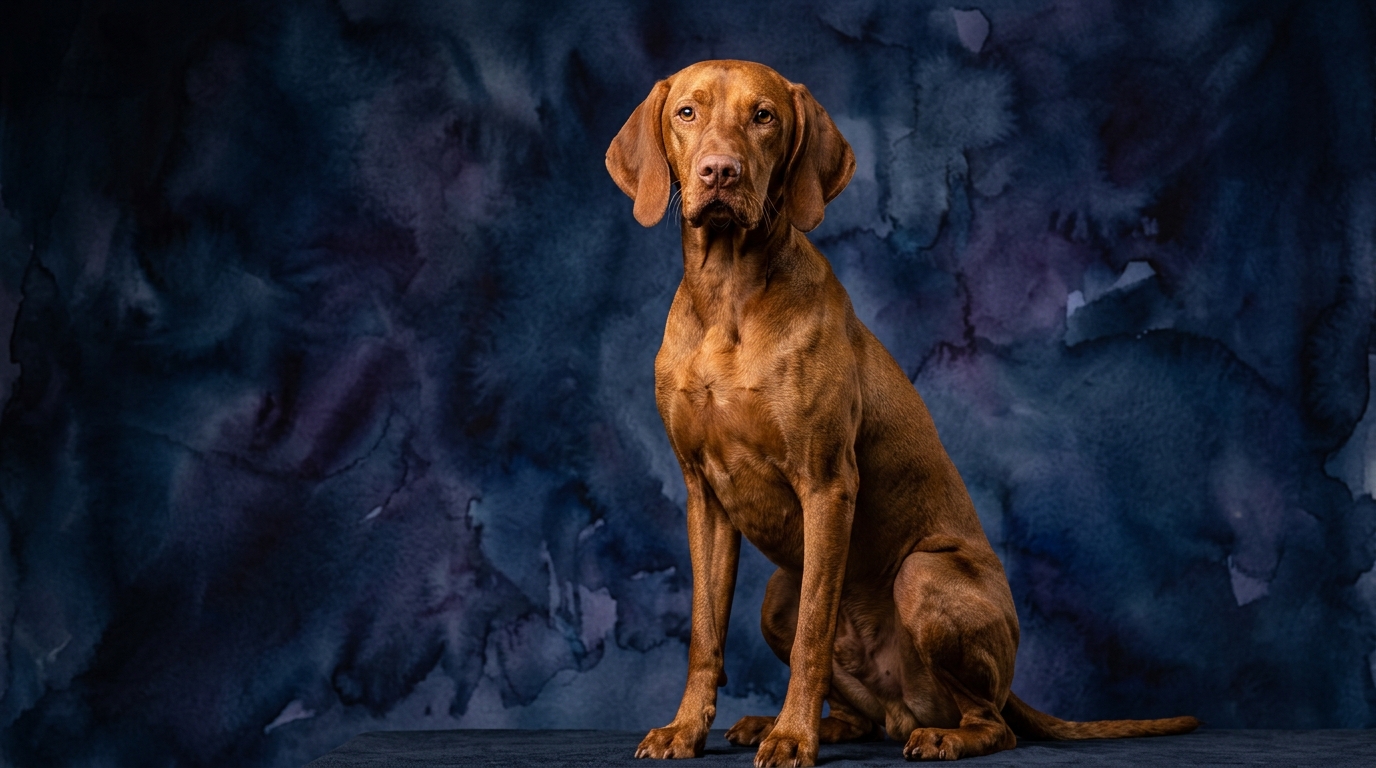
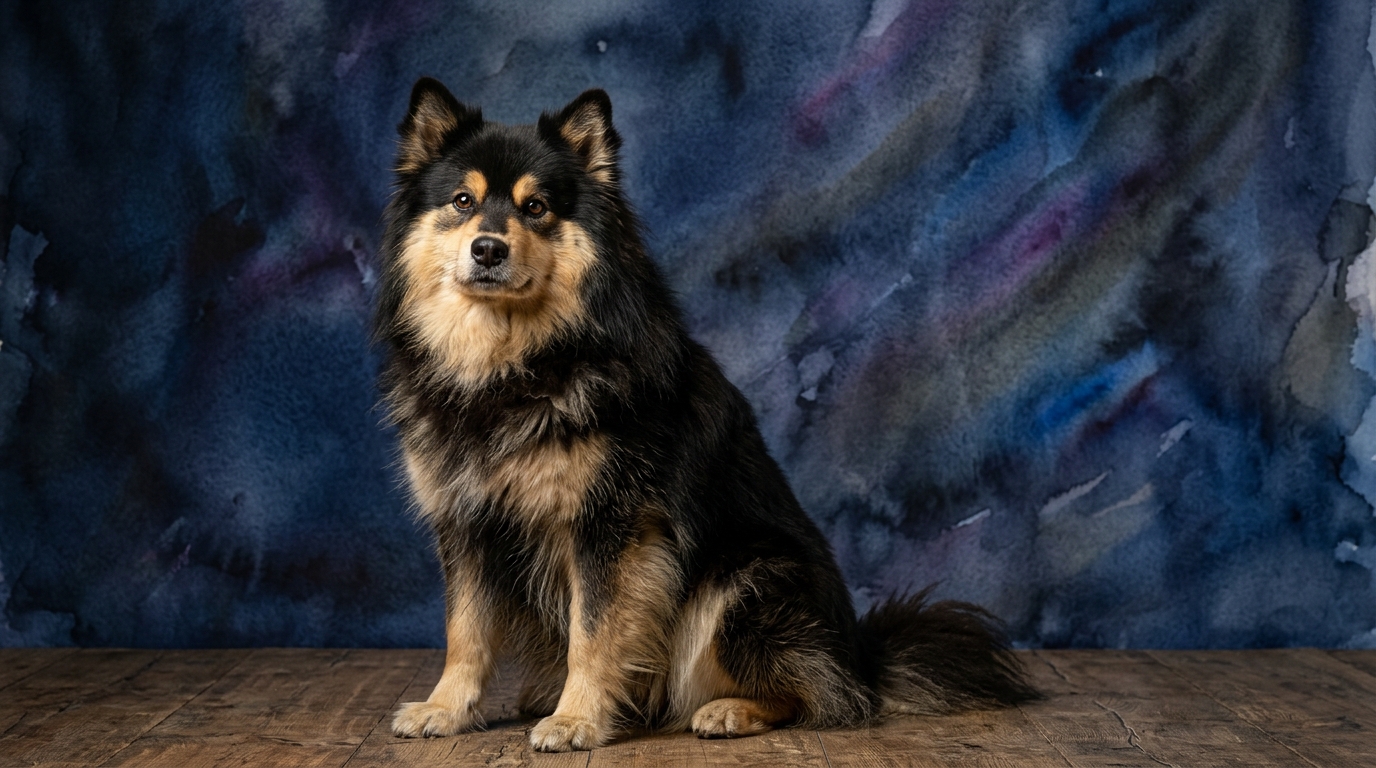
Side-by-Side Cognitive Profiles: Vizsla vs. Finnish Lapphund
The Cosmic Pet Pet IQ Lab employs a five-dimensional framework to assess canine cognition, offering a granular view of a breed's mental aptitudes. For the Vizsla, a Sporting breed ranked #31 by Coren, its scores paint a picture of a highly engaged and cooperative partner. Their Problem Solving is rated 4/5, indicating a strong capacity for navigating novel challenges and strategizing effectively. Training Speed also stands at 4/5, suggesting a quick uptake of new commands and routines. Where the Vizsla truly shines is in Social Intelligence, earning a perfect 5/5, reflecting an exceptional attunement to human cues and emotional states. Their Instinctive Drive is equally robust at 5/5, demonstrating a powerful intrinsic motivation for their breed-specific tasks, primarily hunting. Finally, their Memory is solid at 4/5, allowing them to retain learned behaviors and experiences with notable consistency.
In contrast, the Finnish Lapphund, a Herding breed not ranked by Coren, presents a more uniformly moderate cognitive profile, yet one perfectly suited to its historical role. Across all five dimensions—Problem Solving, Training Speed, Social Intelligence, Instinctive Drive, and Memory—the Finnish Lapphund consistently scores 3/5. This indicates a capable but less intensely driven or overtly cooperative cognitive style compared to the Vizsla. Their Problem Solving at 3/5 suggests an ability to figure out dilemmas, but perhaps with less urgency or innovation. A Training Speed of 3/5 means they are certainly trainable, though they may require more repetition and patience. Social Intelligence at 3/5 points to an awareness of their human companions, but perhaps with a greater degree of independence. Their Instinctive Drive of 3/5 reflects a clear herding aptitude, yet one that might be expressed with less overwhelming intensity than a Vizsla's hunting drive. A Memory score of 3/5 means they can certainly learn and recall, but perhaps not with the same precision or speed as their Vizsla counterpart.
Where the Vizsla Excels Cognitively
The Vizsla's cognitive strengths are particularly pronounced in areas demanding close partnership and rapid adaptation. Their 5/5 Social Intelligence is a standout feature, enabling them to form exceptionally tight bonds with their human companions and interpret subtle body language or vocal cues with remarkable accuracy. This makes them profoundly responsive and keen to engage in joint activities, often anticipating their owner's next move. Coupled with a 4/5 in Problem Solving, Vizslas demonstrate a distinct ability to assess new environments or situations and devise effective strategies, whether it's navigating complex terrain during a hunt or figuring out how to retrieve a toy from an unusual spot. Their 5/5 Instinctive Drive fuels an unwavering focus and stamina for tasks, making them relentless in pursuit of a goal once motivated. This drive, combined with a 4/5 Training Speed, means they absorb new commands and complex sequences with impressive alacrity, often appearing to learn effortlessly.
Where the Finnish Lapphund Shows Distinct Strengths
While the Finnish Lapphund's scores are consistently 3/5, these moderate ratings reflect a unique set of cognitive strengths tailored to their herding heritage. Their 3/5 in Problem Solving suggests a practical, independent approach to challenges, often relying on observation and a methodical rather than impulsive strategy. This can manifest as a watchful nature, assessing situations before acting, which is valuable in managing a flock. The 3/5 in Social Intelligence indicates they are engaged with their family but often maintain a degree of thoughtful independence, not exhibiting the same intense need for constant human interaction as some breeds. This can translate to a calm self-reliance, allowing them to be content without being perpetually 'on.' Their 3/5 Instinctive Drive is robust enough to provide purpose and a desire for engagement, particularly in activities that mimic herding work, without the overwhelming intensity that might be challenging for some owners. This balanced drive allows them to be focused when working but also relaxed when off duty, a valuable trait for a companion animal.
Trainability: Vizsla's Responsiveness vs. Lapphund's Thoughtful Pace
When it comes to trainability, the Vizsla generally presents a more straightforward path for owners due to its higher cognitive scores. Their 4/5 Training Speed means they absorb new commands quickly, often requiring fewer repetitions to solidify a behavior. This quick uptake is significantly bolstered by their 5/5 Social Intelligence, which translates into a strong desire to please and work cooperatively with their human partner. Vizslas are acutely attuned to their owner's intentions and feedback, making them highly responsive to positive reinforcement and eager to engage in structured learning sessions. They thrive on clear communication and consistent guidance, eager to prove their aptitude.
The Finnish Lapphund, with its 3/5 Training Speed and Social Intelligence, requires a different approach. While certainly capable of learning, they may take a bit longer to grasp new concepts and might not exhibit the same urgent desire to comply. Their moderate social intelligence means they can be more independent thinkers, sometimes prioritizing their own observations or instincts over immediate human directives. This isn't stubbornness, but rather a thoughtful, self-directed nature inherent to many herding breeds. Training a Finnish Lapphund benefits from patience, consistency, positive reinforcement, and making the learning process engaging and rewarding. Owners should be prepared for a slightly slower pace and appreciate their dog's independent thought process rather than expecting instant obedience.
Matching Canine Cognition to Lifestyle: Active vs. Relaxed Owners
The distinct cognitive profiles of the Vizsla and Finnish Lapphund lead to clear preferences for different owner lifestyles. The Vizsla, with its 5/5 Instinctive Drive and high Problem Solving and Training Speed, is an ideal match for active owners who can provide ample physical exercise and consistent mental stimulation. These dogs thrive on activities like running, hiking, hunting, competitive dog sports, or extensive training sessions that challenge both their bodies and minds. Their strong social intelligence means they crave close companionship and involvement in family activities, often struggling if left alone for extended periods without engagement. They are best suited for individuals or families who embrace an energetic, outdoor-oriented lifestyle and are prepared to integrate their dog fully into their daily routines as an active participant.
The Finnish Lapphund, with its moderate 3/5 scores across the board, can suit owners who are active but perhaps not intensely dedicated to high-octane pursuits. While they are a working breed and require regular exercise—daily walks, playtime, and opportunities for mental engagement—their instinctive drive is less overwhelming than a Vizsla's. They enjoy outdoor activities and thrive on having a 'job' like obedience, agility, or herding games, but they can also be content with more structured, moderate exercise. Their thoughtful independence (3/5 social intelligence) means they can be comfortable with periods of self-directed activity, though they still value being part of the family. They are a good fit for owners who enjoy regular, purposeful activity and consistent, patient training, but who may also appreciate a dog that is not constantly demanding intense engagement.
The Verdict
Choose a Vizsla if you're an active, dedicated owner seeking a highly cooperative, responsive, and energetic canine partner for adventures and intensive training.
Opt for a Finnish Lapphund if you appreciate a thoughtful, moderately active companion with a self-reliant streak, willing to engage but also comfortable with a bit more independence.
🧠 Find Your Pet's IQ Score
Our Pet IQ Lab assessment covers 25+ tests across 5 cognitive dimensions — personalized to your breed.
Take the Full IQ Test →Frequently Asked Questions
Do Vizslas suffer from separation anxiety more than Finnish Lapphunds?
Vizslas, with their 5/5 Social Intelligence, often form exceptionally strong bonds and have a high need for companionship. This can make them more prone to developing separation anxiety if their needs for interaction and engagement are not consistently met. Finnish Lapphunds, while social, tend to have a more independent nature (3/5 Social Intelligence), which might make them slightly less susceptible to severe separation distress, though proper training and acclimatization are still vital for both breeds.
Which breed is better for first-time dog owners?
Neither breed is typically recommended for entirely inexperienced owners without a strong commitment to training and exercise. However, the Vizsla's high energy and intense needs might be more challenging for a novice. The Finnish Lapphund's more moderate drive and independent thought process could be slightly more manageable for a first-timer who is committed to consistent, positive reinforcement training and understanding their dog's unique herding instincts, without the overwhelming intensity of a Vizsla.
How do their instinctive drives manifest differently in daily life?
The Vizsla's 5/5 Instinctive Drive manifests as a powerful urge to hunt, retrieve, and explore, often leading to a relentless pursuit of scents and high energy output requiring significant outlets. The Finnish Lapphund's 3/5 Instinctive Drive, rooted in herding, translates to a watchful nature, an inclination to gather and manage, and a desire for purposeful activity, but typically with less explosive energy than a Vizsla, often expressed through circling, grouping, or observing rather than intense prey drive.