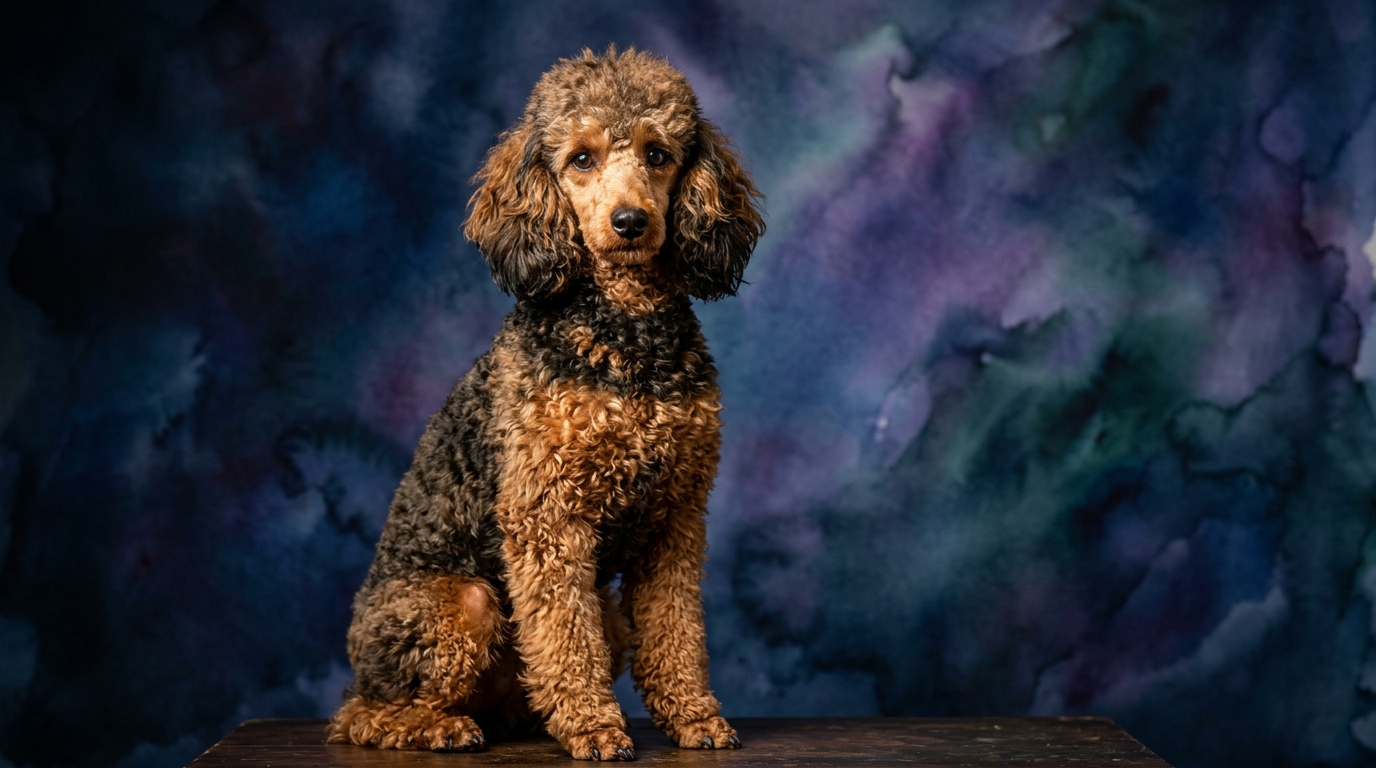
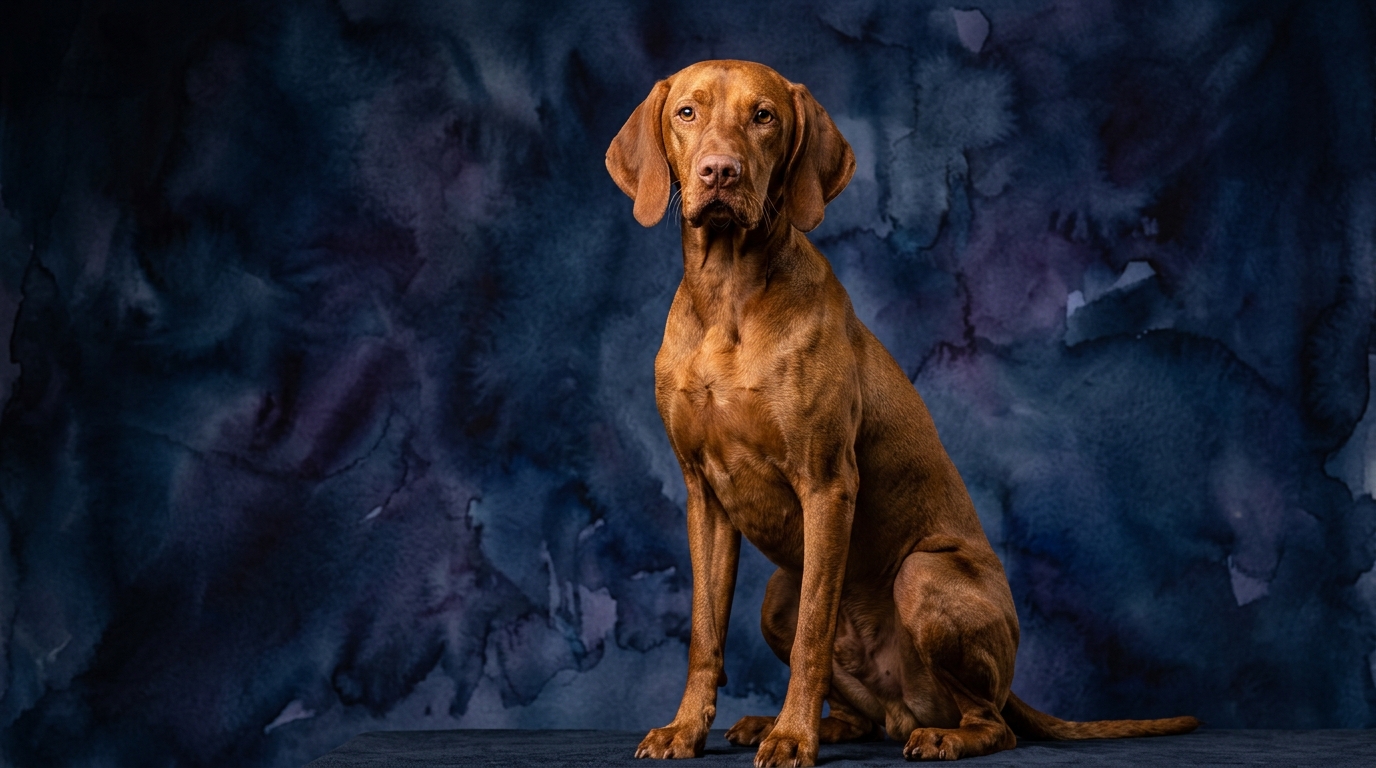
Side-by-Side IQ Profile: Poodle (Standard) vs. Vizsla
The Cosmic Pet Pet IQ Lab employs a five-dimensional framework to assess canine intelligence, offering a granular view beyond general classifications. For the Poodle (Standard), ranked #2 by Coren, its profile is exceptional across the board: Problem Solving 5/5, Training Speed 5/5, Social Intelligence 5/5, Instinctive Drive 4/5, and Memory 5/5. This suggests a breed adept at abstract thought, rapid learning, and strong social bonds, with a well-modulated but present drive.
In contrast, the Vizsla, holding a Coren rank of #31, presents a distinct cognitive signature. Its scores are: Problem Solving 4/5, Training Speed 4/5, Social Intelligence 5/5, Instinctive Drive 5/5, and Memory 4/5. While still remarkably capable, particularly in social understanding, the Vizsla shines with an intense, purpose-driven instinct, balanced with solid learning capabilities that are just a touch less rapid than the Poodle's.
Where the Poodle (Standard) Wins Cognitively
The Poodle (Standard) demonstrates a cognitive edge in several key areas, making it a standout for complex learning and adaptability. Its Problem Solving score of 5/5 indicates an exceptional capacity to navigate novel situations and figure out solutions independently, whether it's manipulating puzzle toys, understanding multi-step commands, or adapting to new routines. This is a dog that often anticipates next steps and can troubleshoot minor environmental challenges without constant human intervention.
Further reinforcing its cognitive prowess are its 5/5 scores in Training Speed and Memory. A Poodle (Standard) typically grasps new commands and concepts with remarkable swiftness, often requiring fewer repetitions than many other breeds. This rapid acquisition is paired with a robust ability to retain information over long periods, meaning learned behaviors are not easily forgotten. Owners often observe their Standard Poodle recalling cues from months or even years prior, making long-term skill building a rewarding endeavor. This combination allows for advanced, multi-sequential training and a deep repertoire of behaviors.
Where the Vizsla Wins Cognitively
The Vizsla's unique cognitive strengths are deeply rooted in its heritage as a versatile hunting companion, particularly highlighted by its 5/5 score in Instinctive Drive. This isn't merely about a strong desire to chase; it reflects an intense focus, determination, and a profound sensory intelligence geared towards purpose-driven tasks. A Vizsla's instincts manifest as an unwavering commitment to a perceived 'job,' whether it's tracking a scent, retrieving an object, or performing a complex field trial sequence. Their cognitive process is often channeled through this powerful drive, allowing for sustained effort and precision in activities aligned with their natural inclinations.
While both breeds score 5/5 in Social Intelligence, for the Vizsla, this dimension often integrates powerfully with its instinctive drive. Their deep desire to work collaboratively with their human handler, forming a close 'velcro dog' bond, means their intelligence is often expressed through an eagerness to please and an acute sensitivity to human cues, especially when those cues lead to fulfilling their working desires. This social-instinctive synergy makes them exceptionally responsive partners in dynamic activities, where a shared purpose strengthens the cognitive connection between dog and owner.
Which is Easier to Train and Why
Based on their respective IQ profiles, the Poodle (Standard) generally presents as an easier breed to train for a wide array of tasks. Its 5/5 Training Speed and 5/5 Memory mean it picks up new commands and routines with exceptional rapidity and retains them reliably. Poodles often display an intrinsic eagerness to engage in learning, responding well to positive reinforcement and demonstrating a clear understanding of cause and effect in training scenarios. Their lower Instinctive Drive (4/5) compared to the Vizsla also means they are typically less prone to external distractions like scents or moving objects in a structured training environment, allowing for more focused sessions.
The Vizsla, with 4/5 in Training Speed and Memory, is still a highly capable learner, but its 5/5 Instinctive Drive introduces a different dynamic. While they learn quickly, their strong drive can sometimes make them less immediately pliable if the training task doesn't directly tap into their inherent working desires. A Vizsla might be more inclined to follow a compelling scent trail than to perfectly execute a 'stay' command in a distracting environment. Therefore, while a Poodle might master a new trick in a few sessions, a Vizsla might require more consistent, engaging, and perhaps field-oriented training methods to maintain focus and channel their energy effectively. Their training often benefits from incorporating movement and problem-solving that mimics their natural hunting behaviors.
Which Suits Active Owners vs. Relaxed Owners
For the active owner seeking a canine partner for demanding physical pursuits, the Vizsla is an exceptional match. Their 5/5 Instinctive Drive translates into a profound need for regular, vigorous exercise and mental engagement that often involves a 'job.' Activities like running, hiking, field work, agility, dock diving, or extensive fetch sessions are not just enjoyed by a Vizsla; they are essential for their mental and physical well-being. An owner who can commit to several hours of purposeful activity daily will find the Vizsla to be an incredibly rewarding and tireless companion, thriving on shared adventures and challenges.
The Poodle (Standard), while certainly an active breed that enjoys movement, offers more versatility for owners with varying activity levels. Their high Problem Solving and Memory scores mean they can be fulfilled through a balance of physical activity and complex mental stimulation. While they can excel in dog sports and outdoor adventures alongside an active owner, they can also be content with less intense physical outings if supplemented with plenty of puzzle toys, obedience training, trick learning, or interactive games that challenge their intellect. This adaptability makes the Standard Poodle suitable for owners who are active but perhaps not seeking a dog whose primary fulfillment comes solely from high-intensity physical exertion, or for those who appreciate a dog that can transition between vigorous activity and calm, thoughtful engagement within the home.
The Verdict: When to Choose Each
The Verdict
Choose the Poodle (Standard) if you seek a highly adaptable companion for complex training, enjoy teaching intricate tricks, or desire a dog that can thrive on both physical activity and extensive mental engagement without an overwhelming instinctive drive.
Opt for the Vizsla if you are an intensely active individual or family, passionate about outdoor adventures, field sports, or any activity that can channel a dog's profound instinctive drive, and you value a loyal, purpose-driven partner above all else.
🧠 Find Your Pet's IQ Score
Our Pet IQ Lab assessment covers 25+ tests across 5 cognitive dimensions — personalized to your breed.
Take the Full IQ Test →Frequently Asked Questions
Do both breeds make good family pets?
Yes, both the Standard Poodle and Vizsla score 5/5 in Social Intelligence, indicating they are very people-oriented and bond deeply with their families. Their capacity for social understanding and connection makes them excellent companions in a family setting, provided their individual needs for exercise and mental stimulation are met.
Which breed requires more exercise?
While both breeds benefit from regular activity, the Vizsla generally requires more intense and consistent physical exercise due to its 5/5 Instinctive Drive. They need purposeful outlets for their energy, whereas the Standard Poodle, though active, can often be fulfilled with a mix of physical activity and substantial mental challenges.
Are Poodles truly 'smarter' than Vizslas?
The term 'smarter' is nuanced, but based on The Cosmic Pet Pet IQ Lab's metrics, the Poodle (Standard) shows a cognitive advantage in Problem Solving, Training Speed, and Memory. The Vizsla excels in Instinctive Drive, demonstrating a different, but equally valuable, form of intelligence focused on purpose and sensory input. It's more about different cognitive profiles than a simple 'smarter' or 'less smart' distinction.