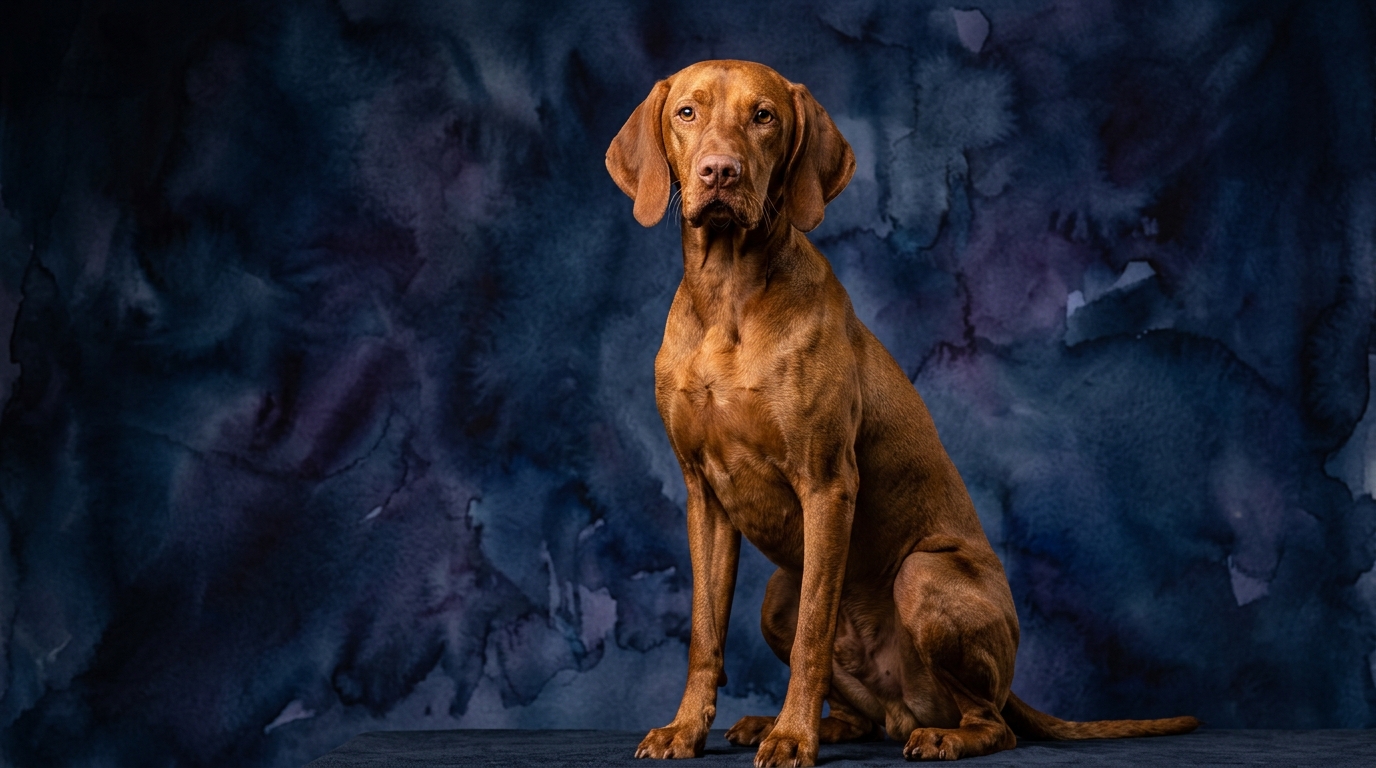
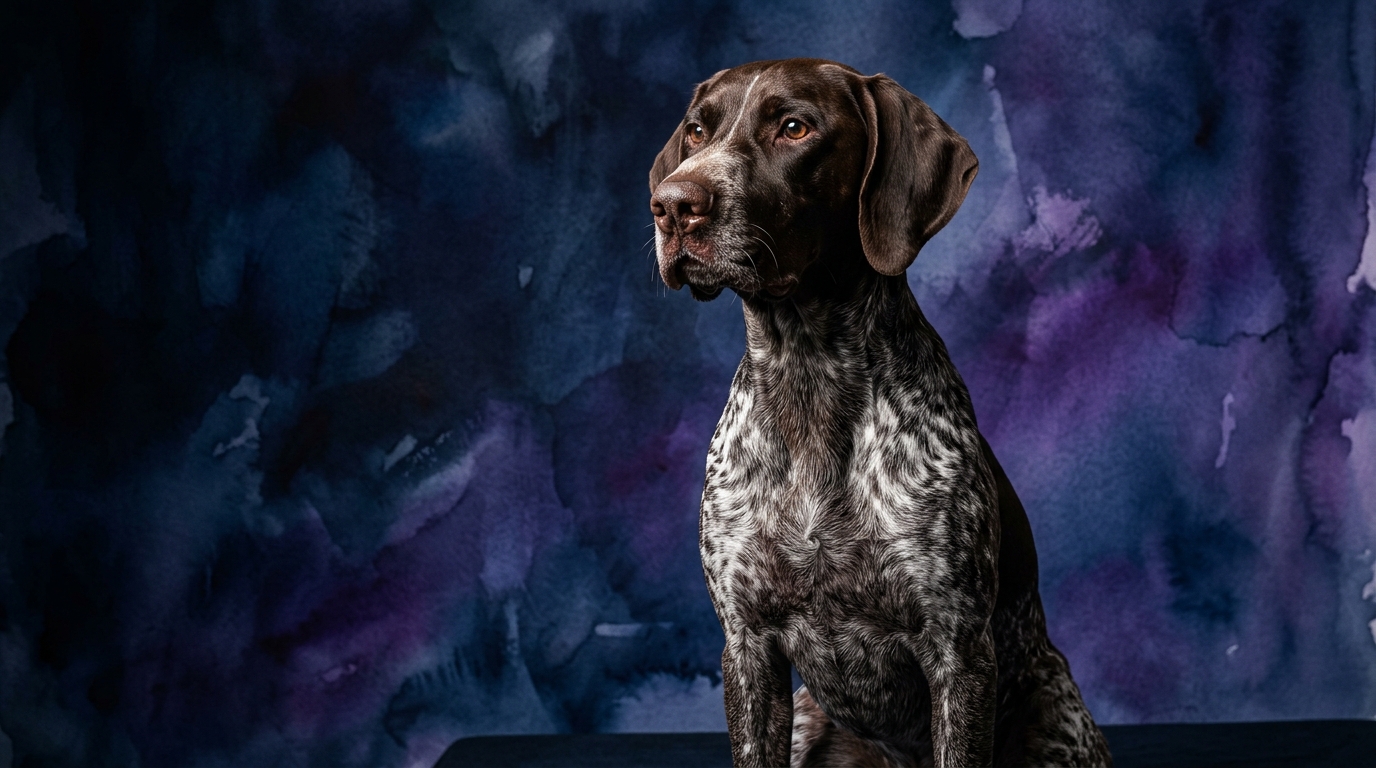
Side-by-Side IQ Profile: Vizsla vs. German Shorthaired Pointer
At The Cosmic Pet Pet IQ Lab, we evaluate canine cognition across five crucial dimensions, offering a detailed look at how each breed's mind operates. Understanding these nuances is key to appreciating their individual capabilities and needs.
The Vizsla, with a Coren rank of #31, exhibits a distinct cognitive blueprint. Their Problem Solving is rated 4/5, indicating a solid capacity for navigating novel situations and understanding cause-and-effect relationships, often relying on observation and persistence. Training Speed stands at 4/5, as they absorb new commands and routines with impressive efficiency, responding well to clear cues and positive reinforcement. Where the Vizsla truly shines is in Social Intelligence, scoring a perfect 5/5; their emotional radar is exceptionally fine-tuned, allowing them to intuitively understand and respond to human moods and intentions, forming profound bonds. Their Instinctive Drive is a powerful 5/5, reflecting a deep-seated urge for tracking, pointing, and retrieving. Finally, their Memory is strong at 4/5, retaining learned behaviors and experiences with a high degree of accuracy.
The German Shorthaired Pointer (GSP), ranking higher at #17 on Coren's scale, presents a slightly different cognitive profile. Their Problem Solving is a standout 5/5, demonstrating a superior aptitude for analytical thinking and swiftly devising solutions to complex challenges, adept at assessing new environments and overcoming obstacles independently. Training Speed matches the Vizsla at 4/5, as GSPs acquire new skills and commands rapidly, thriving on structured training sessions and consistent instruction. Their Social Intelligence is rated 4/5; they possess strong social awareness, capable of forming deep attachments and interpreting social cues effectively, though perhaps less overtly expressive than a Vizsla. Like the Vizsla, their Instinctive Drive is a potent 5/5, embodying an equally intense and inherent urge for field work, characterized by exceptional scenting capabilities and endurance. Their Memory is also a robust 4/5, demonstrating reliable recall for commands and past interactions.
Where the Vizsla Excels Cognitively
The Vizsla's exceptional Social Intelligence, rated 5/5, is their clear cognitive advantage. This isn't just about being friendly; it reflects an advanced capacity for emotional attunement and empathy. Vizslas possess an almost intuitive understanding of human emotions, often anticipating their owner's needs or offering comfort without overt prompting. This deep emotional connection translates into a dog that operates as a true partner, highly responsive to subtle shifts in tone, body language, and mood. For owners, this means a companion that feels deeply connected, almost like an extension of themselves, often described as 'velcro dogs' due to their desire for constant proximity and interaction. This superior social cognition makes them remarkably perceptive in family dynamics and often very gentle with children, as they quickly learn and adapt to social roles within the household.
Where the German Shorthaired Pointer Excels Cognitively
The German Shorthaired Pointer's cognitive edge lies in their superior Problem Solving ability, scoring a perfect 5/5. This breed isn't just quick to learn; they possess a distinct capacity for analytical thought and strategic planning. When faced with a new obstacle or a complex task, a GSP will often assess the situation, devise a plan, and execute it with efficiency, sometimes even independently. This strong problem-solving skill makes them incredibly adaptable to varied environments and challenges, excelling in activities that require independent thought and decision-making, such as complex field trials or agility courses. Their higher Coren rank of #17 further underscores their general working intelligence, indicating a strong capability for understanding and executing a wide range of commands and tasks with precision and reliability. This breed thrives on mental engagement that allows them to use their intellect to overcome challenges.
Which is Easier to Train and Why
Both Vizslas and German Shorthaired Pointers share a Training Speed rating of 4/5, meaning both breeds grasp new commands and routines quickly with consistent effort. However, the 'ease' of training can feel different due to their other cognitive strengths. The Vizsla's superior Social Intelligence often makes them appear easier to train for owners who value responsiveness and a strong desire to please. They are highly motivated by their human's approval and emotional feedback, making positive reinforcement incredibly effective. Their deep connection means they are often eager to work collaboratively, creating a flow in training that feels very intuitive.
Conversely, the GSP's robust Problem Solving and intense Instinctive Drive, while making them quick learners, can also present unique training considerations. Their independence in thought means they might occasionally try to 'outsmart' their handler or get distracted by their environment if a task isn't mentally engaging enough. Training a GSP often requires a more structured approach, focusing on channeling their powerful drive and analytical mind into productive tasks. While equally capable of learning, their inherent drive for independent exploration or pursuit of scent might require more intentional focus to maintain their attention during training sessions, ensuring their mental energy is directed appropriately.
Which Suits Active Owners vs. Relaxed Owners
It's crucial to understand that neither the Vizsla nor the German Shorthaired Pointer is suited for truly 'relaxed' owners. Both breeds possess an Instinctive Drive of 5/5, demanding significant daily physical exercise and mental stimulation. However, the *type* of active owner they suit differs based on their cognitive leanings.
The Vizsla thrives with active owners who desire a constant, interactive companion. Their high social intelligence means they excel in activities that involve their human directly, like long runs, hikes, or playing fetch. They are prone to developing distress if left alone for extended periods, making them ideal for individuals or families who can integrate their dog into most daily activities and provide consistent emotional engagement. They need an owner who appreciates their 'velcro' nature and can provide ample interactive mental and physical outlets. The GSP, with its superior problem-solving and intense drive, is better suited for active owners who can provide rigorous physical exercise combined with structured mental challenges. These dogs excel in competitive dog sports, hunting, or long, exploratory outings where their keen senses and analytical mind can be fully utilized. While social, they might be more content to work or explore independently once given a task, making them a good fit for owners who enjoy challenging their dog with complex scenarios or field work where the dog needs to think and act on its own initiative.
The Verdict: When to Choose Each
The Verdict
Choose a Vizsla if you seek an exceptionally socially intelligent, empathetic, and deeply connected canine partner who thrives on being an integral part of your daily life and enjoys collaborative activities.
Opt for a German Shorthaired Pointer if you value a highly adaptable, strategic problem-solver with an intense work ethic, eager for independent challenges and vigorous physical and mental engagement, perhaps in competitive dog sports or field activities.
🧠 Find Your Pet's IQ Score
Our Pet IQ Lab assessment covers 25+ tests across 5 cognitive dimensions — personalized to your breed.
Take the Full IQ Test →Frequently Asked Questions
Do Vizslas or GSPs make better family pets?
Both breeds can be excellent family pets with proper socialization and training, as both are social and energetic. Vizslas often excel due to their superior social intelligence and deep bonding, while GSPs are playful and robust, making them great companions for active, engaged families.
Which breed is more prone to separation anxiety?
Vizslas, with their exceptional social intelligence and strong desire for constant companionship, are generally more prone to developing separation anxiety if left alone for extended periods. GSPs, while also social and affectionate, tend to exhibit a slightly more independent demeanor.
How do their instinctive drives manifest differently?
Both breeds possess powerful hunting drives (5/5). The Vizsla's drive often manifests with a keen desire to work collaboratively with their handler, while the GSP's drive, combined with superior problem-solving, might lead to more independent and strategic pursuit of scent or prey, sometimes requiring a bit more self-directed action in the field.