Side-by-Side IQ Profile: Vizsla vs. Irish Red and White Setter
The Cosmic Pet Pet IQ Lab assesses canine intelligence across five critical dimensions: Problem Solving, Training Speed, Social Intelligence, Instinctive Drive, and Memory. Understanding these scores provides a nuanced view beyond general perceptions, revealing how each breed processes information and interacts with its environment.
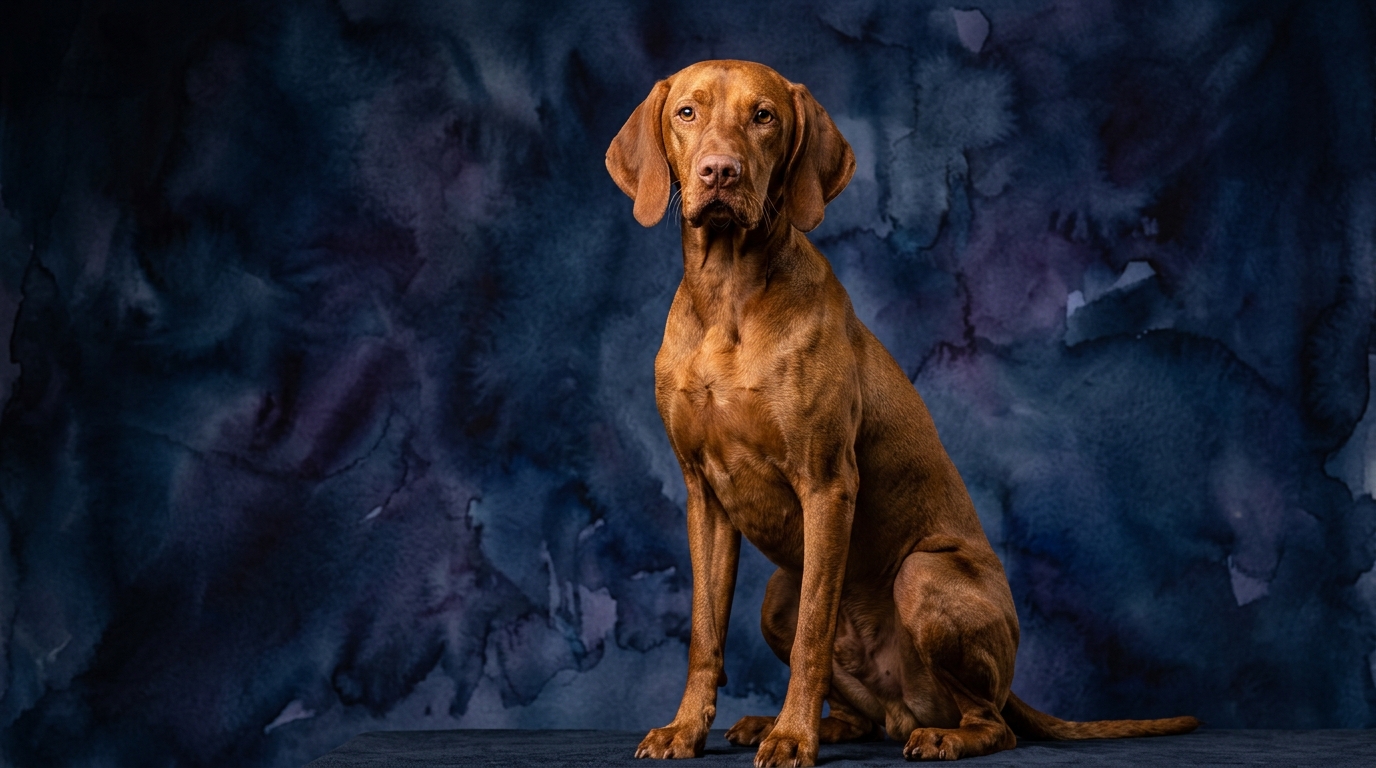
The Vizsla, a Hungarian hunting dog, garners a Coren rank of #31, indicating a strong capacity for working intelligence and obedience. Its individual IQ scores are robust: Problem Solving 4/5, Training Speed 4/5, Social Intelligence 5/5, Instinctive Drive 5/5, and Memory 4/5. This profile suggests a dog that is not only quick to learn but also deeply attuned to its human companions and its natural instincts.
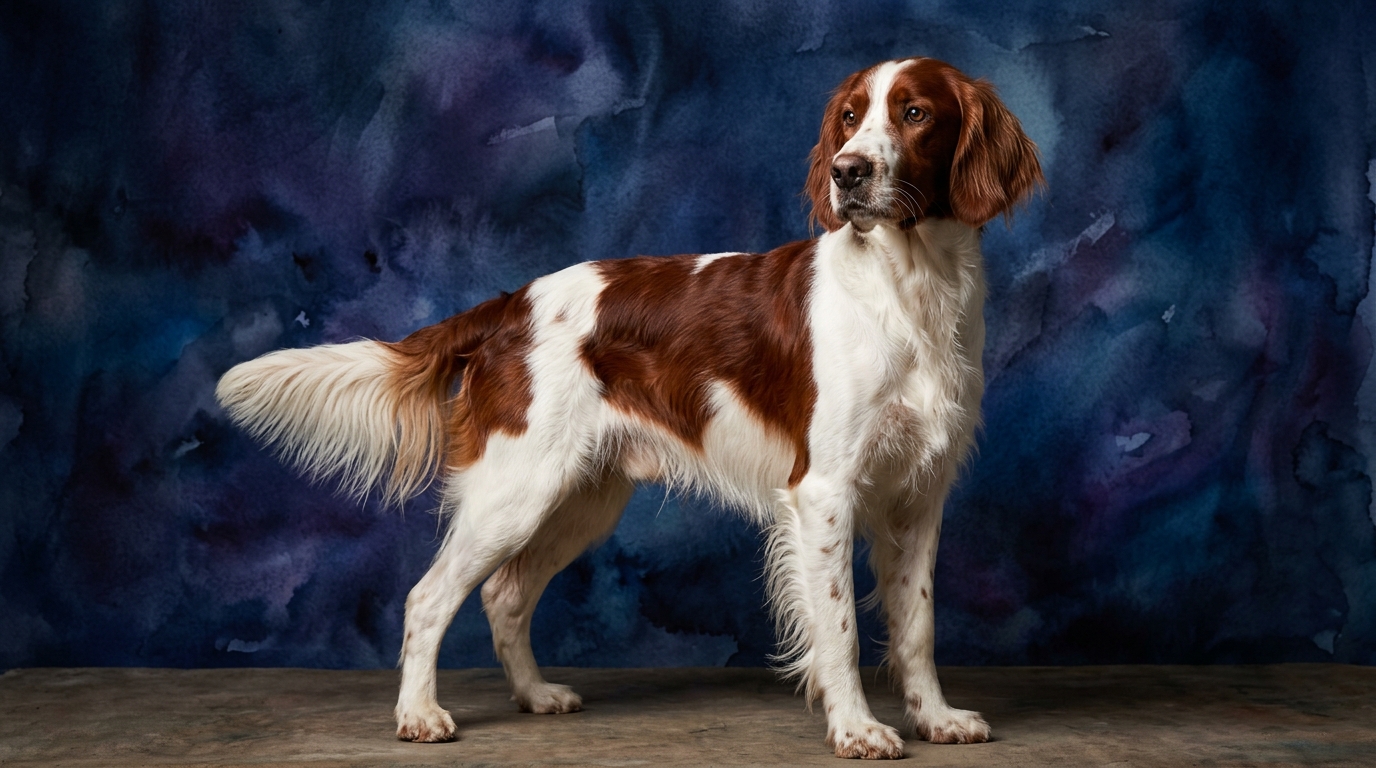
In contrast, the Irish Red and White Setter, an older variety of Irish Setter, does not hold a specific Coren rank but presents a consistent cognitive profile across the board. Its IQ scores are Problem Solving 3/5, Training Speed 3/5, Social Intelligence 3/5, Instinctive Drive 3/5, and Memory 3/5. This balanced assessment points to a capable, steady learner with a moderate, yet reliable, set of cognitive aptitudes.
Where the Vizsla Excels Cognitively
The Vizsla’s cognitive strengths are evident in its superior Problem Solving (4/5) and Training Speed (4/5). These dogs exhibit a remarkable ability to process novel situations and devise solutions quickly, often demonstrating independent thought in challenging scenarios. Their rapid grasp of new commands and concepts means they can progress through complex training regimes with fewer repetitions, making them highly adaptable to various disciplines from advanced obedience to intricate field work.
A standout trait for the Vizsla is its exceptional Social Intelligence (5/5). This indicates a profound capacity to read and interpret human emotions, body language, and subtle cues, often anticipating their owner's intentions. This deep empathetic connection fosters a highly responsive partnership, where the Vizsla can react sensitively to its handler's mood, making them remarkably intuitive companions.
Coupled with a formidable Instinctive Drive (5/5) and strong Memory (4/5), the Vizsla’s cognitive framework supports its role as an accomplished hunting dog. Their drive ensures persistent focus on tasks, while their memory allows them to retain complex scent patterns, retrieve locations, and learned behaviors over extended periods, making them highly effective and reliable in their traditional roles.
Where the Irish Red and White Setter Excels Cognitively
While the Irish Red and White Setter’s individual scores are consistently 3/5, this uniformity represents a unique cognitive strength: balance and predictability. Unlike breeds with extreme highs in certain areas, the IRWS offers a steady, reliable mental disposition. Their moderate Instinctive Drive (3/5) means they possess the necessary hunting instincts without the overwhelming intensity that might be challenging for some owners to manage daily.
Their Social Intelligence (3/5) suggests an amiable and agreeable nature, providing straightforward companionship without the potential for the higher-strung, nuanced emotional complexities sometimes seen in breeds with 5/5 social intelligence. This level of social awareness fosters a pleasant and cooperative bond, making them generally easygoing and less prone to anxiety from subtle human interactions.
The consistent 3/5 in Problem Solving, Training Speed, and Memory indicates a capable learner who thrives on consistency and clear communication. While they may not solve puzzles as rapidly or learn commands in fewer repetitions than a Vizsla, their reliable cognitive function ensures they can master tasks and routines effectively over time. This steadiness makes them a rewarding companion for owners who appreciate a more deliberate pace and consistent, predictable responses.
Training Dynamics: Which is Easier?
Based on their IQ profiles, the Vizsla will generally present as the easier breed to train. Their 4/5 Training Speed and Problem Solving, combined with 5/5 Social Intelligence, means they grasp new concepts with impressive rapidity and are highly attuned to their handler's feedback. They often anticipate what is expected, making training sessions efficient and enjoyable, and allowing for quick progression into more advanced obedience or specialized tasks.
The Irish Red and White Setter, with its 3/5 Training Speed, requires a more patient and consistent approach. While perfectly capable of learning, they may need more repetitions to solidify a command or behavior. Their 3/5 Problem Solving suggests they might not independently figure out complex tasks as quickly. However, their agreeable nature ensures they are cooperative learners, and with clear, positive reinforcement and a structured routine, they become well-mannered and responsive companions, simply taking a slightly longer path to mastery.
Lifestyle Suitability: Active vs. Relaxed Owners
For active owners seeking a dynamic partner, the Vizsla is an ideal match. Their formidable 5/5 Instinctive Drive, coupled with their high Problem Solving and Training Speed, means they thrive on consistent mental and physical challenges. These dogs require significant daily exercise, structured training, and opportunities for engagement in activities like field trials, agility, hiking, or complex scent work. An owner who can provide these outlets will find a deeply fulfilled and responsive companion, whereas a less active lifestyle would likely lead to boredom and potential behavioral issues stemming from unmet cognitive and physical needs.
The Irish Red and White Setter, while still a sporting breed that appreciates activity, generally suits moderately active to relaxed owners better than the Vizsla. Their balanced 3/5 cognitive profile, including a strong but not overwhelming instinctive drive, means they enjoy regular walks, opportunities to explore, and engaging play, but might be content with less intensely structured or high-octane mental work. They are often more amenable to a home environment that prioritizes companionship and a consistent routine over constant, high-intensity challenges, provided their fundamental exercise needs are met.
The Verdict
Choose the Vizsla if you seek a highly engaged, quick-thinking companion eager for complex training, demanding field work, and deeply empathetic social interaction, and are prepared to provide consistent, high-level mental and physical stimulation.
Opt for the Irish Red and White Setter if you desire a steady, amiable companion with a reliable and balanced cognitive profile, valuing a consistent routine and a more moderate pace of learning and activity without the intense drive or social complexity of the Vizsla.
🧠 Find Your Pet's IQ Score
Our Pet IQ Lab assessment covers 25+ tests across 5 cognitive dimensions — personalized to your breed.
Take the Full IQ Test →Frequently Asked Questions
How does the Vizsla's Coren rank of #31 manifest in daily life?
The Vizsla's Coren rank indicates they learn new commands quickly and respond well to obedience training. In daily life, this means they often pick up routines and house rules with ease, are responsive to cues, and thrive when given tasks or mental challenges to solve, making them generally well-behaved with consistent guidance.
Does the Irish Red and White Setter's lack of a Coren ranking imply lower trainability?
Not at all. The absence of a Coren ranking simply means they weren't included in that specific study; it doesn't reflect their inherent capacity. While their 3/5 training speed suggests a more deliberate learning pace than a Vizsla, they are still very trainable, requiring consistency and positive reinforcement to master commands and behaviors effectively.
Are Vizslas more prone to separation anxiety due to their high social intelligence?
Vizslas' 5/5 social intelligence means they form very strong bonds and are highly attuned to their owners. While this fosters deep companionship, it can also predispose them to separation anxiety if not properly managed with early training for independence and consistent routines. Their need for close connection makes alone time potentially more challenging for them without preparation.