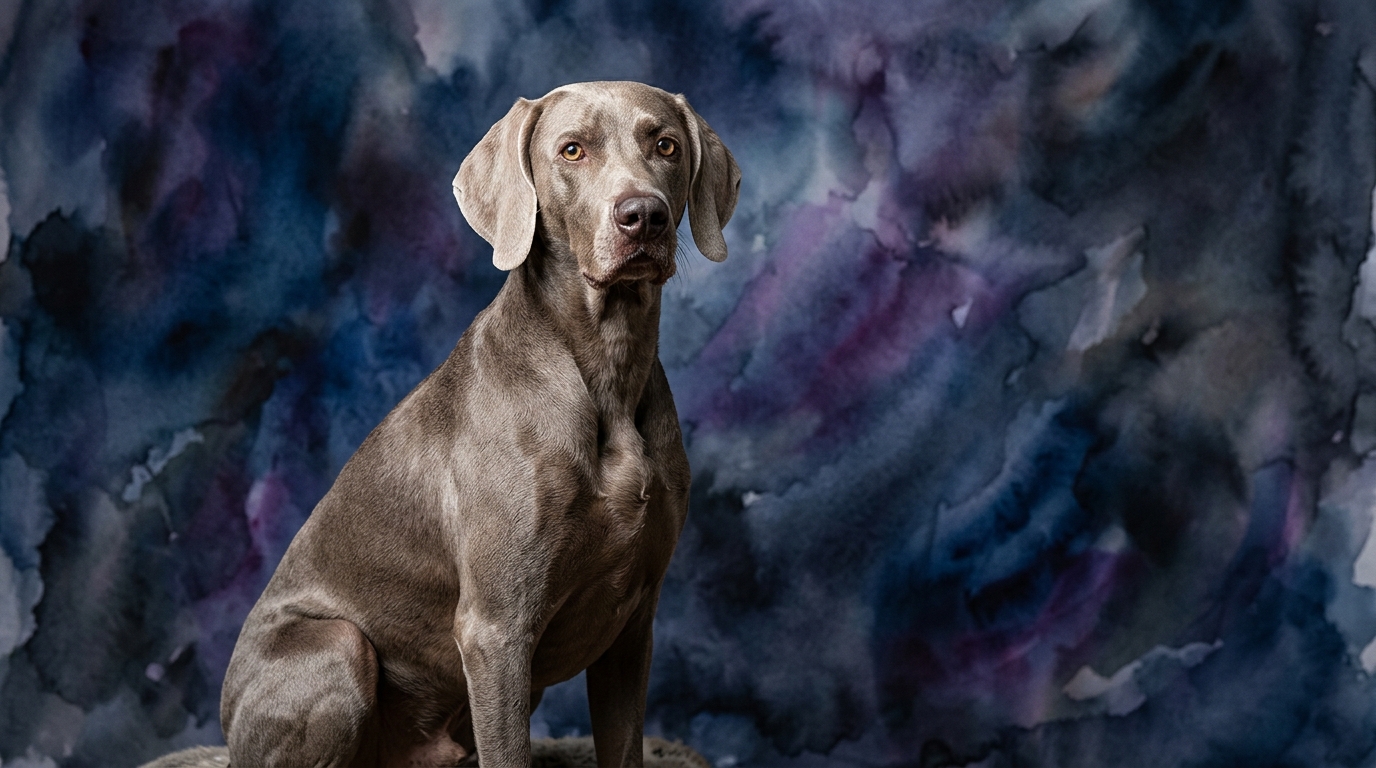
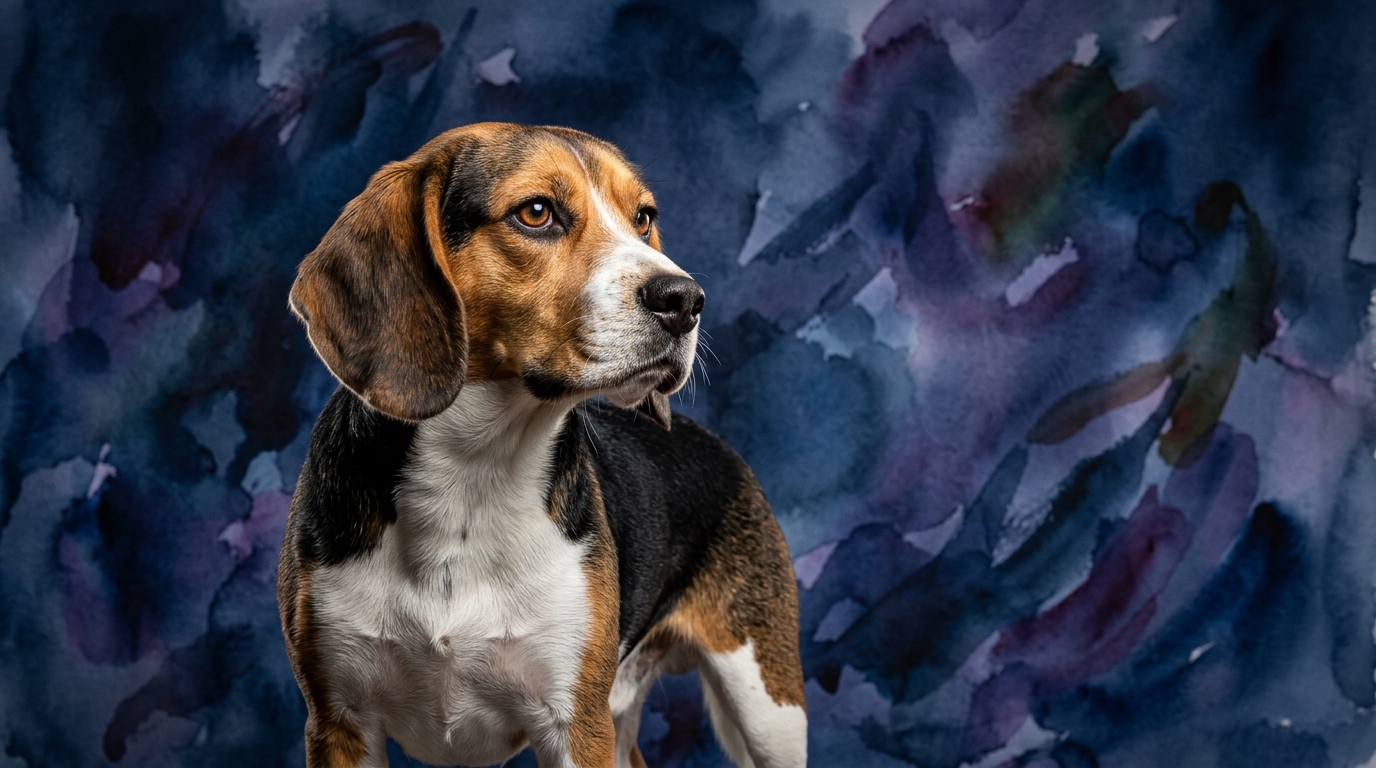
Side-by-Side IQ Profile: Weimaraner vs. Beagle
At The Cosmic Pet Pet IQ Lab, we assess canine intelligence across five key dimensions: Problem Solving, Training Speed, Social Intelligence, Instinctive Drive, and Memory. These metrics offer a granular view beyond general trainability, revealing how each breed's evolutionary path and human-assigned roles have molded their mental aptitudes. Understanding these profiles provides insight into their unique cognitive strengths and challenges.
The Weimaraner, a Sporting group dog, holds a Coren rank of #21, indicating strong working and obedience intelligence. Its IQ profile includes Problem Solving at 4/5, Training Speed at 4/5, Social Intelligence at 4/5, an impressive Instinctive Drive at 5/5, and Memory at 4/5. These scores reflect a breed bred for close partnership and versatility in the field, requiring both mental agility and cooperative spirit.
In contrast, the Beagle, a member of the Hound group, has a Coren rank of #72. Its IQ breakdown shows Problem Solving at 4/5, Training Speed at 2/5, Social Intelligence at 3/5, a formidable Instinctive Drive at 5/5, and Memory at 4/5. This profile speaks to a breed primarily developed for independent scent work, where innate drives and olfactory processing take precedence over human-directed obedience.
Where the Weimaraner Shines Cognitively
The Weimaraner's cognitive strengths are particularly evident in its Training Speed (4/5) and Social Intelligence (4/5). Their history as close hunting companions means they are attuned to human communication, quickly grasping commands and eager to engage in cooperative tasks. This makes them adept at learning complex sequences of behaviors, interpreting subtle body language, and adapting their actions based on human feedback, essential for their role in guiding hunters.
While both breeds share a 4/5 in Problem Solving, the Weimaraner's application often leans towards human-orchestrated challenges. They excel at navigating complex agility courses, figuring out puzzle toys designed to be solved through manipulation, or understanding multi-step commands that require sequential thought. Their robust Memory (4/5) further supports this, allowing them to retain vast repertoires of learned behaviors and apply past solutions to new but similar situations, making them highly effective in structured environments and demanding sporting disciplines.
Where the Beagle Shows Unique Cognitive Strengths
The Beagle's cognitive prowess is overwhelmingly dominated by its exceptional Instinctive Drive (5/5), specifically its unparalleled olfactory capabilities. Their Problem Solving (4/5) is intrinsically linked to scent, making them masters at unraveling complex scent trails, identifying specific odors, and persistently working through environmental distractions to achieve their olfactory goal. This isn't just about following a trail; it involves nuanced discrimination and memory for specific scents, which their 4/5 Memory score supports, allowing them to recall and differentiate countless odor profiles over time.
While their Training Speed (2/5) is lower in a traditional obedience context, this does not diminish their cognitive tenacity. Their focused persistence on a scent task demonstrates a profound form of concentration and problem-solving, albeit one driven by their primal instincts rather than human direction. Their Social Intelligence (3/5), while lower than the Weimaraner's, is effective within a pack context, allowing for cooperative hunting among Beagles and a general amiability towards humans, even if their primary focus often remains on scent.
Training Dynamics: Weimaraner's Eagerness vs. Beagle's Independence
The difference in Training Speed between the Weimaraner (4/5) and the Beagle (2/5) is a critical distinction for prospective owners. Weimaraners typically exhibit a strong desire to please and a quick uptake of new commands, making them highly responsive to positive reinforcement and eager to learn. Their high Social Intelligence (4/5) means they are adept at reading their trainer's cues and intentions, which significantly streamlines the learning process for complex behaviors and advanced obedience.
Conversely, the Beagle’s lower Training Speed stems from its powerful Instinctive Drive (5/5) to follow scent. When a compelling odor is present, their brain is hardwired to prioritize that sensory input, often making them appear 'stubborn' or 'distracted' during training. Effective Beagle training requires immense patience, creativity, and the use of high-value rewards to compete with the allure of a good scent. Trainers must learn to leverage their scent drive, perhaps incorporating nose work into training, rather than trying to suppress this fundamental aspect of their being.
Lifestyle Compatibility: Active Companions vs. Scent Explorers
For owners seeking an active, cooperative partner, the Weimaraner is often an ideal match. Their blend of high Training Speed, Problem Solving, and Instinctive Drive (channeled into human-directed activities like retrieving or pointing) means they thrive on structured activities such as agility, advanced obedience, and various dog sports. They require significant mental and physical engagement, forming a close bond with owners who can provide consistent training and a stimulating environment where their cognitive abilities are regularly challenged.
Beagles, while also requiring activity, channel their energy differently. Their overwhelming Instinctive Drive makes them superb candidates for scent work, tracking, or simply long walks where they can indulge their passion for olfactory exploration. Owners who enjoy leisurely strolls and are content to allow their dog to follow its nose, or those interested in competitive nose work, will find a Beagle fulfilling. They may not be the best fit for owners expecting constant, focused obedience in highly distracting environments, as their independent scenting pursuits will often take precedence.
The Verdict
Choose a Weimaraner if you seek a highly engaged, cooperative canine partner eager for advanced training, structured activities, and a close working bond, thriving on mental and physical challenges alongside their human.
Opt for a Beagle if you appreciate a tenacious, independent companion whose greatest joy is unraveling the world through scent, and you are prepared to channel their powerful instinctive drives into enriching, scent-focused exploration and patient, reward-based training.
🧠 Find Your Pet's IQ Score
Our Pet IQ Lab assessment covers 25+ tests across 5 cognitive dimensions — personalized to your breed.
Take the Full IQ Test →Frequently Asked Questions
Does Coren's ranking fully capture a breed's intelligence?
Coren's ranking primarily assesses 'working and obedience intelligence,' reflecting a dog's ability to learn and follow human commands. It provides a useful benchmark for trainability but doesn't encompass the full spectrum of canine cognition, such as problem-solving in natural environments or social adaptability.
Can a Beagle be trained as effectively as a Weimaraner?
While a Beagle's training speed is lower due to its potent scent drive, it can certainly be trained effectively with consistent, patient methods and high-value rewards, especially when incorporating scent work. The training approach needs to acknowledge and leverage their innate motivations rather than fight against them.
How does 'instinctive drive' differ from 'problem solving' in these breeds?
Instinctive drive refers to a dog's innate, often powerful, behavioral predispositions, like a Beagle's urge to track scents or a Weimaraner's pointing behavior. Problem solving, conversely, is the cognitive process of finding solutions to new challenges, which in these breeds can be influenced by and applied to their strong instincts.