
Side-by-Side IQ Profile: Weimaraner vs. Bouvier des Flandres
The Weimaraner, a Sporting breed ranked #21 by Coren, presents a cognitive blueprint defined by its hunting heritage. Its Problem Solving score of 4/5 indicates a strong capacity for independent thought and devising clever solutions to tasks like accessing hidden treats or navigating complex environments. With a Training Speed of 4/5, Weimaraners grasp new commands rapidly, often requiring fewer repetitions due to their eagerness to engage and work alongside humans. Their Social Intelligence, also 4/5, allows them to adeptly read human cues and form deep bonds, often anticipating their owner's moods. An Instinctive Drive of 5/5 highlights their exceptional prey drive and innate inclination to track, point, and retrieve, which fuels much of their activity. Finally, their Memory, rated 4/5, demonstrates robust recall for commands, routines, and experiences over time.
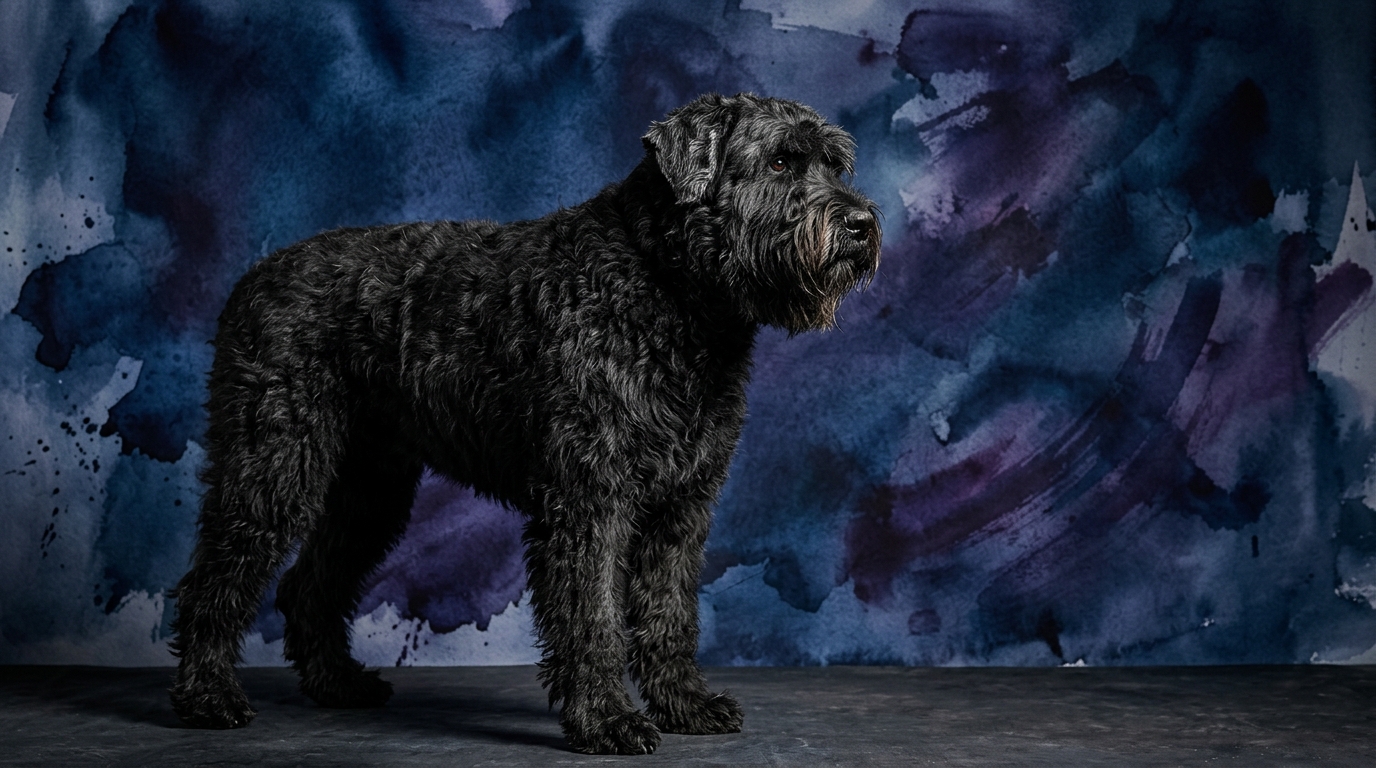
In contrast, the Bouvier des Flandres, a Herding breed not ranked by Coren, exhibits a different cognitive architecture. Its Problem Solving score of 3/5 reflects a practical, methodical approach to challenges, preferring systematic work through tasks, especially those related to herding and guarding, over spontaneous improvisation. A Training Speed of 3/5 means they learn at a steady pace, absorbing information reliably, though requiring more patience and consistency than the Weimaraner. Their Social Intelligence, 3/5, manifests as strong, protective bonds with family and an observant nature regarding their immediate social circle, discerning threats effectively. The Instinctive Drive of 3/5 is centered on herding and guarding, leading to a watchful nature and a desire to keep their 'flock' safe, rather than high-energy pursuit. Their Memory, 3/5, ensures solid retention of learned behaviors and established routines, contributing to their reliability once trained.
Where Weimaraner Wins Cognitively
The Weimaraner's cognitive edge largely stems from its exceptional problem-solving acumen and rapid training acquisition. With a problem-solving score of 4/5, Weimaraners frequently display ingenuity in navigating their environment, often devising novel strategies to achieve desired outcomes, whether it's opening a complex latch or finding a hidden toy. This inventive streak, combined with their 4/5 training speed, means they can quickly grasp multi-step commands and intricate routines, making them prime candidates for advanced dog sports like agility or competitive obedience. Their Coren rank of #21 further underscores their capacity for swift learning and reliable command execution.
Moreover, their powerful instinctive drive (5/5) means they are highly motivated to engage in activities that tap into their natural hunting behaviors, providing an inherent eagerness to learn tasks related to tracking or retrieving. This strong drive, when channeled appropriately, translates into focused, persistent effort during training, allowing them to excel in tasks requiring sustained attention.
Where Bouvier des Flandres Wins Cognitively
While perhaps not possessing the Weimaraner's lightning-fast learning curve, the Bouvier des Flandres demonstrates distinct cognitive strengths rooted in its heritage as a herding and guarding dog. Their problem-solving (3/5) and training speed (3/5) scores reflect a methodical, thorough approach to learning and challenges. Bouviers excel in tasks requiring consistency, reliability, and a measured response, rather than quick improvisation.
Their social intelligence (3/5) manifests as a deep, protective bond with their family, coupled with a keen awareness of their surroundings. This allows them to quickly identify and respond to perceived threats or changes in their environment, a crucial trait for a guardian. Their instinctive drive (3/5) is less about chase and retrieve, and more about watchful oversight and territorial management. This translates into a steadfast dedication to their duties, making them highly effective in roles requiring vigilance and calm authority. Once a Bouvier learns a task, its memory (3/5) ensures deep retention, leading to dependable performance. This breed's cognitive strengths lie in its unwavering commitment and practical application of learned skills within a structured, protective framework.
Which is Easier to Train and Why
Based on The Cosmic Pet Pet IQ Lab's metrics, the Weimaraner is generally easier to train, primarily due to its superior training speed (4/5) and robust problem-solving abilities (4/5). Weimaraners tend to pick up new commands with fewer repetitions and are more inclined to experiment with solutions when faced with a new task. Their intense instinctive drive (5/5) also provides a powerful motivator; when training taps into their natural desire to work, they exhibit remarkable focus and enthusiasm. For instance, teaching a Weimaraner to retrieve a specific item is often a swift process because it aligns with their inherent drive.
In contrast, the Bouvier des Flandres, with a training speed of 3/5, requires more patience and consistency. While they are certainly capable learners, they tend to be more deliberate and methodical, needing additional repetitions to solidify new concepts. Their approach to problems is often less about immediate innovation and more about careful consideration, which can translate to a slower but ultimately very reliable learning process. A Weimaraner might figure out a puzzle toy in minutes, whereas a Bouvier will meticulously work through it until mastery. Therefore, for owners seeking rapid skill acquisition and a dog eager to engage in diverse training challenges, the Weimaraner presents an easier path.
Which Suits Active Owners vs. Relaxed Owners
The cognitive profiles of these two breeds clearly delineate their suitability for different owner lifestyles. Weimaraners, with their high instinctive drive (5/5), strong problem-solving skills (4/5), and quick training speed (4/5), are unequivocally suited for active owners. They require consistent mental and physical engagement to thrive, often becoming restless or destructive if their considerable cognitive and physical energies are not adequately channeled. An active owner who enjoys daily long runs, hiking, hunting, or participation in dog sports like agility, flyball, or obedience trials will find a Weimaraner a highly compatible and rewarding companion. Their social intelligence (4/5) also means they crave close interaction and become deeply attached, making them ideal for owners who want a constant companion in their adventures.
Conversely, the Bouvier des Flandres, while certainly not a couch potato, is better suited for owners who might be less intensely active but are committed to consistent, structured engagement. Their moderate instinctive drive (3/5) and methodical approach to learning (3/5) mean they appreciate routine and purposeful activity. They excel with owners who can provide regular, moderate exercise, consistent training, and clear boundaries. While they enjoy outdoor activities, their protective nature and watchful disposition often mean they are content with supervising their domain and engaging in less frenetic, more focused tasks. A relaxed owner, in this context, values steady companionship and predictable routines over high-octane, spontaneous adventures, making the Bouvier an excellent fit for a home seeking a steadfast and reliable presence.
The Verdict
Choose the Weimaraner if you are an active, experienced owner seeking a highly engaged, quick-witted partner for dynamic activities like hunting, competitive sports, or extensive outdoor adventures, and you can commit to channeling their intense energy and sharp mind daily.
Opt for the Bouvier des Flandres if you prefer a steadfast, protective companion who thrives on consistent routine, purposeful work, and clear guidance, and you appreciate a methodical learner who will form an unwavering bond within a stable family environment.
🧠 Find Your Pet's IQ Score
Our Pet IQ Lab assessment covers 25+ tests across 5 cognitive dimensions — personalized to your breed.
Take the Full IQ Test →Frequently Asked Questions
Is the Weimaraner's high instinctive drive difficult to manage?
The Weimaraner's 5/5 instinctive drive, rooted in its hunting heritage, requires dedicated management. This drive translates to a strong desire to chase and retrieve, necessitating early socialization, consistent training, and ample outlets for their energy to prevent undesirable behaviors.
Do Bouvier des Flandres dogs respond well to positive reinforcement?
Absolutely. Bouvier des Flandres dogs, with their 3/5 training speed, thrive on positive reinforcement and consistent methods. Their methodical learning style benefits greatly from clear, encouraging feedback, which builds trust and reinforces desired behaviors effectively over time.
How does Coren's ranking relate to The Cosmic Pet Pet IQ Lab scores?
Coren's ranking primarily measures obedience and working intelligence (how quickly a dog learns and obeys commands), which aligns closely with our 'Training Speed' dimension. The Cosmic Pet Pet IQ Lab offers a broader, multi-dimensional view of cognition, including problem-solving, social intelligence, instinctive drive, and memory, providing a more holistic understanding of a breed's mental capacities.