
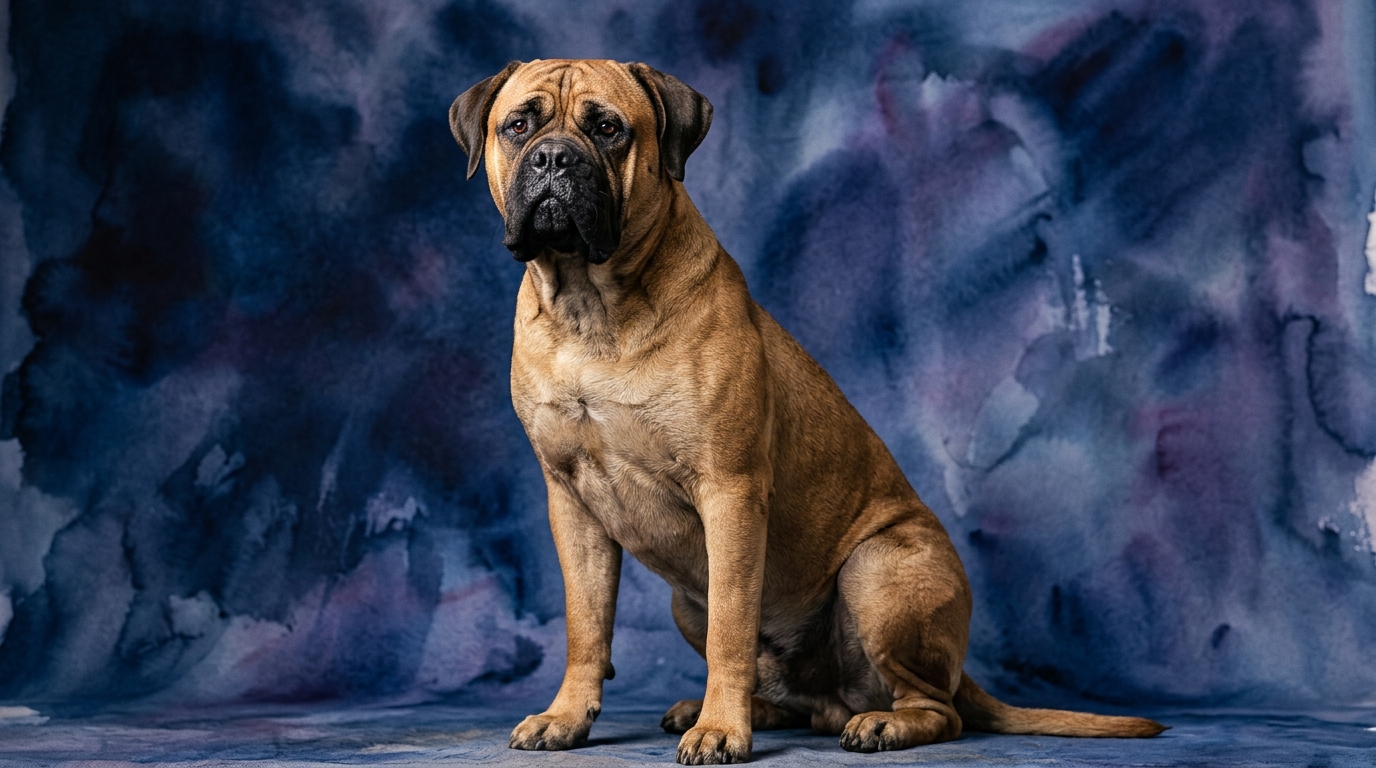
Side-by-Side IQ Profile: Weimaraner vs. Bullmastiff
The Cosmic Pet Pet IQ Lab's assessment reveals distinct cognitive profiles for these two breeds. The Weimaraner, a Sporting dog ranking #21 on Coren's scale, exhibits strong intellectual aptitudes: its Problem Solving is rated 4/5, indicating a resourceful, quick-thinking approach to novel challenges. Its Training Speed at 4/5 means it grasps new commands with impressive alacrity. Social Intelligence, also 4/5, reflects a keen awareness of human cues and emotions. An exceptionally high Instinctive Drive of 5/5 fuels its focused pursuit of tasks, while its Memory, 4/5, ensures robust retention of learned information.
In contrast, the Bullmastiff, a Working dog ranking #69, presents a more deliberate cognitive style. Its Problem Solving is 3/5, suggesting a reliance on known routines rather than extensive independent experimentation. Training Speed at 3/5 indicates a methodical learning pace requiring consistent repetition. Social Intelligence, 3/5, is discerning, primarily focused on its immediate family. Its Instinctive Drive, 3/5, is channeled into watchful guardianship rather than active pursuit, and its Memory, 3/5, is functional for routines and familiar contexts, though less pronounced for new or complex data.
Where the Weimaraner Wins Cognitively
The Weimaraner's cognitive strengths truly shine in scenarios demanding quick adaptation and focused performance. Its superior Problem Solving (4/5) allows it to rapidly assess situations, such as figuring out how to open a child-proof gate or retrieving a toy from a difficult spot, often with minimal guidance. This breed doesn't just react; it actively seeks solutions. Coupled with a Training Speed of 4/5, Weimaraners quickly forge connections between commands and actions, making them highly responsive pupils for advanced obedience or competitive dog sports. Their exceptional Instinctive Drive (5/5) means they possess an innate, powerful motivation for work, whether it's tracking, retrieving, or complex scent discrimination tasks. This drive translates into sustained attention and a remarkable willingness to persist, making them formidable partners in demanding roles where mental stamina is key. Their robust Memory (4/5) ensures these intricate skills are retained, contributing to consistent, high-level performance.
Where the Bullmastiff Wins Cognitively
While less about rapid performance, the Bullmastiff's cognitive advantages are rooted in its profound, steady presence and discerning nature. Its Social Intelligence (3/5), though not broadly expressive, is acutely tuned to the subtleties of its family dynamics and home environment. This breed excels at intuitively understanding and reacting to potential threats or disturbances, demonstrating a deep, protective intuition that is calm yet resolute. Their Problem Solving (3/5) manifests as a deliberate, thoughtful approach to situations concerning their territory or loved ones; they might not quickly solve a puzzle, but they are exceptionally adept at reading human moods or sensing unfamiliar presences. The Bullmastiff's Instinctive Drive (3/5) is a quiet, watchful vigilance, a strength centered on deterrence and presence rather than high-energy pursuit. This translates into a reliable, consistent guardian. Their Memory (3/5) for established routines and familiar individuals is strong, fostering a sense of security through their predictable behavior and dependable responses within their known world. Their cognitive wins are in their unwavering loyalty, discerning protective instincts, and reliable, comforting presence.
Which is Easier to Train and Why
Comparing ease of training highlights distinct approaches for each breed. The Weimaraner, with its Training Speed of 4/5 and high Instinctive Drive of 5/5, is generally considered easier to train for complex commands and active roles. They possess a strong eagerness to engage and an intrinsic motivation to work alongside their human, often grasping new concepts in fewer repetitions. Their higher Problem Solving ability means they are more likely to offer behaviors proactively, simplifying the shaping of desired actions. However, their intense drive and energy demand consistent mental and physical engagement; without it, their intelligence can lead to inventive, often undesirable, self-entertainment.
The Bullmastiff, with a Training Speed of 3/5, requires a more patient, consistent, and reward-based approach. They are not inherently driven by complex tasks for sport but respond well to clear, fair leadership and positive reinforcement, especially when training relates to their role as a companion and guardian. Their lower Instinctive Drive means they are less prone to overstimulation but also less inclined to repetitive, high-energy tasks. Training a Bullmastiff often involves more repetitions and a slower progression, but once a command is learned, their Memory (3/5) ensures it sticks, making them reliably consistent. Ultimately, the 'easier' dog depends on the owner's goals: for rapid skill acquisition and performance, the Weimaraner leads; for a steady, reliable companion through patient guidance, the Bullmastiff excels.
Which Suits Active Owners vs. Relaxed Owners
The Weimaraner's energetic disposition and high cognitive scores make it an ideal match for active owners who can meet its substantial needs for both physical exertion and mental stimulation. An owner who enjoys daily long runs, hiking, or participating in dog sports like agility, obedience, or scent work will find a Weimaraner to be an enthusiastic and capable partner. Their high Instinctive Drive (5/5) and Problem Solving (4/5) demand consistent purpose and engagement; without sufficient outlets, they can become restless, channeling their considerable intellect and energy into less desirable behaviors. They thrive on having a 'job' and consistent interaction that challenges their quick minds.
Conversely, the Bullmastiff is better suited for more relaxed owners who appreciate a steadfast, watchful companion rather than a high-octane athlete. While they do require regular, moderate exercise to maintain health and prevent boredom, their needs are far less intense. Short daily walks and supervised yard time are typically sufficient. Their lower Instinctive Drive (3/5) and more deliberate Training Speed (3/5) mean they are content with a calmer pace of life, often preferring to observe and be near their family. An owner who values a strong, quiet presence, a discerning guardian, and a dog content with a cozy spot after a leisurely stroll will find the Bullmastiff's temperament and cognitive leanings a perfect fit.
The Verdict
Choose a Weimaraner if you seek an intensely engaged, quick-thinking partner for active pursuits and enjoy channeling high drive into performance tasks. Their mental agility demands consistent challenge and interaction.
Opt for a Bullmastiff if you desire a calm, steadfast companion and discerning guardian who thrives on routine and a steady, predictable environment. Their quiet strength offers profound companionship without constant high-energy demands.
🧠 Find Your Pet's IQ Score
Our Pet IQ Lab assessment covers 25+ tests across 5 cognitive dimensions — personalized to your breed.
Take the Full IQ Test →Frequently Asked Questions
Does the Weimaraner's high drive make it difficult for first-time owners?
While intelligent and trainable, the Weimaraner's intense instinctive drive and high energy levels require significant commitment. First-time owners must be prepared for consistent training, extensive exercise, and mental stimulation to prevent boredom and channeling of their drive into unwanted behaviors.
Are Bullmastiffs good with children, given their guardian instincts?
Bullmastiffs can be excellent family dogs, often displaying a patient and protective nature towards children within their family. Early socialization and training are crucial to ensure they understand their role and interact gently, as their large size necessitates supervision.
How much daily exercise does each breed typically need?
A Weimaraner typically requires at least 60-90 minutes of vigorous daily exercise, often more, including running or structured activity, combined with mental games. A Bullmastiff generally needs 30-45 minutes of moderate daily exercise, like leisurely walks, to stay healthy without overexertion.