
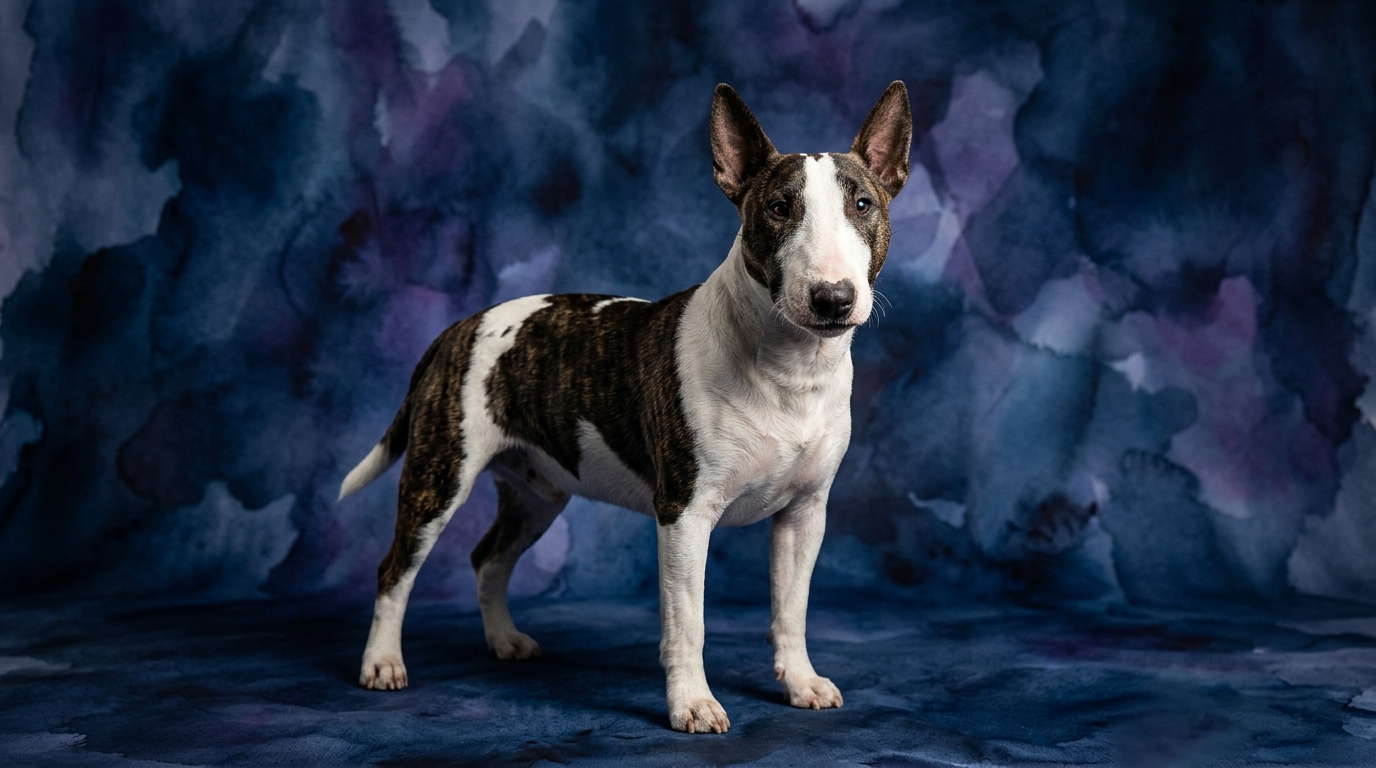
Side-by-Side IQ Profile: Weimaraner vs. Miniature Bull Terrier
The Weimaraner, a breed originally honed for hunting, showcases a robust cognitive profile. Its Problem Solving at 4/5 indicates a capacity for navigating complex environments and understanding multi-step tasks, often figuring out how to achieve a desired outcome efficiently. Training Speed, also at 4/5, highlights their quick uptake of new commands and routines, making them highly receptive to instruction. Their Social Intelligence of 4/5 means they are generally attuned to human cues and social dynamics, fostering strong partnerships. A standout is their Instinctive Drive at 5/5, reflecting an intense, focused urge to pursue, retrieve, and work, deeply rooted in their sporting heritage. Finally, a Memory score of 4/5 ensures they retain learned behaviors and recall past experiences effectively, building upon their training over time.
In contrast, the Miniature Bull Terrier presents a different set of cognitive strengths, reflective of its terrier lineage. With Problem Solving rated at 3/5, they can tackle straightforward puzzles but might approach more abstract challenges with a unique, sometimes stubborn, determination rather than immediate insight. Their Training Speed of 3/5 suggests they learn at a moderate pace, requiring consistency and patience, often with a playful approach. Social Intelligence at 3/5 means they engage with their human companions but might display a more independent streak, less overtly seeking constant direction or validation. An Instinctive Drive of 3/5 implies they possess a moderate prey drive and an urge to explore, but it's often expressed with less focused intensity than a dedicated sporting dog. Their Memory score of 3/5 indicates they retain information adequately, but perhaps require more reinforcement for complex sequences compared to their Weimaraner counterparts.
Where the Weimaraner Wins Cognitively
The Weimaraner's cognitive strengths shine brightly in areas demanding quick comprehension, sustained focus, and a strong partnership with their handler. Their 4/5 Problem Solving and 4/5 Training Speed mean they excel in scenarios requiring rapid learning and adaptation, such as advanced obedience, agility, or scent work. For example, a Weimaraner can often master a new multi-step trick in fewer repetitions and generalize that learning to different environments more readily. Their exceptional 5/5 Instinctive Drive makes them unparalleled in tasks involving sustained pursuit and retrieval, like dock diving or field trials, where their innate drive is channeled into purposeful activity. This drive, combined with their 4/5 Social Intelligence, allows them to anticipate handler intentions and respond with precision, forming a cohesive working unit. Their solid 4/5 Memory ensures that once a skill is learned, it's typically retained with remarkable consistency, making them reliable performers over the long term.
Where the Miniature Bull Terrier Wins Cognitively
While the Miniature Bull Terrier's scores might appear lower, their cognitive profile offers distinct advantages for specific lifestyles and owner preferences. Their 3/5 Problem Solving, though not as rapid, often manifests as a tenacious, inventive approach to obstacles. They might not solve a puzzle the 'expected' way but will persist, sometimes with amusing and creative solutions born from their independent spirit. Their moderate 3/5 Instinctive Drive, while less intense, can be a 'win' for owners who appreciate a dog with natural curiosity and a desire to explore without the overwhelming focus of a high-drive working dog. This means they are less likely to constantly scan for prey or require strenuous outlets for an insatiable drive, making them adaptable to varied environments. Their 3/5 Social Intelligence, reflecting a degree of independence, means they can be content to entertain themselves or relax without constant human interaction, offering a unique blend of companionship and self-sufficiency. This isn't a lack of affection, but rather a preference for engaging on their own terms, appealing to owners who value a dog with a distinct personality and less 'clingy' disposition.
Which is Easier to Train and Why?
Without question, the Weimaraner generally presents an easier and more straightforward training journey. Their 4/5 Training Speed, coupled with a 4/5 Social Intelligence, means they are eager to please, attentive to their handler, and quick to grasp new concepts. They thrive on positive reinforcement and clear directives, often finding joy in the process of learning and working alongside their human. This makes them ideal candidates for competitive obedience, service work, or advanced canine sports, where precision and consistent performance are paramount. In contrast, the Miniature Bull Terrier, with its 3/5 Training Speed and 3/5 Social Intelligence, requires a more nuanced and patient approach. Their independent nature and occasional stubborn streak mean that training sessions must be engaging, varied, and consistent to hold their attention. While they are capable learners, they may not always see the immediate 'point' of a command, and their compliance often hinges on making the task fun or rewarding on their terms. This isn't a deficiency, but rather a unique cognitive style that demands creativity and perseverance from their trainer, sometimes leading to slower progress but ultimately cementing a deep, mutual respect.
Suiting Active vs. Relaxed Owners
The Weimaraner is unequivocally suited for active owners who can provide ample physical exercise and mental stimulation. Their 5/5 Instinctive Drive and high energy levels demand a lifestyle that includes daily vigorous activity, such as long runs, hiking, swimming, or engaging in dog sports like agility or retrieving. A Weimaraner without sufficient outlets for its considerable drive and problem-solving abilities can become restless or engage in undesirable behaviors. They thrive when given a 'job' to do, needing purpose and partnership. Conversely, while the Miniature Bull Terrier also benefits from regular exercise, their moderate 3/5 Instinctive Drive and more independent nature allow for greater flexibility. They enjoy walks, playtime, and exploring, but may not require the same intensity or duration of structured activity as a Weimaraner. They can adapt to a slightly more relaxed pace, often content with a good romp in the yard followed by snuggles on the couch. Owners who appreciate a dog with personality and a less demanding drive for constant engagement might find the Mini Bull Terrier a better fit, provided they still commit to daily activity and mental enrichment.
The Verdict
Choose a Weimaraner if you are an experienced, highly active owner seeking a devoted, trainable partner for demanding activities and structured training.
Opt for a Miniature Bull Terrier if you appreciate a dog with a unique, tenacious personality, are patient with training, and can offer consistent exercise alongside an independent spirit.
🧠 Find Your Pet's IQ Score
Our Pet IQ Lab assessment covers 25+ tests across 5 cognitive dimensions — personalized to your breed.
Take the Full IQ Test →Frequently Asked Questions
Are Weimaraners good family dogs with children?
Weimaraners, with their 4/5 social intelligence, can be wonderful family dogs, often forming strong bonds. However, their high energy and strong drive mean they require consistent training and supervision around young children to prevent accidental knocks or over-exuberance.
Do Miniature Bull Terriers have strong prey drives?
Miniature Bull Terriers have a moderate instinctive drive (3/5), meaning they do possess a prey drive typical of terriers. While not as intense as a Weimaraner, it's present, so secure fencing and leash training are important to manage their curiosity for small critters.
Which breed requires more mental stimulation?
Both breeds benefit from mental enrichment, but the Weimaraner, with higher problem-solving and drive scores, typically requires more consistent and challenging mental stimulation to prevent boredom and destructive behaviors. The Miniature Bull Terrier appreciates puzzles and games, but may be more content with independent exploration.