
Side-by-Side IQ Profile: Weimaraner vs. West Highland White Terrier
The Cosmic Pet Pet IQ Lab provides a nuanced look at canine intelligence across five key dimensions. For the Weimaraner, ranked #21 by Coren, its profile reflects a highly capable and driven intellect. Their Problem Solving is rated 4/5, indicating a strong capacity for strategizing and adapting to novel situations, often involving complex multi-step tasks related to their retrieving instincts. Training Speed, also 4/5, means they grasp new commands and routines quickly, thriving on consistent, engaging instruction. Social Intelligence at 4/5 points to their attunement to human cues and a desire to work collaboratively, making them responsive companions. Their Instinctive Drive is a powerful 5/5, reflecting a deep-seated urge to hunt, track, and retrieve, which profoundly shapes their cognitive focus and energy. Memory, at 4/5, supports their ability to retain training and recall learned behaviors over time, crucial for intricate field work.
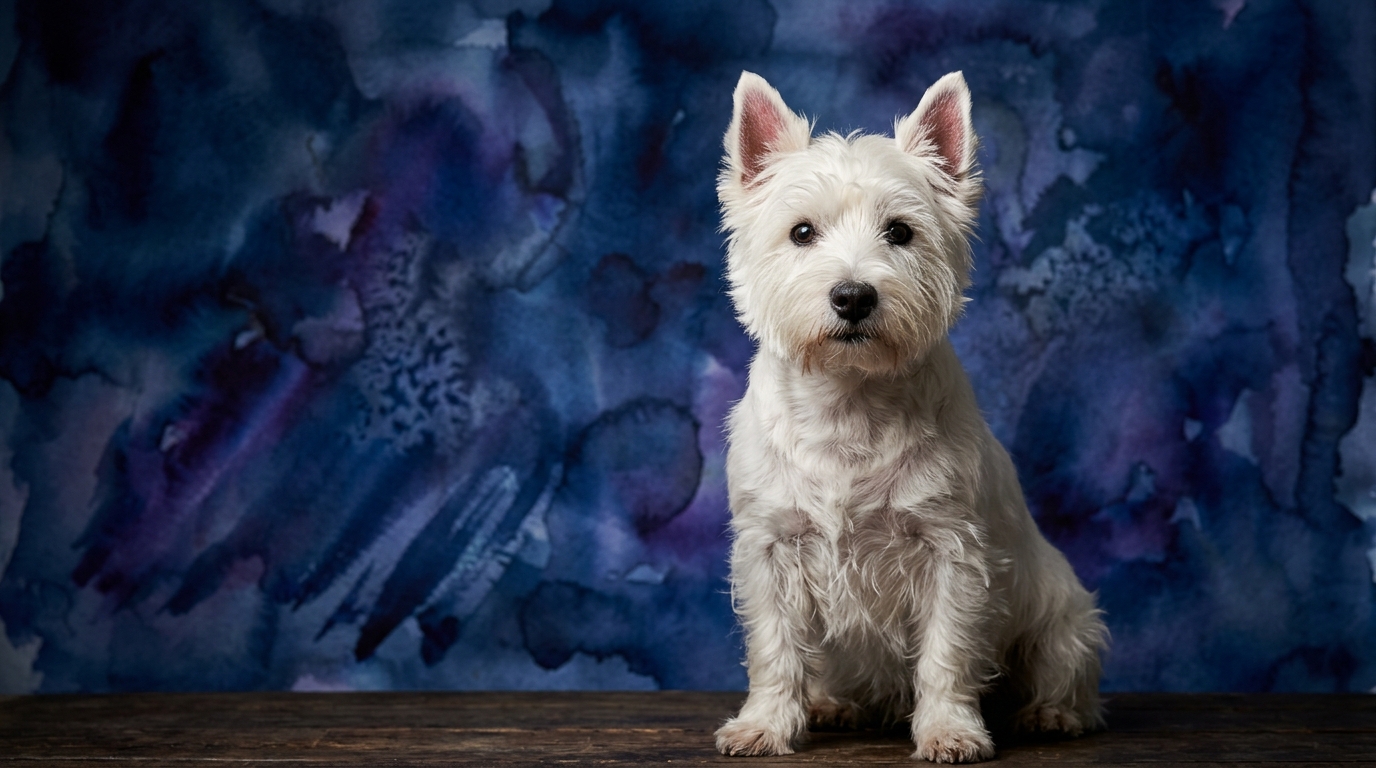
The West Highland White Terrier, with a Coren rank of #47, presents a different, yet equally compelling, cognitive landscape. Their Problem Solving is 3/5, suggesting they can navigate challenges, particularly those requiring independent thought and persistence, like locating prey. Training Speed, 3/5, means they learn at a steady pace but might require more repetition or varied approaches due to their independent nature. Social Intelligence, also 3/5, indicates they are generally amiable but often prioritize their own agenda or instincts over constant human direction. Their Instinctive Drive is 3/5, a moderate score that still highlights their terrier heritage – a drive to dig, chase, and explore, though perhaps less intensely focused than a sporting dog. Memory, a strong 4/5, allows them to remember specific commands, locations, and routines, aiding in their tenacious pursuit of goals.
Where the Weimaraner Excels Cognitively
The Weimaraner's cognitive strengths shine in scenarios demanding collaboration, rapid assimilation of complex commands, and sustained focus on a singular objective. Their 4/5 Problem Solving isn't just about figuring things out; it's about doing so with a clear purpose, often tied to their handler's instructions. Imagine a Weimaraner methodically tracking a scent trail, navigating obstacles, and then retrieving an item, all based on a sequence of commands. This requires sophisticated spatial reasoning, an ability to link cause and effect, and a capacity for strategic planning. Their 4/5 Training Speed means they don't just learn quickly; they learn efficiently, building upon previous knowledge to master new, more intricate tasks. This makes them exceptional candidates for advanced obedience, intricate agility courses, or specialized working roles where a nuanced understanding of human directives is paramount. Furthermore, their 4/5 Social Intelligence allows them to anticipate human intentions and adapt their behavior, fostering a deep, almost intuitive working partnership. This supreme 5/5 Instinctive Drive fuels this entire cognitive engine, providing an unwavering motivation to engage in tasks that tap into their natural hunting and retrieving predispositions.
Where the West Highland White Terrier Shines Cognitively
The West Highland White Terrier’s cognitive prowess lies in their independent problem-solving and unwavering tenacity, traits honed over generations of solitary vermin control. Their 3/5 Problem Solving manifests differently; it's less about collaborative, multi-step tasks and more about autonomous, persistent strategizing to overcome immediate environmental challenges. Picture a Westie encountering a burrow: they don't wait for instructions; they assess the situation, determine the best entry point, and commit to the task with singular focus, often employing clever digging techniques. This requires a robust, self-directed form of intelligence, prioritizing individual initiative over handler dependence. Their 3/5 Instinctive Drive, while not as overwhelming as a Weimaraner's, is intensely focused on their terrier purpose: hunting and exploring. This drive translates into an exceptional ability to maintain focus on a self-assigned task, even in distracting environments. Their 4/5 Memory is particularly strong for spatial recall and for remembering specific strategies that have yielded success in the past. While their 3/5 Social Intelligence means they might not always be looking to their human for constant cues, it also implies a resilient, self-assured temperament, allowing them to thrive in varied social settings without becoming overly dependent or anxious. Their cognitive victories are often quiet, personal triumphs of will and wit against environmental puzzles.
Trainability: A Tale of Two Temperaments
When considering ease of training, the Weimaraner generally presents a more straightforward path for traditional obedience and complex task learning. Their 4/5 Training Speed means they absorb new commands rapidly, often requiring fewer repetitions than many other breeds. This efficiency, combined with their 4/5 Social Intelligence, makes them highly receptive to human direction and eager to please, forming a strong cooperative bond with their trainer. They thrive on structured learning environments and quickly understand sequences of commands, making them excellent candidates for advanced training disciplines like competitive obedience, agility, or scent work. Their impressive 5/5 Instinctive Drive, when channeled appropriately, becomes a powerful motivator for learning, as they naturally enjoy engaging in tasks that mimic their historical roles, such as retrieving.
In contrast, the West Highland White Terrier, with a 3/5 Training Speed and 3/5 Social Intelligence, typically requires a more patient and creative training approach. Their historical role as independent hunters means they are often less inclined to blindly follow commands and possess a strong sense of self-determination. While they are certainly capable learners, their learning style is often characterized by needing clear motivation and a sense of purpose beyond mere compliance. Real behavioral differences manifest as a tendency for Westies to be more selective in their obedience, especially if a command conflicts with their immediate interests, such as chasing a squirrel. Their 3/5 Instinctive Drive, while lower than the Weimaraner's, is still potent and highly focused on digging, chasing, and exploring, which can be a significant distraction during training if not managed. Owners might find themselves needing to make training sessions feel more like a game or a puzzle for a Westie, leveraging their 3/5 Problem Solving skills to engage them, rather than relying solely on repetition. Therefore, for an owner seeking a dog that quickly masters a wide array of commands and works in close partnership, the Weimaraner is generally the easier choice. For an owner who enjoys a challenge and appreciates a dog's independent spirit, the Westie offers a rewarding, albeit sometimes more demanding, training journey.
Matching Canine Intellect to Owner Lifestyle
The distinction between these two breeds in terms of suitability for active versus relaxed owners is quite pronounced, largely driven by their respective Instinctive Drives and energy levels. The Weimaraner, with its commanding 5/5 Instinctive Drive, is unequivocally suited for highly active individuals or families. This drive translates into a profound need for extensive physical exercise and mental engagement daily. A Weimaraner thrives on long runs, hikes, vigorous games of fetch, and structured activities like dog sports or field trials. Their 4/5 Problem Solving and 4/5 Social Intelligence mean they also require consistent mental stimulation to prevent boredom and destructive behaviors. An owner who enjoys outdoor adventures, has the time for daily dedicated training sessions, and can provide a 'job' for their dog will find a Weimaraner to be an unparalleled companion. Their energy is not merely physical; it's a cognitive energy that needs direction and purpose.
The West Highland White Terrier, while smaller and appearing less demanding, still possesses a spirited nature that belies a 'relaxed owner' stereotype. Their 3/5 Instinctive Drive, though moderate, is focused on their terrier heritage of hunting and exploring. This means they require regular opportunities to satisfy their urge to chase, dig, and investigate. While they might not need the sheer mileage of a Weimaraner, daily walks, off-leash exploration in secure areas, and engaging playtime are essential. Their 3/5 Problem Solving skills, coupled with their tenacious spirit, mean they benefit from puzzle toys, scent games, and short, fun training sessions that challenge their minds. A 'relaxed owner' for a Westie isn't someone who offers minimal interaction; rather, it's someone who can provide consistent, moderate activity and mental engagement without needing to commit to extreme athletic endeavors. They can adapt to apartment living better than a Weimaraner, provided their exercise and mental needs are met. However, an owner who prefers a truly sedentary lifestyle and offers little stimulation would find even a Westie to be a handful, as their independent streak and drive can lead to nuisance behaviors like excessive barking or digging if under-stimulated. Therefore, the Weimaraner is for the dedicated athlete-owner, while the Westie suits an owner who enjoys consistent, moderate engagement and appreciates a dog with a robust, independent personality.
The Verdict
Choose the Weimaraner if you are an active individual or family seeking a highly trainable, collaborative, and energetic companion for demanding activities like hunting, competitive dog sports, or extensive outdoor adventures. Their impressive cognitive abilities and intense drive flourish with consistent, challenging engagement.
Choose the West Highland White Terrier if you appreciate a spirited, independent, and tenacious companion that excels at autonomous problem-solving and offers moderate, consistent engagement rather than extreme athletic demands. They thrive with owners who enjoy their self-assured personality and can provide regular mental and physical stimulation.
🧠 Find Your Pet's IQ Score
Our Pet IQ Lab assessment covers 25+ tests across 5 cognitive dimensions — personalized to your breed.
Take the Full IQ Test →Frequently Asked Questions
Does Coren rank directly reflect real-world intelligence?
Coren rank primarily assesses a breed's working intelligence and obedience, indicating how quickly they learn commands and respond to human cues. While it's a valuable metric for trainability, it doesn't fully capture the breadth of canine intelligence, such as independent problem-solving or emotional intelligence.
Are Westies truly less intelligent than Weimaraners?
Not necessarily 'less intelligent,' but their intelligence manifests differently. Weimaraners excel in collaborative, human-directed tasks, while Westies demonstrate strong independent problem-solving and tenacity, especially in tasks related to their historical purpose, which isn't always reflected in traditional obedience rankings.
How does instinctive drive impact trainability?
Instinctive drive provides a powerful internal motivation for a dog. For Weimaraners, their high drive can be channeled into focused training and work, making them eager learners. For Westies, their drive, while lower, can make them persistent in their own pursuits, sometimes requiring more creative training to redirect their focus towards human-directed tasks.