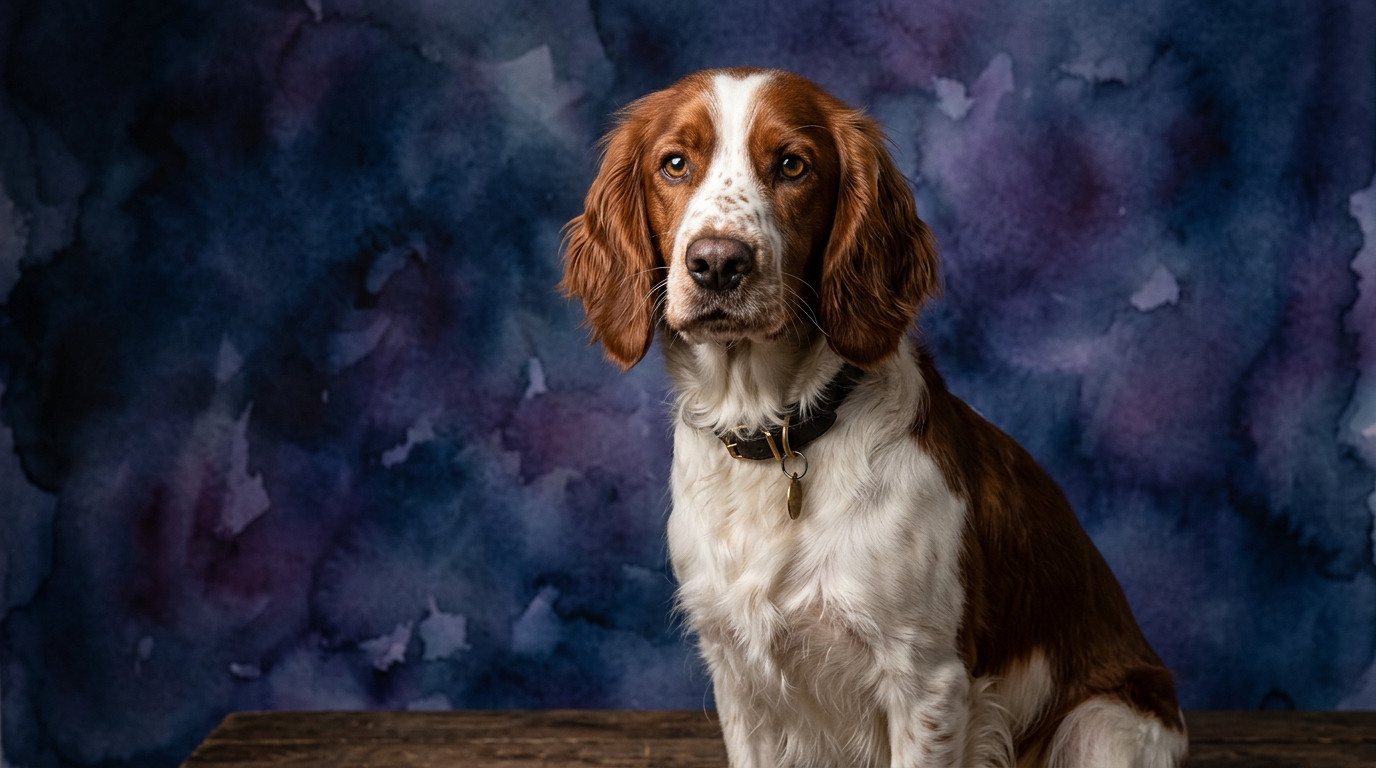
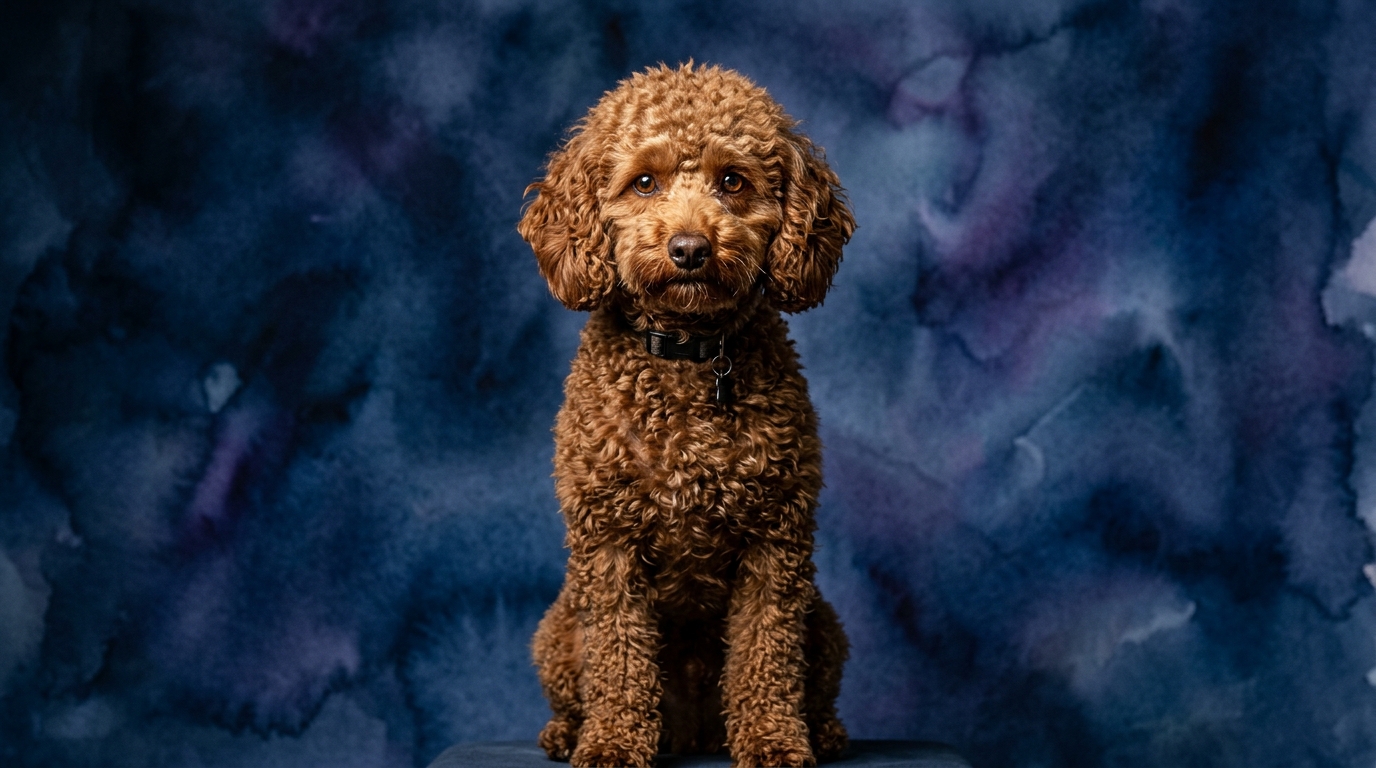
The Cognitive Profiles: Welsh Springer Spaniel vs. Miniature Poodle
Delving into the minds of these two distinct breeds, The Cosmic Pet Pet IQ Lab data provides a granular view of their cognitive landscapes. The Welsh Springer Spaniel, with a Coren rank of #31, demonstrates a practical, purpose-driven intelligence. Their Problem Solving is rated 4/5, indicating strong aptitude for tangible challenges, especially those related to their working heritage. Training Speed also sits at 4/5, showing a good capacity for learning new commands. Social Intelligence and Instinctive Drive are both at 3/5, suggesting moderate awareness of social cues and a manageable level of innate working impulses. Finally, their Memory is solid at 4/5, enabling them to recall learned behaviors and environmental details effectively.
In contrast, the Miniature Poodle, holding a remarkable Coren rank of #2, presents a cognitive profile characterized by exceptional versatility and abstract reasoning. They achieve a perfect 5/5 in Problem Solving, signifying a profound ability to conceptualize and devise novel solutions. Their Training Speed is also rated 5/5, reflecting an outstanding capacity for rapid learning and concept acquisition. Like the Springer, their Social Intelligence and Instinctive Drive are both 3/5, indicating similar levels of social awareness and innate impulses. However, their Memory, at a perfect 5/5, denotes a superior ability to retain complex information over extended periods, contributing significantly to their renowned trainability.
Where the Welsh Springer Spaniel's Mind Excels
While the Miniature Poodle often takes the spotlight for overall cognitive prowess, the Welsh Springer Spaniel's mind shines in specific, practical applications. Their problem-solving (4/5) is particularly adept at real-world, sensory-driven challenges. For instance, a Welsh Springer will instinctively and efficiently track a scent across varied terrain, demonstrating a focused determination to locate the source, a task for which their olfactory memory (4/5) is finely tuned. They excel at deciphering spatial puzzles related to finding hidden objects or navigating dense cover, relying on their keen senses and robust memory for environmental details.
This isn't abstract reasoning, but a highly effective, purpose-driven cognitive process rooted in their working heritage. Their instinctive drive (3/5), while moderate, is perfectly channeled for tasks requiring persistence and a methodical approach to exploration, making them superior in certain field trial scenarios where subtle environmental cues are paramount. They exhibit a grounded, practical intelligence that thrives when given a clear objective within a natural environment, utilizing their strong memory for patterns and locations to achieve their goals.
The Miniature Poodle's Cognitive Edge
The Miniature Poodle's cognitive strengths are more generalized and abstract, allowing them to excel in a wider array of learning environments. Their perfect 5/5 scores in problem-solving, training speed, and memory highlight a breed capable of exceptional cognitive flexibility. They don't just solve problems; they often invent novel solutions, demonstrating an ability to generalize learned concepts to entirely new situations. For example, a Poodle might figure out how to open a complex latch not by brute force or simple trial-and-error, but by understanding the mechanism and manipulating it deliberately.
Their training speed (5/5) means they can rapidly grasp multi-step commands and intricate sequences, making them stars in obedience, agility, and even theatrical performances where complex cues are common. This swift learning is underpinned by their superior memory (5/5), enabling them to retain vast repertoires of commands and recall them with precision, even after long periods. This capacity for abstract thought and retention makes them highly adaptable to various training methodologies and sophisticated learning tasks, often appearing to anticipate or understand human intentions with remarkable accuracy.
Training Dynamics: Which Breed Learns Faster?
Based on The Cosmic Pet Pet IQ Lab data, the Miniature Poodle (Training Speed 5/5) presents a demonstrably easier and faster training experience compared to the Welsh Springer Spaniel (Training Speed 4/5). The Poodle's exceptional capacity for rapid association means they often understand a new command or concept after just a few repetitions. This isn't merely about obedience; it extends to complex trick training, dog sports, or even learning to perform tasks like fetching specific items on command.
Their high problem-solving (5/5) and memory (5/5) scores contribute significantly here; they are not just memorizing actions but often understanding the underlying intent and context, allowing for quicker generalization and less 'proofing' against distractions. For instance, a Poodle might learn 'fetch the red ball' and then generalize to 'fetch the blue toy' with minimal additional instruction. In contrast, while the Welsh Springer Spaniel learns quickly (4/5), their training might require more consistent reinforcement and repetition, particularly for commands that deviate from their natural retrieving or flushing instincts. They are excellent learners, but the Poodle often requires fewer repetitions and demonstrates a greater aptitude for abstract or novel tasks, making the initial learning curve smoother and faster.
Lifestyle Fit: Active Pursuit or Calm Companionship?
The suitability for active versus relaxed owners hinges significantly on each breed's inherent energy levels and cognitive stimulation needs, which correlate with their historical roles. The Welsh Springer Spaniel, originating as a gundog, possesses a robust physical stamina and a persistent, methodical energy. Their instinctive drive (3/5), while moderate, translates into a need for regular, engaging outdoor activity such as long hikes, scent work, or vigorous games of fetch. Owners who enjoy exploring trails, participating in dog sports like agility or flyball, or who appreciate a canine companion for outdoor adventures will find the Welsh Springer Spaniel a fulfilling partner. Their satisfaction comes from purposeful activity that engages both body and mind, particularly tasks involving searching and retrieving.
Conversely, the Miniature Poodle, despite its elegant appearance, is a surprisingly athletic breed, but its activity needs are often more adaptable and can be met with varied types of engagement. While they certainly thrive on physical exercise, their exceptional problem-solving (5/5) and training speed (5/5) mean they also require substantial mental stimulation to prevent boredom. A Miniature Poodle can be content with slightly less intense physical activity than a Springer if their mind is constantly challenged with puzzle toys, learning new tricks, or engaging in advanced obedience. Therefore, active owners who enjoy teaching complex behaviors or participating in dog sports that emphasize precision and mental agility will find the Poodle a brilliant match.
However, for a truly relaxed owner, the Miniature Poodle might present a challenge due to its constant need for mental engagement; if not provided, this can lead to undesirable behaviors. A moderately active owner who enjoys daily walks but also dedicates time to interactive games and training sessions would find the Miniature Poodle a more suitable companion than a truly sedentary individual. The Welsh Springer Spaniel, with its more physically driven energy, would likely be more frustrated by a purely relaxed lifestyle, whereas the Poodle can adapt better to diverse activity levels as long as its cognitive needs are met, making them surprisingly versatile for owners who prioritize mental engagement.
The Verdict
Opt for the Welsh Springer Spaniel if you are an active individual or family who values a robust, outdoors-oriented companion for scent work, hiking, or field activities, and you appreciate a dog whose practical intelligence shines in purposeful, physical tasks.
Select the Miniature Poodle if you seek a highly trainable, cognitively flexible companion for advanced obedience, complex trick learning, or dog sports, and you are prepared to provide consistent mental challenges alongside regular physical exercise.
🧠 Find Your Pet's IQ Score
Our Pet IQ Lab assessment covers 25+ tests across 5 cognitive dimensions — personalized to your breed.
Take the Full IQ Test →Frequently Asked Questions
Do Miniature Poodles have a strong prey drive?
While Miniature Poodles retain a moderate instinctive drive (3/5) from their water retrieving heritage, it's generally manageable and less pronounced than in many dedicated hunting breeds. It often manifests as an interest in chasing toys or an affinity for water, rather than an overwhelming prey drive towards small animals.
Are Welsh Springer Spaniels good with children?
Welsh Springer Spaniels typically possess a social intelligence (3/5) that allows them to form strong bonds with their family, including children, often displaying patience and playfulness. However, like any breed, proper socialization and supervision are crucial to ensure positive interactions.
Which breed is more prone to separation anxiety?
Both breeds, with their moderate social intelligence (3/5) and strong family attachments, can develop separation anxiety if not properly habituated to alone time. The key is consistent training from a young age, regardless of breed, to foster independence and prevent over-attachment.