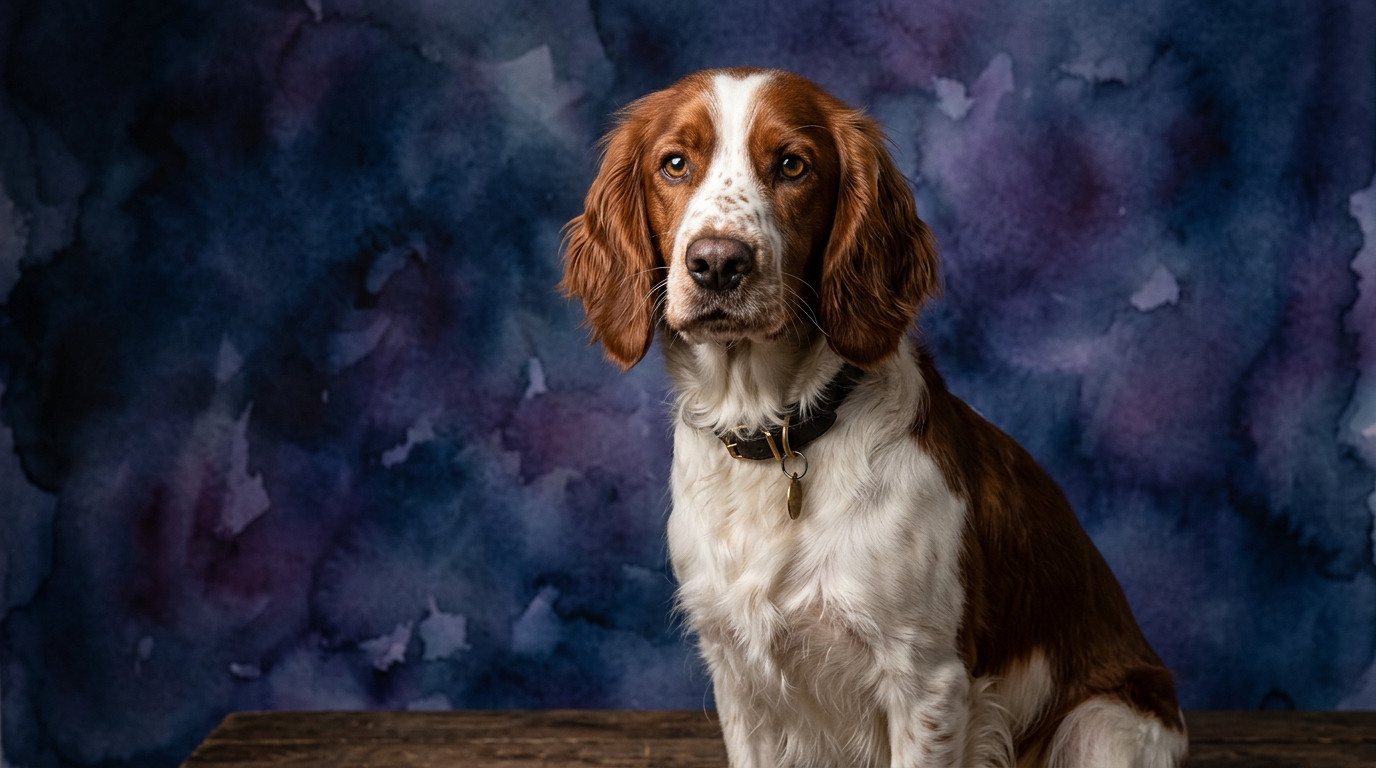

Side-by-Side IQ Profile: Welsh Springer Spaniel vs. Norfolk Terrier
The Welsh Springer Spaniel, a Sporting dog, ranks #31 on Coren's intelligence list, exhibiting a robust cognitive profile. Its Problem Solving is rated 4/5, indicating a strong capacity to figure out solutions to novel challenges efficiently. Training Speed is also 4/5, reflecting their quick grasp of new commands and routines. Their Social Intelligence stands at 3/5, demonstrating a balanced understanding of human cues and interactions. An Instinctive Drive of 3/5 guides their natural inclination for flushing and retrieving, a focused but not overwhelming urge. Finally, their Memory is rated 4/5, suggesting a reliable ability to recall learned behaviors and specific information over time.
The Norfolk Terrier, a sturdy Terrier breed not specifically Coren-ranked, presents a distinct cognitive makeup. Its Problem Solving is rated 3/5, indicating a persistent, often trial-and-error approach to obstacles rather than immediate deduction. Training Speed is 3/5, meaning they learn at a steady pace but require consistent engagement to maintain focus. Their Social Intelligence is 3/5, allowing them to understand and respond to their family's dynamics. An Instinctive Drive of 3/5 is deeply rooted in their terrier heritage, manifesting as a tenacious focus on digging, chasing, and small prey interaction. Their Memory is also 3/5, providing a functional ability to recall routines and familiar elements, though perhaps with less breadth than some higher-scoring breeds.
Where the Welsh Springer Spaniel Excels Cognitively
The Welsh Springer Spaniel's cognitive strengths are particularly evident in its superior problem-solving capabilities, rated at 4/5 compared to the Norfolk Terrier’s 3/5. This means a Welsh Springer is more likely to assess a novel situation, such as a puzzle toy or a gate latch, and deduce an effective solution rather quickly. Their Sporting group heritage means they are adept at understanding multi-step tasks required for retrieving or flushing game, translating into a quicker grasp of sequential commands or complex agility courses.
Another distinct advantage lies in their memory, also rated 4/5 against the Norfolk’s 3/5. A Welsh Springer Spaniel tends to retain learned commands, routines, and even specific locations or scents with greater longevity and accuracy. This robust memory contributes significantly to their reliability in obedience and field work, reducing the need for constant re-training and allowing them to build a larger repertoire of understood cues over their lifetime. Their ability to recall past experiences helps them adapt more smoothly to changing environments or new tasks.
Where the Norfolk Terrier’s Unique Cognitive Traits Shine
While the Norfolk Terrier's general IQ scores might not numerically surpass the Welsh Springer Spaniel's, its cognitive strengths manifest in a distinct, tenacious application of its abilities, particularly within its instinctive drive. Rated 3/5 for both problem-solving and instinctive drive, the Norfolk’s cognitive "win" lies in its unwavering persistence and focused determination when pursuing a goal. For example, when faced with a perceived "pest" or a hidden toy, a Norfolk Terrier will often exhibit a singular-minded focus and relentless effort, employing repeated attempts until success is achieved, which can be seen as a form of practical problem-solving driven by instinct.
This breed’s cognitive profile, while not as outwardly "quick" in training speed or problem solving, is characterized by a durable resolve. Their social intelligence (3/5) combined with their instinctive drive (3/5) means they are adept at reading their immediate environment for opportunities to engage their terrier instincts, often displaying a cleverness in finding ways to investigate or "hunt" within a domestic setting. This isn't about rapid deduction but rather an enduring, practical application of their intellect to their core motivations, making them remarkably effective at tasks requiring sustained effort and independence.
Which Is Easier to Train and Why?
The Welsh Springer Spaniel generally presents as the easier breed to train, primarily due to its 4/5 training speed and a strong desire to cooperate with its human companions. Their eager-to-please nature means they are often highly motivated by praise and positive reinforcement, quickly forming associations between commands and desired actions. This responsiveness allows for faster progression through obedience lessons and a more fluid learning curve for complex behaviors, making them a rewarding partner for consistent training efforts.
In contrast, the Norfolk Terrier, with a 3/5 training speed, requires a more patient and nuanced approach. While capable of learning, their independent terrier spirit means they may not always see the immediate value in compliance, often preferring to pursue their own interests. Training a Norfolk often involves employing varied reinforcement, keeping sessions short and engaging, and demonstrating clear leadership without resorting to harshness. Their inherent tenacity, while a cognitive strength in some contexts, can translate into stubbornness during training if not managed with understanding and consistency, demanding more creative strategies from their handler.
Suitability for Active vs. Relaxed Owners
The Welsh Springer Spaniel, originating from the Sporting group, is an ideal companion for active owners who enjoy outdoor pursuits and can provide ample opportunities for physical and mental engagement. Their moderate instinctive drive (3/5) combined with higher problem-solving and memory scores (4/5) means they thrive with activities like long hikes, retrieving games, agility, or scent work. Owners who lead an active lifestyle and are prepared to integrate their dog into these activities will find a Welsh Springer to be an enthusiastic and capable partner, channeling their energy into productive outlets.
The Norfolk Terrier, while certainly not a couch potato, can adapt to a slightly less intensely active lifestyle, making them suitable for owners who appreciate focused bursts of activity rather than prolonged, high-endurance efforts. Their smaller size and terrier instincts mean they enjoy vigorous play sessions, short walks, and particularly thrive on "jobs" that engage their hunting drive, such as searching for hidden treats or participating in earthdog trials. Relaxed owners who can commit to daily structured play, mental puzzles, and consistent short walks will find the Norfolk to be a charming and contented companion, capable of enjoying quiet time indoors after their needs are met.
The Verdict
Choose the Welsh Springer Spaniel if you desire a highly trainable, eager-to-please companion for active family life and enjoy engaging in dog sports or extensive outdoor adventures. Their robust memory and problem-solving abilities make them excellent partners for learning complex tasks.
Opt for the Norfolk Terrier if you appreciate a spirited, tenacious companion who thrives on focused play, enjoys puzzle challenges, and can integrate into a moderately active household that values personality and independent thinking.
🧠 Find Your Pet's IQ Score
Our Pet IQ Lab assessment covers 25+ tests across 5 cognitive dimensions — personalized to your breed.
Take the Full IQ Test →Frequently Asked Questions
Do Welsh Springer Spaniels require a lot of mental stimulation?
Yes, with a 4/5 problem-solving and memory score, Welsh Springer Spaniels definitely benefit from regular mental stimulation. They enjoy puzzle toys, learning new tricks, and engaging in activities that challenge their intellect, keeping them content and well-behaved.
Are Norfolk Terriers good with children due to their social intelligence?
Norfolk Terriers have a 3/5 social intelligence score, meaning they can be good with children, especially if raised with them and properly socialized. Their sturdy nature makes them tolerant, but supervision is always recommended to ensure respectful interactions from both dog and child.
How much exercise does a Norfolk Terrier need compared to a Welsh Springer Spaniel?
A Welsh Springer Spaniel typically requires more prolonged, vigorous exercise due to its sporting background. A Norfolk Terrier needs regular, energetic play sessions and daily walks, but its smaller size means its exercise needs are generally met with shorter, more intense bursts of activity compared to the spaniel.