
Side-by-side IQ profile
The Cosmic Pet Pet IQ Lab's assessment provides a detailed look at the cognitive make-up of both breeds, highlighting their unique mental strengths across five key dimensions. These scores, combined with their Coren rankings, paint a comprehensive picture of their learning styles and inherent aptitudes.
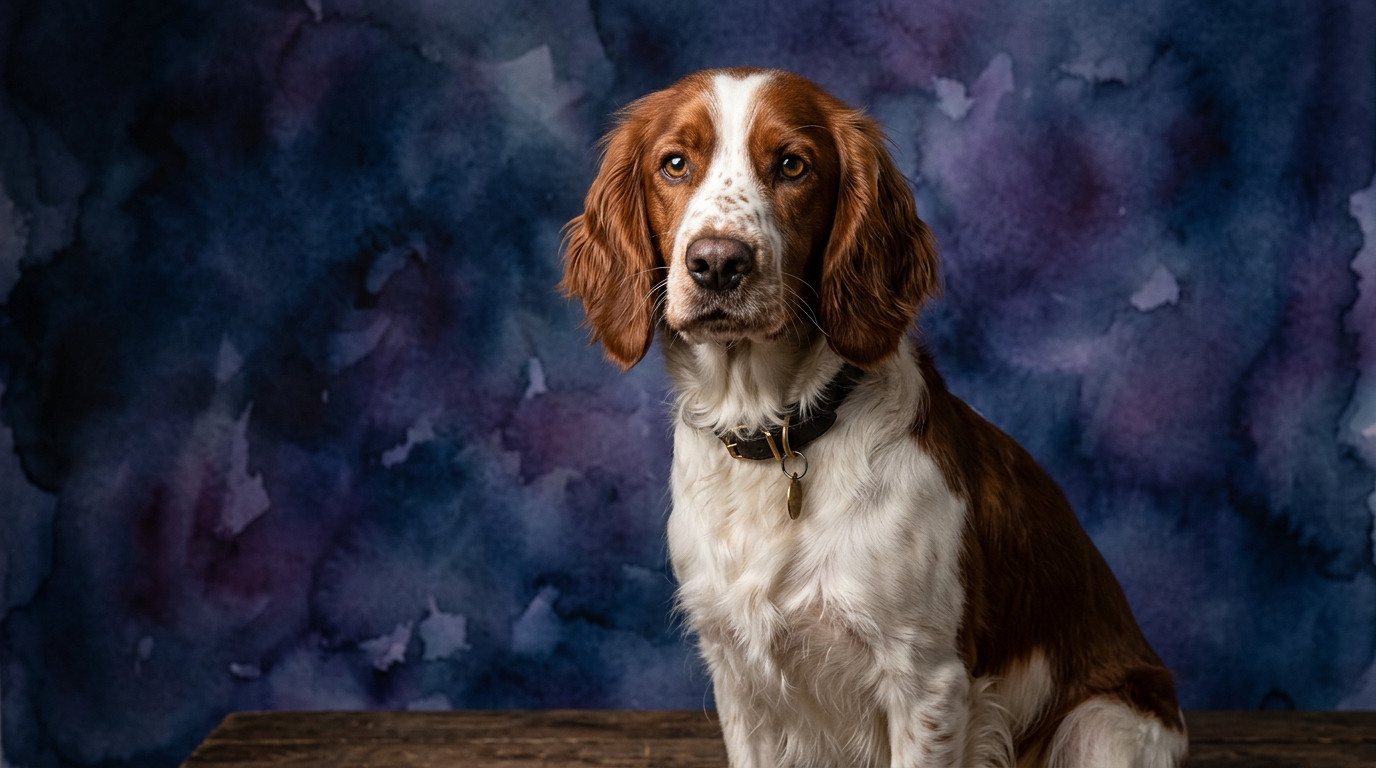
**Welsh Springer Spaniel (Coren rank #31):** This Sporting group member demonstrates a nuanced cognitive profile. Their **Problem Solving (4/5)** indicates a keen ability to navigate novel situations and devise effective solutions, whether deciphering a puzzle or adapting to new training challenges. **Training Speed (4/5)** is impressive, as they absorb new commands and routines with notable alacrity, often requiring fewer repetitions. **Social Intelligence (3/5)** shows a moderate understanding of human emotional cues and family dynamics, allowing them to integrate harmoniously. Their **Instinctive Drive (3/5)** is rooted in their sporting heritage, manifesting as a purposeful desire to flush game and retrieve, rather than an overwhelming urge. Finally, their **Memory (4/5)** is robust, enabling them to recall learned information and experiences reliably over time.
**Rhodesian Ridgeback (Coren rank #52):** Hailing from the Hound group, the Rhodesian Ridgeback presents a distinct cognitive approach. Their **Problem Solving (3/5)** is characterized by a more deliberate, sometimes independent, mindset, often relying on persistence or established patterns rather than quick-witted solutions. **Training Speed (3/5)** suggests they learn steadily but may require more consistent reinforcement and patience, processing commands at their own pace. Their **Social Intelligence (3/5)** is on par with the Welsh Springer, capable of reading their owner's intentions and environmental cues with quiet dignity. The Ridgeback's **Instinctive Drive (3/5)** is powerful, stemming from their historical role in hunting and guarding, manifesting as a strong prey drive and protective instinct. Their **Memory (3/5)** is functional for commands and routines, though it may not be as sharp or long-lasting as the Welsh Springer's without consistent practice.
Where Welsh Springer Spaniel wins cognitively
The Welsh Springer Spaniel distinctly outpaces the Rhodesian Ridgeback in several cognitive domains, particularly in `Problem Solving` (4/5 vs. 3/5) and `Training Speed` (4/5 vs. 3/5). This means a Welsh Springer is generally quicker to grasp complex tasks, such as navigating a multi-step obstacle course or understanding the nuances of a new trick. Their cognitive flexibility allows them to adapt rapidly when initial attempts at a solution fail, often trying different approaches until success is achieved, demonstrating a more agile mental processing.
Furthermore, their `Memory` ranking (4/5 vs. 3/5) indicates a superior ability to retain learned information and past experiences. This translates into more consistent command execution over time, even after periods without practice, and a stronger recall of routines. For an owner, this means less frustration and more fluid progress in advanced obedience or canine sports where precise, remembered sequences are vital. The Welsh Springer's efficient mental storage and retrieval make them adept at tasks requiring sequential learning and enduring recall.
Where Rhodesian Ridgeback wins cognitively
While the Rhodesian Ridgeback's scores might not outpace the Welsh Springer in direct cognitive speed or immediate recall, their unique blend of `Instinctive Drive` (3/5) and `Social Intelligence` (3/5), combined with their physical prowess, gives them a distinct advantage in specific real-world scenarios. Their problem-solving, though rated 3/5, is often characterized by a determined, independent persistence, particularly when it comes to tasks involving tracking or protecting their territory. They excel in situations demanding sustained focus on a singular objective, like following a scent trail over long distances, where their innate drive provides unwavering motivation and a deep-seated purpose.
The Ridgeback's cognitive strengths are less about rapid learning of arbitrary commands and more about their profound awareness of their environment and their role within it. Their social intelligence, though rated similarly to the Welsh Springer, is often expressed through a deep, observant connection with their family, allowing them to anticipate needs or potential threats with a calm, discerning presence. This translates into an exceptional ability to assess situations for safety and act with deliberate, often protective, intent, showcasing a different kind of practical problem-solving rooted in their ancient heritage.
Which is easier to train and why
Based on their respective `Training Speed` scores (Welsh Springer Spaniel 4/5, Rhodesian Ridgeback 3/5) and Coren rankings (WSS #31, RR #52), the Welsh Springer Spaniel is generally easier to train. Welsh Springers exhibit a strong desire to please and a quick uptake of commands, meaning they often require fewer repetitions to learn a new behavior. Their focus tends to be on the handler, making them highly responsive to cues and eager for interaction during training sessions. For example, teaching a Welsh Springer to 'stay' will likely involve fewer sessions and less distraction management compared to a Ridgeback.
The Rhodesian Ridgeback, while capable of learning, possesses a more independent and sometimes discerning nature. Their problem-solving approach, which can be deliberate, means they might take longer to internalize a command, often questioning the 'why' or needing to be convinced of the task's relevance. Training a Ridgeback requires immense patience, consistency, and a strong understanding of motivation. For instance, a Ridgeback might require more persuasive techniques and higher-value rewards to consistently perform a recall, especially if their instinctive drive for tracking takes precedence over the handler's command. Their training is more about building a respectful partnership than simply issuing commands.
Which suits active owners vs relaxed owners
For active owners seeking a dynamic companion for various activities, the Welsh Springer Spaniel is an excellent match. Their `Problem Solving` (4/5) and `Memory` (4/5) make them adept at sports like agility, obedience, and field trials, where quick thinking and recall of complex sequences are essential. They thrive on structured activity that engages both their body and their mind, enjoying long hikes, retrieving games, and opportunities to utilize their scenting abilities. An owner who enjoys consistent training, outdoor adventures, and a dog that is always eager for the next challenge will find the Welsh Springer a rewarding partner.
The Rhodesian Ridgeback, while certainly capable of activity, might appeal more to owners who are active in a different, perhaps more independent, way. Their `Instinctive Drive` (3/5) for patrolling and tracking means they benefit from purposeful exercise, such as long, steady jogs, exploring vast, secure areas, or participating in scent work. They possess a calm, dignified presence indoors but require consistent, substantial outdoor engagement to prevent boredom. A relaxed owner in terms of constant interactive engagement, but one who is committed to providing significant, structured exercise and mental stimulation that respects the Ridgeback's independent nature, would find this breed a suitable companion. They are not necessarily 'relaxed' dogs, but they are less demanding of constant interactive engagement than a typical spaniel.
The Verdict
Choose a Welsh Springer Spaniel if you desire a highly trainable, responsive companion for canine sports, advanced obedience, or a family seeking an engaged, mentally agile dog that quickly grasps new concepts and remembers them reliably.
Opt for a Rhodesian Ridgeback if you appreciate a dignified, independent companion with a strong protective instinct and a deliberate approach to learning, and are prepared to provide consistent, patient training and purposeful, robust exercise.
🧠 Find Your Pet's IQ Score
Our Pet IQ Lab assessment covers 25+ tests across 5 cognitive dimensions — personalized to your breed.
Take the Full IQ Test →Frequently Asked Questions
How do the problem-solving skills of these two breeds differ in practical scenarios?
The Welsh Springer Spaniel tends to approach problems with more cognitive flexibility, quickly trying different strategies to achieve a goal, like figuring out a complex puzzle toy. The Rhodesian Ridgeback, while capable, often relies on persistence and established methods, using their physical strength or determined focus to overcome obstacles, such as patiently trying to access a hidden treat.
Is one breed more suitable for a first-time dog owner based on their cognitive traits?
The Welsh Springer Spaniel, with its higher scores in Training Speed and Memory, is generally more forgiving for a first-time owner, as they tend to pick up commands faster and retain them well. The Rhodesian Ridgeback's independent streak and deliberate learning style can be more challenging, requiring consistent, experienced handling to ensure effective communication and training.
How does their social intelligence impact their interaction with strangers or other pets?
Both breeds have a moderate social intelligence, meaning they can generally read social cues. A Welsh Springer Spaniel might be more overtly friendly or curious with strangers, quickly assessing for positive interaction. A Rhodesian Ridgeback, while capable of understanding social dynamics, tends to be more reserved and discerning with new people or animals, observing carefully before deciding to engage or remain aloof.