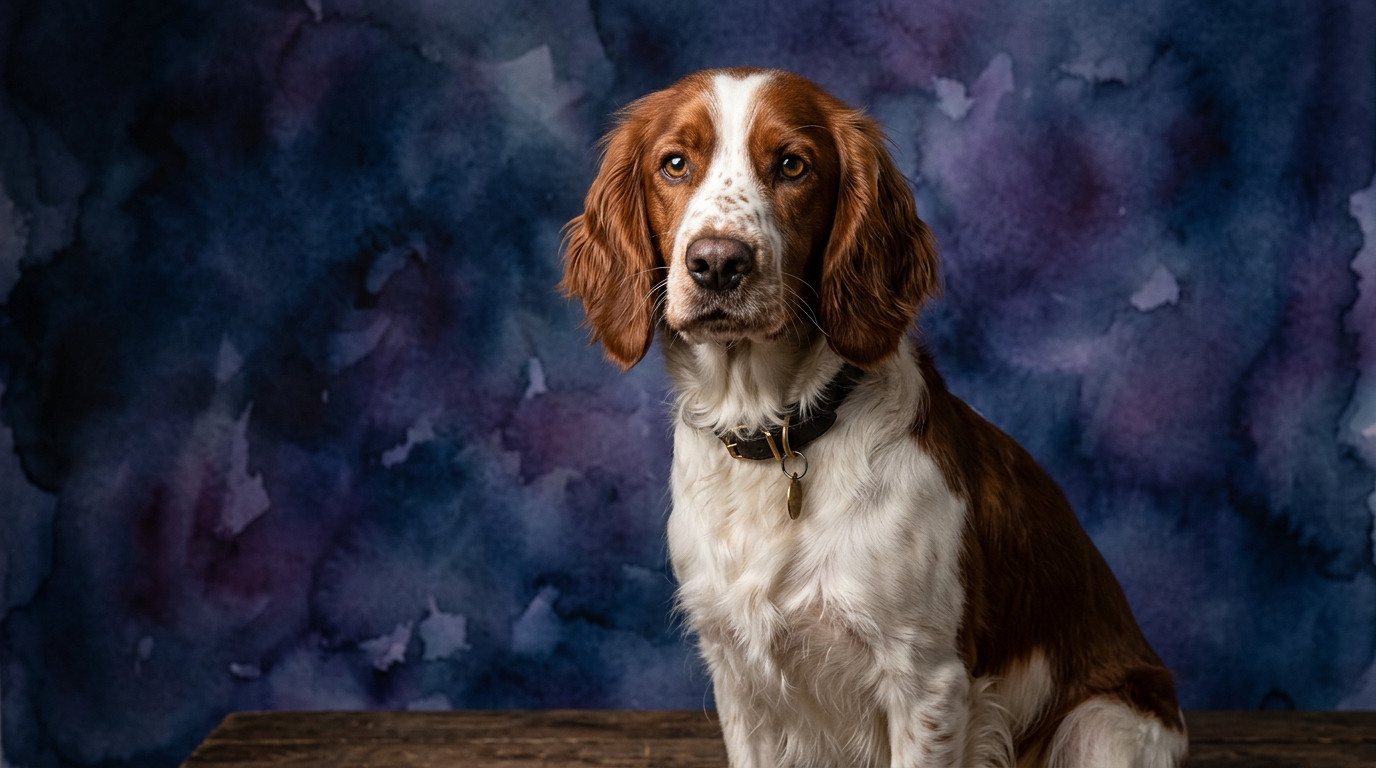

Side-by-Side IQ Profile: Welsh Springer Spaniel vs. Russian Toy
The Cosmic Pet Pet IQ Lab assesses canine cognition across five key dimensions, offering a nuanced view of each breed's mental architecture. For the Welsh Springer Spaniel, a Coren-ranked breed at #31, its scores reflect a history of active partnership and purpose. Its Problem Solving is rated 4/5, indicating a strong capacity for independent thought and figuring out complex tasks, whether it's navigating a new environment or understanding sequential commands. Training Speed also scores 4/5, meaning these dogs typically grasp new instructions and routines quickly, often requiring fewer repetitions than many other breeds. Social Intelligence stands at 3/5, suggesting a good understanding of human cues and family dynamics, though perhaps with a focus more on task execution than subtle emotional manipulation. Instinctive Drive is 3/5, manifesting as a moderate but present urge for traditional spaniel activities like flushing and retrieving, contributing to their enthusiasm for interactive play. Finally, Memory is rated 4/5, allowing them to retain learned behaviors and associations over extended periods, making their training consistent and reliable.
In contrast, the Russian Toy, a delicate Toy breed not featured in Coren's ranking, presents a different cognitive profile tailored to companionship. Its Problem Solving score is 3/5, indicating a moderate ability to tackle puzzles, often relying on learned patterns or trial-and-error rather than abstract reasoning. Training Speed also receives a 3/5, meaning they learn at a steady pace, responding well to consistent, positive reinforcement, though they may require more repetitions for mastery. Social Intelligence is 3/5, highlighting their adeptness at reading human moods and social cues within their intimate circle, often seeking comfort or attention from their favored people. Instinctive Drive is 3/5, primarily expressed as a strong desire for companionship, vigilance, and alert barking, demonstrating a protective instinct for their home and people. Memory is rated 3/5, signifying their capability to remember commands and routines, though occasional refreshers might be beneficial for less frequently practiced skills, and they clearly recall beloved individuals and familiar places.
Where the Welsh Springer Spaniel Wins Cognitively
The Welsh Springer Spaniel's cognitive strengths truly shine in scenarios demanding adaptable problem-solving and rapid learning. Their 4/5 Problem Solving score means they are adept at navigating unfamiliar environments, quickly assessing situations, and finding solutions independently, such as figuring out how to retrieve a toy from a challenging spot or adapting to new agility course layouts without extensive prior exposure. Their 4/5 Training Speed translates into a faster acquisition of complex multi-step commands, making them excellent candidates for advanced obedience, canine sports, or even service work where intricate behaviors are required. Furthermore, their 4/5 Memory ensures superior retention of diverse training sequences over time, meaning they recall intricate routines and commands with impressive consistency, even after a break from practice. This combination fosters a dog that not only learns quickly but also applies its knowledge flexibly and reliably.
Where the Russian Toy Wins Cognitively
While not built for complex field work, the Russian Toy's cognitive advantages are deeply rooted in its role as a devoted companion. Their 3/5 Social Intelligence, while matching the Welsh Springer Spaniel numerically, often manifests as an acute sensitivity to their owner's emotional state, fostering profoundly deep and responsive bonds. They are often excellent at communicating their own needs or discomfort through subtle cues, making them highly attuned partners in a household. Their 3/5 Instinctive Drive, geared towards vigilance, means they possess excellent auditory discernment, often alerting to unusual sounds or visitors long before larger breeds might react, acting as diligent little guardians of the home. This blend of social acumen and protective instinct allows them to excel in providing comfort and acting as a sensitive, observant presence within the family unit, quickly assessing new people or situations within their secure environment.
Which is Easier to Train and Why
When considering ease of training, the Welsh Springer Spaniel generally holds an advantage. Their 4/5 Training Speed means they pick up new commands and concepts with remarkable efficiency, often needing fewer repetitions to achieve mastery. Coupled with their 4/5 Problem Solving, they tend to understand the *intent* behind a task, not just the mechanical steps, allowing them to generalize learned behaviors to new situations. Their moderate 3/5 Instinctive Drive provides ample motivation for engagement and work without being overwhelmingly distracting, making them focused and enthusiastic learners who thrive on varied, stimulating training sessions.
The Russian Toy, while certainly trainable, may require a more patient and nuanced approach. Their 3/5 Training Speed and Problem Solving scores indicate that they will learn, but might need more repetitions and a slower, more deliberate pace with simpler steps. Their Instinctive Drive, while present, isn't typically geared towards complex obedience tasks, meaning motivation for advanced skills might need to be carefully cultivated through high-value rewards and making training feel like a fun game. They excel with positive reinforcement, short, engaging sessions, and a focus on foundational commands and good manners, becoming reliable companions under consistent, gentle guidance.
Which Suits Active Owners vs. Relaxed Owners
For active owners, the Welsh Springer Spaniel is an ideal match. Their Sporting group heritage, combined with their cognitive profile, demands substantial physical and mental engagement. They thrive on regular, vigorous activity such as running, hiking, swimming, or long sessions of retrieving and scent work. Their cognitive scores, particularly in problem-solving and memory, mean they also require consistent mental stimulation through advanced training, puzzle toys, and new challenges to prevent boredom. An owner who enjoys an outdoor lifestyle and is committed to structured, engaging training will find the Welsh Springer Spaniel a fulfilling and capable partner.
Conversely, the Russian Toy is better suited for relaxed owners who prioritize companionship and indoor activities. While they possess bursts of energy, their needs are generally met with indoor play, short daily walks, and ample lap time. Their cognitive strengths lean towards social interaction and observation rather than strenuous physical or complex mental tasks. A relaxed owner who values a sensitive, observant companion, enjoys consistent affection, and is content with teaching basic manners in a calm, predictable environment will find the Russian Toy to be a perfect, devoted companion. They flourish when their social needs are met and their routines are consistent.
The Verdict
Choose the Welsh Springer Spaniel if you desire a robust, mentally agile companion eager for outdoor adventures and advanced training challenges, capable of independent thought and consistent performance.
Opt for the Russian Toy if you seek a sensitive, observant companion whose cognitive strengths shine in close social bonds and home vigilance, thriving on consistent affection and gentle guidance in a calmer setting.
🧠 Find Your Pet's IQ Score
Our Pet IQ Lab assessment covers 25+ tests across 5 cognitive dimensions — personalized to your breed.
Take the Full IQ Test →Frequently Asked Questions
Does the Coren ranking difference imply a vast intelligence gap?
Not necessarily a 'vast' gap, but it indicates the Welsh Springer Spaniel's greater aptitude for understanding and obeying new commands, reflecting its higher Training Speed score. The Russian Toy's lack of a Coren rank doesn't mean it's untrainable, but rather that its primary cognitive strengths might not align with the specific obedience-focused criteria of that ranking system, focusing more on social acumen.
Can a Russian Toy excel in dog sports like agility?
While not a traditional agility competitor like a Welsh Springer Spaniel, a Russian Toy can certainly participate and enjoy dog sports, especially if the focus is on fun and bonding. Their problem-solving and training speed scores suggest they can learn routines, but they might require more patience and tailored motivation than breeds with higher scores in these areas, excelling in sports like rally obedience or smaller-scale agility courses designed for their size.
How does 'instinctive drive' manifest differently in these two breeds?
For the Welsh Springer Spaniel, instinctive drive translates into a desire to hunt, retrieve, and explore its environment, making them persistent in scent work or fetching games. For the Russian Toy, it manifests as a strong companion drive, vigilance, and sometimes a tendency to alert bark, rooted in their historical role as loyal, protective companions for their human families, prioritizing social security over physical tasks.