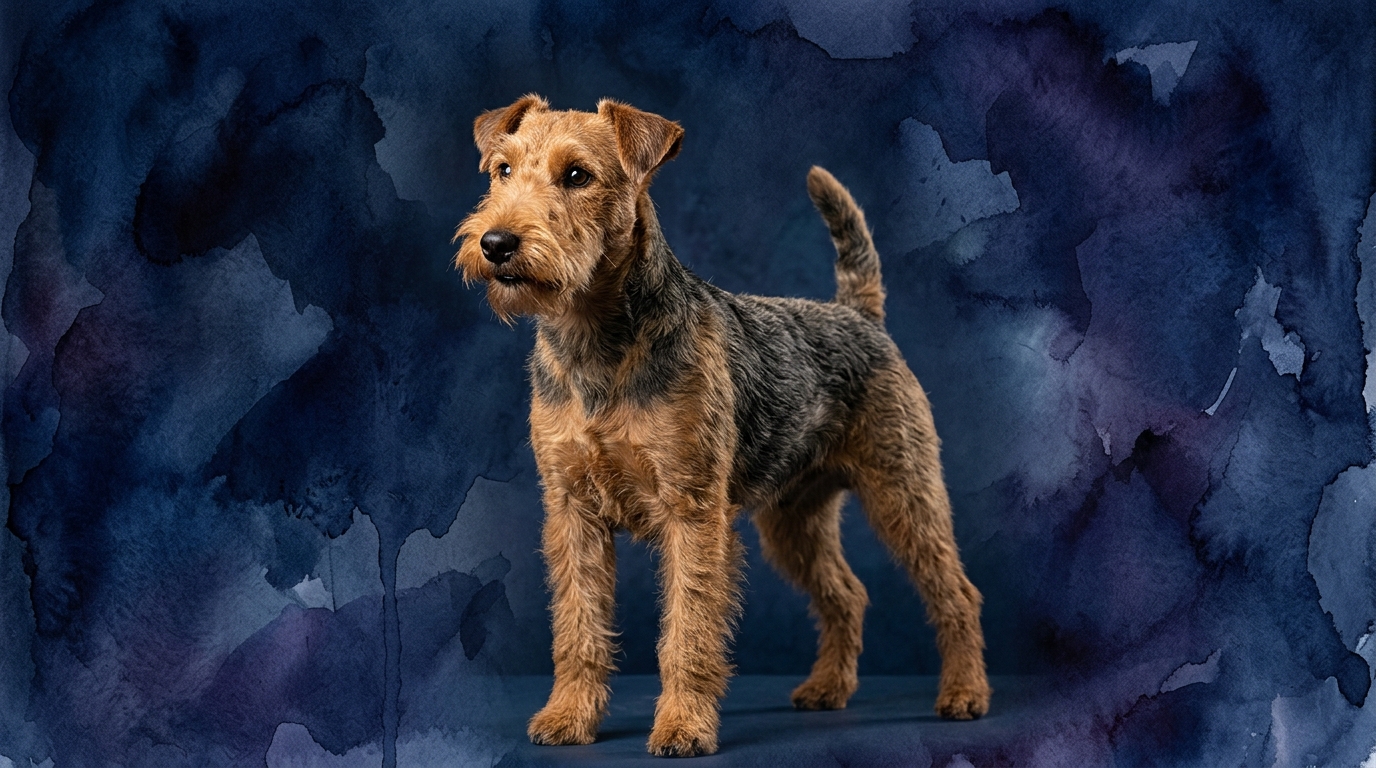
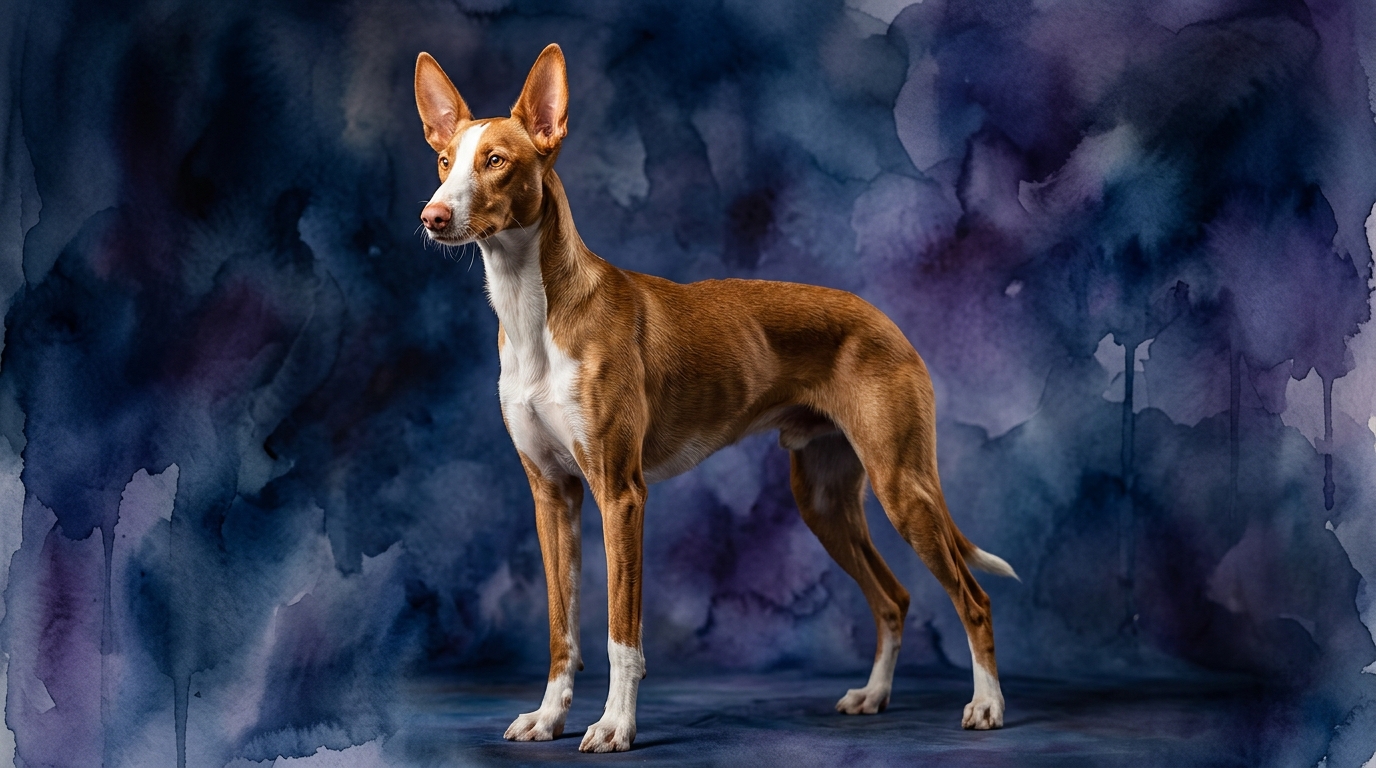
Side-by-Side Cognitive Profiles
The Cosmic Pet Pet IQ Lab assesses canine intelligence across five critical dimensions, providing a granular view of a breed's cognitive strengths. Interestingly, both the Welsh Terrier and the Ibizan Hound register a consistent 3/5 across all five categories, suggesting a balanced, functional intelligence rather than extreme specialization in any single area. However, the *application* of these scores varies dramatically between these two distinct breeds.
For the **Welsh Terrier**, a score of 3/5 in Problem Solving reflects a breed adept at practical, often physical, challenges. Their terrier heritage means they excel at tasks requiring persistence, digging, and navigating confined spaces to achieve a goal, such as flushing out prey. Training Speed at 3/5 indicates they are capable learners, quick to grasp commands, but their independent streak means motivation and consistency are key. Social Intelligence at 3/5 points to an awareness of human moods and household dynamics, though they might prioritize their own agenda over constant human appeasement. Their Instinctive Drive, also 3/5, is strongly rooted in their prey drive and territoriality, manifesting as vigilance and a desire to 'work.' Memory at 3/5 suggests they recall routines, learned behaviors, and past successes or failures in their pursuits, making them creatures of habit to some extent.
The **Ibizan Hound**, despite the identical numerical scores, demonstrates these traits through a different lens. Their 3/5 in Problem Solving often manifests in their sighthound hunting strategies: assessing vast landscapes, identifying movement, and devising a pursuit path. This is less about intricate puzzles and more about swift, on-the-fly decision-making in open environments. Training Speed at 3/5 means they learn efficiently, but their independent nature and strong prey drive can make them seem distractible; they learn *what* you want but might choose *not* to comply if a more interesting stimulus (like a squirrel) presents itself. Social Intelligence at 3/5 suggests a sensitive, often reserved nature, keenly observing their human companions and displaying affection on their own terms, rather than constantly seeking interaction. Their Instinctive Drive, also 3/5, is overwhelmingly focused on visual hunting and pursuit, a deep-seated urge that defines much of their behavior. Memory at 3/5 indicates they retain knowledge of familiar territories, hunting patterns, and the location of past 'prey,' demonstrating a strong spatial and visual memory.
Where the Welsh Terrier Excels Cognitively
While both breeds share balanced IQ scores, the Welsh Terrier's cognitive strengths often lie in its tenacious application of its abilities within structured or confined environments. Their 3/5 Problem Solving score shines brightest when faced with tasks requiring focused, persistent effort, such as figuring out how to retrieve a toy from under furniture or meticulously digging under a fence. This isn't about abstract thought, but rather an unwavering determination to overcome physical obstacles, a trait deeply ingrained from their working terrier lineage. They possess a robust memory for specific tasks and routines, allowing them to excel in repetitive training exercises once they understand the reward structure.
Furthermore, their social intelligence, while not overly effusive, allows them to keenly observe and respond to their immediate family unit's dynamics. A Welsh Terrier might not be the first to greet a stranger, but they demonstrate a shrewd understanding of their owner's emotional states and household rules, often using this insight to their advantage, perhaps by subtly nudging for attention or anticipating a walk. Their instinctive drive, channeled appropriately, translates into a tireless enthusiasm for engaging activities, making them highly responsive to tasks that simulate their natural working instincts, such as agility or earthdog trials.
Where the Ibizan Hound Excels Cognitively
The Ibizan Hound's cognitive prowess is best observed in open, dynamic settings, a testament to their heritage as sighthounds. Their 3/5 Problem Solving capability manifests as exceptional visual acuity and rapid decision-making in pursuit. This breed can process visual information at high speeds, identifying subtle movements at vast distances and instantaneously calculating the most efficient path for a chase, often exhibiting a grace and precision that belies their speed. This spatial and visual problem-solving is a distinct cognitive advantage over breeds more focused on close-range physical manipulation.
Their social intelligence, while sometimes perceived as aloof, is characterized by a refined sensitivity and an ability to form deep, quiet bonds. An Ibizan Hound's memory for specific landscapes, scents, and the location of past 'prey' (even a thrown toy) is remarkable, indicating a sophisticated spatial mapping ability. This breed's instinctive drive is a finely tuned instrument for the hunt; it's not just about chasing, but about a holistic sensory engagement with their environment, making them incredibly aware of their surroundings and any potential stimulus. Their mental agility in processing environmental data, especially visual cues, is a hallmark of their unique cognitive profile.
Which is Easier to Train and Why
Despite both breeds scoring 3/5 in Training Speed, the practical experience of training a Welsh Terrier versus an Ibizan Hound can differ significantly due to their underlying behavioral motivations. A Welsh Terrier, while possessing a terrier's characteristic independence and occasional stubbornness, often has a strong desire for engagement with their human handler. They learn quickly when tasks are presented as engaging challenges and when positive reinforcement is consistent. Their inherent drive to 'work' and their territorial instincts can be channeled into focused training, making them responsive to clear boundaries and structured routines, even if they'll test those boundaries occasionally. The key is making training feel like a collaborative mission.
The Ibizan Hound, conversely, learns commands quickly but their compliance often hinges on whether the task aligns with their independent nature or is overshadowed by their powerful prey drive. Their Coren ranking of #53, placing them in the 'Average Working/Obedience Intelligence' category, reflects that while they are capable of understanding, their primary motivation is often self-directed. Training an Ibizan requires immense patience, positive reinforcement, and an understanding that their sighthound instincts will always be a powerful force. They might learn a 'recall' command rapidly in a controlled environment, but the sight of a rabbit in an open field could easily override any learned behavior, demonstrating that their training speed is high, but their *reliability* in high-distraction scenarios can be lower due to their instinctive drives. Their independent nature means they aren't driven to constantly please, but rather to assess if the task is worthwhile for them.
Which Suits Active Owners vs. Relaxed Owners
Neither the Welsh Terrier nor the Ibizan Hound are suitable for truly relaxed, sedentary owners; both breeds demand a significant commitment to physical and mental activity. The Welsh Terrier thrives with owners who enjoy structured play, consistent training, and activities that engage their working instincts. They require daily vigorous exercise, such as long walks, energetic fetch sessions, or participation in dog sports like agility. Their mental stimulation needs are equally high; they enjoy puzzle toys, scent work, and learning new tricks. An owner who appreciates a dog with a spirited, engaged personality and is prepared to provide consistent, interactive engagement will find a Welsh Terrier rewarding. They are not content to be couch potatoes and will invent their own (potentially destructive) entertainment if undersimulated.
The Ibizan Hound, while often calm and graceful indoors, possesses an extraordinary need for off-leash running in a safe, securely fenced area. Their sighthound heritage means they require opportunities to gallop at full speed, making them ideal companions for owners who enjoy lure coursing, long hikes in expansive, secure spaces, or have access to large, private property. Their mental stimulation often comes from visual tracking and observing their environment. While they can be quiet and elegant housemates, their exercise requirements are non-negotiable for their well-being. Owners who enjoy a dog that can transition from an athletic outdoor companion to a serene indoor presence, but understand the profound need for high-intensity bursts of exercise, will find the Ibizan Hound a wonderful fit.
The Verdict
Choose the Welsh Terrier if you appreciate a spirited, tenacious companion eager for interactive problem-solving and structured engagement, and are prepared for consistent training to channel their working drives. They thrive with owners who enjoy active, mentally stimulating routines within a family setting.
Opt for the Ibizan Hound if you have access to vast, secure spaces for them to run freely and admire a dog with elegant athleticism, keen visual intelligence, and an independent yet sensitive nature. They suit owners who value quiet companionship indoors balanced with intense, open-field exercise.
🧠 Find Your Pet's IQ Score
Our Pet IQ Lab assessment covers 25+ tests across 5 cognitive dimensions — personalized to your breed.
Take the Full IQ Test →Frequently Asked Questions
Do Welsh Terriers and Ibizan Hounds have similar intelligence levels?
According to The Cosmic Pet Pet IQ Lab, both breeds score identically across all five cognitive dimensions (3/5), indicating a balanced intelligence. However, the *expression* and *application* of these intelligence types vary significantly due to their distinct breed histories and inherent drives.
Which breed is better for first-time dog owners?
Neither breed is typically recommended for novice owners without significant preparation, as both require consistent training, ample exercise, and an understanding of their specific breed traits. The Welsh Terrier's stubbornness and the Ibizan Hound's independent sighthound nature can be challenging for those unfamiliar with dog ownership.
Are Welsh Terriers or Ibizan Hounds more prone to separation anxiety?
Both breeds, when undersocialized or lacking sufficient mental and physical stimulation, can develop separation-related stress. Welsh Terriers, being more family-oriented, might express this as destructive chewing or barking, while Ibizan Hounds, though independent, can become anxious if their exercise needs are not met, potentially leading to escape attempts or general restlessness.