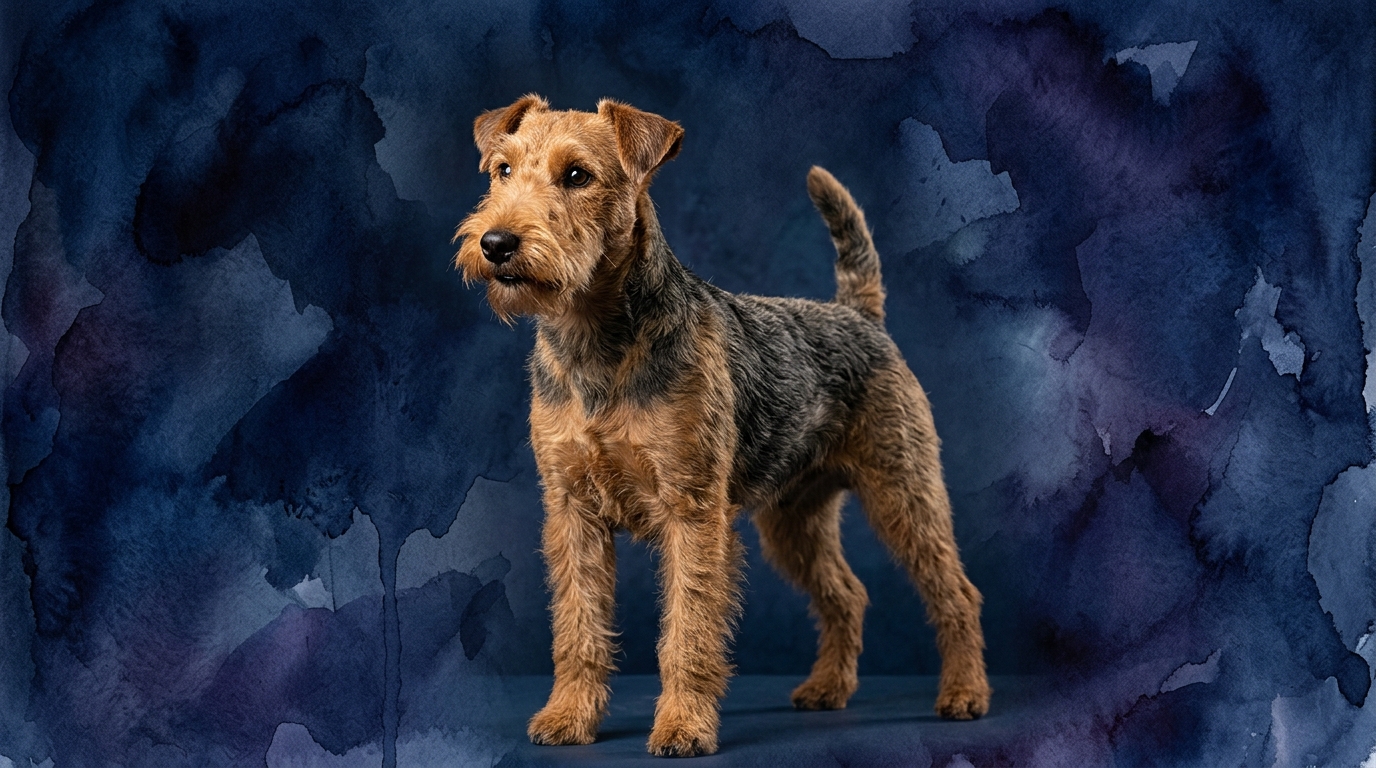

Side-by-Side IQ Profile: Welsh Terrier vs. Redbone Coonhound
The Welsh Terrier, a spirited member of the Terrier group, brings a distinct set of cognitive strengths to the table. In problem Solving (3/5), they exhibit an independent, tenacious approach, often figuring out how to outwit small quarry or navigate complex environments with a singular focus. Their training Speed (3/5) is respectable, capable of learning commands efficiently, though their inherent willfulness can present challenges in consistent execution. Social Intelligence (3/5) sees them form strong bonds with their primary human companions, but they can be assertive and discerning in their interactions with unfamiliar dogs or people. Instinctive Drive (3/5) is pronounced, manifesting as a potent prey drive, a desire to dig, and a tendency to vocalize when aroused or bored. Their memory (3/5) is robust, allowing them to recall routines, learned behaviors, and past experiences with remarkable clarity, particularly those tied to their hunting instincts.
The Redbone Coonhound, a quintessential member of the Hound group, demonstrates a different flavor of intelligence, deeply rooted in their tracking heritage. Their problem Solving (3/5) is exemplified by their ability to unravel intricate scent puzzles, navigating diverse terrains and overcoming obstacles with unwavering focus to locate their quarry. Regarding training Speed (3/5), Redbones are certainly capable learners, but their powerful olfactory focus means that environmental distractions, especially compelling scents, can significantly impact their responsiveness. Social Intelligence (3/5) is often expressed as a desire to be part of a “pack,” showing amiability towards people and generally getting along well with other dogs, though their boisterous nature requires management. Their Instinctive Drive (3/5) is overwhelmingly dominated by their scenting ability and the urge to track and bay, a drive that can be all-consuming. Memory (3/5) in a Redbone is particularly strong for scent patterns, geographical routes, and the learned cues associated with the hunt, allowing them to build complex mental maps of their environment.
Where the Welsh Terrier Excels Cognitively
The Welsh Terrier's cognitive strengths truly shine in scenarios demanding independent thought and swift, decisive action. Their problem-solving acumen, rated at 3/5, often manifests as a quick, tactical response to immediate challenges, such as flushing out a hidden rodent or finding a way through a tight space. This breed excels at focused, short-burst cognitive tasks where persistence against a single objective is paramount, rather than long, meandering pursuits. Their terrier drive gives them a certain mental fortitude to concentrate intensely on a specific target, often showing impressive mental resilience in overcoming minor setbacks without handler intervention. Furthermore, their adaptability to various living situations, beyond their original working context, suggests a mental flexibility in adjusting their cognitive strategies to new environments and expectations more readily than some specialized scent hounds. They are adept at learning and applying different rules for different contexts, demonstrating a versatile intellectual nimbleness.
Where the Redbone Coonhound Holds a Cognitive Edge
In contrast, the Redbone Coonhound's cognitive superiority becomes evident in situations demanding sustained mental effort, intricate sensory processing, and collaborative intelligence. Their 3/5 problem-solving capability is less about quick, independent decisions and more about the methodical, persistent unraveling of complex, long-term challenges, such as following a faint, hours-old scent trail across miles of varied terrain. This requires an exceptional degree of focus and determination, coupled with a sophisticated ability to interpret environmental cues. Their strong pack orientation influences their social intelligence, making them particularly adept at understanding and responding to the subtle signals within a group, whether human or canine, during a hunt. Redbones also demonstrate remarkable spatial memory, not just for specific locations but for the intricate, invisible pathways of scent, allowing them to retrace steps or anticipate routes with incredible accuracy. Their mental endurance for a singular, overarching task—tracking—is arguably unmatched, showcasing a unique form of cognitive stamina.
Training Dynamics: Which Breed is Easier to Shape?
Assessing which breed is “easier” to train, given both have a 3/5 training speed, requires a nuanced understanding of their behavioral drivers. The Welsh Terrier, while capable of learning commands quickly, often presents a challenge due to their inherent independence and strong will. Their terrier nature means they might evaluate a command and decide whether it aligns with their immediate desires, leading to moments where compliance is optional rather than automatic. This necessitates highly engaging, consistent training with positive reinforcement to build a strong desire to cooperate, overcoming their instinct to make their own decisions. Their strong prey drive also means that a squirrel or a rustle in the bushes can easily override a learned command, demanding rigorous proofing in distracting environments.
The Redbone Coonhound, on the other hand, is generally eager to please their human “pack leader,” which can be a significant advantage. However, their overwhelmingly powerful instinctive drive for scent work introduces a different set of training complexities. While they can learn commands, the moment a compelling scent hits their nose, their brain often switches into “tracking mode,” making recall or attention to handler commands incredibly difficult to achieve. Their training requires immense patience, understanding of their natural instincts, and often specialized techniques to manage their scent drive. Leash manners can be a struggle as their nose leads the way, and off-leash reliability is a lifelong project. While they may be more inclined to cooperate in a low-distraction environment, their cognitive focus shifts dramatically when their primary instinct is engaged. Therefore, neither is “easy” in a conventional sense; both demand a dedicated, informed approach tailored to their specific cognitive predispositions.
Matching Breeds to Lifestyles: Active vs. Relaxed Owners
Neither the Welsh Terrier nor the Redbone Coonhound are suitable companions for relaxed or sedentary owners; both breeds demand a significant commitment to physical and mental activity. The Welsh Terrier thrives with active owners who can provide consistent, structured exercise and engaging mental challenges. They need daily vigorous walks, opportunities for off-leash running in secure areas, and interactive games that tap into their problem-solving and prey drive, such as fetch or puzzle toys. Owners who enjoy agility, obedience, or earthdog trials will find a willing and capable partner. A Welsh Terrier left to its own devices without sufficient stimulation can become destructive or excessively vocal, channeling its ample energy and cognitive capacity into undesirable behaviors.
The Redbone Coonhound, however, demands an even greater level of activity, making them ideal for truly dedicated outdoor enthusiasts. Their immense stamina and profound need to follow scents mean they require vast amounts of exercise, ideally involving long hikes, runs, or supervised opportunities to explore and track in safe, expansive environments. For a Redbone, physical exercise is inextricably linked with mental stimulation; their minds are most engaged when their noses are working. Relaxed owners will quickly find themselves overwhelmed by a Redbone's boundless energy, potential for vocalization (baying), and unwavering focus on scent, which can lead to frustrating escapades if not managed with consistent training and appropriate outlets. They are not dogs that are content with a short walk around the block; they need a lifestyle that aligns with their historical purpose.
The Verdict
When seeking a companion, choose the Welsh Terrier if you are an owner who appreciates a spirited, independent dog thriving on structured activities and mental challenges, and you are prepared to engage with a strong personality that requires consistent, positive guidance.
Choose the Redbone Coonhound if you are a dedicated outdoor enthusiast who can provide extensive opportunities for a dog to engage its powerful scenting abilities through long excursions and tracking work, valuing a loyal, resilient companion with immense stamina and a distinct vocal presence.
🧠 Find Your Pet's IQ Score
Our Pet IQ Lab assessment covers 25+ tests across 5 cognitive dimensions — personalized to your breed.
Take the Full IQ Test →Frequently Asked Questions
Are Welsh Terriers good family dogs?
Yes, Welsh Terriers can be affectionate and playful companions within a family setting, but their terrier tenacity means they benefit greatly from early socialization and consistent training to ensure they interact appropriately with children and other pets, and understand household rules.
Do Redbone Coonhounds bark a lot?
Redbone Coonhounds are known for their distinctive “baying” vocalization, which is a key part of their tracking heritage. While not constant, they will vocalize frequently when on a scent trail, excited, or under-exercised, making their sound a significant consideration for potential owners, especially in quieter environments.
What kind of mental stimulation do these breeds need?
Both breeds require substantial mental engagement to thrive. Welsh Terriers benefit from puzzle toys, agility, and obedience training, while Redbone Coonhounds are best stimulated by scent work, long exploratory hikes, and activities that allow them to fully utilize their powerful natural tracking instincts.