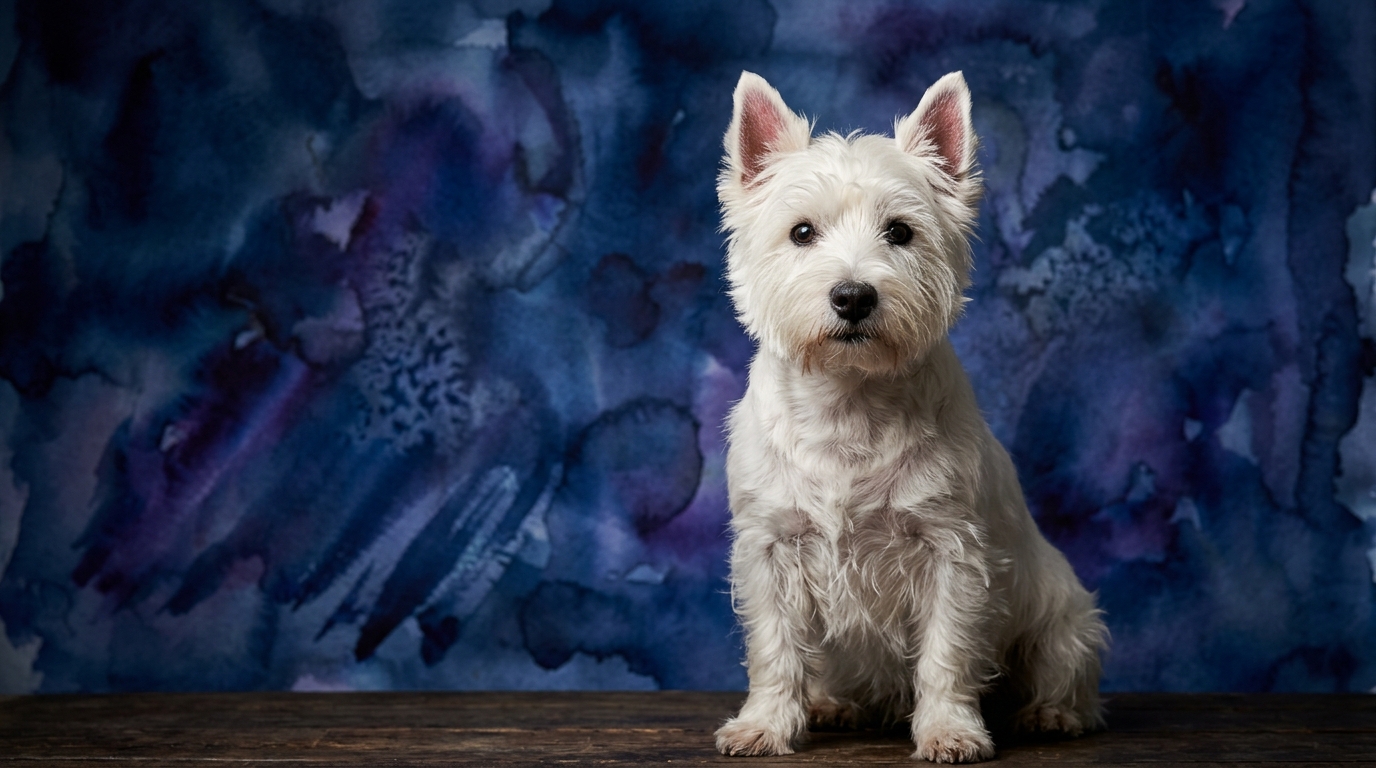
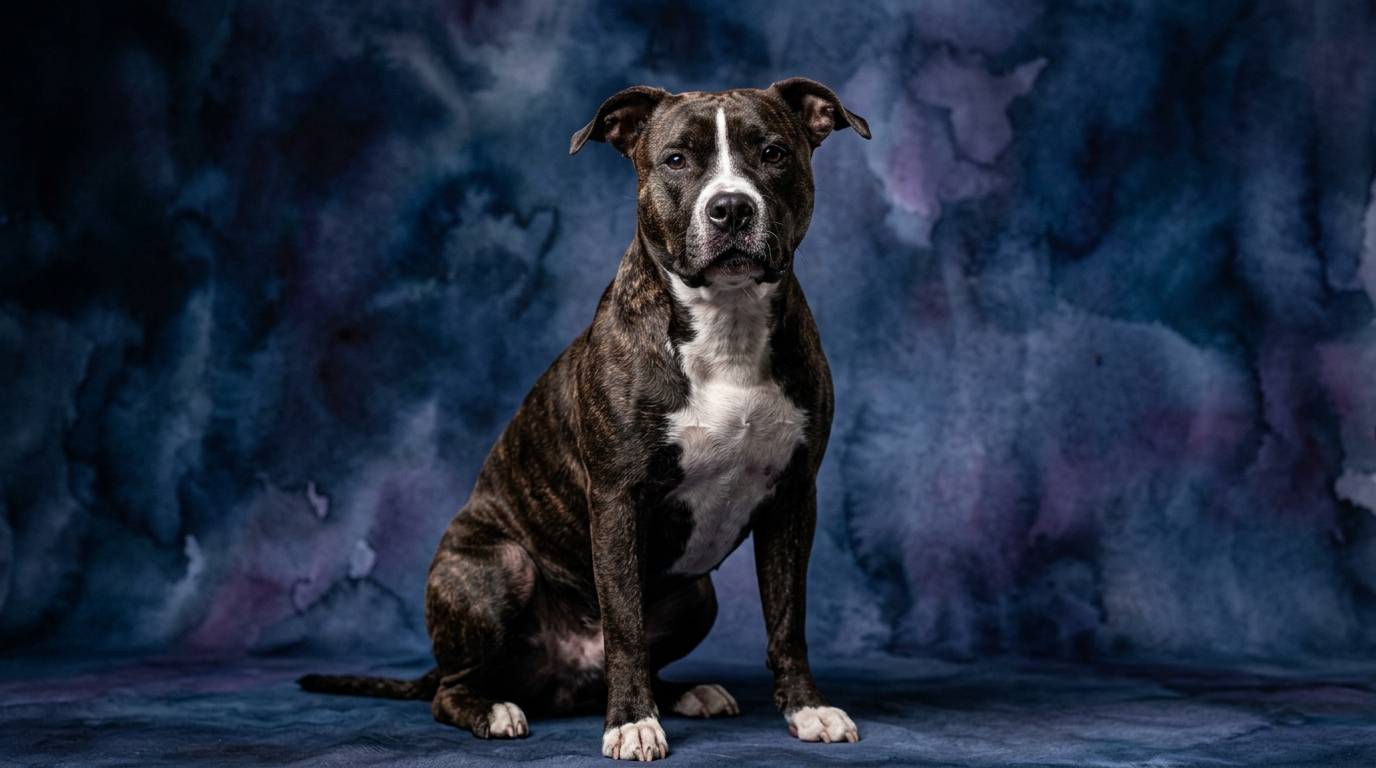
Side-by-Side Cognitive Profiles: Westie vs. AmStaff
At The Cosmic Pet Pet IQ Lab, we assess canine cognition across five key dimensions. While both the West Highland White Terrier (Westie) and the American Staffordshire Terrier (AmStaff) surprisingly achieve identical scores in each category, understanding their breed-specific manifestations is crucial.
The Westie, ranked #47 by Coren, demonstrates Problem Solving at 3/5, adept at navigating complex environments to achieve goals, often involving strategic thinking to outwit perceived small prey or discover hidden objects. Their persistence particularly shines when a puzzle involves digging or exploring tight spaces, rooted in their vermin-hunting heritage. Training Speed is 3/5; they learn commands at a moderate pace, but their independent terrier spirit can sometimes lead to selective hearing, requiring consistent and engaging positive reinforcement. Their Social Intelligence, rated 3/5, means they are observant of human emotions and household dynamics, forming strong bonds with primary caregivers, yet their self-assured nature might not always prioritize human directives. Instinctive Drive, also 3/5, manifests strongly as a drive to chase, dig, and explore, a powerful motivator in play and training that requires careful management. Finally, their Memory at 4/5 indicates excellent recall for routines, learned commands, and locations of favored toys or interesting smells, seldom forgetting experiences that influence future interactions.
The American Staffordshire Terrier, ranked #48 by Coren, matches the Westie with a Problem Solving score of 3/5, showcasing resourcefulness in overcoming physical challenges, whether figuring out how to open a gate or navigating an agility course. Their solutions often involve determined effort and a direct approach rather than subtle manipulation. Training Speed is 3/5; they learn new tasks and commands with a moderate pace and a strong desire to please their handler, especially when motivated by praise and rewards, with their physical strength and focus aiding quick learning for practical commands. Their Social Intelligence, also 3/5, signifies high attunement to their family's emotional states and social cues, excelling at forming deep, loyal connections and often discerning intentions, making them sensitive companions. Instinctive Drive, 3/5, is characterized by a strong drive for physical activity, engagement, and a protective instinct towards their family, translating into tenacious play and a desire to 'work' alongside their owner. Their Memory at 4/5 exhibits a robust retention for people, places, and learned behaviors, retaining training well over time and remembering past social interactions, which is crucial for building trust and managing their powerful physique responsibly.
Where the Westie's Cognition Shines Brightest
While their IQ scores are numerically identical, the West Highland White Terrier's cognitive strengths often manifest uniquely within their small, tenacious package. Their problem-solving, rated 3/5, frequently shines in scenarios demanding independent thought and a persistent, often crafty, approach to overcoming obstacles. A Westie might spend considerable time strategizing how to reach a perceived 'intruder' (like a squirrel or a leaf blowing past the window) or how to unearth a buried treasure in the garden.
This isn't just brute force; it's a calculated effort rooted in their historical role as vermin hunters, where quick, decisive, and often solitary mental processing was paramount. Their memory (4/5) is particularly sharp for spatial awareness and the location of interesting scents or objects, making them exceptionally good at remembering where they 'hid' something or the precise spot a squirrel disappeared. This combination of independent problem-solving and strong spatial memory allows them to excel in self-directed exploratory tasks, often requiring minimal human intervention once a goal is identified.
Where the AmStaff's Cognition Takes the Lead
The American Staffordshire Terrier, despite mirroring the Westie's scores, demonstrates cognitive advantages that align with their robust physique and companion-oriented nature. Their problem-solving, also a 3/5, often revolves around tasks requiring both mental and physical application. An AmStaff might excel at figuring out complex puzzle toys that demand manipulation and strength, or devising ways to retrieve a ball from a tricky spot, showcasing a determined focus on the task at hand.
Their social intelligence (3/5) is particularly pronounced in their ability to read and respond to their human family's emotions, often acting as sensitive barometers of household mood. This social attunement contributes to their strong desire to please, which, while not directly a 'win' in a competitive sense, makes their application of memory (4/5) and training speed (3/5) highly effective in collaborative tasks. They remember commands and routines with remarkable accuracy and enthusiasm, especially when those tasks are tied to interaction and partnership with their cherished owners. Their cognitive strength lies in their capacity for focused, physically integrated problem-solving and their deep emotional intelligence within their social circle.
Navigating Training: Which is Easier and Why?
When considering ease of training, both the West Highland White Terrier and the American Staffordshire Terrier present unique challenges and rewards, despite their identical 3/5 training speed rating. The Westie's training journey is often characterized by their independent spirit and strong instinctive drives. While they learn commands at a moderate pace, their primary motivation is often their own agenda – chasing a scent, digging a hole, or exploring a new territory.
This means a trainer must be exceptionally engaging and consistent, using positive reinforcement to make desired behaviors more appealing than their innate terrier pursuits. Distraction management is crucial, as their keen senses and curiosity can easily divert their attention. Training a Westie requires patience, humor, and a deep understanding of their tenacious nature.
In contrast, the AmStaff's training, while also rated 3/5 for speed, benefits significantly from their strong desire to please their human family and their capacity for focused engagement. They often respond well to consistent, reward-based training that emphasizes partnership and clear communication. Their physical strength and tenacity mean that early and consistent socialization, coupled with firm but fair boundaries, are essential to channel their drives constructively. While they may be less prone to independent 'terrier antics' than a Westie, their powerful physique demands that training instills impeccable manners and impulse control. Therefore, while both learn at a similar pace, an AmStaff might appear 'easier' in structured obedience due to their willingness to collaborate, whereas a Westie requires more ingenuity from the handler to overcome their independent streak.
Matching Lifestyle: Active vs. Relaxed Owners
The choice between a West Highland White Terrier and an American Staffordshire Terrier also hinges significantly on an owner's lifestyle, particularly regarding activity levels. The Westie, despite its smaller stature, is far from a sedentary lap dog. Their instinctive drive (3/5) for exploration, digging, and chasing means they require consistent mental and physical engagement. An active owner who enjoys daily walks, interactive play, and perhaps even earth dog trials or agility will find a Westie a delightful companion.
They thrive on having a 'job' to do, even if it's just patrolling the garden for imaginary foes. A relaxed owner who prefers minimal outdoor activity might find a Westie's persistent energy and need for stimulation challenging, potentially leading to unwanted behaviors like excessive barking or digging out of boredom.
Conversely, the American Staffordshire Terrier, with its robust physique and powerful build, absolutely necessitates an active lifestyle. Their instinctive drive (3/5) translates into a need for vigorous daily exercise – long walks, runs, hikes, or structured playtime. They excel in dog sports like agility, weight pull, or obedience, channeling their energy and focus into productive outlets. A relaxed owner who cannot commit to substantial daily physical activity and mental stimulation would struggle to meet an AmStaff's needs, potentially resulting in a frustrated and destructive dog. Their social intelligence also means they thrive on being an integrated part of family activities, not just a backyard dog. Therefore, both breeds demand active engagement, but the *intensity* and *type* of activity differ, with the AmStaff requiring a significantly more rigorous and physically demanding routine than the Westie.
The Verdict
Choose West Highland White Terrier when you appreciate a spirited, independent companion with a keen mind for self-directed exploration and a tenacious personality, and you are prepared to engage with their specific terrier drives through consistent, creative training and moderate daily activity.
Choose American Staffordshire Terrier when you seek a loyal, physically powerful partner who thrives on vigorous activity, structured training, and deep family integration, and you are committed to providing consistent leadership, extensive socialization, and ample opportunities for physical and mental exertion.
🧠 Find Your Pet's IQ Score
Our Pet IQ Lab assessment covers 25+ tests across 5 cognitive dimensions — personalized to your breed.
Take the Full IQ Test →Frequently Asked Questions
Do Westies or AmStaffs bark more?
Westies, due to their terrier nature and historical role as alarm barkers against vermin, are generally more prone to barking at perceived threats or novel stimuli. AmStaffs typically bark less frequently but will use their voice to alert their family to strangers or unusual events.
Are West Highland White Terriers good with children?
Westies can be good with children, especially if raised with them and properly socialized. However, their independent spirit and lower tolerance for rough play mean interactions should always be supervised, and children taught to respect the dog's boundaries.
How much exercise does an American Staffordshire Terrier need daily?
American Staffordshire Terriers require substantial daily exercise, typically at least 60-90 minutes of vigorous activity like brisk walks, runs, or active playtime. This helps manage their powerful physique and strong energy levels, preventing boredom and destructive behaviors.