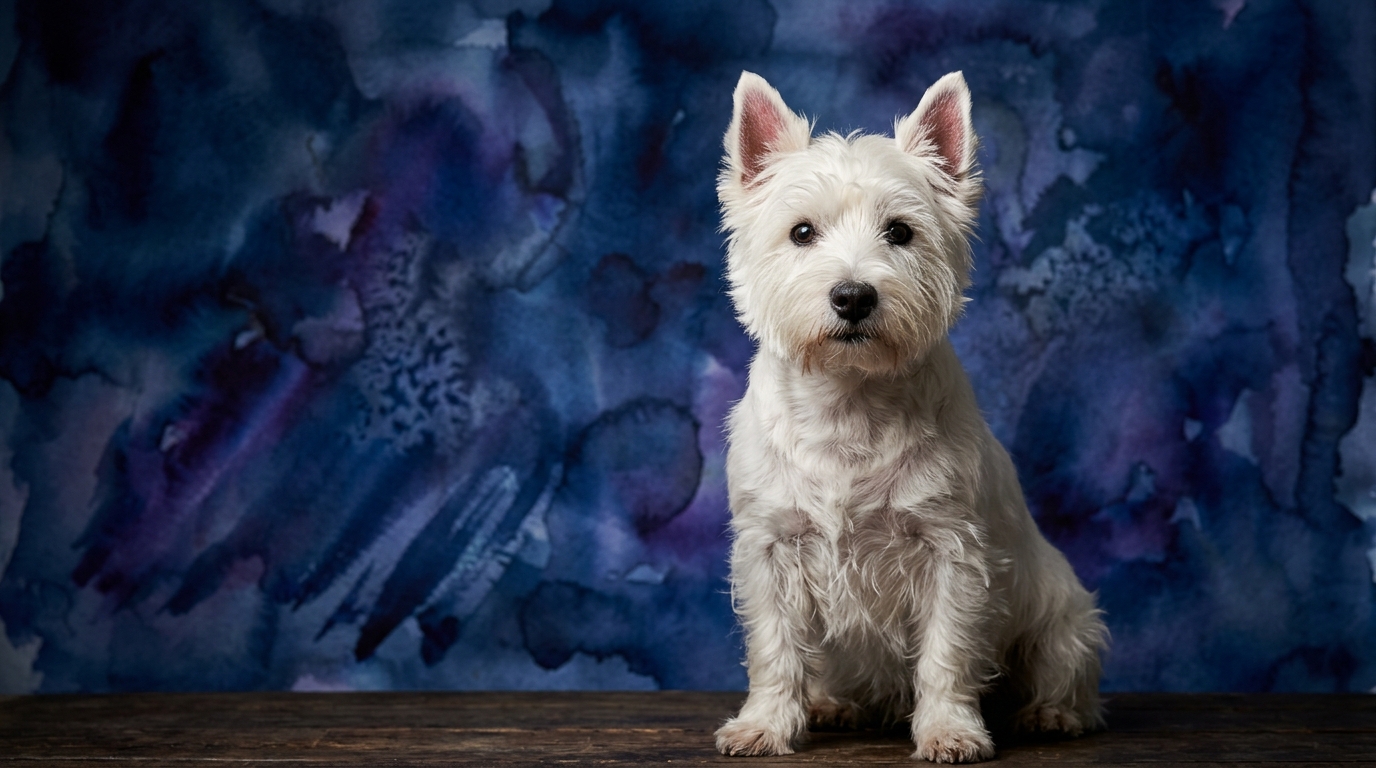
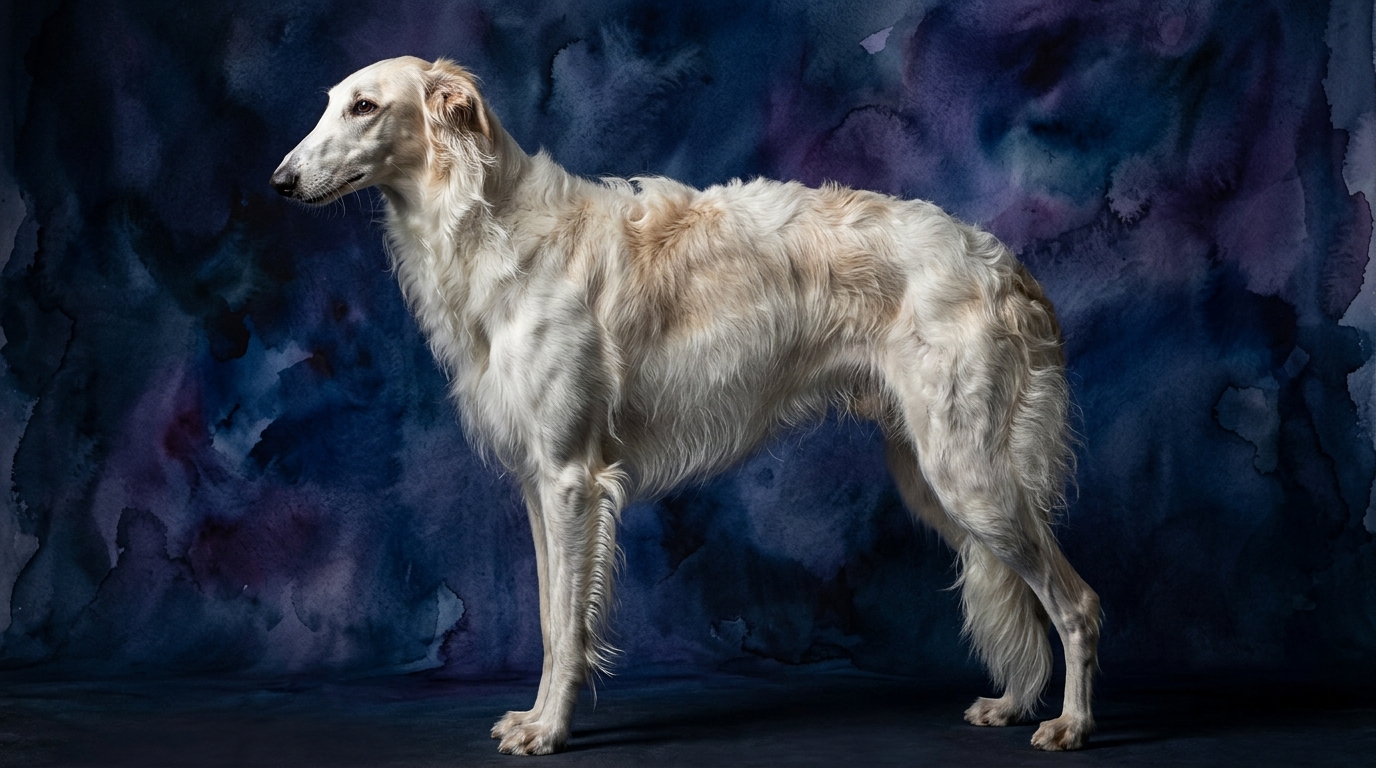
Side-by-Side IQ Profile: Westie vs. Borzoi
The Cosmic Pet Pet IQ Lab employs five dimensions to map canine intelligence, providing a granular view of each breed’s cognitive landscape. For the West Highland White Terrier, ranked #47 by Coren, its profile shows a Problem Solving score of 3/5, indicating a resourceful nature often applied to terrier-specific tasks. Training Speed also sits at 3/5, suggesting they learn at a moderate pace, often with a terrier's characteristic independent streak. Social Intelligence is 3/5, reflecting their ability to form bonds and interpret cues, while their Instinctive Drive, also 3/5, points to a strong prey drive. Notably, their Memory is rated 4/5, indicating a robust capacity for recall and retaining learned behaviors.
The Borzoi, with a Coren ranking of #75, presents a slightly different cognitive picture. Its Problem Solving ability is rated 3/5, which often manifests as independent, situational decision-making rather than human-directed puzzle-solving. Training Speed is 3/5, meaning they learn, but often require specific motivation and are less inclined towards repetitive drills. Social Intelligence stands at 3/5, typically expressed as a discerning, thoughtful connection. Their Instinctive Drive is also 3/5, representing a powerful sighthound chase instinct, while their Memory is rated 3/5, adequate for routines but perhaps less focused on complex, multi-step sequences compared to the Westie.
Where the West Highland White Terrier Wins Cognitively
The West Highland White Terrier's higher Coren ranking of #47, compared to the Borzoi's #75, suggests a generally greater aptitude for understanding and executing human-directed tasks and commands. This often translates to a perception of easier training and higher biddability in a typical companion setting. Their cognitive profile is geared towards active engagement with their human environment, a hallmark of many terrier breeds.
A significant cognitive advantage for the Westie lies in its superior Memory score of 4/5, surpassing the Borzoi's 3/5. This robust recall capacity means Westies are generally more adept at retaining complex sequences of commands, remembering household rules, and recalling specific training cues over extended periods. This makes them particularly well-suited for owners who enjoy teaching a wide repertoire of tricks or engaging in dog sports requiring precise, remembered routines. Their Problem Solving at 3/5, combined with strong memory, often results in creative and persistent efforts to achieve goals, whether it’s retrieving a favored toy or navigating an obstacle course.
Where the Borzoi Wins Cognitively
While the Borzoi's scores might appear numerically similar or lower in some areas, their cognitive strengths are uniquely tailored to their sighthound heritage, representing a different kind of operational intelligence. Their Instinctive Drive of 3/5 is not simply a moderate drive; it's a highly specialized and powerful impulse for visual pursuit, demanding rapid visual processing, spatial reasoning, and split-second decision-making during high-speed chases. This form of dynamic problem-solving in open, changing environments is a distinct cognitive advantage, requiring immense focus and independence.
The Borzoi's Social Intelligence, also rated 3/5, manifests as a discerning and often subtle understanding of their human companions, rather than overt eagerness. They form deep, thoughtful bonds and are adept at reading nuanced emotional cues, often displaying a calm, observant presence. This quiet attentiveness reflects a sophisticated internal processing of social information. Their Problem Solving at 3/5, while not always applied to human-invented puzzles, highlights an independent capacity to assess situations and act, a critical trait for a sighthound expected to make life-or-death decisions in the field without direct handler input.
Which is Easier to Train and Why
When considering ease of training, the West Highland White Terrier generally presents a more straightforward path for the average owner. Their Coren rank of #47, combined with a 3/5 Training Speed and 4/5 Memory, means they are capable learners who retain information well. While terriers possess a degree of independence, their desire for interaction and their tenacity can be channeled effectively into structured obedience and trick training, especially when positive reinforcement methods are consistently applied. Their problem-solving skills (3/5) are often readily engaged in learning new tasks and overcoming training challenges.
The Borzoi, with a Coren rank of #75 and 3/5 scores in both Training Speed and Memory, requires a more nuanced training approach. Their independent sighthound nature means they are less inclined towards repetitive drill-like training and need to understand the 'why' behind a command or find the task intrinsically rewarding. Training sessions should be engaging, positive, and relatively short to maintain their interest. While they learn, their strong instinctive drive (3/5) to chase can often override learned commands if a compelling visual stimulus appears, necessitating vigilant management and specialized training to ensure safety in unfenced environments. It's not a matter of lower intelligence, but a different motivational structure.
Which Suits Active Owners vs. Relaxed Owners
For owners with an active lifestyle who enjoy consistent engagement and varied activities, the West Highland White Terrier is often a more suitable companion. Their energy, though compact, requires regular outlets through daily walks, playtime, and mental challenges like scent work or learning new tricks. They thrive on having a 'job' and appreciate an owner who can provide consistent stimulation to prevent boredom and potential destructive behaviors. Their cognitive profile aligns with an owner who enjoys an interactive, busy companion.
The Borzoi, in contrast, often suits owners who appreciate a more relaxed indoor presence but are committed to providing specific, high-intensity exercise opportunities. While they need dedicated, safe spaces for bursts of high-speed running, such as a large, securely fenced yard or lure coursing, they are remarkably calm and quiet indoors, often content to lounge gracefully for hours. They are ideal for owners who value a dignified, independent companion and understand the necessity of fulfilling their unique, albeit concentrated, exercise requirements, rather than seeking a constant playmate for extended periods.
The Verdict
Opt for a West Highland White Terrier if you desire a highly engaged companion who excels at learning routines, enjoys interactive problem-solving, and thrives on consistent, varied mental and physical activities.
Select a Borzoi if you appreciate a serene indoor presence, are prepared to provide secure, spacious areas for their exhilarating sprints, and value a dog with independent thought and a dignified, discerning affection.
🧠 Find Your Pet's IQ Score
Our Pet IQ Lab assessment covers 25+ tests across 5 cognitive dimensions — personalized to your breed.
Take the Full IQ Test →Frequently Asked Questions
Are Borzoi difficult to train due to their lower Coren rank?
Not necessarily difficult, but Borzoi require a different approach. Their Coren rank of #75 means they learn best with positive reinforcement, short engaging sessions, and an understanding of their sighthound independence, rather than rote repetition.
Does the Westie's 4/5 memory make them easier to live with?
A Westie's strong memory (4/5) certainly aids in remembering household rules and commands, contributing to a smoother daily routine. However, it also means they remember both positive and negative experiences vividly, so consistency is key.
How does instinctive drive differ between these two breeds?
Both have a 3/5 instinctive drive, but for Westies, it's often a tenacious prey drive for small vermin, leading to digging and exploring. For Borzoi, it's a powerful sighthound chase drive, triggered by movement, requiring careful management in unfenced areas due to their speed.