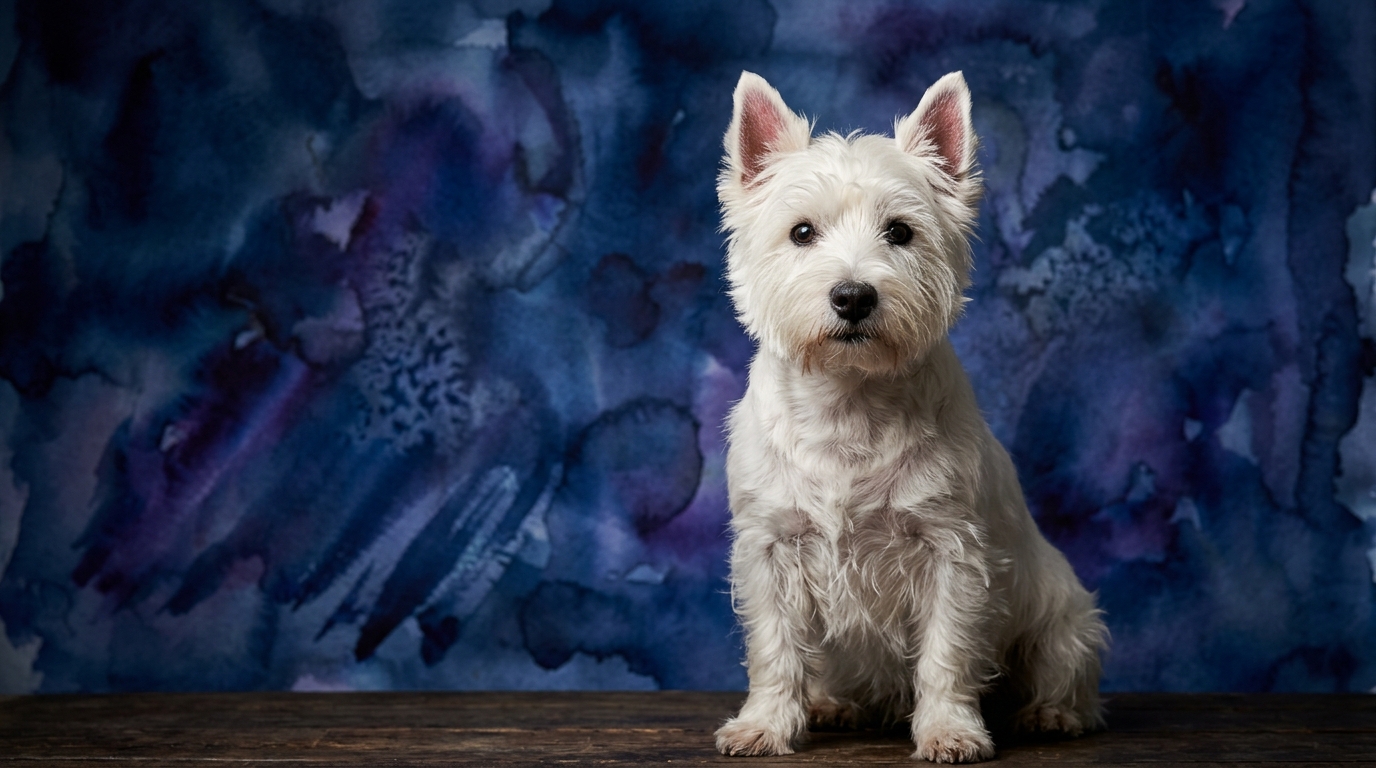
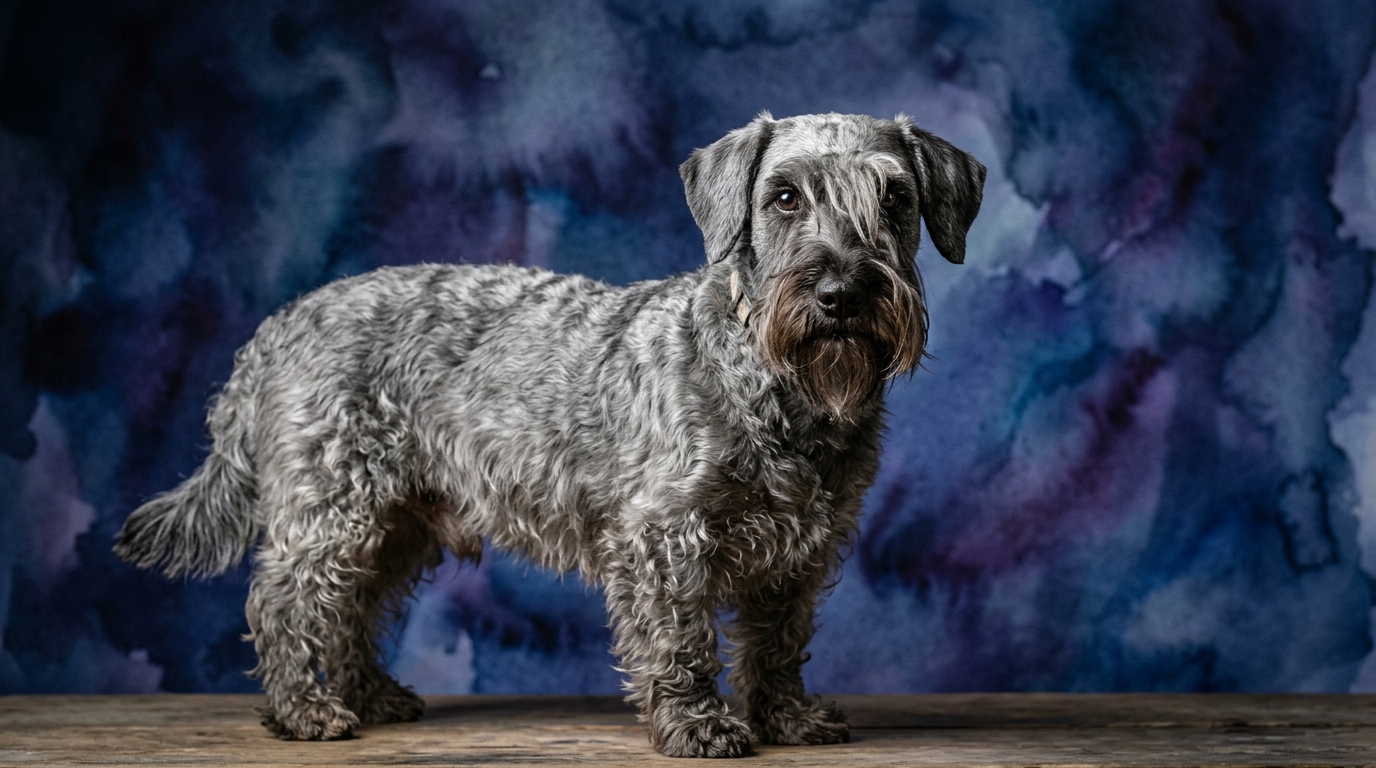
A Side-by-Side Cognitive Profile: Westie vs. Cesky
The Cosmic Pet Pet IQ Lab employs a five-dimensional framework to illuminate the cognitive nuances between the West Highland White Terrier and the Cesky Terrier: Problem Solving, Training Speed, Social Intelligence, Instinctive Drive, and Memory. Let's delve into their individual profiles. The West Highland White Terrier, a popular and spirited companion, scores a consistent 3 out of 5 across Problem Solving, Training Speed, Social Intelligence, and Instinctive Drive. This means a Westie is adept at figuring out everyday puzzles, like navigating a new room or getting to a favorite toy, often through persistent effort rather than complex strategizing. They learn commands at a moderate pace, capable of grasping new concepts but often requiring patience due to their independent terrier spirit. Socially, Westies are generally good at reading their human companions, forming strong bonds while maintaining a degree of self-possession. Their instinctive drive, typical for a terrier, manifests in an enjoyment of chasing and digging, requiring appropriate outlets. Where the Westie truly distinguishes itself is in Memory, earning a commendable 4 out of 5. This superior recall means they remember training cues, routines, and past experiences with remarkable fidelity, often retaining complex commands over long periods.
The Cesky Terrier, a rarer breed known for its calm yet determined demeanor, shares similar scores in many aspects of its cognitive profile. Like the Westie, the Cesky also registers a 3 out of 5 for Problem Solving, demonstrating a methodical and practical approach to challenges, such as systematically exploring an area for an interesting scent. Their Training Speed also stands at 3 out of 5; they are capable learners, but their terrier resolve means consistent, engaging methods are key to successful instruction. In Social Intelligence, the Cesky, rated 3 out of 5, tends to be more reserved with strangers but forms deep, understanding connections with its family unit, recognizing their cues and emotions. Their Instinctive Drive, also 3 out of 5, is channeled into a focused interest in scent work and exploration, reflecting their hunting heritage. The primary difference from the Westie lies in Memory, where the Cesky scores a solid 3 out of 5. While they remember basic commands and routines well, their recall might not be as expansive or long-lasting as their Westie counterparts, potentially requiring more frequent refreshers for less common cues. This detailed comparison reveals two capable terrier minds, with the Westie holding a distinct advantage in the realm of memory.
Where the West Highland White Terrier Shines Cognitively
The West Highland White Terrier's standout cognitive asset is its remarkable memory, rated a 4 out of 5 in our Pet IQ Lab assessment. This isn't just about remembering where the treat jar is; it extends to a robust recall of training cues, past experiences, and the intricate daily routines of its human companions. A Westie might remember a specific command learned months ago with surprising clarity, or recall the exact location of a buried toy from weeks prior. This superior memory can translate into more consistent adherence to learned behaviors over time, provided the training was thorough and positive. Furthermore, it aids in their ability to navigate complex environments they've previously encountered, remembering layouts and potential 'danger zones' or preferred spots. This strong recall makes them excellent candidates for advanced obedience or trick training where sequential memory is beneficial, allowing them to build upon a foundation of previously mastered skills with greater ease.
Where the Cesky Terrier Excels Cognitively
While the Cesky Terrier's individual cognitive scores might mirror the Westie's in several categories, its particular strength lies in a balanced and consistent application of these intellectual attributes, particularly within its instinctive drive and practical problem-solving. Rated 3 out of 5 for both, the Cesky demonstrates a steadfast, methodical approach to its environment. This breed exhibits a grounded problem-solving ability, often employing persistent focus to achieve a goal rather than relying on flashier, quickly remembered solutions. For instance, a Cesky might systematically explore every possible route to a desired object, learning through trial and error with unwavering determination. Their instinctive drive, while not extreme, is channeled effectively into tasks like scent work or investigating interesting sounds, demonstrating a focused application of their natural terrier curiosity with less potential for scattershot exploration. This means that while a Cesky might not out-remember a Westie, it brings a reliable, predictable intelligence to its interactions and explorations, making it a steady and predictable companion in its cognitive endeavors, thriving on consistent engagement rather than complex, multi-step recall challenges.
Training Aptitude: Which is Easier to Train and Why?
When assessing ease of training, both the West Highland White Terrier and the Cesky Terrier present a moderate challenge, each earning a 3 out of 5 for Training Speed. This score reflects the typical terrier temperament: bright and capable of learning, yet often possessing an independent streak that can be interpreted as stubbornness. However, a key differentiator emerges in their memory capabilities. The Westie's superior memory, rated 4 out of 5, suggests that once a command or behavior is thoroughly learned, it is likely to be retained with greater fidelity over time. This means that while initial training might require consistent effort due to their independent nature, a Westie may require fewer refresher sessions down the line. For example, a Westie might recall a 'stay' command after a longer hiatus than a Cesky. The Cesky, with a memory score of 3 out of 5, will certainly learn, but trainers might find themselves needing to reinforce commands more frequently to ensure long-term retention. Both breeds respond best to positive reinforcement, short, engaging sessions, and a trainer who understands the terrier's need for mental stimulation and a clear, fair hierarchy. The Westie's strong memory gives it a slight edge in long-term retention, potentially making the overall training journey feel marginally smoother over time, despite similar initial learning speeds.
Matching Cognitive Profiles to Lifestyles: Active vs. Relaxed Owners
Understanding the cognitive profiles of the Westie and Cesky helps align them with suitable owner lifestyles. Both breeds, scoring 3 out of 5 for Instinctive Drive and Problem Solving, are not content to be mere couch potatoes; they possess an inherent curiosity and need for mental engagement. For the active owner, both terriers offer rewarding companionship. The West Highland White Terrier, with its excellent memory (4/5), thrives in structured activities like obedience trials, agility, or advanced trick training, where remembering sequences and cues is paramount. An active owner who enjoys teaching new skills and building on past successes would find the Westie a highly capable and eager participant. Their moderate instinctive drive means they enjoy walks, hikes, and games of fetch, but are generally amenable to direction. The Cesky Terrier, with its consistent 3/5 across most cognitive domains, also fits well with an active lifestyle, but perhaps one that values exploration and varied engagement. Their balanced instinctive drive makes them excellent companions for scent work, tracking games, or simply long walks where they can investigate new smells and sights. While they might require more consistent reinforcement for long-term command retention due to their 3/5 memory, their practical problem-solving and social intelligence make them adaptable to different scenarios. Neither breed is suited for a truly 'relaxed' owner who offers minimal mental or physical stimulation, as their terrier minds require consistent engagement to prevent boredom and potential undesirable behaviors.
The Verdict
Choose the West Highland White Terrier if you value a companion with an exceptional memory for training and routines, and desire a dog that can build upon learned skills with impressive recall, making them excellent for advanced obedience or trick work.
Opt for the Cesky Terrier if you appreciate a balanced, consistently intelligent companion with a practical approach to problem-solving and a steady drive for exploration, suitable for owners who enjoy varied engagement and consistent, positive reinforcement.
🧠 Find Your Pet's IQ Score
Our Pet IQ Lab assessment covers 25+ tests across 5 cognitive dimensions — personalized to your breed.
Take the Full IQ Test →Frequently Asked Questions
Are Westies harder to train due to stubbornness?
Westies, like many terriers, possess an independent streak that can be perceived as stubbornness, earning them a 3/5 in Training Speed. However, their superior memory (4/5) means that once a behavior is learned through consistent positive reinforcement, it's likely to be retained very well.
How do their social skills compare?
Both Westies and Ceskies score 3/5 in Social Intelligence. Westies are generally good with family and can be friendly, while Ceskies tend to be more reserved with strangers but form strong bonds with their immediate family. Both understand social cues within their established circles.
Which breed needs more exercise for their instinctive drive?
Both breeds score 3/5 in Instinctive Drive, meaning they require moderate exercise and mental stimulation. They enjoy activities like digging, chasing, and scent work. Neither has an extreme drive, but daily engagement is crucial to satisfy their terrier instincts.